What’s actually slowing this PC down?
Pick the symptom - the matching free tool is one click away.
Your EV can charge normally and still be unable to power your house. Ordinary charging only proves that electricity can travel from the supply, through the EVSE (electric-vehicle supply equipment), into the battery. Bidirectional operation also requires the vehicle to discharge, compatible control hardware, a properly engineered connection to your home, and—if energy will flow beyond the premises—utility approval.
The failure is usually a mismatch in one of four layers: the exact vehicle configuration, the EVSE and its inverter/control architecture, the building-side electrical interface, or the utility interconnection. Check all four before buying equipment or assuming that a familiar connector makes a system compatible.
As an Amazon Associate I earn from qualifying purchases.
What bidirectional charging actually adds
The U.S. Department of Energy’s Federal Energy Management Program defines a bidirectional EV as one that can receive energy from an EVSE (charge) and provide energy to an external load (discharge), often paired with a similarly capable EVSE. A conventional wallbox performs only the first half of that exchange.
In a one-way installation, the utility supplies alternating-current power, the EVSE manages the charging session, and the vehicle’s onboard charger converts power for the battery. In a bidirectional installation, power must also leave the battery under controlled conditions. That reverse path needs switching, power conversion, communications, protection and software that are designed and certified for the intended use.
#1 Best Overall
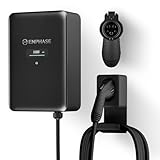
- 9× FASTER CHARGING: Get faster, smarter EV charging up to 11.5 kW (up to 46 miles/hour). Perfect for overnight charging or quick top-ups.
- REVENUE GRADE METER: Eligible for utility rebate programs with accurate, compliant energy monitoring.
- SOLAR CHARGING: Seamlessly connects with your home solar system so you can use more of your own clean energy.
- 5-YEAR WARRANTY: Backed by an industry-leading 5-year warranty for peace of mind.
- SECURE ACCESS: Prevent unauthorized use with app-based control or RFID card access for added safety.
“Vehicle-to-home” (V2H) generally means supplying a residence. “Vehicle-to-building” (V2B) means serving a larger or differently configured building, sometimes as part of a microgrid. “Vehicle-to-grid” (V2G) means exporting or providing grid services through an approved interconnection. These labels describe destinations, not a universal feature set: support for one does not establish support for the others.
"A bidirectional EV can receive energy from an EVSE (charge) and provide energy to an external load (discharge), and is often paired with a similarly capable EVSE."
Four compatibility checks that determine whether it will work
1. The exact vehicle must support discharge
Start with the vehicle identification number, model year, trim, battery option and regional specification. Ask the manufacturer whether that exact configuration supports the use you want: backup for selected circuits, broader home operation, building loads or grid export. A charging connector only describes the physical interface for receiving energy; it does not prove that the battery can send energy out.
Recommended Free Tools
Marketing language can also be narrower than it sounds. A vehicle may offer an outlet for tools or appliances while lacking a certified stationary-home interface. Another may support a particular backup system but not scheduled grid services. Obtain current owner documentation or written confirmation from the automaker for the model year and trim rather than relying on a forum post or a salesperson’s general statement.
Rank #2

- AI-POWERED SMART CHARGING & APP CONTROL – This ev charger level 2 uses Autel’s AI-integrated smart app to schedule charging around time-of-use utility rates, helping lower your monthly bill while boosting station utilization. Start or stop sessions remotely, adjust current from low to high amps, view real-time energy data, and get alerts if anything looks off.
- ULTRAFAST 80A PERFORMANCE FOR HOME – Delivering up to 19.2 kW / 80A, this charger adds about 70 miles of range per hour and powers your EV up to 14x faster than a standard Level 1 outlet, so you can fully recharge overnight or between customer visits. This 80 amp ev charger is a high-power level 2 ev charger that future-proofs your setup for larger-battery EVs and busy households.
- BUILT FOR 24/7 RELIABILITY & THEFT PROTECTION – Engineered for a 10-year lifespan with internal temperature monitoring and a flame-retardant enclosure. Dual-network Wi-Fi + Wi-SUN keep your charger online with >99.9% uptime, so drivers always find a live station. Custom tamper-resistant screws plus remote locking provide double theft protection for both residential and commercial installs.
- FAST INSTALL & FLEXIBLE STATION MANAGEMENT – Hardwired design for maximum power and reliability (100A circuit recommended for full 80A output; professional electrician install suggested). One-click configuration lets installers set up a charging station in about 10 minutes, then you can easily manage pricing, access, and usage in the app.
- CSA CERTIFIED, REBATE READY & UNIVERSAL J1772 – UL certified by CSA and eligible for many U.S. rebates, incentives, and tax credits to help reduce your installation cost. The 25 ft SAE J1772 cable works with all EVs and PHEVs in North America and with Tesla vehicles when used with a NACS adapter (not included). Backed by a 5-year warranty, 24/7 expert support, and Autel’s proven EV charger technology for long-term peace of mind.
2. The EVSE must be bidirectional and communicate correctly
A normal Level 2 charger is not automatically a bidirectional charger. The EVSE, vehicle and any inverter must agree on operating states, voltage, current, isolation, shutdown conditions and battery limits. The Department of Energy’s January 2025 Vehicles-to-Grid Integration Assessment Report notes that AC bidirectional charging requires a bidirectional inverter onboard the vehicle plus communication and control with the AC EVSE.
Residential DC designs put more conversion hardware outside the vehicle. The same assessment describes limited availability and high cost for residential DC bidirectional EVSE. The evidence does not establish a current retail price or a complete product count, so treat any quoted figure as project-specific rather than a market standard.
3. The home needs a safe electrical interface
Battery output cannot simply be connected to a household receptacle or an ordinary breaker. The installation may need a bidirectional charger, a DC-to-AC inverter, transfer or isolation equipment, a backed-up-loads panel, monitoring and controls. Those components must maintain power quality and disconnect safely when the utility supply fails.
PC Slower Than It Used to Be?
A free scan shows the junk files, broken settings and background clutter dragging Windows down - then fixes them in one click.Free scan · Windows 10 & 11Crashes, No Sound, or Screen Glitches?
Random freezes, missing sound and display glitches usually trace back to one bad driver. Find and replace yours safely.Free scan · under a minuteSelected-circuit backup and whole-home backup are different designs. A critical-loads panel might serve a refrigerator, heating controls, internet equipment and a few lighting circuits. Whole-home operation requires enough conversion capacity, service equipment and load management for the residence. Neither configuration should be promised without a site assessment that checks the service rating, panel capacity, grounding, conductor sizes and expected loads.
Rank #3

- Charge with Confidence: ChargePoint builds reliable, flexible EV charging stations for home, business, and fleets. Get 24/7 support and access to hundreds of thousands of North American charging locations.
- Charge Smart: With the user-friendly ChargePoint Mobile App, you can control your electric car charger, manage reminders, connect to smart home devices, find stations, get data and charging info, and access the latest features. Note: WiFi is needed for certain functionalities and troubleshooting steps if connectivity issues arise.
- Vast Network: Wherever you go, ChargePoint’s network includes 274k+ stations across North America and Europe and 565k+ roaming partner stations.
- Safe & Durable: Rely on this UL-certified EV charger for safe home charging. It can be installed indoors or outdoors by an electrician and includes a cold-resistant cable.
- Fast & Powerful: This EV charger charges 9× faster than a 120V outlet, delivering up to 45 mi/hr., dependent upon your vehicle. It features a J1772 connector for all non-Tesla EVs and requires a 20A or 80A circuit. For Tesla EVs, this will require an adapter.
4. The utility must allow the proposed power flow
Keeping your own circuits energized during an outage is not the same as exporting electricity to the grid. V2G normally requires an interconnection agreement, approved protection settings, a compatible meter and compliance with local rules. The Federal Energy Management Program advises customers to ask their serving utility whether the interconnection agreement permits reverse power flow.
Utility programs and incentives vary by territory, and the Department of Energy notes that incentives for vehicle grid services are not yet widely in place. A utility may permit non-export backup while prohibiting export, or require a separate review before any parallel operation. Get the answer in writing before purchasing equipment intended for grid services.
Why a car can charge normally but fail to power a house
- One-way vehicle hardware: the onboard charger accepts AC but cannot invert battery DC back to AC for external loads.
- Unsupported vehicle software: the battery and inverter may be physically capable, but the manufacturer has not enabled stationary discharge for that trim or region.
- EVSE mismatch: a charger may start a normal session yet lack the bidirectional communication, control logic or protection required for discharge.
- Missing conversion equipment: the system has no certified inverter or other device to produce building-compatible AC.
- No islanding protection: the home interface cannot disconnect from the utility during an outage, so it must block discharge for safety.
- Insufficient service or load capacity: the proposed backup load exceeds the inverter, panel, transfer equipment or vehicle’s permitted output.
- Utility restriction: export or parallel operation is not authorized in the service territory, even if the vehicle and hardware support it.
AC and DC bidirectional architectures
| Architecture | Where conversion occurs | What must be compatible | Practical constraint |
|---|---|---|---|
| AC bidirectional | The vehicle includes a bidirectional onboard inverter; the AC EVSE handles communication and control. | Vehicle inverter, exact EVSE, controls, protection and home interface. | Normal AC charging compatibility does not establish that the onboard inverter supports discharge. |
| DC bidirectional | External equipment performs the DC-to-AC conversion and controls battery power. | Vehicle battery interface, external bidirectional EVSE, communications, inverter and building equipment. | The Department of Energy’s January 2025 assessment describes residential availability as limited and cost as high; no universal retail price is established. |
Do not compare the charger box alone. A meaningful comparison covers the vehicle, EVSE, inverter, transfer equipment, controls, installation and utility approval as one system. A lower equipment price can be irrelevant if the required home interface or interconnection work is unavailable.
Quick wins for a faster PC:
Scan for outdated or missing drivers - takes under a minuteDriver Scan →Repair Windows errors before they cause bigger problemsFix Now →Fix the driver behind crashes, sound loss and screen glitchesFind Drivers →V2H, V2B and V2G: different goals and permissions
| Use case | Energy destination | Typical design question | Grid permission assumption |
|---|---|---|---|
| V2H | One residence | Which circuits will remain powered, and how will the home be isolated during an outage? | Non-export backup may be possible, but local approval still needs confirmation. |
| V2B | A commercial or institutional building, sometimes within a microgrid | Can the service, switchgear and controls manage the building’s load profile? | Depends on the site’s interconnection and operating rules. |
| V2G | The utility grid or an approved grid-services program | What export limits, metering, telemetry and dispatch rules apply? | Requires utility interconnection approval; home-backup approval is not enough. |
How to diagnose a failed or incompatible setup
- Define the desired outcome. Write down whether you need outage backup for selected circuits, whole-home support, building operation or grid export. The answer determines the required equipment and approvals.
- Record the exact vehicle specification. Note model year, trim, battery, market and software version. Obtain the manufacturer’s statement that this configuration supports discharge for your chosen use case.
- Identify every installed component. List the EVSE model, inverter, transfer switch, energy-management controller, service panel and meter. Ordinary charging proves only the forward charging path.
- Check the architecture. Confirm whether the design is AC or DC bidirectional and where the inverter is located. For AC, verify the vehicle’s onboard bidirectional inverter and its communication with the EVSE. For DC, verify the external converter and the vehicle’s supported DC discharge protocol.
- Have a licensed electrical professional inspect the site. Ask for a load calculation, service-capacity check, islanding method, backed-up-circuit plan, grounding review and required permits. Request the expected continuous and surge output, not just a battery energy figure.
- Ask the utility about the exact operating mode. Confirm non-export backup, parallel operation, export limits, meter requirements, inspection steps and program eligibility separately. Keep the utility’s written response with the project documents.
- Test in stages. After commissioning, verify charging, controlled discharge to the intended loads, automatic isolation during an outage simulation and restoration when utility power returns. Grid export should be tested only under the approved procedure.
Common symptoms and targeted fixes
The car charges but the bidirectional charger never starts discharge
Check the vehicle’s model-year and trim approval first, then confirm that the EVSE firmware and control mode are supported. If either side is one-way, replacing a cable or changing a mobile-app setting will not create bidirectional capability.
Rank #4
- 7× FASTER CHARGING: Get fast, reliable EV charging up to 9.6 kW (38 miles/hour) in a compact, flexible design that’s easy to use anywhere.
- REVENUE GRADE METER: Eligible for utility rebate programs with accurate, compliant energy monitoring.
- SOLAR CHARGING: Seamlessly connects with your home solar system so you can use more of your own clean energy.
- 5-YEAR WARRANTY: Backed by an industry-leading 5-year warranty for peace of mind.
- SECURE ACCESS: Prevent unauthorized use with app-based control or RFID card access for added safety.
The system works until the utility fails
This usually points to missing or incorrectly configured islanding equipment, an unapproved transfer arrangement or a protection setting that blocks operation when grid voltage disappears. Do not bypass the interlock. Have the installer verify the transfer switch, neutral and grounding arrangement, and the backed-up panel.
Only a few appliances can run
That may be intentional. Inverter output, service capacity and surge demand limit the circuits that can be backed up. Move essential circuits to a properly sized backed-up panel or reduce simultaneous loads; do not assume that a large battery automatically provides high instantaneous power.
The vehicle supplies the home but export is refused
Backup and export are separate permissions. Contact the serving utility about interconnection, reverse-power protection, metering and any V2G program. A system can be correctly installed for non-export V2H while remaining prohibited from sending energy onto utility lines.
Free tools Windows power users keep installed
One-click scans. No signup required.
What to compare when choosing a complete system
| Comparison area | Questions to answer before purchase |
|---|---|
| Vehicle | Is the exact model year, trim and region approved for the intended discharge use? |
| EVSE and controls | Is the equipment explicitly bidirectional, and does it list compatibility with that vehicle and software version? |
| Power conversion | Is the inverter onboard or external, and what continuous and surge output is available? |
| Home integration | Which circuits are backed up, how is the home isolated, and what service upgrades or permits are required? |
| Utility | Is export allowed, what interconnection agreement applies, and are local program requirements met? |
| Availability and cost | Can the complete installed configuration be sourced now? DOE characterizes residential DC bidirectional EVSE as limited in availability and high in cost; the cited assessment gives no verified universal retail price. |
Safety and installation boundaries
Battery systems can deliver lethal voltage and high fault current. Never backfeed a panel through a receptacle, defeat a transfer interlock or improvise a cable to connect the vehicle to house wiring. Use equipment listed for the intended application and a qualified electrical contractor familiar with storage, EVSE and local code requirements.
Best Value

- Dual Charging on a Single Circuit: Charge two EVs simultaneously with the HCS-D40’s dual-port design, delivering 32 Amps to one vehicle or 16 Amps to two vehicles, minimizing the need for costly electrical upgrades.
- Commercial-Grade Durability with Rugged Connector: Designed for heavy-duty use, the HCS-D40 features a rugged connector that withstands drops, rollovers, and harsh environments, perfect for high-traffic or commercial settings.
- Reliable Performance in All Weather Conditions: The HCS-D40 includes a NEMA 4-rated enclosure and a flexible cable that remains operational even in extreme cold, ensuring reliable charging in any climate.
- Fast and Efficient Charging for Two EVs: Charge one vehicle at 32 Amps or two vehicles at 16 Amps each, providing up to 31 miles of range per hour, ideal for EVs with up to 7.7kW acceptance rates.
- Safe, Long-Lasting Installation for High-Traffic Use: The HCS-D40 hardwired station offers a robust installation for homes and businesses, with safety certification to UL 2594 standards and a 5-year limited warranty for long-term reliability.
The Department of Energy’s Alternative Fuels Data Center consumer guidance recommends checking vehicle-and-charger compatibility with the manufacturer and consulting a utility and electrical contractor before installing home charging equipment. Bidirectional projects add discharge controls and islanding requirements, so apply that advice to the entire system, not just the wall-mounted charger.
What current evidence does—and does not—establish
DOE’s January 2025 assessment provides a technical and market-level view: AC systems need an onboard bidirectional inverter and coordinated controls, while residential DC equipment remains limited and expensive. It does not provide a model-by-model compatibility matrix, a universal adoption rate, a current consumer price or a product count. Compatibility must therefore be verified for the specific vehicle, equipment, house and utility territory.
For historical context, a DOE announcement dated April 20, 2022 quoted Ford executive Bob Holycross describing an F-150 Lightning powering a home during an outage and an E-Transit running tools. That statement illustrates the V2X concept at that time; it is not proof that every vehicle, charger or present-day installation supports those functions.
A practical decision rule
Proceed only when four answers are documented: the exact vehicle is approved to discharge for your goal; the EVSE and inverter architecture are compatible; a licensed professional has designed the building connection and isolation; and the utility has confirmed the permitted operating mode. If any answer is missing, normal charging may continue to work while bidirectional operation remains unavailable or unsafe.
Quick Recap
Product prices and availability are accurate as of the date/time indicated and are subject to change. Any price and availability information displayed on Amazon at the time of purchase will apply.




