Do these 3 things before closing this tab:
1Scan for outdated or missing drivers - takes under a minute2Clear out junk files and repair common Windows errors3Fix the driver behind crashes, sound loss and screen glitchesIf an electric vehicle charges normally but will not send power to a home, building or grid, the connector is not the diagnosis. Bidirectional operation requires a compatible vehicle, a bidirectional EVSE (charger), matching communications, correctly installed transfer and protection equipment, and— for grid export—utility approval. A fault in any one of those layers can leave ordinary charging working while reverse power remains unavailable.
What bidirectional charging actually is
In ordinary charging, electricity flows from the electrical service through charging equipment into the vehicle battery. Bidirectional charging adds a controlled path in the other direction: the vehicle can discharge energy through equipment designed to deliver that energy to an external load or, where permitted, to the utility grid. The U.S. Department of Energy (DOE) describes this as an electric vehicle receiving electricity from EVSE and providing energy to an external load, usually with similarly capable EVSE.
As an Amazon Associate I earn from qualifying purchases.
That makes bidirectional charging a system capability rather than a property of a plug. A connector can fit and a vehicle can accept charge without the vehicle, charger, controls and installation supporting discharge. The exact vehicle model year, trim, market, software eligibility, charger model and intended operating mode all matter.
- V2H (vehicle-to-home): supplies a residence during an outage or peak-period operation. The installation may energize the whole service or only selected circuits.
- V2B (vehicle-to-building): serves a commercial or institutional building, often a defined group of loads rather than every circuit.
- V2G (vehicle-to-grid): exports power or grid services through a utility-approved interconnection. It has requirements that do not apply to isolated backup.
Those labels are not interchangeable. A setup that can back up selected household circuits may not be approved to export power, and a grid-interactive system may need controls that a simple backup installation does not.
#1 Best Overall
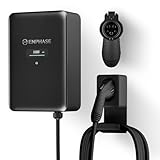
- 9× FASTER CHARGING: Get faster, smarter EV charging up to 11.5 kW (up to 46 miles/hour). Perfect for overnight charging or quick top-ups.
- REVENUE GRADE METER: Eligible for utility rebate programs with accurate, compliant energy monitoring.
- SOLAR CHARGING: Seamlessly connects with your home solar system so you can use more of your own clean energy.
- 5-YEAR WARRANTY: Backed by an industry-leading 5-year warranty for peace of mind.
- SECURE ACCESS: Prevent unauthorized use with app-based control or RFID card access for added safety.
Why normal charging can work while reverse power fails
Forward charging proves only that the vehicle and EVSE can complete the charging function. It does not prove that the battery-management software permits discharge, that the EVSE contains a bidirectional inverter, or that the site has transfer equipment and protection for an energized building circuit. Manufacturers can also enable or disable functions by model year, trim, market, software version or an enrollment program.
Common causes therefore span several layers:
- The vehicle does not support discharge for the requested use, even though it supports fast or Level 2 charging.
- The charger is unidirectional, or its bidirectional feature supports a different mode than the one you selected.
- The vehicle and EVSE use incompatible communications or software revisions.
- The installation lacks an approved inverter, transfer switch, isolation device, control panel or protection scheme.
- The utility has not approved reverse power flow, or the site is not enrolled in a required program.
- The vehicle is outside an OEM-defined state-of-charge, temperature, battery-health or operating window.
- A commissioning, firmware or authentication step has not been completed.
Do not infer a failed battery from a missing discharge option until those system checks are complete. A diagnostic message, disabled menu or installer interlock may be an intentional safety or eligibility control.
First decide what you want the vehicle to do
Write down the outcome before changing settings or buying equipment. “Power my house” can mean outage backup for a refrigerator and internet equipment, whole-home backup, scheduled peak shaving, or selling energy to the grid. Each objective changes the equipment and approval path.
| Objective | Energy destination | Controls and approvals to expect | What ordinary charging does not establish |
|---|---|---|---|
| V2H backup | Home loads during an outage or controlled operation | Bidirectional EVSE, building isolation/transfer equipment, code-compliant installation and a defined load plan | That the vehicle can safely energize house circuits |
| V2B backup | Selected building loads or a facility distribution section | Site engineering, load management, protection coordination and equipment sized for the building | That a residential setup can serve commercial loads |
| V2G export | Utility grid or a utility-managed service | Interconnection review, reverse-power-flow permission, applicable tariff or program enrollment and grid-interactive controls | That the utility will accept exported power |
| Managed self-consumption | On-site loads without intentional grid export | Controls that prevent export, plus a compatible vehicle and EVSE | That a non-export configuration can be changed to V2G without approval |
Specify whether you need whole-home or selected-circuit backup, the largest simultaneous loads, and whether any energy may flow onto utility conductors. Give that description to the vehicle manufacturer, charger manufacturer, installer and utility; vague requests often produce an apparently compatible but unusable design.
Check the vehicle before blaming the charger
Use the exact vehicle identity
Look up the model year, trim, battery configuration, market and software or feature eligibility in the manufacturer’s current documentation. “This model supports bidirectional charging” is too broad if only a particular trim, production date or region is eligible. Dealer literature can also omit a later software restriction, so ask the OEM or dealer to confirm discharge support for your vehicle identification and intended mode: V2H, V2B or V2G.
Confirm the supported operating mode
A vehicle may support one mode but not another. For example, a manufacturer could permit stationary backup while excluding utility export, or support export only through a named charger and program. Obtain the supported power direction, maximum discharge power, required communications protocol and any activation procedure in writing.
Rank #2

- AI-POWERED SMART CHARGING & APP CONTROL – This ev charger level 2 uses Autel’s AI-integrated smart app to schedule charging around time-of-use utility rates, helping lower your monthly bill while boosting station utilization. Start or stop sessions remotely, adjust current from low to high amps, view real-time energy data, and get alerts if anything looks off.
- ULTRAFAST 80A PERFORMANCE FOR HOME – Delivering up to 19.2 kW / 80A, this charger adds about 70 miles of range per hour and powers your EV up to 14x faster than a standard Level 1 outlet, so you can fully recharge overnight or between customer visits. This 80 amp ev charger is a high-power level 2 ev charger that future-proofs your setup for larger-battery EVs and busy households.
- BUILT FOR 24/7 RELIABILITY & THEFT PROTECTION – Engineered for a 10-year lifespan with internal temperature monitoring and a flame-retardant enclosure. Dual-network Wi-Fi + Wi-SUN keep your charger online with >99.9% uptime, so drivers always find a live station. Custom tamper-resistant screws plus remote locking provide double theft protection for both residential and commercial installs.
- FAST INSTALL & FLEXIBLE STATION MANAGEMENT – Hardwired design for maximum power and reliability (100A circuit recommended for full 80A output; professional electrician install suggested). One-click configuration lets installers set up a charging station in about 10 minutes, then you can easily manage pricing, access, and usage in the app.
- CSA CERTIFIED, REBATE READY & UNIVERSAL J1772 – UL certified by CSA and eligible for many U.S. rebates, incentives, and tax credits to help reduce your installation cost. The 25 ft SAE J1772 cable works with all EVs and PHEVs in North America and with Tesla vehicles when used with a NACS adapter (not included). Backed by a 5-year warranty, 24/7 expert support, and Autel’s proven EV charger technology for long-term peace of mind.
Ask about operating limits
Request the OEM’s limits for state of charge, battery temperature, charging rate, discharge duration, driving priority and emergency reserve. Do not apply a universal percentage to every vehicle. The allowable window can vary by battery chemistry, software and warranty terms. If a discharge control is hidden or unavailable, ask whether the vehicle must be updated, enrolled or connected to a certified system.
Outdated Drivers Are Slowing You Down
One free scan finds every outdated or missing driver and matches the right update for your exact hardware.Free scan · exact hardware matchWindows Errors? Fix Them Before They Spread
Repair common Windows errors and clear accumulated junk for a smoother, more stable PC - no reinstall needed.Free scan · no reinstallCheck warranty implications
DOE’s planning guidance advises discussing the effect of bidirectional use on the high-voltage battery warranty with the OEM or dealer. Ask whether V2H, V2B and V2G are covered separately, whether energy throughput is limited, and which operating records must be retained. There is no universal warranty rule or state-of-charge threshold that can be assumed across brands or jurisdictions.
Verify that the EVSE is truly bidirectional
Many products called chargers only move electricity into the vehicle. A bidirectional system normally includes power electronics that can convert battery energy for the building or grid, plus controls that coordinate the vehicle and site. Confirm the exact unit—not merely the connector type—is rated for the mode you need.
- Check the manufacturer’s specification for bidirectional operation and identify whether it is V2H, V2B, V2G or a non-export mode.
- Match the EVSE to the exact vehicle model, year and software eligibility. DOE recommends confirming compatibility with the vehicle and charger makers or a vetted compatibility list.
- Verify AC versus DC architecture. The power path, inverter location, protection equipment and communications can differ substantially.
- Check continuous and peak power ratings against your planned loads. A vehicle may discharge, yet still be unable to start a large motor or support every household circuit.
- Identify required gateway, energy-management controller, transfer switch, meter, networking connection and firmware version.
- Confirm whether the charger needs an installer commissioning code, cloud account, utility signal or program enrollment before discharge appears.
Ask for a written compatibility statement covering the vehicle, EVSE, site controller and operating mode. If the vendor lists only charging amperage or connector dimensions, that is not evidence of bidirectional capability.
Communications and standards can block an otherwise compatible pair
Vehicle and charger must exchange more than a start signal. They may negotiate authorization, voltage, current, state of charge, direction of power flow, isolation status and shutdown conditions. A connector that fits cannot guarantee that those messages are understood by both sides.
Free tools Windows power users keep installed
One-click scans. No signup required.
DOE’s January 2025 Vehicles-to-Grid Integration Assessment Report describes an unsettled standards landscape. In its comparison, AC utility-interactive V2G support is identified under SAE J3072 with IEEE 1547-2013, while ISO 15118-20 was listed as work in progress and not harmonized with U.S. standards in that assessment. The report also lists DC V2G work as in progress across the standards tracks. This does not prove that standards caused a particular failure, but it explains why a vehicle and charger can each advertise advanced functions without interoperating in a specific installation.
Rank #3

- Charge with Confidence: ChargePoint builds reliable, flexible EV charging stations for home, business, and fleets. Get 24/7 support and access to hundreds of thousands of North American charging locations.
- Charge Smart: With the user-friendly ChargePoint Mobile App, you can control your electric car charger, manage reminders, connect to smart home devices, find stations, get data and charging info, and access the latest features. Note: WiFi is needed for certain functionalities and troubleshooting steps if connectivity issues arise.
- Vast Network: Wherever you go, ChargePoint’s network includes 274k+ stations across North America and Europe and 565k+ roaming partner stations.
- Safe & Durable: Rely on this UL-certified EV charger for safe home charging. It can be installed indoors or outdoors by an electrician and includes a cold-resistant cable.
- Fast & Powerful: This EV charger charges 9× faster than a 120V outlet, delivering up to 45 mi/hr., dependent upon your vehicle. It features a J1772 connector for all non-Tesla EVs and requires a 20A or 80A circuit. For Tesla EVs, this will require an adapter.
Have the manufacturers or installer confirm the communication stack, required certificates, firmware versions and utility-control interface. Record the versions at commissioning. If one component was replaced, repeat the compatibility check rather than assuming the previous pairing still applies.
Inspect the home or building installation
Bidirectional energy changes the electrical design. During backup, the vehicle can become a source that energizes conductors normally supplied by the utility. The system must prevent unsafe backfeed, isolate from an outage, and protect people and equipment under fault conditions.
DOE’s Alternative Fuels Data Center guidance says charging infrastructure installation must comply with applicable state and local codes and regulations and be completed by a licensed electrical contractor. Have that contractor assess:
What’s actually slowing this PC down?
Pick the symptom - the matching free tool is one click away.
- service capacity, panel ratings and available fault current;
- the location and rating of the bidirectional inverter or EVSE;
- transfer or isolation equipment that prevents unintended utility backfeed;
- grounding, bonding, overcurrent protection and disconnect access;
- the circuits selected for backup and the starting current of motors, pumps and compressors;
- communications wiring, network reliability and emergency shutdown controls;
- permits, inspections, utility requirements and any changes to the service equipment.
There is no one-size-fits-all wiring checklist. A portable cable or an adapter that appears to connect the vehicle to a receptacle is not a substitute for a listed, engineered transfer arrangement. Never defeat an interlock or connect a vehicle to a house circuit through an improvised cord.
For V2G, the utility decides whether export is allowed
Grid export is not simply V2H with a different menu setting. Contact the utility before installation and ask whether the proposed equipment may operate in parallel with the grid. Confirm the interconnection application, protection settings, meter configuration, reverse-power-flow rules, rate or tariff, export limits, outage behavior and program enrollment.
DOE notes that vehicle grid-service incentive programs are not yet widely in place. Availability, compensation and technical requirements therefore vary by utility and jurisdiction; do not assume that exporting energy will earn money or that a retail electricity plan permits it. Written utility approval may be required even when the equipment has a recognized certification.
Rank #4
- 7× FASTER CHARGING: Get fast, reliable EV charging up to 9.6 kW (38 miles/hour) in a compact, flexible design that’s easy to use anywhere.
- REVENUE GRADE METER: Eligible for utility rebate programs with accurate, compliant energy monitoring.
- SOLAR CHARGING: Seamlessly connects with your home solar system so you can use more of your own clean energy.
- 5-YEAR WARRANTY: Backed by an industry-leading 5-year warranty for peace of mind.
- SECURE ACCESS: Prevent unauthorized use with app-based control or RFID card access for added safety.
If the utility allows only non-export operation, configure controls to prevent power from flowing onto the grid and verify that behavior during commissioning. A system designed for isolated backup may need different controls before it can be approved for parallel operation.
A step-by-step troubleshooting sequence
- State the goal. Record V2H or V2B backup versus V2G export, whole-home versus selected loads, and whether the system must operate during an outage.
- Verify the vehicle. Use official OEM documentation for the exact model year, trim, market and software version. Ask the OEM or dealer to confirm discharge eligibility, supported mode and operating limits.
- Verify the EVSE. Read the exact model specification and confirm bidirectional operation for your mode and vehicle. Check required power rating, inverter architecture, firmware and accessories.
- Confirm the pairing. Ask both manufacturers or a qualified installer to validate communications, certificates, control software and any approved compatibility list. Record every firmware version.
- Review the site design. Have a licensed electrical contractor check service capacity, transfer/isolation equipment, protection, grounding, selected circuits, permits and code requirements.
- Check commissioning status. Complete required account activation, installer setup, network connection, firmware updates and utility signals. Look for an explicit discharge-ready or backup-ready status rather than relying on a charging icon.
- Call the utility for export issues. For V2G, ask about interconnection approval, reverse power flow, rates, export caps and program enrollment. Do not test export before approval.
- Check battery limits and warranty. Ask the OEM for the allowed state-of-charge window, temperature conditions, discharge limits and warranty treatment. Let the system stop normally if it reaches a protection limit.
Symptoms and the most useful next check
| Observed symptom | Likely layer | Next check |
|---|---|---|
| Vehicle charges, but no discharge option appears | Vehicle eligibility, software or unsupported mode | Confirm exact model/trim/market and ask the OEM whether discharge must be enabled or enrolled |
| EVSE reports vehicle connected but refuses reverse flow | Vehicle-EVSE compatibility or communications | Have both manufacturers validate the pairing and required firmware |
| Backup works for a test load but not the whole house | Load plan or power rating | Compare continuous and startup demand with the system rating; use selected circuits if designed that way |
| System works off-grid but export is blocked | Utility interconnection or export control | Check written utility approval, meter configuration, protection settings and program status |
| Discharge stops at a repeatable battery level | OEM operating reserve or protection limit | Ask the OEM for the permitted state-of-charge and temperature window; do not override it |
| System will not energize during an outage | Transfer/isolation equipment, commissioning or safety interlock | Stop testing and have the licensed installer inspect the transfer path and fault logs |
Choose a configuration by loads, power path and approvals
When comparing proposals, request the same facts from every installer. A lower equipment price can conceal missing site hardware, a smaller supported load set or an operating mode that cannot be approved locally.
| Comparison axis | Questions to put in the proposal |
|---|---|
| Vehicle compatibility | Which model year, trim, market and software version are covered, and is the statement from the OEM? |
| Function | Is the design V2H, V2B, V2G or non-export only? Can it operate during an outage? |
| Power architecture | Is the system AC or DC, where is the inverter, and what continuous and surge power are available? |
| Loads | Which circuits are backed up, and how are motor-starting loads handled? |
| Site equipment | Which transfer switch, gateway, meter, disconnects, protection devices and communications equipment are included? |
| Utility and code | Who obtains permits and interconnection approval, and which local requirements apply? |
| Warranty and limits | What battery throughput, state-of-charge, temperature and discharge limits apply, and who supports a fault? |
Product pricing, incentives and permitting fees cannot be generalized from the system requirements alone. They depend on the vehicle, charger, service equipment, jurisdiction and utility program, so obtain a site-specific written quote.
Commissioning and safe testing
After installation, require a documented commissioning test. It should identify the vehicle and EVSE versions, demonstrate normal charging, demonstrate the intended discharge mode into an approved load, verify transfer and isolation during a simulated outage, and record shutdown behavior at the OEM limits. For V2G, the test should also confirm the approved export limit and that the meter and utility controls respond as specified.
Keep the single-line diagram, permits, inspection record, compatibility statement, firmware versions and warranty contacts. If the system reports an isolation fault, unexpected backfeed, overheating, damaged cable or repeated protective shutdown, stop operation and contact the installer. Do not open energized equipment or bypass a safety device.
Misconceptions that lead to failed installations
- “The plug fits, so it should work.” Mechanical fit does not establish bidirectional power electronics or communications compatibility.
- “My car has a large battery, so it can power the house.” Battery capacity is not the same as approved discharge capability, inverter output or transfer equipment.
- “A backup test proves grid export.” Isolated backup and utility-parallel operation have different protection and approval requirements.
- “A software update will unlock every vehicle.” Eligibility can be hardware-, trim-, market- or program-specific; only the OEM can confirm it.
- “Any electrician can connect it.” Use a licensed electrical contractor familiar with the applicable codes, source-interconnection controls and local permitting process.
- “Export will automatically be compensated.” DOE reports that vehicle grid-service incentive programs are not yet widespread; compensation depends on the utility and jurisdiction.
When to stop troubleshooting yourself
Disconnect attempts and improvised adapters can create shock, fire, equipment-damage and utility-backfeed hazards. Stop and call a qualified installer if you see arcing, heat damage, a damaged connector, an isolation or ground fault, an unexpected energized circuit during an outage, or a protection alarm that returns after reset. Do not alter firmware, defeat an interlock, change protection settings or export to the grid without the required approval.
Best Value

- Dual Charging on a Single Circuit: Charge two EVs simultaneously with the HCS-D40’s dual-port design, delivering 32 Amps to one vehicle or 16 Amps to two vehicles, minimizing the need for costly electrical upgrades.
- Commercial-Grade Durability with Rugged Connector: Designed for heavy-duty use, the HCS-D40 features a rugged connector that withstands drops, rollovers, and harsh environments, perfect for high-traffic or commercial settings.
- Reliable Performance in All Weather Conditions: The HCS-D40 includes a NEMA 4-rated enclosure and a flexible cable that remains operational even in extreme cold, ensuring reliable charging in any climate.
- Fast and Efficient Charging for Two EVs: Charge one vehicle at 32 Amps or two vehicles at 16 Amps each, providing up to 31 miles of range per hour, ideal for EVs with up to 7.7kW acceptance rates.
- Safe, Long-Lasting Installation for High-Traffic Use: The HCS-D40 hardwired station offers a robust installation for homes and businesses, with safety certification to UL 2594 standards and a 5-year limited warranty for long-term reliability.
Frequently asked questions
Can every EV with a modern charging connector charge bidirectionally?
No. Bidirectional discharge depends on the exact vehicle, software, EVSE, communications and installation. Connector compatibility alone is not evidence.
Do I need a special charger for V2H?
Yes, the system needs EVSE and power-conversion equipment designed for bidirectional operation, plus code-compliant transfer and protection equipment. A conventional one-way charger cannot be assumed to support V2H.
Why does my EV charge normally but refuse to send power back?
Forward charging may be supported while discharge is not. Check vehicle eligibility, EVSE mode, communications, commissioning, battery limits and—if export is involved—utility approval.
Recommended Free Tools
Can I use V2H without utility permission?
Requirements depend on the design and jurisdiction. A properly isolated backup system may follow a different approval path from a grid-parallel system, but permits, code compliance and local authority requirements still apply. Ask the licensed installer and utility before work.
Is there a universal state-of-charge percentage for bidirectional charging?
No. The OEM sets limits for each vehicle and software configuration. Obtain the permitted window and warranty terms for your specific vehicle.
Are standards mature enough to guarantee interoperability?
No universal guarantee exists. DOE’s January 2025 assessment describes differences and work in progress across AC and DC V2G standards, so the specific vehicle-EVSE pairing must be validated.
Frequently Asked Questions
Can a bidirectional EV power my whole house?
Only if the vehicle, bidirectional EVSE, inverter/transfer equipment and service design are rated and configured for the whole-home load. Many systems are designed for selected circuits instead.
The Tool Desk
Outbyte Driver Updater FREEScan for outdated or missing drivers - takes under a minuteDriver Scan →Outbyte PC Repair FREERepair Windows errors before they cause bigger problemsFix Now →Will V2G always reduce my electricity bill or earn revenue?
No. Utility programs and incentives are not widespread and vary by jurisdiction. Confirm the tariff, export rules and compensation with the utility.
Who should install a bidirectional EV system?
Use a licensed electrical contractor who can handle local code, permits, transfer/isolation equipment and any utility interconnection requirements.
Quick Recap
Product prices and availability are accurate as of the date/time indicated and are subject to change. Any price and availability information displayed on Amazon at the time of purchase will apply.




