Free tools Windows power users keep installed
One-click scans. No signup required.
Nissan Motor Co., Ltd. is an independent, publicly traded Japanese automaker headquartered in Yokohama. Renault is Nissan’s largest strategic shareholder and alliance partner—not its wholly owned parent. Nissan, meanwhile, owns 26.67% of Mitsubishi Motors as of March 31, 2026. Nissan vehicles are built around the world, so the assembly country depends on the model, market, and production year.
Who owns Nissan?
Nissan Motor Co., Ltd. is an independent, publicly traded Japanese automaker headquartered in Yokohama. Renault is Nissan’s largest strategic shareholder and alliance partner, but Renault does not wholly own Nissan, and Nissan is not simply a Renault subsidiary in the ordinary sense.
| # | Preview | Product | Price | |
|---|---|---|---|---|
| 1 |
|
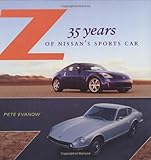
Z: 35 Years of Nissan's Sports Car | $89.98 | Buy on Amazon |
| 2 |

|
Nissan 300ZX and 350Z: The Z-Car Story | $170.85 | Buy on Amazon |
| 3 |

|
NISSAN FAIRLADY Z again .― New Z33 Details Tyre/Fair Lady Z History (yaesumedyiamukku) | $67.60 | Buy on Amazon |
| 4 |

|
Tamiya 1: 24 Scale Nissan 370z (Book) | $45.99 | Buy on Amazon |
As an Amazon Associate I earn from qualifying purchases.
As of March 31, 2026, Nissan’s filing listed Renault S.A. with 633.107 million Nissan shares, representing 17.1% of Nissan’s shares excluding treasury stock. Nissan’s disclosure also explains that shares held through a French trust are effectively held by Renault. Including those trust-held shares, Renault’s effective position was 1.326231 billion Nissan shares.
Those figures can look inconsistent because they describe different things:
#1 Best Overall
- Direct share ownership: shares registered directly to Renault.
- Effective ownership: direct shares plus shares treated as held for Renault through the relevant French trust arrangement.
- Voting rights: the practical voting position after applying the alliance’s governance arrangements and any applicable caps.
For that reason, the most accurate short description is: Renault is Nissan’s largest strategic shareholder, while Nissan remains a separate publicly traded company. The Renault-Nissan relationship is an alliance involving cross-shareholdings, board and governance arrangements, and cooperation on vehicles, technology, manufacturing, and other business activities.
Does Renault own Nissan?
Not in the sense of owning 100% of Nissan or operating Nissan as an ordinary wholly owned subsidiary. Renault has a major strategic stake and remains Nissan’s largest strategic shareholder, but Nissan has its own listed shares, corporate identity, management structure, operations, and financial reporting.
The alliance has changed over time. Nissan’s alliance disclosures describe cross-shareholdings and governance provisions, including a 2025 amendment that gave the two companies more flexibility around their minimum shareholdings. That history is why older articles may quote different percentages or use simplified language such as “Renault owns Nissan.” Such wording is misleading unless it immediately explains the difference between Renault’s shareholding and Nissan’s independent corporate status.
Does Mitsubishi own Nissan?
No. The principal ownership direction is the other way around. Nissan owned 26.67% of Mitsubishi Motors as of March 31, 2026, making Nissan Mitsubishi Motors’ largest shareholder. Mitsubishi Motors is described as an equity-method associate of Nissan.
| Relationship | What it means |
|---|---|
| Renault → Nissan | Renault is Nissan’s largest strategic shareholder and alliance partner. |
| Nissan → Mitsubishi Motors | Nissan holds 26.67% of Mitsubishi Motors and accounts for it as an equity-method associate. |
| Renault, Nissan and Mitsubishi Motors | The companies cooperate through an alliance, including work involving vehicle development, manufacturing, technology, and other business activities. |
An alliance is not the same as one company wholly owning the other two. Each company remains a distinct automaker with its own brands and corporate reporting.
Where are Nissan cars built?
Nissan vehicles are built through a worldwide manufacturing network, not exclusively in Japan. Nissan’s official plant directory identifies production bases in Japan, the United States, Mexico, the United Kingdom, Spain, France, China, Taiwan, Thailand, the Philippines, Indonesia, India, Brazil, Argentina, Egypt, and South Africa.
Nissan’s corporate profile reported automobile production at 28 sites in 13 markets as of March 31, 2025. That figure excludes plants that provide OEM vehicles to Nissan, so it should not be interpreted as a complete list of every facility that has ever assembled a Nissan-badged vehicle.
What’s actually slowing this PC down?
Pick the symptom - the matching free tool is one click away.
The answer for a specific Nissan depends on its:
- model and trim;
- destination market;
- production year;
- regional supply chain; and
- whether Nissan or an OEM partner performed the final assembly.
Therefore, “Nissan is a Japanese carmaker” describes the company’s origin and headquarters—not the assembly country of every Nissan sold around the world.
Rank #2
- Used Book in Good Condition
Major Nissan production sites in Japan
Tochigi Plant — Kaminokawa, Tochigi Prefecture
Nissan describes Tochigi as its largest plant site in Japan. It produces a range of luxury, sports, and electrified vehicles. Nissan’s listed products include the LEAF, ARIYA, Skyline, and Fairlady Z.
Oppama Plant — Yokosuka, Kanagawa Prefecture
Oppama has been an important site for advanced vehicle production and is associated with the LEAF and other electrified vehicles. Nissan’s current plant information also carries a notice that production is planned to transfer from Oppama to Nissan Motor Kyushu.
That notice matters when researching a particular model. A statement that a Nissan was built at Oppama may be correct for one production period and outdated for another. Model-to-plant claims should be tied to a production year and checked against current Nissan information.
Do these 3 things before closing this tab:
1Fix the driver behind crashes, sound loss and screen glitches2Clear out junk files and repair common Windows errors3Scan for outdated or missing drivers - takes under a minuteYokohama Plant — Yokohama, Kanagawa Prefecture
The Yokohama Plant began mass production in 1935 and is historically important as Nissan’s first mass-production plant in Japan. Its current work focuses largely on components and powertrain production, including engines, electric motors, and suspension parts.
It should not automatically be described as the final-assembly plant for every Nissan made in Japan. A Nissan can carry the company’s Yokohama heritage while being assembled at another Japanese or overseas facility.
Iwaki Plant — Iwaki, Fukushima Prefecture
Nissan identifies the Iwaki facility primarily as an engine-production plant. It is one of the Japanese production bases highlighted in Nissan’s plant directory.
Nissan Shatai Shonan Plant — Hiratsuka, Kanagawa Prefecture
The Shonan plant is associated mainly with light commercial, or “working,” vehicles and produces a broad range of models. It is operated by Nissan Shatai, so it should be distinguished from a Nissan Motor final-assembly plant when describing who operates the facility.
Nissan Motor Kyushu — Kanda, Fukuoka Prefecture
Nissan Motor Kyushu began production in 1975 and is described by Nissan as its largest-volume Japanese plant. The site serves customers in Japan and overseas and includes body, paint, assembly, shipping, and export facilities on or near the plant.
It is also relevant to Nissan’s future production allocation because Nissan has announced plans connected with transferring production from Oppama.
Are all Nissan cars made in Japan?
No. Nissan vehicles are assembled in multiple countries for regional and global markets. A Nissan sold in North America may be built in the United States or Mexico; a Nissan sold elsewhere may come from a European, Asian, South American, African, or Japanese facility, depending on the model and supply arrangements.
There is also an important distinction between built by Nissan and built for Nissan. Some vehicles may be assembled at an alliance-related or outside OEM facility. Nissan’s reported production-site count excludes plants that provide OEM vehicles to Nissan, which is why the official number should not be treated as a universal list of all factories involved in Nissan-badged production.
Recommended Free Tools
How to find where a particular Nissan was built
For a specific vehicle, use the vehicle’s own documentation rather than assuming its country from the brand.
- Check the vehicle identification label. The certification label, door-jamb information, VIN documentation, or equivalent market-specific label may identify the final assembly country.
- Confirm the model and production year. The same model can be assembled in different plants over its lifecycle, and production can move between facilities.
- Check the official Nissan documentation for the destination market. Regional Nissan websites, model information, and vehicle documents are more reliable than a generic global article.
- Separate component origin from final assembly. An engine, battery, motor, or other major component may come from a different country than the vehicle’s final assembly plant.
- Use the VIN only with a reliable decoder or manufacturer documentation. VIN conventions vary by market, and a decoder should be treated as a way to confirm—not replace—the vehicle’s official records.
Plant assignments can change. The Oppama production-transfer notice is a practical example of why a model’s manufacturing location should be dated rather than presented as permanently fixed.
Why Nissan’s ownership and factory story is complicated
Nissan combines Japanese corporate roots with a multinational operating footprint. Its vehicles can involve design and engineering in one country, engines or electric motors from another, final assembly in a third, and sales through a regional Nissan organization. Renault and Mitsubishi Motors add another layer because alliance projects can share platforms, technology, purchasing, manufacturing capacity, or market strategies without turning the three companies into one corporation.
That is why three common shortcuts produce wrong answers:
Windows Errors? Fix Them Before They Spread
Repair common Windows errors and clear accumulated junk for a smoother, more stable PC - no reinstall needed.Free scan · no reinstallCrashes, No Sound, or Screen Glitches?
Random freezes, missing sound and display glitches usually trace back to one bad driver. Find and replace yours safely.Free scan · under a minute- “Renault owns Nissan.” This confuses a strategic shareholding and alliance relationship with wholly owned control.
- “Mitsubishi owns Nissan.” This reverses the better-known shareholding relationship: Nissan owns a substantial stake in Mitsubishi Motors.
- “Nissan cars are made in Japan.” This confuses Nissan’s Japanese identity with a global production network.
Nissan’s Japanese history and heritage
Nissan’s official Heritage archive documents the company’s evolution through historical stories, images, videos, catalogs, and a vehicle collection. It is useful context for understanding how a Japanese manufacturer developed into a global automaker with production bases across several continents.
Rank #4
- Glue and Paint sold separately
- Manufacturer Item #: 24315
- International products have separate terms, are sold from abroad and may differ from local products, including fit, age ratings, and language of product, labeling or instructions.
The archive is also particularly relevant to the company’s sports-car history. Readers interested in the lineage from early Datsun and Nissan performance cars through the Z family may want an optional Nissan Z history book. A publisher preview identifies a commercially published title covering five decades of Nissan Z cars, but current marketplace availability and affiliate eligibility were not verified, so this should be treated as a general reading recommendation—not as an assertion that it is an official Nissan publication or that a particular retailer currently stocks it.
Bottom line
Nissan is an independent, publicly traded Japanese automaker headquartered in Yokohama. Renault is its largest strategic shareholder and alliance partner, not its 100% owner. Nissan holds 26.67% of Mitsubishi Motors, so the most important Mitsubishi ownership relationship runs from Nissan to Mitsubishi Motors.
Nissan cars are built around the world, including in Japan, North America, Europe, Asia, South America, Africa, and other production markets listed by Nissan. To identify the origin of a particular vehicle, check its vehicle label and official market documentation, and account for the model year because production locations can change.
Frequently Asked Questions
Does Renault own Nissan?
No. Renault is Nissan’s largest strategic shareholder and alliance partner, but Nissan is a separate publicly traded company rather than a wholly owned Renault subsidiary.
Does Mitsubishi own Nissan?
No. As of March 31, 2026, Nissan owned 26.67% of Mitsubishi Motors, making Nissan Mitsubishi Motors’ largest shareholder. Mitsubishi does not own Nissan.
Where are Nissan cars made?
Nissan cars are built in Japan and in production markets including the United States, Mexico, the United Kingdom, Spain, France, China, Thailand, India, Brazil, South Africa, and others. The exact location depends on the model, market, and production year.
How can I find where my Nissan was built?
Check the vehicle identification or certification label, VIN documentation, and official Nissan information for the relevant destination market and production year. Do not assume the country from the Nissan badge alone.
The Bottom Line
Nissan is a separate Japanese public automaker, not a wholly owned Renault company. Renault is Nissan’s largest strategic shareholder; Nissan owns 26.67% of Mitsubishi Motors. Nissan vehicles are built globally, so a specific car’s assembly country depends on its model, market, production year, and sometimes an OEM manufacturing arrangement.
Quick Recap
Product prices and availability are accurate as of the date/time indicated and are subject to change. Any price and availability information displayed on Amazon at the time of purchase will apply.




