Ford has used its 3.5L EcoBoost V6 in a broad set of trucks, SUVs, vans, performance cars and crossovers. The confirmed vehicle lines include the F-150, Expedition, Transit, Taurus SHO, Flex, Explorer Sport, Lincoln MKS, Lincoln MKT and Lincoln Navigator. The engine was frequently optional, and the name of the vehicle alone cannot prove that a particular example has it. Model year, trim, body configuration and the vehicle identification number (VIN) are required for a reliable identification.
Ford’s own history document identifies the Taurus SHO, Flex, Lincoln MKT and Lincoln MKS as 2010 applications, the F-150 as a 2011 application and Explorer Sport applications as arriving for 2013. Current Ford specifications continue to list 3.5L EcoBoost engines in the F-150, Expedition and Transit, with output and availability varying by model year and configuration.
As an Amazon Associate I earn from qualifying purchases.
Ford vehicles that have used the 3.5L EcoBoost
The 3.5L EcoBoost is not tied to one body style. It has appeared in full-size pickups, large SUVs, commercial vans, a performance sedan, a large crossover and Lincoln vehicles. The table is an application guide, not a VIN-level fitment chart; many entries were optional and were not installed in every trim.
Do these 3 things before closing this tab:
1Scan for outdated or missing drivers - takes under a minute2Clear out junk files and repair common Windows errors3Fix the driver behind crashes, sound loss and screen glitches| Vehicle line | Documented application or milestone | What to verify on an individual vehicle |
|---|---|---|
| Ford F-150 | Ford’s history document describes a 2011 application. Ford specifications for 2025 and 2026 continue to list a 3.5L EcoBoost. | Year, cab and bed configuration, trim, and whether the truck has the standard EcoBoost, high-output version or PowerBoost hybrid. |
| Ford Expedition | Current 2025 and 2026 specifications list standard and high-output 3.5L EcoBoost variants. Historical application lists also include Expedition. | Model year and trim, because horsepower, torque and availability change by specification. |
| Ford Transit | 2025 and 2026 specifications list a 3.5L EcoBoost alongside a naturally aspirated 3.5L PFDI V6. | Body type and engine listing; a 3.5L displacement badge does not identify the turbocharged engine. |
| Ford Taurus SHO | Named by Ford as one of the 2010 debut applications. | Confirm that the car is an SHO rather than another Taurus trim. |
| Ford Flex | Named by Ford as a 2010 debut application. | Check the original build specification because the engine was version- and trim-dependent. |
| Ford Explorer Sport | Ford’s history document says Explorer Sport applications were added for 2013. | Do not extend that statement to every Explorer trim or every Explorer year. |
| Lincoln MKS | Named by Ford as a 2010 application; later ranges need model-year documentation. | Trim, year and original Lincoln specification. |
| Lincoln MKT | Named by Ford as a 2010 application; later ranges need model-year documentation. | Trim, year and original Lincoln specification. |
| Lincoln Navigator | A compiled application history includes Navigator, but the official sources reviewed here do not establish a complete year-by-year range. | Use the exact VIN and model-year specifications before ordering parts or describing the engine. |
Ford’s retrospective engine-history document is the source for the early milestones in this table: Ford engine history PDF. A secondary application reference lists additional model categories, including Navigator, but its ranges should be checked against the original model-year documentation: Ford Authority’s 3.5L EcoBoost application reference.
#1 Best Overall
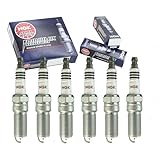
- This 6 pack NGK Iridium IX Spark Plug is compatible with Ford F-150 2019, 2018, 2017, 2016, 2015, 2014, 2013, 2012, 2011 3.5L V6
- Genuine NGK Parts
- Includes original packaging and hardware
- Direct replacement auto parts
- Confirm vehicle fitment with Amazon Confirmed Fit
How the 3.5L EcoBoost name works
Displacement is only part of the identification
“3.5L” describes engine displacement, not the induction system or exact specification. Ford used both a turbocharged 3.5L EcoBoost and a naturally aspirated 3.5L PFDI V6 in the Transit. Therefore, a 3.5L badge, registration entry or parts search is not enough to identify an EcoBoost engine.
For the 2026 Transit, Ford describes the EcoBoost as twin-turbocharged and intercooled and lists coil-on-plug ignition. The same specification sheet separately lists the naturally aspirated 3.5L PFDI V6. Read the engine line on the vehicle’s build sheet or technical specification instead of inferring from displacement.
EcoBoost is not the same configuration as PowerBoost
Ford’s 2025 F-150 material lists a 3.5L EcoBoost V6 and a 3.5L PowerBoost Full Hybrid as separate powertrain choices. PowerBoost combines a 3.5L EcoBoost-based engine with a hybrid system, so it should be recorded as the hybrid configuration when comparing equipment, service parts, output or towing specifications. It is not accurate to treat every PowerBoost truck as if it had the same non-hybrid EcoBoost specification.
Free tools Windows power users keep installed
One-click scans. No signup required.
Standard and high-output versions have different ratings
Some lines offer more than one 3.5L EcoBoost calibration. In the 2026 Expedition specifications, the standard engine is rated at 400 horsepower and 480 lb-ft of torque, while the high-output version is rated at 440 horsepower and 510 lb-ft. Those figures apply to that model year’s Expedition specifications and should not be transferred to another vehicle or year without checking its own Ford documentation.
When each vehicle line received the engine
2010: the first group of applications
Ford’s engine-history document identifies the 2010 Taurus SHO, Ford Flex, Lincoln MKT and Lincoln MKS as early 3.5L EcoBoost applications. This is an application milestone, not a claim that every 2010 vehicle in any of those lines used the engine. The SHO designation matters on the Taurus, and specific Flex, MKS and MKT versions must be checked against their original equipment lists.
2011: F-150 joins the lineup
The same Ford history document describes the 3.5L EcoBoost application in the 2011 F-150. Pickup availability depended on configuration and trim, so a 2011 F-150 without an EcoBoost option is entirely possible. Ford’s current F-150 materials show that the engine family remains part of the line, but current ratings should not be applied retroactively to the first application year.
2013: Explorer Sport application
Ford states, “For 2013, Explorer Sport applications are added.” That sentence supports the 2013 Explorer Sport milestone only. It does not establish that all Explorers, all Explorer trims or every later model year used a 3.5L EcoBoost.
Expedition, Transit and Navigator
Historical application compilations include Expedition and Navigator, while Ford’s current technical sheets provide direct evidence for Expedition and Transit in recent model years. The available official history is not a complete start-and-end-year matrix for either Expedition or Navigator. Treat those lines as documented application categories and verify the exact year, trim and VIN before making a fitment decision.
Rank #2

- Fitment Note: This UF646 coil FITS Turbo/EcoBoost (3-pin) ONLY; 2-pin or Non-Turbo (Naturally Aspirated) will NOT FIT—please double-check your connector before purchasing
- Vehicle Fitment-1: Coil Packs and Spark Plugs Compatible with Ford F150 2011-2014 V6 3.5L, F 150 2015-2016 V6 3.5L, Explorer 2013-2019 V6 3.5L, Expedition 2015-2017 V6 3.5L, Police Interceptor Utility 2014-2019 V6 3.5L, Police Interceptor Sedan 2013-2017 V6 3.5L, Flex 2013-2019 V6 3.5L, Taurus SHO 2013-2016 V6 3.5L, Transit150 2015-2019 V6 3.5L, Transit250 2015-2019 V6 3.5L, Transit350 2015-2019 V6 3.5L, Transit 350 HD 2015-2019 V6 3.5L
- Vehicle Fitment-2: Ignition Coils and Spark Plugs Set Compatible with Lincoln MKT 2013-2019 V6 3.5L, Navigator 2015-2017 V6 3.5L, MKS 2013-2016 V6 3.5L
- Reference Number: Ignition Coils replacement for UF646 UF-646 BL3Z-12029-A BL3Z-12029-B BL3Z-12029-C 5C1871 C1814 BL3Z12029A BL3Z12029B BL3Z12029C DG549 DG548 GN10638 IGC0221 673-6300. Spark Plugs replacement for SP534 AI5363 AI5863 CYFS12YT3 CYFS12YT4 SP580 XP5363 XP5863. ENA Ignition Coils and Spark Plugs are engineered to deliver a consistent spark, improve fuel efficiency, and reduce misfires
- Spark Plugs and Coils built with durable materials and a plug-and-play design ensure easy installation and are compatible with popular vehicles including 2011 2012 2013 2014 2015 2016 2017 2018 2019 F-150 Explorer Expedition Transit-150 Transit-250 Transit-350 HD Flex Police Interceptor Utility Police Interceptor Sedan Taurus MKT Navigator MKS 3.5 liters 6 cyl
Model-by-model details
Ford F-150
The F-150 is one of the best-known 3.5L EcoBoost applications. Ford’s history document places the engine in the 2011 F-150, and Ford’s 2025 and 2026 materials continue to list a 3.5L EcoBoost among the available engines. Ford’s 2025 specifications report 400 hp and 500 lb-ft for the listed 3.5L EcoBoost V6: 2025 F-150 specifications. The page separately identifies the 3.5L PowerBoost full hybrid and a high-output 3.5L EcoBoost used in Raptor applications.
That means “3.5 EcoBoost F-150” can describe materially different trucks. A standard F-150 EcoBoost, a PowerBoost hybrid and a Raptor high-output engine should not be compared as if they were one specification. The 2026 F-150 page shows the engine’s continued availability, but trim and configuration determine whether it is offered: 2026 F-150.
Ford Expedition
Ford’s 2025 and 2026 Expedition technical specifications list both standard and high-output 3.5L EcoBoost engines. For 2026, the standard version produces 400 hp and 480 lb-ft, while the high-output version produces 440 hp and 510 lb-ft. These are model-year-specific Ford ratings, not universal ratings for every Expedition carrying an EcoBoost badge.
Quick wins for a faster PC:
Scan for outdated or missing drivers - takes under a minuteDriver Scan →Repair Windows errors before they cause bigger problemsFix Now →Fix the driver behind crashes, sound loss and screen glitchesFind Drivers →The Expedition is a large SUV with multiple trims and equipment combinations, so the trim line and original build data matter. Consult Ford’s 2025 sheet for that model year at 2025 Expedition technical specifications and the 2026 sheet at 2026 Expedition technical specifications.
Ford Transit
Ford offers the Transit with two different 3.5L engines: a turbocharged EcoBoost V6 and a naturally aspirated 3.5L PFDI V6. The EcoBoost is listed for cargo, passenger, chassis cab and cutaway body types in the 2026 specification material, but body configuration and equipment still need to be matched to the individual van.
Ford’s 2026 sheet specifically characterizes the EcoBoost as twin-turbocharged and intercooled and lists coil-on-plug ignition. It does not provide a universal spark-plug part number for every Transit or every other 3.5L EcoBoost vehicle. Review the 2025 sheet at 2025 Transit technical specifications and the 2026 sheet at 2026 Transit technical specifications.
Ford Taurus SHO
The Taurus SHO is one of the four applications Ford identifies for the engine’s 2010 debut. The SHO badge is significant: the application does not mean that every Taurus trim received the 3.5L EcoBoost. When evaluating a used Taurus, confirm the original trim and engine rather than relying on the model name alone.
Ford Flex
Ford also identifies the Flex as a 2010 application. Flex buyers should verify the year and version because the engine was not guaranteed across every trim or production configuration. The original window sticker, build sheet or VIN-decoded equipment record is more reliable than a generic online parts listing.
Rank #3

- IGNITION SPARK PLUGS, This set of Ignition spark plugs provides a quick and easy, direct spark plug replacement to your engine, giving your vehicle the spark it needs.
- COMPATIBILITY, Professionally designed for a truly versatile fit . For finding compatibility to your vehicle, please use the chart included in the description.
- AVOID DAMAGE CAUSED BY OLD SPARK PLUGS, With these ignition coil replacements, you can effectively avoid the consequences of a faulty ignition coil, and ultimately save hundreds of dollars in future repairs. Easily restore your vehicle’s performance and drivability at home or bring your own spark plugs to your professional mechanic.
- MATERIALS, Manufactured using only the highest material selection, each aspect of the ignition coil replacements is properly designed and crafted for long lasting and a seamless fit. With incomparably high electrical resistance and tolerance against high heat temperatures, you can avoid cracks, pin holes and imperfections that often lead to engine issues.
- We are so confident that you will be satisfied with your Spark Plugs Replacements Set, that if for any reason you are unsatisfied, we ask that you please reach out to our customer service team, and we’ll be sure to fix your problem.
Ford Explorer Sport
Explorer Sport applications were added for 2013, according to Ford’s engine-history document. The Sport designation is essential to that statement. A standard Explorer from the same period should not automatically be described as a 3.5L EcoBoost vehicle, and a later Explorer requires its own model-year specification.
Lincoln MKS
Lincoln MKS appears in Ford’s list of 2010 applications. The engine was associated with selected configurations, so the MKS name alone does not settle the question. For a particular sedan, verify the original equipment record and model year before ordering engine or ignition components.
Lincoln MKT
Lincoln MKT is likewise identified as a 2010 application. Because equipment changed by year and version, an MKT should be checked through its VIN or factory specification. A secondary compilation may show broader ranges, but those ranges are not a substitute for Lincoln’s documentation for the vehicle being serviced.
The Tool Desk
Outbyte PC Repair FREEClear out junk files and repair common Windows errorsFree Scan →Outbyte Driver Updater FREEFix the driver behind crashes, sound loss and screen glitchesFind Drivers →Lincoln Navigator
A compiled application history includes the Lincoln Navigator, making it a relevant 3.5L EcoBoost application category. However, the official sources used for the current specifications do not establish a complete Navigator year-by-year start and end range. State the model year only when it is supported by the vehicle’s own Lincoln documentation or a matching factory specification.
Current Ford ratings you can quote safely
Ratings must be attached to the exact model year and engine version. The following figures come directly from Ford’s cited specifications.
| Vehicle and model year | Engine description | Published output | Source |
|---|---|---|---|
| 2025 Ford F-150 | 3.5L EcoBoost V6 | 400 hp, 500 lb-ft | Ford 2025 F-150 specifications |
| 2026 Ford Expedition | Standard 3.5L EcoBoost V6 | 400 hp, 480 lb-ft | Ford 2026 Expedition specifications |
| 2026 Ford Expedition | High-output 3.5L EcoBoost V6 | 440 hp, 510 lb-ft | Ford 2026 Expedition specifications |
| 2026 Ford Transit | Twin-turbocharged, intercooled 3.5L EcoBoost V6 | Not stated in the cited sheet | Ford 2026 Transit specifications |
Do not combine the F-150’s 2025 rating with the Expedition’s 2026 rating to create a generic “3.5L EcoBoost output.” Different calibrations, vehicles and model years can produce different numbers.
How to tell whether your vehicle has the engine
Use several independent identifiers when the answer affects maintenance, resale information or parts ordering.
Recommended Free Tools
- Record the full vehicle identity. Write down the model year, model line, trim, drivetrain description and body configuration. For a Transit, note whether it is a cargo van, passenger van, chassis cab or cutaway.
- Check the factory equipment record. Look at the original window sticker, build sheet or owner documentation. The engine line should distinguish EcoBoost from a naturally aspirated 3.5L engine and, on an F-150, from PowerBoost.
- Inspect the under-hood labeling. Engine covers and emissions labels can identify the engine family, but labels should be read together with the vehicle’s year and VIN because parts and calibrations vary.
- Have the VIN decoded by a Ford dealer or qualified service department. Ask for the factory engine code and the exact calibration or equipment description, especially when the vehicle has been modified or imported.
- Match parts by year and engine version. Give the supplier the VIN and confirm the catalog fitment. A search for “3.5 EcoBoost” alone can return parts for an F-150, Expedition, Transit or Lincoln with different applications.
How to compare two 3.5L EcoBoost vehicles
When deciding whether two vehicles have the same engine specification, compare the following items in order:
Rank #4

- [Vehicle Fitment] - Direct Fit & OEM Standard. Fits for Ford Expedition V6 3.5L 2015-2017, Explorer V6 3.5L 2013-2019, F-150 V6 3.5L 2001-2016, Flex V6 3.5L 2013-2019, Police Interceptor Sedan V6 3.5L 2013-2019, Police Interceptor Utility V6 3.5L 2014-2019, Taurus V6 3.5L 2013-2016, Transit-150 V6 3.5L 2015-2020, Transit-250 V6 3.5L 2015-2020, Transit-350 HD V6 3.5L 15-20, Transit-350 V6 3.5L 15-20, Fits for Lincoln MKS V6 3.5L 13-16, MKT V6 3.5L 13-19, Navigator V6 3.5L 15-17
- [Replace OEM Part Number] - Built as a direct replacement replace# DG-549 DG549 UF646 UF-646 36-8234 BL3E-12A375-CA BL3E-12A375-CB BL3E-12A375-CC BL3Z-12029-A C1814 E1146 BL3Z-12029-B BL3Z-12029-C BL3Z12029B BL3Z12029C BL3Z12029A BL3E12A375CC BL3E12A375CA BL3E12A375CB NP-6134 NP6134 SP534 SP-534
- [Long-Lasting & Reliable] – Double iridium spark plugs provide up to 100,001 km of service life with consistent sparks. Each ignition coil features high-conductivity copper windings and high-dielectric epoxy for enhanced heat resistance. Premium components ensure stable voltage transfer, fewer misfires, and smoother engine performance. Upgraded copper windings and advanced insulation deliver stronger spark energy, boosting combustion efficiency, throttle response, and overall driving power.
- [Superior Performance – Feel the Power] - Over time, factory ignition coils and spark plugs can wear out, causing poor fuel economy, misfires, hesitation, and check engine lights. Upgrading to high-performance coils and plugs delivers up to 15% more energy than OE coils, ensuring stable high-voltage sparks for consistent ignition, smoother combustion, restored power, improved throttle response, better fuel efficiency, and noticeably stronger acceleration.
- [Quality You Can Trust – Backed by 12-Month Warranty] - Each ignition coil is put through rigorous factory testing to ensure it meets OE standards. Built to endure real-world driving demands. Backed by a 12-month, no-hassle warranty for your complete peace of mind — because you deserve parts that work as hard as your vehicle does.
| Comparison point | Why it matters |
|---|---|
| Model year | Ford changed ratings, equipment and availability over time. |
| Trim and package | The engine could be optional, restricted to a performance version or offered in standard and high-output forms. |
| Powertrain description | Non-hybrid EcoBoost and PowerBoost hybrid are separate F-150 choices. |
| Body and configuration | Transit engine choices vary across cargo, passenger, chassis cab and cutaway bodies. |
| Published horsepower and torque | Use the rating for each vehicle’s own model year rather than a family-wide number. |
| VIN and service fitment | Exact engine codes control replacement parts and calibration compatibility. |
Parts and maintenance implications
The 3.5L label does not authorize a universal service-parts recommendation. Spark plugs, ignition components, sensors, belts and other consumables must be matched to the exact vehicle, engine version and model year. Ford’s Transit sheet confirms coil-on-plug ignition, but it does not support one spark-plug part number for every 3.5L EcoBoost application. Select the vehicle in a parts catalog, enter the VIN when available and compare the result with the factory service information.
This precaution is especially important when shopping for a replacement consumable such as spark plugs. An F-150 listing can look similar to a Transit or Lincoln listing while specifying a different year range, heat range, connector or revision. If a catalog gives conflicting results, stop and obtain the factory engine code rather than choosing the cheapest or most common listing.
Common identification mistakes
Assuming every vehicle in a model line has EcoBoost
Most of the listed applications were optional or limited to particular trims. Saying “all 2013 Explorers” or “all Flex models” overstates what the application evidence establishes.
What’s actually slowing this PC down?
Pick the symptom - the matching free tool is one click away.
Confusing a 3.5L naturally aspirated engine with EcoBoost
The Transit demonstrates why displacement is insufficient: Ford lists both a naturally aspirated 3.5L PFDI V6 and a turbocharged 3.5L EcoBoost V6. Use the engine description, not only the number stamped on a badge.
Calling PowerBoost the same engine configuration
Ford lists PowerBoost separately from the non-hybrid EcoBoost on the F-150. Record the hybrid designation whenever comparing specifications or ordering service parts.
Applying today’s output to an older vehicle
The 400 hp and 500 lb-ft F-150 figure is Ford’s 2025 rating. The 400/480 and 440/510 Expedition figures are Ford’s 2026 ratings. Neither set should be presented as the output of every 3.5L EcoBoost built in another year.
Treating a secondary year range as definitive
Compiled application lists are useful for finding possible vehicles, including Navigator, but exact start and end years should be confirmed in model-year Ford or Lincoln specifications.
Bottom line for buyers and owners
Ford’s 3.5L EcoBoost spans the F-150, Expedition, Transit, Taurus SHO, Flex, Explorer Sport, Lincoln MKS, Lincoln MKT and Lincoln Navigator. Ford documents 2010 applications for the Taurus SHO, Flex, MKT and MKS, a 2011 F-150 application and a 2013 Explorer Sport addition. Current Ford specifications show the engine continuing in the F-150, Expedition and Transit, with standard, high-output and hybrid distinctions that affect performance and fitment. To identify a particular vehicle, combine its model year, trim, body configuration, factory build data and VIN; never rely on the 3.5L badge alone.
Quick Recap
Product prices and availability are accurate as of the date/time indicated and are subject to change. Any price and availability information displayed on Amazon at the time of purchase will apply.




