You can power a home from an electric vehicle only when the vehicle supports vehicle-to-home (V2H) discharge and is connected to a compatible bidirectional charging and home-integration system. The installation must convert the EV battery’s DC electricity to household AC, disconnect the house from utility lines during an outage, and meet electrical, permitting, and utility requirements.
A normal one-way Level 2 charger, a portable charging cable, or an EV’s cabin, bed, or accessory outlet is not a whole-home backup system. The exact vehicle trim, model year, software, market, charger, inverter, transfer equipment, electrical panel, and utility approval all determine whether the installation will work safely.
As an Amazon Associate I earn from qualifying purchases.
What vehicle-to-home power actually does
In a conventional charging setup, electricity flows in one direction: the utility supplies AC power, the EV charger converts it as needed, and the vehicle battery stores DC energy. V2H reverses that relationship. When the utility fails or the system is deliberately placed in backup mode, energy leaves the traction battery, passes through an inverter, and supplies selected or whole-home AC circuits.
The home must be electrically separated from the utility before the EV supplies it. An automatic transfer switch, gateway, home hub, or microgrid-interconnection device performs that islanding function. Without it, a backup source could energize utility lines that workers believe are de-energized, creating a lethal hazard and potentially damaging equipment.
#1 Best Overall
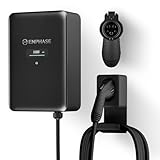
- 9× FASTER CHARGING: Get faster, smarter EV charging up to 11.5 kW (up to 46 miles/hour). Perfect for overnight charging or quick top-ups.
- REVENUE GRADE METER: Eligible for utility rebate programs with accurate, compliant energy monitoring.
- SOLAR CHARGING: Seamlessly connects with your home solar system so you can use more of your own clean energy.
- 5-YEAR WARRANTY: Backed by an industry-leading 5-year warranty for peace of mind.
- SECURE ACCESS: Prevent unauthorized use with app-based control or RFID card access for added safety.
V2H is different from V2L
Vehicle-to-load (V2L) outlets can run compatible appliances, tools, or temporary equipment through outlets built into the vehicle or an approved accessory. That is a useful small-scale feature, but it does not make the vehicle a home generator. Chevrolet’s owner guidance states: “Do not connect your on-vehicle or accessory outlets to your home. Connecting to your home can result in damage to your home and/or vehicle.” Use the manufacturer’s approved V2H equipment for household wiring.
V2H is also different from V2G
Vehicle-to-grid (V2G) sends energy back to the utility under an approved grid-interconnection program. A V2H installation primarily serves the owner’s home and still needs utility review in many jurisdictions because the equipment connects to the premises wiring. Do not assume that a V2H system can export power to the grid or participate in a utility program.
Confirm that your exact EV is eligible
Vehicle eligibility is the first gate. The automaker must support discharge through the charge port for your precise model, trim, model year, software version, and region. A statement that a vehicle “supports bidirectional charging” is not enough if it applies to a different market or a later production version.
What’s actually slowing this PC down?
Pick the symptom - the matching free tool is one click away.
What to verify with the automaker
- The exact model and trim are approved for V2H, not merely V2L.
- Your model year and software release support the feature.
- The vehicle is sold and certified for this use in your region.
- The required bidirectional EVSE, inverter, gateway, and home equipment are available for that vehicle.
- There are no restrictions on battery state of charge, charging connector, warranty, or installation location.
- Any required account, app, subscription, or enablement process is completed.
Examples of manufacturer-specific systems
| Ecosystem | Documented requirements | Important qualification |
|---|---|---|
| GM Energy | A V2H-capable GM EV, PowerShift Charger, and V2H Enablement Kit. A complete configuration may also include a PowerBank and Home Hub & Inverter. | Professional installation and permits are part of the described process. Compatibility depends on the exact vehicle and package. |
| Tesla Powershare | Eligibility depends on the vehicle and order configuration. The current equipment path for Cybertruck lists a Powershare Gateway and Universal Wall Connector, with different arrangements for some existing Powerwall and Wall Connector installations. | Hardware and installation estimates are Tesla-specific; capability and supported configurations vary by model. |
| BMW U.S. | A compatible BMW EV, Wallbox Professional, Home Backup System Professional, Power Module Professional, Gateway Module Professional, BMW ID, and My BMW App. | The listed equipment is a complete ecosystem rather than a generic charger pairing. |
These examples are not interchangeable by default. A bidirectional charger that works with one manufacturer’s battery-control protocol may not communicate with another vehicle, even when the connector appears physically compatible.
Rank #2

- AI-POWERED SMART CHARGING & APP CONTROL – This ev charger level 2 uses Autel’s AI-integrated smart app to schedule charging around time-of-use utility rates, helping lower your monthly bill while boosting station utilization. Start or stop sessions remotely, adjust current from low to high amps, view real-time energy data, and get alerts if anything looks off.
- ULTRAFAST 80A PERFORMANCE FOR HOME – Delivering up to 19.2 kW / 80A, this charger adds about 70 miles of range per hour and powers your EV up to 14x faster than a standard Level 1 outlet, so you can fully recharge overnight or between customer visits. This 80 amp ev charger is a high-power level 2 ev charger that future-proofs your setup for larger-battery EVs and busy households.
- BUILT FOR 24/7 RELIABILITY & THEFT PROTECTION – Engineered for a 10-year lifespan with internal temperature monitoring and a flame-retardant enclosure. Dual-network Wi-Fi + Wi-SUN keep your charger online with >99.9% uptime, so drivers always find a live station. Custom tamper-resistant screws plus remote locking provide double theft protection for both residential and commercial installs.
- FAST INSTALL & FLEXIBLE STATION MANAGEMENT – Hardwired design for maximum power and reliability (100A circuit recommended for full 80A output; professional electrician install suggested). One-click configuration lets installers set up a charging station in about 10 minutes, then you can easily manage pricing, access, and usage in the app.
- CSA CERTIFIED, REBATE READY & UNIVERSAL J1772 – UL certified by CSA and eligible for many U.S. rebates, incentives, and tax credits to help reduce your installation cost. The 25 ft SAE J1772 cable works with all EVs and PHEVs in North America and with Tesla vehicles when used with a NACS adapter (not included). Backed by a 5-year warranty, 24/7 expert support, and Autel’s proven EV charger technology for long-term peace of mind.
Build the complete V2H equipment stack
A reliable installation is a coordinated system, not a single box. The exact architecture varies: the inverter may be inside the vehicle, inside the charger, or in a separate home unit.
| Component | Function | Questions to ask before purchase |
|---|---|---|
| V2H-capable EV | Stores the energy and supplies it when authorized. | Is this exact configuration approved for V2H in your market and software version? |
| Bidirectional EVSE or charger | Controls two-way energy flow and communication with the vehicle. | Is it explicitly bidirectional, and is it listed for your vehicle? |
| Inverter or power-conversion equipment | Converts battery DC to household AC and manages electrical characteristics. | Is conversion onboard or external, and what continuous output is supported? |
| Transfer, gateway, or islanding device | Disconnects the home from the grid and routes backup power. | Does it switch automatically, and which panel configurations does it support? |
| Energy meter and controls | Measures household demand, battery flow, reserves, and solar production where supported. | What app, communications link, and reserve settings are required? |
| Panel, circuits, and wiring | Carry backup power to selected loads or the whole service. | Will the service, grounding, overcurrent protection, and panel capacity pass inspection? |
| Optional solar or stationary battery | Can reduce EV energy use or supplement duration and starting-current demand. | Can the system operate with solar while islanded, and are the devices certified together? |
Critical-loads panel versus whole-home backup
A critical-loads panel feeds selected circuits such as refrigeration, lighting, communications, heating controls, or medical equipment. It usually reduces the required inverter size and makes the battery last longer. Whole-home backup keeps more circuits energized but may require a larger inverter, service equipment changes, load management, and a higher installation cost. The installer should document exactly which breakers remain live during an outage.
Power and energy determine what will run and for how long
Understand kW and kWh
Kilowatts (kW) measure instantaneous power. They determine whether the system can start and continuously operate loads such as pumps, compressors, heating equipment, or cooking appliances. Kilowatt-hours (kWh) measure stored energy. They determine how long the battery can support the selected loads.
The Tool Desk
Outbyte PC Repair FREERepair Windows errors before they cause bigger problemsFix Now →Outbyte Driver Updater FREEFix the driver behind crashes, sound loss and screen glitchesFind Drivers →Runtime is not the vehicle’s advertised battery capacity divided by a fixed number. Useable energy is limited by the vehicle’s state of charge, manufacturer reserve settings, conversion losses, temperature, battery condition, and the loads connected. A vehicle that can deliver enough kW for a refrigerator may still run out of kWh quickly if electric heating or other large loads are left enabled.
Rank #3

- Charge with Confidence: ChargePoint builds reliable, flexible EV charging stations for home, business, and fleets. Get 24/7 support and access to hundreds of thousands of North American charging locations.
- Charge Smart: With the user-friendly ChargePoint Mobile App, you can control your electric car charger, manage reminders, connect to smart home devices, find stations, get data and charging info, and access the latest features. Note: WiFi is needed for certain functionalities and troubleshooting steps if connectivity issues arise.
- Vast Network: Wherever you go, ChargePoint’s network includes 274k+ stations across North America and Europe and 565k+ roaming partner stations.
- Safe & Durable: Rely on this UL-certified EV charger for safe home charging. It can be installed indoors or outdoors by an electrician and includes a cold-resistant cable.
- Fast & Powerful: This EV charger charges 9× faster than a 120V outlet, delivering up to 45 mi/hr., dependent upon your vehicle. It features a J1772 connector for all non-Tesla EVs and requires a 20A or 80A circuit. For Tesla EVs, this will require an adapter.
A practical runtime calculation
Start with the usable energy available for backup and divide it by the energy consumed by the backed-up loads. Then allow for inverter and wiring losses, a reserve that protects mobility, and changes in household demand:
Estimated runtime = usable battery kWh ÷ average backed-up load kW
For example, a 90 kWh battery supplying an average of 30 kWh per day would produce roughly three days if it began fully charged and all 90 kWh were available. Tesla presents that as an illustrative example using an average U.S. household-use figure attributed to the U.S. Energy Information Administration. It is not a site-specific forecast and does not account for your starting charge, reserve, weather, or actual appliances.
How solar changes the estimate
Tesla also illustrates a 90 kWh scenario with 30 kWh of daily consumption, split into an assumed 15 kWh daytime and 15 kWh nighttime demand, and 10 kWh of solar generation per day. Under those simplifying assumptions, the net draw is 20 kWh per day and the example reaches 4.5 days. Actual solar output, shading, weather, inverter limits, and overnight demand can make the result substantially different. Solar can extend backup only if the V2H architecture is certified to operate with solar while the grid is disconnected.
Rank #4
- 7× FASTER CHARGING: Get fast, reliable EV charging up to 9.6 kW (38 miles/hour) in a compact, flexible design that’s easy to use anywhere.
- REVENUE GRADE METER: Eligible for utility rebate programs with accurate, compliant energy monitoring.
- SOLAR CHARGING: Seamlessly connects with your home solar system so you can use more of your own clean energy.
- 5-YEAR WARRANTY: Backed by an industry-leading 5-year warranty for peace of mind.
- SECURE ACCESS: Prevent unauthorized use with app-based control or RFID card access for added safety.
Manufacturer examples are not guarantees
- Tesla’s current Powershare material says a Cybertruck can provide up to 11.5 kW and gives an “over three days” example based on 30 kWh of daily use and a full battery. The page says results vary by model, solar, usage, and starting charge.
- GM says a paired PowerShift Charger and V2H Enablement Kit can help a 2026 Chevrolet Silverado EV Max Range power a properly equipped home for up to five days. That is a GM scenario claim; the published description does not provide enough assumptions to apply it to other vehicles or houses.
Before installation, list each appliance, its running demand, and any motor-starting surge. Decide which circuits can be switched off during an outage and set a minimum state-of-charge reserve if the manufacturer allows it.
Meet panel, code, and utility requirements
An electrician must assess the service entrance, main panel, grounding and bonding, overcurrent protection, available capacity, charger location, cable route, and the circuits you want backed up. Some homes need a subpanel, service upgrade, additional metering, or load-management controls. The charger generally needs to be close enough to both the parking position and the electrical panel for an approved installation.
Local rules can require electrical permits, building permits, inspection, utility interconnection review, equipment listings, and commissioning records. Requirements differ by jurisdiction, so obtain the utility and authority-having-jurisdiction checklist before ordering equipment. Puget Sound Energy’s V2X page is an example of a utility-led process, but it states that its program is demonstration-only and not open to the public; its participation steps should not be treated as a generally available service.
Outdated Drivers Are Slowing You Down
One free scan finds every outdated or missing driver and matches the right update for your exact hardware.Free scan · exact hardware matchPC Slower Than It Used to Be?
A free scan shows the junk files, broken settings and background clutter dragging Windows down - then fixes them in one click.Free scan · Windows 10 & 11Installation sequence
- Confirm eligibility. Ask the automaker to verify the exact vehicle, trim, model year, software, region, and approved V2H equipment.
- Define the backup objective. Choose critical-loads or whole-home backup, identify high-surge appliances, and decide how much battery reserve must remain for driving.
- Obtain a site assessment. Have a qualified installer inspect the panel, service capacity, grounding, protection, parking location, cable route, and communications requirements.
- Validate the complete pairing. Match the vehicle, bidirectional charger, inverter, gateway or transfer equipment, meter, solar system, and stationary battery against the manufacturer’s compatibility documentation.
- Secure approvals. Confirm utility review, interconnection rules, permits, inspections, and any required equipment certifications before work begins.
- Install and label the equipment. The installer should make panel changes, install islanding protection, connect the charger, configure controls, and label backed-up circuits and disconnects.
- Commission the system. Test normal charging, discharge, automatic transfer, manual controls, reserve behavior, communications, and recovery when utility power returns.
- Document operation. Keep the single-line diagram, breaker schedule, firmware and settings record, emergency shutdown procedure, warranty details, and installer contact information.
Safety rules that cannot be bypassed
- Never backfeed a panel through a household receptacle, extension cord, improvised adapter, or vehicle outlet.
- Never defeat a transfer switch or manually connect the EV to fixed house wiring.
- Do not assume an outage has isolated the utility; rely on listed automatic or manual islanding equipment.
- Keep required clearances around the charger, inverter, battery, and disconnects, and follow fire and ventilation rules.
- Have only qualified personnel open energized equipment or modify service conductors.
- After a software update, vehicle service, or equipment replacement, verify that V2H authorization and reserve settings still operate as commissioned.
How the available ecosystems compare
When comparing systems, compare the complete installed solution rather than the charger’s nameplate alone.
Best Value

- Dual Charging on a Single Circuit: Charge two EVs simultaneously with the HCS-D40’s dual-port design, delivering 32 Amps to one vehicle or 16 Amps to two vehicles, minimizing the need for costly electrical upgrades.
- Commercial-Grade Durability with Rugged Connector: Designed for heavy-duty use, the HCS-D40 features a rugged connector that withstands drops, rollovers, and harsh environments, perfect for high-traffic or commercial settings.
- Reliable Performance in All Weather Conditions: The HCS-D40 includes a NEMA 4-rated enclosure and a flexible cable that remains operational even in extreme cold, ensuring reliable charging in any climate.
- Fast and Efficient Charging for Two EVs: Charge one vehicle at 32 Amps or two vehicles at 16 Amps each, providing up to 31 miles of range per hour, ideal for EVs with up to 7.7kW acceptance rates.
- Safe, Long-Lasting Installation for High-Traffic Use: The HCS-D40 hardwired station offers a robust installation for homes and businesses, with safety certification to UL 2594 standards and a 5-year limited warranty for long-term reliability.
| Decision point | Why it matters |
|---|---|
| Vehicle eligibility | A compatible connector does not prove that the battery can discharge through it. |
| Continuous and surge output | Determines which circuits can operate and whether motors or compressors can start. |
| Usable energy and reserve controls | Determines runtime and how much driving range remains after an outage. |
| Inverter location | Onboard conversion may simplify some hardware; an external inverter changes installation space, wiring, and service requirements. |
| Home integration | Gateway, transfer equipment, meter, and panel design determine safe islanding and circuit coverage. |
| Solar and battery compatibility | Some systems can coordinate solar or a stationary battery; others may not support islanded solar operation. |
| Installer and service network | Commissioning, firmware support, warranty work, and emergency response matter after installation. |
| Total installed cost | Panel condition, cable distance, permits, service upgrades, and existing equipment can outweigh the charger’s price. |
Costs and availability
Tesla currently estimates Powershare Home Backup hardware at $1,950 USD and installation without Powerwall at approximately $2,000 to $4,000 USD. Those are Tesla’s estimates for its own system, and the final quote depends on the home configuration and installer. Existing compatible equipment may reduce the equipment cost.
GM’s published product material identifies its bundles and specifications but does not provide a general installed-cost comparison in the information summarized here. BMW’s required equipment list likewise does not establish a universal price. Request a site-specific quote that itemizes hardware, panel work, wiring, permits, utility fees, inspection, commissioning, and any software or service charges. Incentives depend on location and date; verify them with the relevant authority before including them in your budget.
Common failure modes and fixes
The vehicle charges but will not discharge
Check that the model and software are V2H-authorized, the bidirectional charger is online, the vehicle is fully latched to the connector, and the battery is above its reserve threshold. A one-way charger can charge an EV normally while never supporting discharge.
The system trips when a load starts
The load may exceed continuous output or have a starting surge beyond the inverter’s capability. Move that circuit off the backup panel, add approved load management, or choose equipment rated for the measured demand. Do not repeatedly reset protective devices without finding the cause.
Backup lasts far less than expected
Compare the actual load profile with the estimate. Electric resistance heat, water heating, vehicle charging, pumps, and cooking can consume energy quickly. Reduce discretionary loads, verify reserve settings, and use a critical-loads configuration if whole-home demand is excessive.
The home does not transfer during an outage
Do not manually bridge the system. Check the gateway’s status, utility-sensing input, communications link, and fault log, then call the installer. A failed islanding device is a commissioning or service issue, not a reason to bypass protection.
The utility or inspector rejects the installation
Ask for the specific code or interconnection deficiency and have the installer revise the design using listed equipment and the manufacturer’s approved wiring method. Recheck requirements before purchasing replacement hardware.
Do these 3 things before closing this tab:
1Fix the driver behind crashes, sound loss and screen glitches2Repair Windows errors before they cause bigger problems3Scan for outdated or missing drivers - takes under a minuteQuick Recap
Pre-purchase checklist
- Written confirmation of V2H eligibility for your exact EV configuration.
- A complete compatibility list for charger, inverter, gateway, meter, panel, solar, and stationary battery.
- Measured service capacity and a documented backed-up-circuit schedule.
- Continuous output, surge output, usable energy, reserve, and charging-rate specifications.
- Utility, permit, inspection, and commissioning requirements.
- An itemized installed quote and a statement of what is excluded.
- A qualified installer who can service both the electrical installation and the manufacturer’s controls.
- A tested outage procedure and written instructions for returning the home to normal operation.
Product prices and availability are accurate as of the date/time indicated and are subject to change. Any price and availability information displayed on Amazon at the time of purchase will apply.




