Quick wins for a faster PC:
Scan for outdated or missing drivers - takes under a minuteDriver Scan →Clear out junk files and repair common Windows errorsFree Scan →A small-displacement sport bike is not automatically a beginner motorcycle. The right choice depends on the specific model’s power delivery, controls, braking equipment, weight, fit and intended use, plus your training and licensing. Start by choosing how and where you will ride, take a proper course, sit on the actual motorcycle, and verify the model-year specifications before paying a deposit.
What “small displacement” tells you—and what it does not
Engine displacement, measured in cubic centimeters (cc), describes engine size. It does not by itself tell you how manageable a motorcycle will feel. Two motorcycles in a similar cc class can differ substantially in throttle response, gearing, riding position, curb weight, seat shape, braking hardware and the way their power arrives.
As an Amazon Associate I earn from qualifying purchases.
A fully faired sport bike may place your weight farther forward and your wrists lower than a naked motorcycle with the same engine size. A model with a sharp throttle and aggressive gearing can demand more precision than a motorcycle with a smoother response. Conversely, a heavier motorcycle with a low seat may be easier for one rider to balance at a stop than a lighter motorcycle with a tall, narrow seat. Treat displacement as one data point, not a suitability rating.
The Tool Desk
Outbyte Driver Updater FREEFix the driver behind crashes, sound loss and screen glitchesFind Drivers →Outbyte PC Repair FREEClear out junk files and repair common Windows errorsFree Scan →The Motorcycle Safety Foundation (MSF) cautions that some manufacturers designate particular sport-bike models for experienced riders. Its institutional FAQ states: “The MSF cannot make specific recommendations regarding which motorcycle a rider should purchase.” That is a useful boundary: a purchase decision has to match the individual motorcycle and the individual rider rather than a universal “best beginner bike” list.
#1 Best Overall

- 【DOT Certified & High-Impact Protection】 This full face motorcycle helmet meets or exceeds DOT FMVSS-218 standards, ensuring professional-grade safety. Built with a rugged ABS shell and energy-absorbing EPS, these motorcycle helmets dot approved provide ultimate defense for street bikes, cruisers, and sport bikes
- 【Optimized Airflow for All-Weather Riding】 Experience superior ventilation with 4 strategically placed air intakes and exhaust vents. This full face helmet design minimizes wind resistance and fogging, keeping you cool during summer rides and providing a reliable full face helmet adult option for rainy or cold weather
- 【Quick-Release Dual Visor System】 Adapt to any light condition with ease. Our full face helmet motorcycle features a tool-free quick-release system. Each order includes a pre-installed tinted shield plus a bonus clear visor, making these full face motorcycle helmets for men and women versatile for both bright days and night riding
- 【Washable Lining & Comfort Fit】 Maintain freshness on every journey with our fully removable and machine-washable interior. The moisture-wicking sponge padding makes these motorcycle helmets for adults incredibly comfortable for long-distance trips, ensuring a snug fit for these full face motorcycle helmets dot certified
- 【Complete Bundle & Perfect Sizing】 We include a premium carrying bag for easy storage and scratch protection. Whether you are searching for motorcycle helmets for women or men, TRIANGLE offers 4 sizes (S-XL) to ensure a secure fit. Please measure your head circumference to find the perfect full face motorcycle helmet for women or men
Start with training, licensing and a realistic use case
Take a course before choosing performance
The MSF Basic RiderCourse teaches the controls and core skills you will need to evaluate a motorcycle safely: starting and stopping, shifting, turning, emergency braking and swerving. The course describes 15 hours of instruction—five hours in the classroom and 10 hours riding. A motorcycle or scooter, helmet and gloves are provided, although the exact motorcycle used, fees and local arrangements vary.
Successful completion can waive the riding portion of a motorcycle-endorsement test in most states, and an insurance discount might be available. Neither benefit is automatic: confirm the rule with your state licensing agency and the discount with your insurer before relying on it. Licensing requirements themselves vary by state.
Training also gives you a better reference point for a test ride. You will know whether the clutch engagement, steering response and braking feel are within your current ability instead of trying to learn every control while negotiating traffic.
Answer “Which motorcycle is best for me?” by describing your rides
Write down your normal trips before comparing models. Honda’s buyer guidance frames the decision around practical questions:
- Will most miles be in city traffic, on highways or on winding roads?
- Will you regularly carry a passenger?
- Do you need built-in storage or provisions for luggage?
- Can you remain comfortable in the motorcycle’s intended riding position for the length of your typical trip?
City riding makes low-speed balance, steering lock, clutch control and a predictable throttle especially important. Highway use puts more emphasis on sustained-speed comfort, wind exposure and whether the engine and riding position suit longer periods at speed. Winding roads reward a position that lets you move naturally and operate the controls without tension. A motorcycle chosen only because it looks like a race bike may be a poor match for commuting or carrying a passenger.
Fit the actual motorcycle to your body
Check more than seat height
Seat-height figures are useful for narrowing a search, but they cannot predict whether you can control a motorcycle at a stop. Seat width, suspension sag, the distance to the bars, tank shape and boot sole all change how far your feet reach. Honda advises sitting on motorcycles and checking foot reach, control access, knee position and posture. Follow that advice on the exact motorcycle and model year you intend to buy.
When seated, check whether you can:
- Place at least one foot securely on the ground without twisting your hips or sliding off the seat.
- Reach the clutch, brake lever, throttle and switchgear without stretching or locking your wrists.
- Operate the rear-brake pedal and shift lever while keeping your knee and ankle in a relaxed position.
- Turn the bars fully at walking pace without your knees, hands or tank contact forcing an awkward posture.
- Hold the riding position for several minutes without excessive pressure on your wrists, neck or lower back.
Ask the dealer to let you sit in normal riding gear. A thick boot, armored jacket or different gloves can alter reach. If the motorcycle feels tall, do not assume lowering it is a harmless fix; suspension changes can affect handling and ground clearance. First determine whether the stock ergonomics already work for you.
Rank #2

- 2 Visors Included: Clear + Smoked and 1 Neck Scarf for Winter Use
- Streamlined Aerodynamic Design Reduces Wind Noise and Drag
- Advanced and Lightweight Durable ABS Shell
- Quick Release Clasp and Strap and Removable Inner Lining Pads
- Meets or Exceeds FMVSS-218 and DOT Safety Standards
Use weight and balance, not a single number
Published weight is worth comparing, but where that weight sits matters at low speed. A motorcycle that feels light while moving can still feel difficult when you push it backward, turn it around or catch it during a stop. With the engine off, hold the bike upright, apply the front brake and walk it a short distance. Make sure you can put it on and take it off the side stand confidently.
Ask for a controlled, low-speed evaluation before entering traffic. NHTSA advises riders to become accustomed to an unfamiliar motorcycle in a controlled area. Practice starts, stops, tight turns and a smooth emergency stop there, subject to the seller’s permission and local rules.
Compare the model, not just the cc class
Model-year and market differences can change equipment and dimensions. Check the manufacturer’s specifications for the exact year and country; do not transfer figures from a different year or region. Manufacturers can change specifications, and availability can differ by dealer.
| Comparison point | Questions to answer before buying |
|---|---|
| Fit and control reach | Can you reach both levers, the pedals and switches naturally in your gear? Can you support the motorcycle at a stop? |
| Riding position | Is the posture appropriate for your usual city, highway or winding-road miles? Can you maintain it without pain? |
| Weight and low-speed handling | Can you push, park and turn the motorcycle around without assistance? |
| Power delivery and rider suitability | Is the throttle response predictable for your experience? Does the manufacturer identify the model as suitable for newer riders or experienced riders? |
| Braking equipment | Does the exact trim include anti-lock braking (ABS), and is that equipment standard or optional? |
| New or used ownership cost | What is the purchase price, and what maintenance, service or history risks accompany a used example? |
| Insurance | What premium does the specific model and your location produce? Obtain a quote before committing. |
| Service and parts | Is there a qualified service outlet nearby, and can routine and collision parts be obtained without long delays? |
This is a decision framework, not an independently tested ranking. The available evidence does not establish a complete cross-brand performance, reliability or cost comparison.
Current examples: how to read the specifications
Kawasaki Ninja 300 ABS (2026 listing)
A United States Kawasaki search listing identifies the 2026 Ninja 300 ABS with 296cc displacement and a 30.9-inch seat height. Those figures provide a starting point for a showroom visit, not a verdict about fit or skill level. Verify the current specification, equipment, availability and market directly with Kawasaki before purchase because specifications may change. Confirm that the motorcycle you are being offered is the ABS version and that the model year matches the documentation.
The 30.9-inch seat figure also illustrates why a number cannot replace sitting on the bike. Seat width, suspension setup, your inseam and riding boots determine how much of your foot reaches the ground and how stable you feel at a stop.
Honda CB300R
Honda describes the CB300R as a lightweight naked sport bike with ABS standard. Honda characterizes its position as engaged and athletic while remaining upright. It is a naked motorcycle rather than a fully faired sport bike, so use it as a neighboring category example when comparing ergonomics and equipment, not as a direct fairing-to-fairing equivalent to the Ninja.
Rank #3
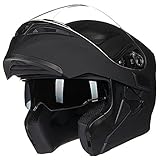
- High Resistance ABS Shell With Micrometrically Adjustable Strap
- Meets or Exceeds FMVSS-218 and DOT Safety Standards
- Helmet Liner / Cheek Pads are Lightweight, Soft and Easily Removable and Washable
- Sleek and Lightweight Design Reduces Wind Noise
- Modular Flip-Up Function Anti-Scratch, Anti-Fog and Wide View Clear Visor
For either example, check the current manufacturer page and the physical motorcycle. A dealer’s inventory may contain a different year, trim or market specification than an online article or an older brochure.
Recommended Free Tools
Budget for ownership, not only the sticker price
New purchase
A new motorcycle can provide warranty coverage and may offer financing options, according to Honda’s buyer guidance. Read the warranty terms, identify required service intervals and ask which fees are included in the advertised price. A monthly payment does not show the total amount paid or the cost of insurance and gear.
Used purchase
Used motorcycles are generally more affordable, but Honda notes that they can carry hidden service and maintenance costs and a history that is harder to determine. Ask for maintenance records, title information and the motorcycle’s complete model-year and trim details. Inspect for evidence of neglected fluids, worn tires, damaged controls or prior falls, and arrange an independent inspection when you cannot verify the condition yourself.
Do not spend the entire cash budget on the motorcycle. Reserve money for:
- A properly fitting, DOT-compliant helmet and the rest of the protective clothing.
- Registration, licensing and any required course or examination fees.
- Insurance for the exact motorcycle, rider and location.
- Initial maintenance, consumables and repairs that a used inspection identifies.
- Practical security and storage suited to where the motorcycle will be parked.
Comparable current prices and insurance premiums were not established for the examples above, so obtain local quotes rather than treating a published list price as your total cost.
Free tools Windows power users keep installed
One-click scans. No signup required.
ABS, equipment and the safety specification
Check braking equipment on the exact trim. The Honda CB300R description identifies ABS as standard; do not assume that equipment carries over to another model, year or market. For any motorcycle, confirm how ABS is described in the owner’s manual and whether warning lights or service requirements apply.
Look at the controls and lighting in person: lever adjustment, mirror visibility, switch clarity, headlight, indicators and brake-light operation. A motorcycle that fits your body but leaves you struggling to operate a control is not a good fit.
Rank #4

- Advanced Safety Design: Combines a lightweight ABS outer shell.
- DOT Approved, Clear Vision: Meets DOT standards, with a scratch-resistant, anti-fog lens for optimal visibility.
- Easy Quick Release: Convenient quick-release chin strap with adjustable features for effortless and speedy helmet adjustments and removal.
- Comfort System: Designed for superior comfort, the helmet’s interior features a moisture-wicking lining that ensures a cool and dry experience during your ride.
- Sun Visor for Added Protection: Built-in pull-down sun visor system provides effective sun protection, ensuring a comfortable and shaded ride.
NHTSA recommends a helmet that meets U.S. Department of Transportation FMVSS 218 and protective clothing. MSF’s course clothing requirements include a DOT-compliant helmet, eye protection, long sleeves, durable long pants, over-the-ankle boots and full-finger gloves. Buy gear that fits correctly; certification alone does not make a poorly fitting helmet protective.
Licensing and risk are part of the purchase decision
Motorcycling carries substantially greater exposure to injury than passenger-car travel. NHTSA reported that in 2024 motorcyclists were almost 27 times more likely to die and almost five times more likely to be injured per vehicle mile traveled than passenger-car occupants. In the same year, 35% of motorcycle operators involved in fatal crashes were riding without valid motorcycle licenses. These figures compare defined groups for that year; they are not a prediction of an individual rider’s outcome, but they show why training and legal licensing belong in the buying decision.
Outdated Drivers Are Slowing You Down
One free scan finds every outdated or missing driver and matches the right update for your exact hardware.Free scan · exact hardware matchPC Slower Than It Used to Be?
A free scan shows the junk files, broken settings and background clutter dragging Windows down - then fixes them in one click.Free scan · Windows 10 & 11Complete the endorsement process required in your state before riding in traffic. After buying, use a controlled area to learn the motorcycle’s clutch, throttle, brakes and turning response. NHTSA recommends checking tire pressure and tread, brakes, lights and indicators, and fluid levels before every ride.
Independent reader supportYour contribution helps us test, update, and keep practical guides available for everyone.A practical pre-purchase process
- Define the mission. Record your typical route, traffic, highway exposure, passenger needs, storage requirements and the longest ride you expect to make.
- Complete training. Take the MSF Basic RiderCourse or an equivalent local program, then verify how completion affects your state endorsement and insurance.
- Shortlist actual models. Use manufacturer pages for the exact model year, trim and market. Note displacement, weight, seat dimensions, riding position and braking equipment.
- Get insurance quotes. Quote each shortlisted motorcycle using your real address, age, riding history and intended coverage.
- Fit-test in gear. Sit on every candidate, reach all controls, check knee and wrist position, and hold the bike upright and on its stand.
- Evaluate low-speed control. With permission, practice starts, stops and tight turns in a controlled area before entering traffic.
- Inspect the specific unit. Confirm the VIN, year, trim and ABS status. On a used bike, review records and have an independent mechanic inspect it if the history or condition is uncertain.
- Price the complete package. Add motorcycle cost, taxes and registration, course fees, helmet and protective clothing, insurance, initial service and secure storage.
- Read the owner’s information. Check maintenance intervals, fluid specifications, tire requirements, warning lights and any model-specific operating limits before signing.
Common buying mistakes and better alternatives
“The smallest engine is automatically safest.”
Why it fails: displacement does not determine control reach, weight distribution, riding posture or model-specific rider suitability.
Better approach: compare the complete motorcycle and test the fit while wearing your gear.
“A seat-height chart tells me whether I can ride it.”
Why it fails: seat width, suspension and body position change actual foot reach.
Do these 3 things before closing this tab:
1Scan for outdated or missing drivers - takes under a minute2Repair Windows errors before they cause bigger problems3Fix the driver behind crashes, sound loss and screen glitchesBetter approach: sit on the motorcycle, move it at walking pace and verify that you can stop and park it confidently.
Best Value
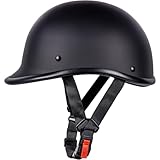
- DOT Approved Motorcycle Helmet:Built with rugged ABS shell and impact-absorbing EPS liner for solid on-road protection. Ready for daily cruising, city commuting, and weekend runs.
- Low Profile Beanie Helmet Design:Sits close without the mushroom look. Gives a clean, compact skull cap silhouette that cruiser and bobber riders want — covers critical areas without adding bulk.
- Vintage-Style Look:With classic biker lines and a fresh finish that feels bold, not dated. Pairs with old-school choppers, café racers, and modern cruisers for a half helmet with real character.
- Quick-Release Buckle: Let you gear up and go instantly. Just click in and ride. A simple convenience that saves time on daily commutes and quick trips around town.
- Lightweight with Removable Inner Padding: Cuts neck fatigue on long rides. The washable, breathable liner keeps things fresh through hot summer days, all-day comfort lasts.
“Online specifications are interchangeable.”
Why it fails: equipment and dimensions can change by model year and market, and manufacturers may revise specifications.
Better approach: match the manufacturer’s current listing to the VIN, trim and paperwork on the motorcycle you are buying.
“The purchase price is the budget.”
Why it fails: insurance, licensing, protective equipment and used-bike maintenance can materially change ownership cost.
What’s actually slowing this PC down?
Pick the symptom - the matching free tool is one click away.
Better approach: obtain quotes and reserve funds for initial service before committing.
“I can learn after I buy and ride straight into traffic.”
Why it fails: an unfamiliar motorcycle adds new control and balance demands in an environment with little margin for error.
Better approach: train first and acclimate in a controlled area, following NHTSA’s advice.
When you are ready to decide
Choose the motorcycle that you can control comfortably at a stop and at walking pace, whose riding position suits your real routes, whose braking and safety equipment you have verified, and whose total ownership cost fits after gear, insurance, licensing and maintenance. A 296cc sport bike, a lightweight naked sport bike or another model in the same broad displacement range can each be sensible—or unsuitable—depending on those factors. The disciplined choice is the one supported by training, a physical fit check, model-specific documentation and a complete budget.
Quick Recap
Product prices and availability are accurate as of the date/time indicated and are subject to change. Any price and availability information displayed on Amazon at the time of purchase will apply.




