The Tool Desk
Outbyte Driver Updater FREEFix the driver behind crashes, sound loss and screen glitchesFind Drivers →Outbyte PC Repair FREEClear out junk files and repair common Windows errorsFree Scan →If you suspect your Mercedes-Benz S-Class is losing brake fluid, or the instrument display tells you to check the brake-fluid level, stop as soon as traffic conditions safely allow. Do not continue driving and do not add fluid as a workaround. Arrange roadside recovery to a qualified specialist workshop, where the braking system can be inspected and the actual fault identified.
The correct response is to stop driving
A brake-fluid leak is not a “drive carefully until the garage” problem. Mercedes-Benz states in the S-Class owner’s manuals reviewed for the 2017 and 2018 W222 and the 2021 W223 that a low brake-fluid level can impair both braking effect and braking characteristics. Those warnings direct the driver to stop safely, not continue driving, and consult a qualified specialist workshop.
As an Amazon Associate I earn from qualifying purchases.
Use this sequence if the warning appears or you see evidence of a leak:
Recommended Free Tools
- Reduce speed smoothly. Avoid abrupt steering or braking while looking for a safe place to leave the traffic lane.
- Stop in the safest available location. A hard shoulder, parking area or other protected position is preferable to stopping where you could be struck by passing traffic.
- Secure the car. Select Park, apply the parking brake if it is safe to do so, switch on the hazard warning lights and keep occupants away from moving traffic.
- Switch off the vehicle and do not set off again. The manual instruction is not limited to long journeys or high speeds; it applies until the vehicle has been assessed.
- Call for recovery. Tell the operator that the S-Class has a brake-fluid warning or suspected leak and requires transport, not a normal roadside drive to a workshop.
If you are already parked when you discover fluid, leave the vehicle where it is and make the recovery arrangements. Do not test the brakes by driving around the block.
#1 Best Overall

- Brake Fluid DOT 4 – Reliable Performance: STP Synthetic DOT 4 brake fluid is designed to help protect brake systems and support consistent braking performance in a wide range of driving conditions
- Brake Fluid DOT 4 Compatibility: This brake fluid DOT 4 formula works with ABS, disc, and drum systems and is suitable for vehicles requiring DOT 3 or DOT 4 specifications
- High-Temperature Protection: Advanced dot4 brake fluid formulation helps resist brake failure caused by vapor lock while maintaining performance under high heat conditions
- Break Fluid System Protection: This break fluid helps protect against corrosion and wear, supporting the longevity and reliability of key brake system components
- Suitable for Multiple Applications: Compatible with cars and trucks this versatile formula works with a wide range of brake fluids requirements
Why low brake fluid changes the safety decision
Brake fluid transmits the force generated at the brake pedal through the hydraulic braking system. A warning that the level is too low means Mercedes-Benz cannot assure normal braking performance. The 2018 S-Class saloon manual puts the consequence plainly: “If the brake fluid level is too low, the braking effect and the braking characteristics may be impaired.”
“Braking characteristics” includes how the car responds to pedal input, not merely whether the car can stop at all. A vehicle that still appears to brake may not respond in the expected way, may require more pedal effort or may behave differently from one stop to the next. You cannot establish the remaining safety margin from the warning message alone.
The warning also does not identify the failed part. The title of the problem does not tell you whether the cause is a leak, another hydraulic fault or a condition that requires a different inspection. Model year, market specification, warning details and a physical examination are all relevant. Guessing at a component can delay the correct repair.
What the applicable Mercedes-Benz manuals say
The official wording reviewed covers three specific model-year examples. It is strong enough to determine the immediate action, but it should not be treated as proof that every S-Class manual in every country uses identical wording.
| Vehicle covered by the reviewed manual | Safety information in the low-fluid warning | Required next step |
|---|---|---|
| W222 S-Class, 2017 | Low brake fluid may impair braking effect and characteristics; the warning instructs the driver not to continue driving and not to top up the brake fluid. | Stop safely and consult a qualified specialist workshop. |
| W222 S-Class saloon, 2018 | The manual states that braking effect and characteristics may be impaired when the level is too low and says, “Do not continue driving.” | Stop and obtain qualified assistance rather than driving to a workshop. |
| W223 S-Class, 2021 | The reviewed low-fluid warning gives the same essential safety direction: impaired braking is possible and continued driving is prohibited. | Stop safely and have the vehicle handled by a qualified specialist workshop. |
Mercedes-Benz manuals can vary by model year, equipment and national market. Identify your car’s exact year and market before relying on a particular display message or manual illustration. That qualification does not make it reasonable to continue driving with a brake-fluid warning: the safe response in the cited manuals is to stop and seek qualified help.
How to arrange recovery without creating another hazard
The manuals do not name a towing company or roadside provider. Use the assistance number available through your insurance, vehicle coverage, motoring organisation or local emergency service, depending on your location and the danger posed by the stopping place.
Rank #2

- Mixes well with conventional fluids
- Low-moisture formula provides excellent vapor lock protection
- Ideal for hydraulic and disc brakes
When you call, give the operator:
- the vehicle identification details and registration number;
- your exact location and direction of travel;
- whether the car is fully off the carriageway or exposed to traffic;
- the exact dashboard wording, warning symbol or message, if visible;
- whether you saw fluid beneath the car or noticed any change in pedal feel; and
- the destination of a Mercedes-Benz-qualified or otherwise qualified specialist workshop, if already arranged.
Ask for a transporter suitable for the S-Class and tell the operator that you do not want to drive the vehicle under its own power. Follow the recovery operator’s instructions about remaining in the car or moving to a safer position; on a fast road, personal safety around traffic takes priority.
Why adding brake fluid is not a fix
The 2017 manual explicitly says, “Do not top up the brake fluid.” The 2018 and 2021 manuals reviewed likewise direct the owner not to continue driving when the level is too low. Adding fluid can raise the reservoir level temporarily without correcting whatever caused it to fall. It can also make a vehicle appear ready to drive when the braking system still needs inspection.
Do not pour in a generic fluid, use a fluid left from another vehicle or attempt to bleed the brakes at the roadside. The correct specification and the condition of the complete system must be verified for the exact S-Class. A fluid container in the boot is not a substitute for diagnosis.
What a qualified workshop needs to determine
No single failed component can be selected from the phrase “brake-fluid leak.” The workshop should first confirm the warning and establish where fluid is being lost, then assess the braking system and determine the repair for that vehicle’s model year and market.
Confirming the complaint
Give the technician the original display wording, when it appeared, whether it returned after restarting and any change you noticed before stopping. Photographs of a warning message or fluid on the ground can help if they were taken while the car was safely parked. Do not delay recovery to collect evidence.
Free tools Windows power users keep installed
One-click scans. No signup required.
Locating the loss
A specialist must inspect the vehicle rather than infer a failed hose, caliper, master cylinder or other part from the title alone. The visible location of a wet patch may not identify the source, and a low reservoir does not by itself establish which repair is required.
Rank #3
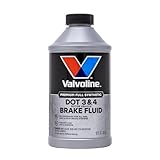
- Ideal for hydraulic and disc brakes
- Mixes well with conventional fluids
- Low-moisture formula provides excellent vapor lock protection
Assessing the braking system
The technician decides how the hydraulic system, controls and related components should be tested. The inspection may show that parts beyond the original leak also need attention, or that the warning has a cause that is not visible from outside the vehicle. Ask for the findings in writing and request an explanation of any safety-critical recommendation.
Determining the repair and return-to-service checks
Repair steps, replacement parts, fluid quantity and bleeding requirements depend on the exact vehicle. After the work, the workshop should verify that the leak has been corrected and that braking performance is suitable for return to the road. Do not accept a simple reservoir refill as proof that the underlying fault has been repaired.
Brake-fluid specification: what “331.0” means
Mercedes-Benz’s official operating-fluids publication platform lists approved fluids for its vehicles. Its brake-fluid sheet 331.0 covers Mercedes-Benz passenger cars and vans and shows a last update of December 10, 2024.
What’s actually slowing this PC down?
Pick the symptom - the matching free tool is one click away.
That sheet is a service-selection reference, not permission to refill a leaking S-Class at the roadside. The low-fluid instructions in the cited owner’s manuals take priority for the immediate situation: do not top up and do not continue driving. Have the workshop verify the applicable approval and specification for your particular vehicle before any fluid is added during the repair.
Approval markings, container labels and fluid colour should not be used as a substitute for the vehicle-specific specification. If you have already bought fluid, leave it sealed and show it to the technician rather than pouring it into the reservoir.
Independent reader supportYour contribution helps us test, update, and keep practical guides available for everyone.Model year and market details matter
“S-Class” covers several generations, powertrains and braking-system configurations. The reviewed evidence is limited to W222 model years 2017 and 2018 and W223 model year 2021. It does not establish that every earlier or later S-Class, or every national-market manual, uses identical language.
Rank #4

- DOT 4 Synthetic Brake Fluid//Quart
Before the workshop begins, record:
- model year and generation, if known;
- country in which the car is registered and serviced;
- the exact display message and warning lamps;
- recent brake work, servicing or wheel removal; and
- the mileage and circumstances in which the warning appeared.
These details help the workshop consult the correct owner’s manual, parts catalogue and approved-fluid information. They do not change the immediate decision to keep a warned vehicle off the road.
Windows Errors? Fix Them Before They Spread
Repair common Windows errors and clear accumulated junk for a smoother, more stable PC - no reinstall needed.Free scan · no reinstallCrashes, No Sound, or Screen Glitches?
Random freezes, missing sound and display glitches usually trace back to one bad driver. Find and replace yours safely.Free scan · under a minuteQuestions to ask the workshop
A clear handover reduces the chance of an incomplete repair. Ask the specialist:
- Where exactly was the fluid loss found?
- What evidence confirms the source rather than a nearby wet area?
- Did the low level affect any other part of the braking system?
- Which replacement parts and fluid approval are specified for this vehicle?
- What tests were completed after repair?
- Has the warning been cleared and confirmed not to return?
- What checks should be performed if the pedal feel or warning changes again?
Keep the written estimate, inspection findings and final invoice. If the workshop cannot explain the source of the loss or the post-repair checks, obtain a second opinion from another qualified specialist without driving the car there; arrange another transport.
Actions that can make the situation worse
| Tempting action | Why it is unsuitable | Safer alternative |
|---|---|---|
| Drive slowly to the nearest garage | The cited manuals warn that braking effect and characteristics may be impaired and say not to continue driving. | Arrange recovery to a qualified specialist. |
| Add fluid and monitor the level | A refill does not correct the malfunction and can conceal the need for inspection. | Leave the reservoir untouched and tell the workshop what happened. |
| Buy a replacement part based on an online guess | The failed component cannot be identified without model details and diagnosis. | Let the workshop identify the source and specify the part. |
| Use a generic bleeding or repair kit at the roadside | The required procedure and equipment are vehicle-specific, and an incorrect intervention can leave the braking system unsafe. | Have the system assessed and repaired by a qualified specialist. |
| Clear the warning by restarting and continue | A temporary disappearance of a message does not establish that the cause is gone. | Record the message and keep the vehicle recovered for inspection. |
Before the S-Class returns to the road
Do not collect the car merely because the reservoir has been filled or the warning has been reset. Confirm that the workshop identified and corrected the loss, used the approved specification for the exact vehicle and completed its braking-system checks. Ask what symptoms require an immediate return to the workshop.
On the first drive after a documented repair, follow the workshop’s instructions and remain alert to any warning, change in pedal response or visible fluid. If the warning returns, stop safely and repeat the recovery process instead of attempting to reach the workshop under your own power.
Quick wins for a faster PC:
Fix the driver behind crashes, sound loss and screen glitchesFind Drivers →Repair Windows errors before they cause bigger problemsFix Now →A concise decision checklist
- Warning or suspected leak while driving: slow down smoothly, stop in a safe place and secure the vehicle.
- Vehicle already parked: leave it parked and arrange transport.
- Fluid level low: do not add fluid as a workaround.
- Workshop choice: use a qualified specialist able to inspect the exact S-Class specification.
- Repair decision: wait for a diagnosis; do not select a hose, caliper, master cylinder, fluid or tool from the title alone.
- Return to service: require confirmation that the source was repaired and braking checks were completed.
The essential decision is simple even when the eventual repair is not: a Mercedes-Benz S-Class with a brake-fluid warning or suspected leak should be stopped, recovered and professionally inspected.
Quick Recap
Product prices and availability are accurate as of the date/time indicated and are subject to change. Any price and availability information displayed on Amazon at the time of purchase will apply.




