A dealership test drive should answer one question: does this specific Audi feel right and behave normally on the road? Check acceleration, transmission, braking, steering, ride, noise, comfort, tires, visibility, and the technology actually fitted to the car. Then verify the VIN, records, recalls, and an independent inspection before you buy.
Use the test drive as one part of your buying decision
A smooth drive is encouraging, but it does not prove that an Audi has a clean history or sound mechanical condition. For a used car, combine the drive with service records, a vehicle-history report, a recall check, and an inspection by a mechanic you trust. Consumer.gov explains that a history report can show ownership and mileage and may include accident or flood damage, but it does not replace a mechanical inspection.
As an Amazon Associate I earn from qualifying purchases.
Audi’s 2019 Q8 Pre-Delivery Inspection is a useful reference for the areas technicians check, including engine performance, transmission operation, braking, steering and tire alignment, cabin noises, and equipped assistance systems. It is a dealership technician procedure for a 2019 Q8—not a guarantee that every used Audi has passed those checks, and not a universal checklist for every model year, trim, powertrain, or market.
Free tools Windows power users keep installed
One-click scans. No signup required.
Before you leave the dealership
Confirm exactly which Audi you are driving
Write down the model, model year, trim, engine or electric drivetrain, transmission, mileage, and equipment on the particular vehicle. Do not assume that a feature on another car, a brochure, or an online configurator is installed on this one. Feature names and controls can change between years and markets.
#1 Best Overall

- 1.Accurate and Efficient: Different colors on the bar represents different scopes, the red range on bar: 0 - 3/ 32; Yellow range on bar: 3/ 32 - 6/ 32; Green range on bar: 6/ 32 - 32/ 32, allowing you easy and fast to read and calibrated
- 2.Reusable:Tire tread gauge is made of sturdy material, reusable and long lasting, which is an efficient tool to moenitor tire tread levels, make driving safer
- 3.Convenient:Tire tread Depth gauge measures approx 3.35 x 1.06 inch, small size, also features a pocket clip for easy carrying, you can clip it on your pocket, ideal for quick and convenient getting and using
- 4.Simple to use :Place the black flat edge of the tire tread gauge on both sides of the tire tread, press down the color bar until it reaches the bottom of the tread groove, and read the depth measurement on the indicator bar.
- 5.Easy to read: There are 3 different color codes of areas on the bar that add simplicity and convenience, which show you a clear result of your tyre condition, really easy to read, giving you a fast and accurate measurement to tread depth, smart, high efficiency
Request records and the vehicle history
- Ask for available service and repair records, including evidence of scheduled maintenance.
- Obtain a vehicle-history report and look for ownership changes, mileage entries, accident records, and flood damage.
- Ask whether any open safety recalls or service campaigns remain and request documentation for completed work.
For a U.S.-market Audi, enter the 17-character VIN in Audi’s official recall and campaign lookup. Audi says the page covers applicable notices from the preceding 15 years, so it is not a lifetime service-history record. Safety recalls should be completed without delay; ask the dealer to explain any open item and how it will be resolved.
Set up the driving position
Before moving, adjust the seat, steering wheel, mirrors, and any memory settings. Check that you can see out of the windshield and over your shoulder, reach the pedals comfortably, and understand the primary controls without taking your eyes off the road. Ask the salesperson to identify unfamiliar switches rather than experimenting while driving.
Choose a representative route
Use a route that resembles your normal use. Include the type of traffic, hills, low-speed streets, and higher-speed roads you regularly encounter, subject to local laws and safe conditions. Consumer.gov specifically recommends matching test-drive conditions to your usual driving, such as heavy traffic for a commuter who drives in congestion.
The Tool Desk
Outbyte PC Repair FREEClear out junk files and repair common Windows errorsFree Scan →Outbyte Driver Updater FREEFix the driver behind crashes, sound loss and screen glitchesFind Drivers →Powertrain and transmission checks
Acceleration
Accelerate normally from a stop and again at a moderate speed when traffic allows. The car should respond smoothly for its drivetrain and conditions. Pay attention to hesitation, surging, misfires, lag that seems abnormal for the model, or warning messages. You are assessing predictable response, not trying to reproduce a maximum-performance run.
Transmission behavior
During gentle and moderate acceleration, observe whether shifts are smooth and appropriately timed. Note harsh engagement when selecting drive or reverse, flaring engine speed, repeated hunting between gears, or a delay that the salesperson cannot explain. Audi’s Q8 technician checklist calls for checking transmission operation and shift paddles when equipped. If the car has paddles or another selectable mode, ask the dealer to demonstrate the normal operating procedure and use it only where safe.
Rank #2

- Accurate and precise tire tread depth readings in 1/32 inch increments (1/128 inch resolution)
- Durable dial type gauge with easy-to-read 32nds scale (max. tread depth 14/32 inch)
- Color coded scale shows true tire health - safe range (green), showing wear (yellow), or needs replacement (red)
- Calibrated to meet or exceed industry standards for precise accuracy of tire tread depth (+/- 0.25%)
- Rugged, convenient, and compact design for easy storage with included leather pouch
Record the exact symptom, speed, temperature, and driving mode if something feels wrong. A dealer may be able to explain a normal characteristic, but a persistent noise, warning, or harsh shift deserves a documented answer and, for a used car, an independent inspection.
Braking, steering, and alignment
Brakes
In ordinary, safe traffic, apply the brakes progressively at different speeds. The pedal should feel consistent, and the vehicle should slow in a straight, controlled manner. Notice pulling, vibration or pulsation through the pedal or steering wheel, scraping, grinding, or unusual squealing. Tell the salesperson what you felt rather than attempting a special emergency maneuver.
Windows Errors? Fix Them Before They Spread
Repair common Windows errors and clear accumulated junk for a smoother, more stable PC - no reinstall needed.Free scan · no reinstallCrashes, No Sound, or Screen Glitches?
Random freezes, missing sound and display glitches usually trace back to one bad driver. Find and replace yours safely.Free scan · under a minuteThe braking procedure in Audi’s technician document is not a consumer instruction to perform a particular hard-stop test. A qualified mechanic can inspect pads, rotors, hydraulic components, and electronic systems more safely and thoroughly than a road test can.
Steering and tracking
On a straight, safe section of road, check whether the Audi tracks as expected with your hands positioned normally. Observe excessive steering play, a steering wheel that sits off-center, pulling to one side, vibration, or clunks over ordinary bumps. Road crown and wind can influence tracking, so repeat an observation before treating it as a fault.
Audi’s checklist groups steering, boots, brake system, hoses, tires, wheels, and alignment-related checks among its inspection points. These are reasons to report a symptom and arrange a mechanical inspection, not a license to diagnose suspension or alignment components from the driver’s seat.
Rank #3

- 1. Accurately measures tire tread depth gauge, Calibrated from 0 to 1 inch in 1/32 inch
- 2. Color coded tire tread depth gauge clearly indicates the tire different phase by colors
- 3. Tire tread depth gauge of Red range on bar: 0-3/32; Yellow Range on bar: 3/32 - 6/32; 5. Green Range on bar: 6/32-32/32
- 4. Comes with a pocket clip, easy to carry a tire tread depth gauge
- 5. Tire tread depth gauge reads in 32nds Suitable for trucks, motorcycles, automobiles and any passenger vehicle
Ride, noise, and cabin comfort
Suspension and ride quality
Drive over representative pavement at legal speeds. Listen and feel for repeated knocks, sharp impacts, excessive bouncing, or a corner that behaves differently from the others. If the Audi has adaptive suspension, ask the dealer to identify the available modes and demonstrate the control. Only compare modes when the road is appropriate and you can maintain full attention.
Squeaks, rattles, and wind noise
Turn the audio system down for part of the route. Listen for dashboard or door rattles, seat or trim squeaks, drivetrain whine, and wind noise around the doors, mirrors, and roof. Note when a sound occurs—over bumps, under acceleration, at a particular speed, or with the climate system running. A repeatable noise is easier for the dealer or mechanic to investigate than a general report that the car sounded unusual.
Climate control and seating
Try heating and cooling, fan speeds, vent direction, defrost, and temperature changes. Confirm that the system responds from the controls you will actually use. Check seat cushion length, lumbar support, bolstering, steering-wheel reach, and visibility for every regular driver. Audi’s checklist includes climate-control operation, but a particular feature may not be fitted to the vehicle you are driving.
Technology, parking aids, and driver assistance
Test only equipment installed on this car
When safely parked, ask the dealer to show the infotainment menus, camera views, parking sensors, and any other assistance functions fitted to the Audi. Then use the systems on an appropriate route if you are comfortable and local conditions permit. Check that displays are legible, prompts are understandable, and controls are reachable without extended distraction.
Manufacturers use different names for similar driver-assistance functions. NHTSA’s driver-assistance guidance emphasizes that the driver must continue to monitor the vehicle and remain responsible for driving. Do not deliberately trigger an emergency intervention, release control to “see what happens,” or treat lane, parking, or braking assistance as autonomous driving.
Recommended Free Tools
Rank #4
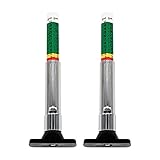
- Accurate measures tire tread depth gauge tool
- Calibrated from 0 to 1 inch in 1/ 32 inch
- Red range on bar: 0-3/32; Yellow Range on bar: 3/32 - 6/32; 5. Green Range on bar: 6/32-32/32
- Pocket-sized gauge, easy handy
- 2 pack
Use the correct manual
For unfamiliar controls, consult the manual for the exact vehicle. Audi’s owner’s manual portal requests the vehicle VIN, which helps distinguish equipment and instructions that vary by model and year. Ask the dealer to demonstrate a feature you cannot identify instead of relying on a generic video or another trim’s menu.
Independent reader supportYour contribution helps us test, update, and keep practical guides available for everyone.Walk-around inspection before and after the drive
Exterior and interior condition
Walk around the car in good light. Look for mismatched paint, dents, glass damage, wheel rash, uneven panel gaps, water marks, and signs of repair. Inside, check upholstery, carpets, headliner, switches, screens, charging ports, seat belts, and the cargo area. Compare what you see with the history report and the dealer’s written description.
Tires and wheels
Inspect every tire’s tread, sidewall, valve area, and shoulder, and look for cuts, bubbles, punctures, embedded objects, or uneven wear. Check the wheels for bends or cracks and ask whether the tires match in size and type as required for that Audi. Uneven wear can point to alignment, suspension, inflation, or prior-impact issues.
An inexpensive tread-depth gauge can provide a reading at selected points, but it cannot evaluate sidewall damage, age, internal defects, alignment causes, or overall tire safety. It is an optional aid to the visual check, not a certification and not a substitute for a mechanic. Audi’s technician checklist specifically calls for inspecting tires and wheels for damage.
What’s actually slowing this PC down?
Pick the symptom - the matching free tool is one click away.
Underside and fluid concerns
Do not crawl under a vehicle on a dealership lot. Instead, look from a safe position for fresh fluid on the ground, damaged splash shields, or obvious leaks and ask the dealer to place the car on a lift for an inspection. Audi’s technician document includes underside inspection items that a technician—not a buyer beside the road—should perform.
Best Value

- 1. Accurately measures tire tread depth gauge tool, Calibrated from 0 to 1 inch in 1/32 inch
- 2. Color coded tire tread depth gauge tool clearly indicates the tire different phase by colors
- 3. Tire tread depth gauge of Red range on bar: 0-3/32; Yellow Range on bar: 3/32 - 6/32; 5. Green Range on bar: 6/32-32/32
- 4. Comes with a pocket clip, easy to carry a tire tread depth gauge tool
- 5. Tire tread depth gauge tool reads in 32nds Suitable for trucks, motorcycles, automobiles and any passenger vehicle
Use a consistent method when comparing two Audis
If you are deciding between two vehicles, drive both on the same route, in similar traffic and weather where possible. This is a practical comparison framework, not an Audi scoring rubric.
| Comparison area | What to record for each Audi |
|---|---|
| Identity and equipment | Model year, trim, drivetrain, mileage, and features actually fitted |
| Powertrain | Acceleration smoothness, transmission engagement, shift quality, and any messages or noises |
| Brakes and steering | Pedal consistency, straight-line tracking, steering feel, vibration, pulling, and noise |
| Ride and cabin | Suspension response, road and wind noise, seat comfort, visibility, and climate performance |
| Technology | Camera, parking sensors, infotainment, and assistance functions demonstrated on that car |
| Condition and history | Tire and wheel condition, visible damage, service records, history report, recall status, and inspection findings |
Keep observations separate from conclusions. “Steering wheel is 10 degrees off-center on a flat road” is more useful than “alignment seems bad,” and “one rear tire has a worn inner shoulder” is more useful than “tires look old.”
What to do after the drive
Arrange an independent inspection for a used Audi
Before purchase, hire a trusted mechanic who is independent of the selling dealership. Ask for a written report identifying immediate safety issues, deferred maintenance, likely repairs, and estimated costs. Consumer.gov advises buyers to hire a mechanic they trust even when a dealer has performed its own checks.
Resolve unanswered symptoms
Give the dealer a specific list of noises, warnings, behaviors, and equipment that could not be demonstrated. Ask for the explanation and any repair order in writing. If a concern remains unresolved, let the independent inspection determine whether it is normal operation, a maintenance item, or a reason to walk away.
Review the complete price
Request the total purchase price, including fees and other costs, before agreeing to buy. A favorable drive does not settle the vehicle’s history, mechanical condition, recall status, or contract terms.
A practical test-drive checklist
- Verify the exact Audi, VIN, mileage, trim, drivetrain, and installed equipment.
- Set the seat, steering wheel, mirrors, and driving position.
- Drive a route that reflects your normal traffic, roads, and speeds.
- Check smooth acceleration, transmission engagement, and any available shift controls.
- Observe braking consistency, steering alignment, tracking, vibration, and noises.
- Listen for squeaks, rattles, wind noise, and drivetrain sounds with the audio muted.
- Try the fitted heating, cooling, defrost, seats, infotainment, cameras, sensors, and assistance controls.
- Inspect paint, glass, interior, tires, wheels, and visible signs of leaks or damage.
- Ask for records, a history report, recall status, and documentation of completed work.
- For a used car, obtain an independent inspection before signing and review the complete price.
Sources and vehicle-specific limits
The Audi checklist cited here is for the 2019 Q8 and was issued as a technician pre-delivery reference. It demonstrates the kinds of road and condition checks Audi included for that vehicle, including the instruction to “Check steering, boots, brake system, hoses, tires and wheels for damage.” It does not establish that every Audi uses the same controls or inspection sequence.
Model year, trim, powertrain, optional equipment, software, and market can change both behavior and feature availability. When a control or warning is unfamiliar, identify the exact vehicle and consult its manual or the dealer before drawing a conclusion.
Quick Recap
Product prices and availability are accurate as of the date/time indicated and are subject to change. Any price and availability information displayed on Amazon at the time of purchase will apply.




