The safest way to buy a used minivan is to combine documents, a VIN-based history check, an individual recall search, a realistic test-drive, and a written inspection by an independent mechanic. A clean-looking vehicle or a favorable price is not enough: history reports can miss events, and only a current mechanical inspection can identify many faults.
Use the process below for a specific vehicle. The right checks depend on its make, model year, mileage, powertrain, condition, seller, and your state’s rules. Federal consumer guidance provides a framework, but it does not create a model-specific defect list or guarantee that every repair appears in a database.

As an Amazon Associate I earn from qualifying purchases.
1. Define how the minivan must work and what you can really spend
Start before you contact a seller. A minivan used for school runs, long highway trips, towing, mobility equipment, or frequent passenger loading may need different features and may experience different wear. Write down the jobs the vehicle must perform and the features that are genuinely important.
Set a total ownership budget
Include more than the advertised price. Allow for registration, taxes, insurance, fuel, routine maintenance, tires, and likely repairs. Keep a reserve for work discovered after purchase; an inspection reduces uncertainty but cannot predict every future failure. Research upkeep costs for the exact model, year, engine, and drivetrain rather than assuming all minivans cost the same to maintain.
#1 Best Overall

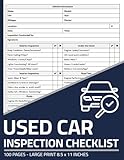
- AUTO VISUAL VEHICLE INSPECTION FORMS: Designed for professional use as a visual vehicle inspection report, these automotive inspection forms support multi-point vehicle checkups in auto repair shops, dealerships, and service centers.
- 2-PART CARBONLESS SNAP-OUT DESIGN: Carbonless inspection sheets eliminate carbon paper while providing instant duplicate copies, making these vehicle inspection checklist forms ideal for efficient service documentation and recordkeeping.
- FULL-SIZE 8.5" x 11" FORMAT: Large inspection report layout offers ample writing space for mechanics, service advisors, and technicians to document vehicle condition, recommended services, and inspection results clearly.
- FULL-COLOR MULTI-POINT CHECKLIST: Bright, full-color printing enhances clarity and usability, helping technicians quickly identify inspection sections such as tires, brakes, fluids, lights, and general vehicle condition.
- HIGH-VOLUME SHOP & DEALERSHIP USE: Supplied in a bulk pack of 250, these auto inspection report forms support daily workflow in repair shops, fleet maintenance operations, and dealership service departments.
Specify the configuration you are evaluating
Record the vehicle’s make, model, model year, mileage, engine, transmission, drivetrain, seating layout, and major options. Safety equipment, cargo dimensions, fuel requirements, towing ratings, and available driver-assistance features can change within a model line. This information lets a mechanic and a history-report provider evaluate the correct vehicle instead of a similar trim.
2. Get the VIN and match the vehicle to its paperwork
Ask for the complete 17-character vehicle identification number before you travel to see the minivan. Compare it with the VIN shown on the title, registration, dashboard plate, driver-door label, and any sales paperwork. A mismatch is a reason to stop and clarify ownership before discussing a purchase.
Use a vehicle-history report as a lead sheet
The National Motor Vehicle Title Information System (NMVTIS) is a route to approved providers. Its data can include title information, odometer readings, and certain damage-history details. Other providers may add service, auction, theft, or insurance records. Coverage differs, so treat a report as a collection of clues rather than a complete biography.
Free tools Windows power users keep installed
One-click scans. No signup required.
A history report cannot establish the minivan’s current mechanical condition. A vehicle may have a clean report and still have worn brakes, leaks, electrical faults, neglected fluids, or damage that was never reported. Conversely, an old damage entry may have been repaired properly. Use each entry to form questions for the seller and mechanic.
Investigate inconsistencies instead of explaining them away
- Compare the mileage sequence in the report with the odometer and service invoices.
- Ask why the title, registration, seller’s name, and report show different owners or dates.
- Clarify salvage, rebuilt, flood, fire, hail, theft-recovery, or other branded-title language before proceeding.
- Ask for documentation when the seller says a reported incident was minor or fully repaired.
- Do not assume a missing event means the event never occurred; federal sources warn that reports are incomplete.
3. Examine title, mileage, maintenance, and ownership records
Request to see the title and ask whether the seller is the titled owner or is selling on behalf of someone else. Check the title status and any brands or liens under your state’s procedure. A lender lien, estate transfer, out-of-state title, or private-sale requirement may require additional paperwork before ownership can legally change.
Rank #2

- Our DOT multi-point inspection report forms included all information needed to estimate for any type of vehicle and designed to cover all critical aspects of a multi-point check.
- User-friendly layout and Snap-out format, great for repair shops or multi-franchised service centers
- Printed in 5 color inks as photo showed, enhancing visibility and providing a professional touch to your inspection records.
- This multi-point inspection form comes with 2 books and contains 200 sets of forms in duplicate. Stop card included and prevents write-through to other form sets.
- The vehicle inspection report books are made of 2-ply carbonless, premium paper that withstands daily use. Size in 8-1/2" x 11-3/4" with a top 3/4" stub that perforates off when form is completed and facilitates easy handling and record-keeping.
Verify mileage from several sources
Read the odometer yourself, then compare it with inspection stickers, repair orders, tire invoices, state records, and the history report. Large unexplained jumps, a cluster of records at a lower mileage, missing documentation during a long ownership period, or a worn interior inconsistent with the displayed mileage deserve a written explanation and professional review. Do not rely on appearance alone to validate mileage.
Ask for maintenance evidence
Look for dated invoices, dealer or independent-shop records, inspection reports, and receipts for scheduled services. Ask when the oil and filter, transmission fluid, coolant, brake components, tires, battery, belts, and other model-specified items were serviced. The maintenance schedule for the exact powertrain is more useful than a generic claim that the vehicle was “well maintained.”
The Tool Desk
Outbyte Driver Updater FREEScan for outdated or missing drivers - takes under a minuteDriver Scan →Outbyte PC Repair FREERepair Windows errors before they cause bigger problemsFix Now →Records may be incomplete even when the work was done by a private owner or small shop. Ask what is documented, what is only remembered, and what the mechanic recommends doing now. Price any overdue service as part of the purchase decision.
4. Check open safety recalls by the individual VIN
Run the VIN through the National Highway Traffic Safety Administration’s recall lookup and ask the seller for the repair status. A model-level internet search is not a substitute: recall coverage can depend on the specific vehicle, production period, and repair history.
NHTSA says an open-recall remedy is free at a local dealership. Confirm that the remedy is actually complete for this VIN, because a seller may confuse a service campaign, a completed recall, and an unrepaired recall. Keep written confirmation of any appointment or completed repair.
Rank #3

- Comprehensive Coverage: our package includes 540 sheets of multipoint vehicle inspection sheets across 6 pads, perfect for all your car inspection needs; Each book has 90 sheets: 30 sheets each of white, pink, and yellow carbonless copies, ensuring a thorough vehicle inspection report every time
- Optimized Size for Professionals: measuring 8 1/2" x 11 3/4" with a 3/4" stub, these vehicle inspection forms provide ample space for thorough documentation; Ideal for mechanics, drivers, and professionals, these forms are essential for maintaining detailed car inspection sheets and vehicle checkup forms
- Effortless Carbonless Copies: our 3 part carbonless multipoint vehicle inspection sheets include white, pink, and yellow pages, allowing clear and efficient record-keeping; Perfect for creating duplicates of your dot inspection forms and stickers, they fit neatly into binders or storage boxes
- Versatile Use: tailored for auto repair shops, service centers, and vehicle fleets, these versatile vehicle inspection reports are ideal for tracking, receipt keeping, or driver logging; Conveniently store in folders or boxes for easy organization and accessibility
- Clear and Simple Printing: features clear, colorful printing and a straightforward design, making recording on these car inspection sheets easy and intuitive; Their crisp layout ensures information is captured accurately and efficiently for every vehicle checkup form
A recall search does not replace an inspection. It addresses identified safety campaigns, not ordinary wear, previous collision damage, deferred maintenance, or failures that have not prompted a recall.
5. Read the dealer’s Buyer’s Guide and the complete written deal
For a dealer sale, inspect the Federal Trade Commission Buyer’s Guide attached to the vehicle. It should state whether the minivan is sold “as is” or with a warranty and identify important warranty terms. Read which systems are covered, how long coverage lasts, who pays for labor and parts, and what exclusions or deductibles apply.
Understand “as is” versus a warranty
“As is” generally means the dealer is not promising to repair problems discovered after the sale, subject to applicable state law. A written warranty changes that risk only to the extent its actual terms cover the problem. Do not treat a salesperson’s verbal assurance as a warranty; ask for it in the contract or an attached document.
Demand an itemized out-the-door price
Ask for a written total that separates the vehicle price, taxes, registration, documentation or other fees, financing charges, and every add-on. Products such as service contracts, protection packages, theft devices, or appearance treatments may be optional. A salesperson presenting an add-on with the deal does not make it legally mandatory. Decline or negotiate items you do not want, and check that removed products disappear from the final paperwork.
Rules for disclosures, fees, warranties, and private transactions vary by state and by the circumstances of the sale. Contact the appropriate state motor-vehicle or consumer-protection authority when the title, warranty, or fee treatment is unclear.
6. Inspect the minivan before driving it
A visual check is a screening step, not a diagnosis. Inspect in daylight on a level surface, preferably with the vehicle cold. Bring a flashlight, paper towels, and a way to record observations. Ask permission before opening panels or moving seats.
Exterior and body
- Compare paint color, texture, panel gaps, hood and door alignment, and overspray around seals. Differences can indicate repairs, but only a qualified inspection can determine their significance.
- Look underneath for fresh fluid, dampness, corrosion, bent components, missing splash shields, or signs of impact.
- Check glass for cracks, chips, mismatched dates, and proper operation of wipers and washers.
- Inspect all lamps, reflectors, turn signals, brake lights, and license-plate lights.
- Examine tire brand, size, tread wear, sidewalls, and manufacturing age. Uneven wear can point to alignment, suspension, or inflation problems.
- Open and close every door, including sliding doors and the liftgate. Test handles, locks, power operation, pinch protection, and the ability to open each door from inside and outside.
Cabin, seats, and family-use equipment
- Operate the driver and passenger seat adjustments, seat belts, head restraints, child-seat anchors, and folding or removable seating.
- Check the cargo floor, under-floor storage, spare-tire area, jack, tools, and signs of water intrusion or mold.
- Test the instrument cluster for warning lights during startup. A light that never illuminates during the bulb check, or one that remains on, needs an explanation.
- Operate heating, air conditioning, rear climate controls, defrosters, fans, heated seats, and power outlets.
- Check windows, mirrors, locks, keyless entry, alarm, interior lights, audio, navigation, cameras, parking sensors, and any entertainment system your household needs.
- Look for smoke odor, damp carpeting, excessive wear, cracked trim, improvised wiring, or evidence that warning lights were recently covered or reset.
7. Test-drive it under conditions that resemble your life
Arrange a drive long enough to observe the minivan from cold start through normal operating temperature. The FTC specifically recommends varied conditions such as hills, highways, and stop-and-go traffic. If you regularly carry a full family, test the seating and cargo arrangement with the people or equipment that matter, without creating a safety hazard.
Before moving
- Start the engine cold if possible. Listen for unusual knocking, rattling, tapping, squealing, or excessive cranking.
- Confirm that warning lights perform their normal startup check and then go out as expected.
- Check idle quality, exhaust appearance, steering effort, pedal feel, and the operation of the transmission selector.
During the drive
- Accelerate gently and firmly to feel for hesitation, slipping, harsh shifts, vibration, or abnormal noise.
- Brake at different speeds in a safe area. Note pulling, pulsation, grinding, delayed response, or a pedal that feels soft.
- Drive straight on a level road and make controlled turns. Watch for wandering, clunks, steering-wheel shake, or a vehicle that does not return smoothly from a turn.
- Use a hill and highway segment when legal and safe to evaluate power delivery, cooling behavior, wind noise, and stability.
- Include stop-and-go traffic to check low-speed transmission behavior, cooling, idle quality, and repeated braking.
- Test cruise control, driver-assistance alerts, cameras, sensors, and navigation only where conditions permit. Do not treat a working screen as proof that the underlying safety system is calibrated.
Write down every unusual sound, smell, vibration, warning, or feature failure immediately after the drive. Give those observations to the independent mechanic rather than relying on memory.
Independent reader supportYour contribution helps us test, update, and keep practical guides available for everyone.8. Pay for an independent pre-purchase inspection
Choose a mechanic who is independent of the seller and experienced with the minivan’s make, model, year, and powertrain. Ask for a written inspection tied to the VIN. It should distinguish urgent safety repairs, needed maintenance, probable future work, and items that are functioning normally, with estimated costs where the shop can provide them.
Do these 3 things before closing this tab:
1Scan for outdated or missing drivers - takes under a minute2Repair Windows errors before they cause bigger problems3Fix the driver behind crashes, sound loss and screen glitchesWhat to give the mechanic
- The VIN, mileage, configuration, and your intended use.
- The history report, maintenance records, seller’s claims, and your test-drive notes.
- A request to check for structural or flood damage, leaks, electronic faults, suspension and brake condition, tires, cooling, exhaust, steering, drivetrain, and the operation of safety equipment.
- Permission to use appropriate diagnostic equipment and, where necessary, a lift or road test.
FTC guidance recommends an independent inspection even when a dealer calls a vehicle certified or says it has already been inspected. A seller who refuses to let you arrange an independent inspection removes an important protection; FTC advice says to consider another dealer in that situation.
Turn findings into a decision
Separate defects from normal used-vehicle wear. Ask which repairs are unsafe to postpone, which are due by the manufacturer’s schedule, and which are optional improvements. Obtain written estimates and use the total to compare the vehicle with other candidates. A low purchase price can disappear once immediate repairs and overdue maintenance are included.
9. Compare multiple minivans on evidence, not price alone
When you have more than one candidate, use the same process and the same categories for each. The goal is not to create a universal numerical formula; it is to make differences visible.
| Comparison area | What to document | Decision question |
|---|---|---|
| Title and history | Title status, brands, ownership sequence, reported damage, odometer entries | Is the history coherent, and are unresolved entries acceptable? |
| Maintenance | Dated records, scheduled services, parts replaced, gaps in documentation | Was required upkeep performed, and what is due now? |
| Independent inspection | Safety defects, mechanical condition, diagnostic results, repair estimates | What must be repaired immediately, and what may follow? |
| Recall status | VIN-specific open or completed recall information | Are remedies complete or scheduled before purchase? |
| Warranty terms | Buyer’s Guide language, written warranty coverage, exclusions, duration | Who pays if a covered failure occurs? |
| Total cost | Out-the-door price, taxes, fees, add-ons, insurance, fuel, upkeep, immediate repairs | Which vehicle fits the budget after realistic ownership costs? |
| Household fit | Seats, cargo access, doors, child-seat placement, comfort, required technology | Will it perform the jobs you identified before shopping? |
Compare the mechanic’s report and repair estimate with the seller’s written promises. A candidate with a higher asking price may be the lower-risk choice if its title, maintenance, inspection, warranty, and immediate repair needs are better documented.
PC Slower Than It Used to Be?
A free scan shows the junk files, broken settings and background clutter dragging Windows down - then fixes them in one click.Free scan · Windows 10 & 11Outdated Drivers Are Slowing You Down
One free scan finds every outdated or missing driver and matches the right update for your exact hardware.Free scan · exact hardware match10. Warning signs that should slow or stop the purchase
- The seller will not provide the VIN or refuses to let you compare it with the title.
- The title is missing, branded unexpectedly, assigned to someone else, or subject to an unresolved lien.
- The odometer, report, invoices, and vehicle wear tell different stories without credible documentation.
- The seller discourages a history report, VIN recall check, independent inspection, or test drive.
- Freshly cleaned fluid, strong air freshener, recently reset warning lights, or unexplained modifications hide symptoms rather than document repairs.
- The dealer will not provide a Buyer’s Guide or an itemized written out-the-door total.
- Pressure to sign immediately prevents you from reading warranty terms, fees, or title documents.
- The minivan cannot be driven in conditions resembling your ordinary use.
One warning sign may have an innocent explanation, but you should resolve it with records and an independent professional instead of accepting a verbal reassurance.
11. Complete the transaction only after the evidence agrees
- Confirm the VIN on the vehicle and every document.
- Review the history report, title, mileage evidence, maintenance records, and recall status together.
- Read the Buyer’s Guide and warranty, then obtain every promise in writing.
- Get the independent mechanic’s written report and estimates.
- Calculate the out-the-door total, immediate repairs, registration, insurance, fuel, and expected upkeep.
- Remove unwanted add-ons and verify the final contract reflects the agreed price.
- Complete title, lien, registration, odometer, and tax paperwork required in your state.
- Keep copies of the contract, Buyer’s Guide, inspection, invoices, report, recall confirmation, and payment records.
The FTC summarizes the central safety step this way: “Ask to get in the car inspected by an independent mechanic, and check to see if there are any recalls on the car.” Apply that advice alongside the VIN, title, records, test-drive, and written-price checks above. For a specific minivan, the final decision should rest on documented condition and total ownership cost, not on a generic reputation for the model or an attractive sticker price.
Quick Recap
Product prices and availability are accurate as of the date/time indicated and are subject to change. Any price and availability information displayed on Amazon at the time of purchase will apply.




