Buy a used Mazda MX-3 in this order: verify the car and its paperwork, inspect corrosion and previous repairs, check the running gear on a properly planned test drive, then pay for an independent inspection on a lift. The MX-3 is an old car, so a clean title and attractive paint are not enough. The individual car’s structure, maintenance records, modifications, and inspection findings should determine whether you proceed.
1. Gather the car’s identity and history before you travel
Ask the seller for the exact model year, market and specification, vehicle identification number (VIN), current registration details, ownership history, service records, repair invoices, and the reason for selling. Confirm that the seller’s identity and title documents satisfy the rules in your jurisdiction. A seller who cannot explain basic ownership or paperwork is a risk before you have inspected a single component.
As an Amazon Associate I earn from qualifying purchases.
Match the VIN everywhere
Compare the VIN on the car with the VIN on the title, registration, insurance documents and any history report. Check the locations specified for your market rather than relying on one label. A mismatch can indicate an administrative error, an incorrectly advertised car, or a much more serious identity problem. Do not agree to buy until the discrepancy has been resolved through the relevant licensing authority.
Crashes, No Sound, or Screen Glitches?
Random freezes, missing sound and display glitches usually trace back to one bad driver. Find and replace yours safely.Free scan · under a minutePC Slower Than It Used to Be?
A free scan shows the junk files, broken settings and background clutter dragging Windows down - then fixes them in one click.Free scan · Windows 10 & 11Order a vehicle-history report, then read it critically
Mazda USA’s used-car guidance recommends a VIN-based history check and names CARFAX as an example. Use a report that covers the country where the car is registered and look for reported title brands, salvage or rebuilt status, accident entries, mileage records, registration changes and ownership transfers. A history report is a record of events supplied to the database, not a physical examination. It can omit accidents, repairs or maintenance that were never reported.
#1 Best Overall

- 1.Accurate and Efficient: Different colors on the bar represents different scopes, the red range on bar: 0 - 3/ 32; Yellow range on bar: 3/ 32 - 6/ 32; Green range on bar: 6/ 32 - 32/ 32, allowing you easy and fast to read and calibrated
- 2.Reusable:Tire tread gauge is made of sturdy material, reusable and long lasting, which is an efficient tool to moenitor tire tread levels, make driving safer
- 3.Convenient:Tire tread Depth gauge measures approx 3.35 x 1.06 inch, small size, also features a pocket clip for easy carrying, you can clip it on your pocket, ideal for quick and convenient getting and using
- 4.Simple to use :Place the black flat edge of the tire tread gauge on both sides of the tire tread, press down the color bar until it reaches the bottom of the tread groove, and read the depth measurement on the indicator bar.
- 5.Easy to read: There are 3 different color codes of areas on the bar that add simplicity and convenience, which show you a clear result of your tyre condition, really easy to read, giving you a fast and accurate measurement to tread depth, smart, high efficiency
When a report lists a collision, ask for repair invoices and photographs if available. Have the inspector look specifically for evidence of poor structural repair, substituted panels, welds, overspray and misaligned crash components. A report with no accident entry does not prove that the car has never been damaged; the physical inspection remains decisive.
Request records that show how the car was maintained
Ask for dated service invoices, inspection certificates, parts receipts and records of major work. Useful documentation identifies the work performed, mileage, date and service provider. Notes such as “serviced” without an invoice or description tell you little. Organize the records chronologically and compare recorded mileage with the VIN report, registration documents, inspection stickers and dashboard reading. Unexplained gaps are questions to resolve, not automatic proof of fraud.
Ask about modifications and drivetrain changes
Ask directly whether the MX-3 has been modified, converted or fitted with a different engine, transmission, suspension, wheels, wiring or emissions equipment. Request receipts, engineering approvals and tuning information for every change. The available evidence does not establish a particular MX-3 modification as a universal defect; the point is to establish what is on this car and whether it is documented and legal where you live. An undocumented swap can complicate insurance, registration, parts selection and future diagnosis.
2. Inspect the body and structure in daylight
View the car in dry daylight, ideally before it has been washed. Artificial lighting and wet paint can hide ripples, color differences and corrosion. Walk around the car slowly and compare both sides before opening doors or starting the engine.
Rank #2

- Accurate and precise tire tread depth readings in 1/32 inch increments (1/128 inch resolution)
- Durable dial type gauge with easy-to-read 32nds scale (max. tread depth 14/32 inch)
- Color coded scale shows true tire health - safe range (green), showing wear (yellow), or needs replacement (red)
- Calibrated to meet or exceed industry standards for precise accuracy of tire tread depth (+/- 0.25%)
- Rugged, convenient, and compact design for easy storage with included leather pouch
Look for accident-repair clues
- Compare panel gaps at the hood, doors, hatch and fenders. Gaps that vary along one panel or differ markedly from the opposite side deserve an explanation.
- Compare paint color and texture from panel to panel. Mismatched shade, heavy orange peel, masking edges, overspray on rubber or glass and fresh underseal can indicate previous work.
- Inspect fasteners and seams inside the engine bay, hatch area and door jambs. Scratched bolt heads, disturbed seam sealer or inconsistent factory markings can support a repair history, although none is conclusive alone.
- Check that doors, hatch and hood open, close and latch without lifting, dropping or rubbing. Misalignment can result from adjustment, worn hinges or structural movement.
Do not reject a car merely because it has been repaired. A documented, correctly repaired collision may be preferable to an apparently original car with hidden structural corrosion. The independent inspection should determine the quality of the work.
Make corrosion a purchase-critical check
Rust is more than a cosmetic issue when it reaches load-bearing metal. Mazda USA’s general guidance and New Zealand Transport Agency (NZTA) advice both direct buyers to inspect the underside and areas where water and dirt collect. NZTA specifically calls out weight-bearing parts and steering mountings. Neither source establishes how frequently MX-3s rust, so judge the individual shell rather than applying a model-wide assumption.
- Inspect body seams, the lower edges of doors, wheel-arch areas and the underside of the hatch opening.
- Lift the trunk floor and remove accessible floor coverings to look for dampness, staining, scale and perforation.
- Look underneath the car for flaky metal, swelling seams, patched sections, fresh black coating and rust around suspension or steering attachment points.
- Check jacking points, subframes, rails and other load-bearing sections from a safe position. Surface discoloration and structural perforation are not equivalent; a technician must distinguish them.
- Look for paint bubbles around seams. A bubble may be a small cosmetic blister or corrosion progressing from the reverse side, so probe and inspect it professionally rather than sanding it casually.
Never crawl under a vehicle supported only by a jack. A lift inspection is the correct way to assess concealed structure, suspension mounts and the condition of brake and fuel lines.
Quick wins for a faster PC:
Fix the driver behind crashes, sound loss and screen glitchesFind Drivers →Repair Windows errors before they cause bigger problemsFix Now →Check seals, glass and signs of water entry
Inspect windshield, side glass, hatch glass and lamps for cracks, chips, clouding or leaks. Run a hand around door and hatch seals for tears, flattening or dampness. Lift carpets where practical and inspect the spare-wheel well for standing water, rust or a musty smell. Water entry can damage wiring and interior structures even when the exterior looks sound.
Rank #3

- 1. Accurately measures tire tread depth gauge, Calibrated from 0 to 1 inch in 1/32 inch
- 2. Color coded tire tread depth gauge clearly indicates the tire different phase by colors
- 3. Tire tread depth gauge of Red range on bar: 0-3/32; Yellow Range on bar: 3/32 - 6/32; 5. Green Range on bar: 6/32-32/32
- 4. Comes with a pocket clip, easy to carry a tire tread depth gauge
- 5. Tire tread depth gauge reads in 32nds Suitable for trucks, motorcycles, automobiles and any passenger vehicle
3. Examine wheels, tires, lights and the cabin
Tires and wheels
Record the tire brand, size, speed and load markings and confirm that all four tires are an appropriate matched set for the car. Check tread wear across each tire, not just the center. Uneven wear can point to alignment, worn suspension or accident damage. Look for sidewall cracks, bulges, puncture repairs and damage to wheel rims. A tread-depth gauge can document one measurement, but it cannot certify tire age, internal damage or overall roadworthiness. Check the date code on each tire and ask why tires differ if they are not the same type or age.
Exterior lighting and safety equipment
- Operate headlights on all settings, turn signals, brake lamps, reverse lamps, hazard lights and license-plate lamps.
- Check that lenses are secure and free of severe moisture. Intermittent operation may indicate wiring or grounding faults.
- Inspect seat belts for fraying, damaged buckles and positive latching. Ask whether any restraint or airbag has deployed and whether replacement documentation exists.
- Confirm that warning lamps illuminate during the key-on self-test and go out after the engine starts. A lamp that never illuminates may have been disabled rather than repaired.
Cabin controls and evidence of neglect
Test the instrument cluster, gauges, heater and ventilation controls, blower speeds, wipers and washers, horn, windows, mirrors, locks and audio equipment. Check seat adjusters and hatch release mechanisms. Missing trim, broken switches and improvised wiring may not make the car unsafe by themselves, but they reveal how carefully it has been maintained and help you price immediate work. Damp carpets, stained headlining or corrosion under seats support a water-entry investigation.
4. Check the engine bay without creating a hazard
Ask the seller for permission before opening the hood and touching anything. View the engine cold if possible; a pre-warmed engine can conceal difficult starting or smoke. Do not open a hot cooling-system cap, place hands near belts or fans, or disconnect components on a running engine.
The Tool Desk
Outbyte Driver Updater FREEScan for outdated or missing drivers - takes under a minuteDriver Scan →Outbyte PC Repair FREEClear out junk files and repair common Windows errorsFree Scan →Before starting
- Look for fresh oil, coolant, fuel or brake-fluid leakage around the engine, transmission, hoses, radiator and master-cylinder area.
- Check fluid levels and condition according to the markings and the owner’s or service documentation. Low or contaminated fluid is a reason for diagnosis, not a basis for guessing the repair cost.
- Inspect hoses, belts, wiring and connectors for cracking, loose routing, amateur repairs or contact with moving parts.
- Look for evidence of overheating, such as dried coolant residue, discolored components or a recently cleaned area surrounded by grime.
Starting and idling
Observe whether the engine starts promptly from cold, settles into a stable idle and produces abnormal smoke or smells. Listen for knocks, rattles, grinding, belt noise or exhaust leaks. The 1995 United States MX-3 workshop manual includes a pre-delivery inspection checklist and can help identify technical terminology, but it does not demonstrate that any particular sound or failure is common across MX-3s. Report symptoms to a qualified technician instead of diagnosing them from a checklist.
Rank #4
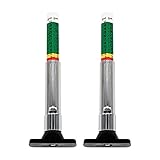
- Accurate measures tire tread depth gauge tool
- Calibrated from 0 to 1 inch in 1/ 32 inch
- Red range on bar: 0-3/32; Yellow Range on bar: 3/32 - 6/32; 5. Green Range on bar: 6/32-32/32
- Pocket-sized gauge, easy handy
- 2 pack
5. Use the test drive to collect symptoms
Drive only with the owner’s permission, valid insurance and a legally roadworthy vehicle. Plan a route that includes low-speed maneuvering, normal urban traffic and a safe higher-speed section where lawful. If the seller refuses a reasonable drive, treat that refusal as a material concern.
Cold and warm operation
If practical, observe both a cold start and a fully warm restart. Note warning lights, idle quality, temperature-gauge behavior, smoke and smells. A temperature that rises unusually high, fluctuates sharply or fails to reach normal operating range needs professional investigation.
Acceleration and engine response
Accelerate progressively and then under a normal load. Note hesitation, surging, misfire, loss of power, unusual vibration or smoke under acceleration. Do not attempt abusive high-rpm tests on an unfamiliar old car. Record the conditions under which a symptom appears so the mechanic can reproduce it.
Free tools Windows power users keep installed
One-click scans. No signup required.
Manual-transaxle and clutch checks
On a manual car, check that each gear engages without excessive force, grinding or repeated baulking. During normal take-up, note clutch engagement point, slipping under load, judder and unusual pedal effort. A clutch that engages near the top of the pedal or slips in a higher gear may require further testing; only an inspection can establish the cause and remaining life.
Best Value

- 1. Accurately measures tire tread depth gauge tool, Calibrated from 0 to 1 inch in 1/32 inch
- 2. Color coded tire tread depth gauge tool clearly indicates the tire different phase by colors
- 3. Tire tread depth gauge of Red range on bar: 0-3/32; Yellow Range on bar: 3/32 - 6/32; 5. Green Range on bar: 6/32-32/32
- 4. Comes with a pocket clip, easy to carry a tire tread depth gauge tool
- 5. Tire tread depth gauge tool reads in 32nds Suitable for trucks, motorcycles, automobiles and any passenger vehicle
Automatic-transmission behavior, where fitted
Check selection from park to drive and reverse, engagement delay, shift quality and any flare, shudder or unexpected kick. Verify that the transmission reaches each intended ratio during ordinary driving. Do not infer a specific failed component from one shift; fluid condition, control issues and internal wear can produce similar symptoms.
Steering, braking and suspension
- On a quiet, level road, check whether the car tracks straight and whether the steering has excessive free play, vibration or pulling.
- Brake progressively and, where safe, more firmly. Note pulsation, pulling, grinding, unusual pedal travel and warning lights. Do not perform emergency-stop tests in traffic.
- Listen for knocks over controlled bumps and observe whether the body continues to bounce after a dip. Have the technician inspect bushings, dampers, springs, ball joints and mountings.
- During slow full-lock turns, listen for clicking, rubbing or tire contact. Confirm that the steering returns smoothly after a corner.
These observations identify symptoms; they do not certify the car. Any concerning noise, leak, warning lamp or handling change should appear in the inspection report and estimate.
Independent reader supportYour contribution helps us test, update, and keep practical guides available for everyone.6. Arrange an independent pre-purchase inspection
Mazda USA’s guidance is explicit: “Always use your own mechanic or an independent service facility of your choice.” NZTA likewise advises buyers to insist on a full professional inspection. Choose the facility yourself, disclose that you are considering purchase, and ask whether it can inspect an older MX-3 and place it on a lift.
What to request
- A lift inspection of structural metal, corrosion, jacking points, subframes, steering and suspension mounting areas, brake and fuel lines, exhaust and leaks.
- Checks of engine operation, cooling system, transmission or transaxle, clutch where fitted, driveshafts, wheel bearings and steering.
- Inspection of brakes, tires, wheels, lights, restraints, warning systems, glass, seals and evidence of water entry.
- Assessment of previous collision repairs, modifications and whether the observed equipment appears legal and safely installed in your jurisdiction.
- A written report separating immediate safety issues, work likely needed soon and cosmetic or optional items.
Give the mechanic useful context
Provide the VIN, history report, service records, seller’s statements and your test-drive notes. Tell the inspector about any noise, warning light, hard start, leak or shift concern and when it occurred. Ask the mechanic to photograph significant corrosion or repair evidence and to state whether a defect is confirmed, suspected or could not be evaluated without further testing.
Use the report before committing
Get estimates for safety-critical and near-term work from the inspecting facility or another qualified shop. Revisit the price only after you understand the scope, parts and labor. Walk away when structural condition, title status or major mechanical condition remains unclear, or when the seller will not allow an independent inspection. A low asking price does not compensate for an unknown shell or undocumented identity.
7. Compare two or more MX-3s on evidence, not appearance
When several cars are available, score each against the same evidence. Do not rank engine variants or model years by reliability based on the available material; no reliable comparison was established. Compare the actual cars as follows:
| Comparison area | Evidence to record | Decision question |
|---|---|---|
| Structural integrity and corrosion | Lift findings, load-bearing metal, steering and suspension mountings, body-seam corrosion | Is the shell sound and repairable without uncertain structural work? |
| Maintenance and repair quality | Dated invoices, major-work records, consistency of mileage and servicing | Does the documentation support the seller’s claims? |
| Independent inspection | Written defects, safety priorities and near-term estimates | What must be repaired before regular use? |
| Title and reported history | VIN match, title status, accident, mileage and registration records | Can the car be legally transferred and insured? |
| Originality and modifications | Receipts, approvals, wiring and equipment changes | Are changes documented, safe and supportable? |
| Local support | Verified availability and cost of parts required for this specific car | Can you obtain the parts and skilled service in your market? |
Current parts availability and local pricing were not established in the available evidence. Verify them with suppliers and repair shops in your market after the inspection identifies the exact components needed.
Quick Recap
8. Common mistakes that make an MX-3 purchase riskier
- Relying on a clean history report: databases can miss unreported damage, so compare the report with the body and lift inspection.
- Checking only visible rust: corrosion at load-bearing, steering or suspension mounts can be hidden from a standing inspection.
- Accepting a seller-selected mechanic: arrange your own independent facility, as recommended by Mazda USA.
- Testing only a warm engine: request a cold-start observation when practical.
- Using a tread gauge as a safety certificate: inspect tire age, sidewalls, wear pattern and wheel condition as well.
- Assuming an old-car modification is harmless: require documentation and have the installation assessed.
- Negotiating before obtaining estimates: price the documented work, not a guess based on symptoms.
- Crawling under an unsupported car or opening a hot cooling system: leave these hazards to a properly equipped technician.
9. A practical day-of-purchase checklist
- Confirm the VIN on the car and documents.
- Review the history report, title status, mileage entries and ownership details.
- Collect service records, repair receipts and modification documentation.
- View the car in daylight and inspect panel alignment, paint, seals and glass.
- Check body seams, wheel areas, trunk and floor coverings for corrosion or water entry.
- Inspect tires, wheels, lights, belts, warning lamps and cabin controls.
- Observe a safe cold start if possible and note leaks, smoke, noises and warning lights.
- Complete a permission-based test drive covering starting, acceleration, shifting, steering, braking and suspension symptoms.
- Have your independent mechanic perform a lift inspection and provide written findings.
- Verify local parts and repair support for the specific defects identified.
- Proceed only when title, structure and major mechanical condition are clear; otherwise renegotiate from documented estimates or walk away.
Product prices and availability are accurate as of the date/time indicated and are subject to change. Any price and availability information displayed on Amazon at the time of purchase will apply.




