Inspect the motorcycle, not the badge or odometer. Before buying a used Honda Shine 100 or Suzuki Katana, verify its exact year and market, match the frame VIN to the paperwork, inspect it cold for mechanical and crash damage, check brakes, tires, lights and fluids, confirm recall status by VIN, and budget for any repair a qualified mechanic identifies. The Shine 100 is an India-market 100 cc commuter, while the Katana is a different class of motorcycle with year-specific manuals; there is no defensible universal winner between them. The better purchase is the individual bike with sound evidence of care, no unresolved safety defect and a price that reflects its actual condition.
Use this sequence in order. It prevents a clean-looking motorcycle or a low odometer reading from distracting you from identity, legal, structural and safety problems.
As an Amazon Associate I earn from qualifying purchases.
Use this inspection order before you negotiate
- Confirm identity and market. Record the model name, exact model year, country specification and frame VIN/chassis number. Obtain the matching owner’s manual before judging specifications, service intervals, fluid grades or adjustment limits.
- Check ownership and records. Compare the VIN with registration, insurance and service documents. Ask for maintenance invoices, inspection certificates and a written explanation of every repair, modification, crash or period of storage.
- Inspect the cold motorcycle. Arrange to see it before the engine has been warmed. Watch the start, idle, exhaust, leaks, noises and warning lights.
- Inspect the chassis and running gear. Examine the frame, forks, wheels, tires, steering, tank, controls and evidence of a fall.
- Verify brakes, controls, lights and fluids. A motorcycle with a safety-critical defect should not be ridden for a test.
- Check recalls by VIN. Use the manufacturer or regulator tool that covers the motorcycle’s market, then confirm any open repair with an authorized dealer.
- Get an independent inspection. If you cannot explain a defect, or the bike has signs of impact, pay a qualified local motorcycle mechanic before committing.
Take photographs of the VIN, documents, tires, warning lights, leaks and any damage. Photographing a defect before a discussion prevents later disagreement about what was present when you viewed the bike.
The Tool Desk
Outbyte PC Repair FREEClear out junk files and repair common Windows errorsFree Scan →Outbyte Driver Updater FREEFix the driver behind crashes, sound loss and screen glitchesFind Drivers →Confirm the exact year, market and manual
Model names are not enough. Equipment, service schedules, fluid specifications, recall coverage, wiring and warranty terms can vary by model year and country. Suzuki’s official manual index lists Katana manuals for model years 2020 through 2026. A Bangladesh Honda manual page lists Shine100 manuals for 2024 and 2025. Those separate listings demonstrate why a manual from a different year or market is not a safe substitute.
#1 Best Overall

- PRO ACCURACY - mechanic recommended, performance tested, & calibrated accurate to professional ANSI 2A standards - with dual pressure sensors certified to ±0.50% FS (0.50 PSI), offering reliable readings up to 100 PSI w/ precise readout resolution of 0.10 PSI - so you can now maintain your tires with a shop-grade mechanic trusted tool
- STRONG & RUGGED - feels solid in the hand & built to last from 100% solid brass & steel parts shielded by our shock-resistant gear-style protective guard to protect against drops & impact. Features ultra soft & strong 10" fully rotational, leak-proof HybridFlex air hose w/ 360 swivel angled air chuck that can be swapped out w/ any 1/4" NPT chuck
- ADVANCED ENGINEERING - all readings lock-on to the display until the "ON" button is pressed once to reset to zero. Features built-in air bleeder valve that bleeds pressure in real time without needing to reset the display - ideal for cars, trucks, motorcycles, bikes, RV & trailers, spare tires, and much more
- SMART DISPLAY - features high-resolution digital 2.5 inch LCD display screen w/ battery life indicator & bright LED backlight for high visibility in the dark. Gauge is programmed to auto shut-off after 150 seconds of inactivity to save battery (2x AAA batteries included)
- 100% Lifetime Warranty by JACO - serving the automotive industry for 35+ years. Enjoy longer-lasting tires, improved fuel economy, and superior vehicle performance & handling with properly inflated tires.
What to ask the seller
- What is the model year shown on the registration and frame documentation?
- In which country was this motorcycle originally sold?
- Has it been imported, re-registered or converted from another market?
- Which manual belongs to this exact year and specification?
- Are any parts, software, exhaust components, lights or controls non-original?
Write the answers down and compare them with the documents. If the seller cannot identify the year or market, treat every specification and service claim as unverified until a dealer or mechanic confirms it.
Match the VIN and complete the legal paperwork
Locate the frame VIN or chassis number on the motorcycle and compare every character with the registration, insurance and service records. It should be legible and show no signs of grinding, repainting, altered spacing or fresh metal around the stamping. Honda India notes that VIN/chassis details can appear on registration, insurance and service documents; use those records as cross-checks, not as a reason to skip inspecting the frame itself.
The UK Driver and Vehicle Standards Agency’s MOT manual says motorcycles first used on or after 1 August 1999 must have a VIN or frame number and that it must be legible in the UK MOT inspection context. That is a UK inspection rule, not a universal law. Your country may specify a different location, format or transfer process.
Before handing over money
- Confirm that the seller is the registered owner or has documented authority to sell.
- Check for outstanding finance, theft alerts, court restrictions or registration holds through the official local service where available.
- Complete the required transfer, tax, insurance and emissions paperwork for your jurisdiction.
- Write the VIN, sale date, price, mileage, included keys and known defects into the purchase agreement.
- Do not accept a promise that ownership documents will arrive later.
No single paperwork checklist applies worldwide. Ask your local vehicle authority or insurer which documents are mandatory before you sign.
Read the service history for evidence, not reassurance
A stamped booklet is useful only when its dates, mileage and work performed make sense together. Look for itemized invoices, parts descriptions, workshop names, inspection results and proof that recalls or campaigns were completed. Check whether long gaps correspond to storage, a change of owner or a period when the motorcycle was not used.
Rank #2

- 90 degree head for those difficult to access valve stems.
- High quality all metal construction.
- 5-50psi (50-300kPa) readout.
- Made by Counteract Balancing Beads.
- Packaged individually. Custom red head with black anodized body with Counteract engraving.
Questions records should answer
- When was the last scheduled service, and at what mileage?
- When were the engine oil, filters, brake components, chain or other model-specific items serviced?
- Were fork seals, wheel bearings, cables, clutch parts or electrical components replaced?
- Has the motorcycle been dropped, crashed, flooded or stored outdoors?
- Which work was done by a dealer, which by an independent shop and which by the owner?
Compare the records with the schedule in the exact-year manual. Honda India publishes service intervals and an oil specification for its India-market Shine100 information, but those values should not be copied to every Shine 100 sold elsewhere. Use the manual for the motorcycle in front of you.
Inspect the engine during a cold start
Ask the seller not to start the motorcycle before you arrive. A warm engine can hide difficult starting, excessive smoke or an unstable idle. Feel the engine or exhaust carefully before starting; if it is already hot, record that and ask why.
Do these 3 things before closing this tab:
1Repair Windows errors before they cause bigger problems2Fix the driver behind crashes, sound loss and screen glitches3Clear out junk files and repair common Windows errorsStarting and idle checks
- Turn the ignition on and note warning lamps and fuel-pump or relay behavior appropriate to that model.
- Start the engine without repeated throttle pumping unless the manual calls for it.
- Listen during the first seconds for persistent clattering, rattling, knocking or a sharp mechanical tap.
- Watch for an idle that hunts, stalls, hangs at high revs or needs unusual throttle input.
- Look for blue, white or unusually heavy exhaust after startup and during a gentle rise in revs.
- Inspect around the engine cases, oil filter area, drain plug, hoses and underneath the motorcycle for fresh oil or fluid.
Honda’s used-motorcycle guidance specifically calls out difficult starting, oil leaks or seepage, unusual clattering, rattling or knocking and an unstable idle. It also warns that a low-mileage engine can still have a problem. Treat a low odometer reading as one data point, not proof of condition.
Leaks and fluids
Use the manual’s procedure for checking oil level: some motorcycles must be upright, others require a specified warm-up and wait period. Do not infer a safe level from a sight glass or dipstick without following that procedure. Check visible brake fluid and coolant reservoirs where fitted, looking for contamination, low level or staining. A wet area that has collected dust can indicate a slow leak even when no drop is falling.
Look for crash, corrosion and frame problems
Stand several metres behind the motorcycle and sight along the wheels. The front and rear wheels should appear aligned. Compare the handlebar, levers, foot controls, mirrors, bar ends and exhaust for scratches or replacement parts on one side only. Symmetrical wear is normal; a cluster of fresh parts and scraped ends can indicate a fall.
Rank #3

- PROCESS LEVEL ACCURACY: Each ETENWOLF’s digital tire pressure gauge is calibrated manually to ANSI B40.7 Grade 2A(plus-minus 1 PSI).Presta valve adapter not included, if used for bicycles, it must be purchased separately
- ACCURACY IN EXTREME PRESSURE RANGE: Whether tire pressure is below 12 PSI or above 140 PSI, ETENWOLF’s digital tire gauge is accurate as well
- ACCURACY IN EXTREME WEATHER: Built-in AI chip with thermal compensation inside, ETENWOLF’s tire gauge works normally even in extreme cold or hot weather(-4°F-130°F/-20°C-54°C)
- PRESSURE RANGE 3-200 PSI : ETENWOLF’s digital tire pressure gauge can measure pressure of all types of vehicles
- REPLACEABLE AAA BATTERIES: Batteries are easy to replace and helps to extend the tire pressure gauge’s life span, with LED light to illuminate dark areas for easy tire pressure reading
Frame and steering
- Inspect the headstock, frame welds, subframe and mounting points for cracks, ripples, fresh paint or distorted metal.
- Move the handlebar from lock to lock. It should turn smoothly without a tight spot, notch or sudden change in resistance.
- With the front brake applied, compress the fork. Look for oil seepage on the tubes and listen for harsh knocks.
- Check that the steering stops are intact and not freshly welded or damaged.
- Look beneath the tank, seat and side panels for corrosion, bent brackets or mismatched fasteners.
Honda’s used-bike guidance recommends checking fork oil seepage, tank dents or rust, steering movement, bent levers and damaged handlebar ends. A dented tank may be cosmetic, but rust inside it can contaminate fuel and create recurring problems. Any suspected frame or steering damage merits a professional inspection before a ride.
Evaluate tires and wheels by age and condition
Inspect both tires, including the sidewalls and the tread between grooves. Look for cracks, cuts, bulges, exposed cords, flat spots, embedded objects and wear that reaches the tread indicators. Uneven wear can point to incorrect pressure, worn suspension, misalignment or hard use.
Honda Global’s published used-motorcycle guidance says it does not recommend tires more than five years old even when grooves remain. That is manufacturer guidance, not a universal legal limit. Read the tire’s date marking, follow the tire maker’s instructions and check local inspection rules.
Measure pressure with a gauge when possible, but use the pressure printed on the motorcycle’s placard or specified in its exact manual. Correct pressure depends on load and market. A gauge can verify inflation; it cannot diagnose internal tire damage, a bent rim or a weakened carcass.
Wheel and bearing checks
- Spin each wheel if safely possible and watch for lateral or radial wobble.
- Inspect rims for dents, cracks, corrosion and missing balance weights.
- With the wheel unloaded where practical, check for roughness or play that could indicate a bearing problem.
- Confirm that valve stems are sound and that tubed or tubeless equipment matches the wheel design.
Check brakes, controls, lights and safety equipment
Operate both brakes while the motorcycle is stationary. The lever and pedal should feel firm and predictable, with the amount of free play specified by the manual. Inspect visible discs, drums, pads and hoses for heavy scoring, leaks, corrosion or contamination. A spongy lever, fluid leak or brake that does not apply evenly is a stop-and-repair issue.
Free tools Windows power users keep installed
One-click scans. No signup required.
Rank #4
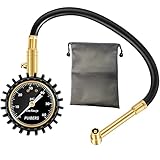
- 1. Reliable Air Pressure Gauge for Tires, full gear precision movement with bronze bourdon tube, no battery required, durable brass construction, accuracy meets ANSI Grade B40.1 Standards, more accurate and reliable than digital tire pressure gauge, maintains good performance for many years.
- 2. Legiable Luminous Dial, glow in the dark, clear display, easy to read even in very low light conditions; Patented design flexible hose and professional 90 degree right angle chuck design, very suitable for motorcycles, car, bike measurement.
- 3. Metric range design, range to 60 psi, meet your reading needs. 60 PSI Right Angle Chuck air gauge tire pressure is perfect for your motorcycle, bike, car, dirt bike, SUV, etc. for Scharder valves.
- 4. Heavy Duty Strong Structure Ensures Its Long Service Life,accurate pressure holding and quick pressure relief function; Larger button is conformed to ergonomic design which makes it more comfortable to press. An ideal gift for Father's Day or Christmas.
- 5. PUIBERS has professional car tire pressure gauge design. After continuous testing, more perfect tire pressure gauge for cars is designed. The quality can be guaranteed and the life-long friendly customer support. Buy with confidence, save a fortune with improved gas mileage, and enjoy a smoother and safer driving experience.
Check the throttle for smooth opening and immediate return when released. Operate the clutch, gear selector, side stand and center stand where fitted. Look for frayed cables, cracked mounts, bent pedals and switches that work only intermittently.
Electrical checklist
- Headlight on all available settings.
- Tail and brake lights from both brake controls.
- Front and rear indicators, hazard function where fitted, and the horn.
- Instrument illumination, warning lamps and fuel or temperature displays.
- Starter operation, battery terminals and visible wiring for corrosion or amateur repairs.
Honda’s routine-care guidance includes brake function and play, tire condition, lights, engine oil and other model-appropriate fluids. Follow your own manual for minimum limits and adjustment methods; do not tighten or adjust a control by guesswork.
Decide whether a test ride is appropriate
Do not ride a motorcycle with a VIN discrepancy, a suspected frame problem, a leaking brake, severely damaged tire, non-functioning control or another safety-critical defect. A test ride is useful only after the stationary inspection passes and local law, insurance and the seller’s permission allow it.
On a controlled, legal ride, check that the motorcycle tracks straight, the steering is neutral, the clutch engages progressively, gears select without abnormal force, the engine responds cleanly and both brakes stop the bike without pulsing or pulling. Notice vibration, smoke, warning lights, suspension noises and any tendency to weave. Avoid high-speed testing on an unknown motorcycle; the purpose is to identify faults, not to prove maximum performance.
Check recall status with the VIN
Use a VIN-based search rather than relying only on a model name. Honda Motorcycle & Scooter India provides a model and 17-digit VIN/chassis lookup. Suzuki Motor USA’s recall page accepts VINs for supported U.S.-spec street motorcycles and showed an update date of 7 October 2026. NHTSA also provides VIN-based recall lookup for supported vehicles.
Best Value
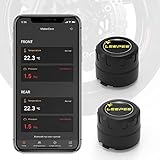
- New upgrade Designed: The LEEPEE TPMS 5.0 provides you with a faster, more accurate and more stable APP wireless connection to monitor the condition of your motorcycle tires in real-time. Only applicable to IOS and Android systems mobile phone, APP name“motorcare” (Not applicable to bicycles)
- Multiple Alert Modes: Tire Pressure Monitoring System monitors your tire condition in real time. Provide a variety of alarm conditions for your car, high and low-pressure alarm, air leakage alarm, high and low-temperature alarm, battery level alarm
- Intelligent Operation: Instantly activates or deactivates for peace of mind. The sensor enters sleep mode after 10 minutes of vehicle inactivity, conserving energy. It reawakens upon vibration and updates in real-time through the APP
- All-Weather Protection: The LEEPEE TPMS features a rugged, waterproof and dustproof construction. Withstanding extreme temperatures, it guards you year-round, accompanying you on all your mountainous and aquatic adventures
- Protection from Tire Pressure Mishaps: Abnormal tire issues can lead to serious incidents. Low pressure degrades riding quality and speeds up tire wear. Cornering risks increase, making rollovers more likely
These tools are market-specific. A result from the India Honda system does not establish coverage for a motorcycle sold in another country, and the U.S. Suzuki tool does not cover every Katana worldwide. If a search returns an open campaign, ask an authorized dealer whether the repair is outstanding, already completed or unavailable because the motorcycle is an imported specification. Keep the confirmation with your purchase records.
Honda Shine 100 and Suzuki Katana: compare the actual bikes
Do not treat these models as direct substitutes. The Honda Shine100 information describes an India-market, 100 cc fuel-injected commuter with combined braking system (CBS). The Suzuki Katana has year-specific manuals, and the available official material does not provide a complete specification comparison against the Shine 100. A meaningful decision therefore depends on the particular motorcycles, not a generic reliability ranking.
| Decision factor | Honda Shine 100 | Suzuki Katana | How to use it when buying used |
|---|---|---|---|
| Identity and documentation | Verify exact year and market; Honda India information is market-specific. | Verify exact year and market; Suzuki’s manual index lists 2020–2026 Katana manuals. | Use the matching manual and local registration records for the bike you are viewing. |
| Published equipment reference | India-market page describes 100 cc fuel injection and CBS braking. | A complete specification comparison was not established by the available official material. | Inspect the actual equipment and do not assume another market has the same parts. |
| Warranty reference | New India purchases are described as having a 3-year/42,000 km warranty, whichever comes first; specified wear items are excluded. | Warranty terms were not established here. | Ask for the original invoice, warranty booklet and dealer confirmation. A used buyer must verify whether any coverage transfers or remains valid. |
| Best comparison basis | Condition, service evidence, commuter suitability and repair needs. | Condition, service evidence, intended use and repair needs. | Compare inspected examples at their actual prices, including immediate tires, brakes, fluids or suspension work. |
Neither the cited manufacturer guidance nor the manual listings establish a population-wide failure rate, resale ranking, running-cost advantage or universal reliability winner. Compare local parts and service access, your intended roads and load, comfort, insurance and the cost of correcting every observed defect.
What’s actually slowing this PC down?
Pick the symptom - the matching free tool is one click away.
Price the motorcycle after identifying repairs
Separate defects into three groups before making an offer:
- Do not ride or buy until repaired: VIN irregularity, suspected frame damage, failed brakes, severely damaged or aged tires, major fluid leaks, unsafe steering or missing ownership documents.
- Immediate service items: overdue oil and filters, weak battery, worn chain or controls, contaminated fluids, cracked hoses or lights that do not work.
- Cosmetic or convenience items: scratched panels, faded finishes, non-essential accessories or minor surface corrosion that does not affect structure.
Obtain written estimates for the first two groups from a local mechanic. Deduct the realistic repair cost, plus a contingency for items hidden by a warm engine or fresh cleaning. If the seller refuses a cold start, VIN inspection or independent check, walk away rather than pricing the unknown as if it were healthy.
When to hire a professional inspector
A qualified local motorcycle mechanic is especially valuable when the bike has an unclear history, imported-market paperwork, crash signs, a modified electrical system, unexplained noises, inconsistent mileage or a failed recall search. Ask the inspector to document compression or diagnostic findings only when appropriate for that model, chassis alignment observations, brake and bearing condition, tire dates, fluid leaks and a road-test result. Give the mechanic the exact year and manual so the inspection uses the correct limits.
An inspection cannot guarantee future reliability, but it can turn an unknown repair bill into a documented decision. Pay for it before a non-refundable deposit, not after the sale.
Printable viewing checklist
- Exact model year and country specification recorded.
- Frame VIN/chassis number photographed and matched to every document.
- Seller’s identity and authority to sell verified.
- Registration, insurance, transfer and finance checks completed for your jurisdiction.
- Cold-start arranged; difficult starting, smoke, unstable idle and abnormal noises checked.
- Engine, cases, hoses and underside checked for leaks.
- Service invoices compared with the exact-year manual.
- Frame, welds, steering stops, forks, tank and subframe inspected for damage or corrosion.
- Wheels, bearings, rims and tire age, pressure, cracks and tread checked.
- Both brakes, free play, hoses, discs or drums and fluid levels checked.
- Throttle, clutch, gearbox controls, stands and switches operated.
- Headlight, tail light, brake lights, indicators, horn and warning lamps tested.
- Recall search completed with the tool that covers the motorcycle’s market.
- Independent mechanic’s findings and repair estimates obtained where needed.
- Final price reflects documented defects and required work.
Final decision
Buy the used Shine 100 or Katana only when its identity is clear, its ownership can be transferred, its cold-start and safety checks are satisfactory, recall status is understood and the price accounts for repairs. Choose between the two based on the inspected examples, your intended use and local support—not on an assumed reliability hierarchy or the odometer alone. If a seller will not provide the VIN, records or a reasonable inspection opportunity, the safest decision is to leave that motorcycle and find another example.
Quick Recap
Product prices and availability are accurate as of the date/time indicated and are subject to change. Any price and availability information displayed on Amazon at the time of purchase will apply.




