The cheapest used car to buy is not always the cheapest to own. Before you commit, calculate the car’s full cost, verify its identity and history, check recalls, drive it in conditions that match your routine, and pay an independent mechanic for a written pre-purchase inspection. Then compare the documented repair needs and total purchase terms with other cars. A low advertised price is only a good deal when fuel, insurance, taxes, maintenance, repairs and financing still fit your budget.
Calculate the full cost, not just the advertised price
Start with an out-the-door figure and a realistic ownership budget. Consumer guidance from the U.S. Federal Trade Commission (FTC), consumer.gov and Canada’s Office of Consumer Affairs identifies these cost categories as relevant:


As an Amazon Associate I earn from qualifying purchases.
| Cost | What to obtain | Why it matters |
|---|---|---|
| Purchase price | The vehicle price plus every dealer fee, documentation charge, tax, registration charge and optional add-on | A low sticker price can become expensive after mandatory and optional charges. |
| Financing | Annual percentage rate (APR), term, down payment, payment schedule and total amount paid | Interest can materially increase the cost. Two cars with the same monthly payment can have very different total prices. |
| Fuel | Official fuel-consumption rating for the exact year and configuration, multiplied by your expected mileage and local fuel price | Driving pattern, traffic, weather and vehicle configuration affect actual consumption. |
| Insurance | A quote for the exact vehicle, driver, address and coverage limits | Insurance varies by location, driver and model; do not substitute a generic estimate. |
| Taxes and registration | Your jurisdiction’s title, registration, inspection and tax charges | These are location-specific and may be due immediately after purchase. |
| Routine maintenance | Manufacturer-scheduled services that are due by mileage or age, plus consumables | A car that is inexpensive to buy may have major scheduled work due soon. |
| Repairs | Near-term work identified by an independent inspection, with written estimates | Deferred maintenance can erase any saving on the purchase price. |
Request the dealer’s total purchase price in writing. When comparing loans, put APR, term, down payment, total amount paid and payment schedule side by side; never choose solely by the monthly payment. Add the inspection’s immediate repair estimates to your first-year budget rather than guessing from the vehicle’s age or price.
Decide what “low running cost” means for your driving
Match the car to your actual trips
Write down your normal mix of stop-and-go traffic, highway driving, hills, short trips, passengers, cargo and seasonal conditions. A vehicle that is economical on a highway commute may not be the best fit for repeated short trips or heavy loads. The test drive and fuel comparison should reflect this use, not an abstract “best” model.
#1 Best Overall
Set a total-cost limit
Choose a maximum amount for the purchase and a separate reserve for insurance, taxes, registration, scheduled maintenance and repairs. Keep those figures separate from the monthly loan payment. If financing is involved, calculate the total amount repaid over the full term before deciding whether the car is affordable.
Research the exact configuration
Use the make, model year, trim, engine and drivetrain shown on the vehicle documents. Compare official fuel-consumption data for that exact configuration where it is available. In Canada, Natural Resources Canada provides a fuel-ratings search tool. Ratings are comparison aids, not guarantees of your real-world fuel use.
Also investigate the model’s likely maintenance schedule and common service requirements. Do not turn general reputation into a claim that one make or model is cheapest for every driver; ownership cost depends on mileage, condition, local labor rates, fuel prices, insurance and how the car is used.
PC Slower Than It Used to Be?
A free scan shows the junk files, broken settings and background clutter dragging Windows down - then fixes them in one click.Free scan · Windows 10 & 11Crashes, No Sound, or Screen Glitches?
Random freezes, missing sound and display glitches usually trace back to one bad driver. Find and replace yours safely.Free scan · under a minuteWhat to do before arranging a viewing
- Record the vehicle’s identity. Get the make, model year, trim, mileage and VIN (or the registration number used in your jurisdiction). Ask the seller for clear photos of the documents and compare the details with the advertisement.
- Ask for the paper trail. Request service invoices, inspection reports and repair records. Ask who maintained the car, whether scheduled work was completed, and when the next services are due.
- Ask direct history questions. Ask whether the vehicle has been in a crash, flood or other damaging event; how it was used; how many owners it has had where that information is available; and why it is being sold. Record the answers so you can compare them with the documents and inspection findings.
- Check recalls. Use the applicable official recall database with the VIN or other required identifying information. A recall search addresses open safety recalls; it does not certify the car’s general mechanical condition.
- Estimate local ownership costs. Obtain an insurance quote and calculate taxes, registration and any required inspection charges before treating the car as affordable.
- Plan an independent inspection. Identify a qualified mechanic you choose, confirm the inspection price and ask whether the mechanic can provide a written report with repair estimates. Arrange this before you negotiate or sign.
Missing records are uncertainty, not proof that the car was neglected and not proof that it was well maintained. Ask the seller to explain gaps and treat unverifiable maintenance as a risk when setting your offer.
Verify the car’s identity and history
Match every identifying number
Compare the VIN on the vehicle with the VIN on the title or registration document, service records and any history report. Check the locations required in your jurisdiction, such as the dashboard or door area, and look for mismatches, altered markings or documents that describe a different trim or mileage. Do not proceed until discrepancies are explained and corrected through the proper authority.
Use the correct regional documents
Rules differ by country and state or province. In the UK, GOV.UK guidance directs buyers to match registration details, MOT history, recall status, VIN and engine number against the V5C log book. The V5C/MOT process is UK-specific and should not be treated as a universal procedure. In the U.S., title, registration, disclosure and recall processes vary by state; in Canada, requirements vary by province or territory.
Read the service history critically
Compare recorded work with the manufacturer’s recommended schedule for the vehicle’s age and mileage. Look for evidence that scheduled services were performed on time and note repairs that were postponed or repeatedly attempted. Contact the issuing shop when reasonable to confirm that an invoice belongs to this vehicle. A consistent record supports the seller’s account; it does not replace an inspection.
The Tool Desk
Outbyte PC Repair FREEClear out junk files and repair common Windows errorsFree Scan →Outbyte Driver Updater FREEFix the driver behind crashes, sound loss and screen glitchesFind Drivers →Understand what a history report can and cannot show
History services can reveal information such as reported damage, title events, mileage entries or ownership records, depending on coverage in your jurisdiction. Reports can have gaps, and the FTC warns that a vehicle history report typically will not list mechanical problems. As the FTC puts it: “A vehicle history report is not a substitute for an independent vehicle inspection.” Confirm that the report is for the correct VIN and treat a clean result as one piece of evidence, not a mechanical guarantee.
Inspect the car at the viewing
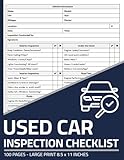
Use a written checklist so you record observations consistently across candidates. A paper checklist can help you avoid omissions, but it is not a substitute for a qualified mechanic.
- Confirm the VIN, mileage and registration or title details match the advertisement, documents and history report.
- Review every available service and repair record and note the date and mileage of the latest work.
- Ask the seller to explain any accident, flood, salvage, rebuilt or commercial-use history shown in the records or report.
- Check that the seller’s answers about ownership, use and maintenance are consistent with the documents.
- Verify the result of the applicable safety-recall search and ask whether open campaigns have been completed.
- Inspect the interior and exterior yourself, recording warning lights, damaged controls, unusual odors, water traces or other observations for the mechanic. Do not diagnose a fault from a quick visual check.
- Confirm that all promised equipment and repairs are present before they are written into the contract.
If the seller will not provide identifying information, refuses reasonable questions or pressures you to skip records and inspection, treat that conduct as a purchase risk rather than a reason to hurry.
Test-drive it as you will use it
Arrange a drive long enough to observe the car in representative conditions. U.S. Department of Justice and other consumer guidance recommends including hills, highways and stop-and-go traffic where practical. If your normal route includes any of those conditions, include them in the drive.
Quick wins for a faster PC:
Clear out junk files and repair common Windows errorsFree Scan →Fix the driver behind crashes, sound loss and screen glitchesFind Drivers →Repair Windows errors before they cause bigger problemsFix Now →- Begin with the car cold if possible; ask whether it has been warmed up before you arrive.
- Drive through the traffic pattern, speeds, hills and road surfaces that resemble your routine.
- Note warning lights, unusual noises, vibrations, odors, hesitation, difficulty selecting gears or changes in temperature.
- Test the controls and equipment you would rely on every day, including climate controls, lights, mirrors and safety features.
- After the drive, look for new warning messages, leaks or smells and record what you observed.
Your impressions help identify questions for the mechanic, but a buyer’s drive cannot establish the car’s mechanical condition. Do not waive an independent inspection because the vehicle feels good for a few miles.
Pay for an independent pre-purchase inspection
Choose the mechanic yourself, rather than relying only on a seller’s certification or recommended shop. FTC guidance says an independent inspection remains useful even when a dealer says a vehicle is certified or offers a warranty. Ask for a written report that identifies the vehicle by VIN and mileage, lists required and recommended work, and provides repair estimates.
Use the report to make a decision
| Finding | Action |
|---|---|
| No significant immediate work, with routine services documented | Continue comparing total cost and contract terms; keep the report with your purchase records. |
| Necessary repairs with clear estimates | Subtract the documented cost from the value you are willing to pay, or require the work in writing before purchase. |
| Uncertain cause, incomplete access or a recommendation for specialist diagnosis | Obtain the additional diagnosis or treat the unresolved issue as a cost and risk when comparing cars. |
| Major safety or mechanical concerns, structural damage or repair costs that exceed your reserve | Walk away unless a qualified professional resolves the issue and the final terms still make financial sense. |
If a dealer refuses to let you obtain an independent inspection, the FTC advises considering another dealer. Do not let a promised warranty or “certified” label replace a neutral assessment.
Read the warranty, as-is disclosure and contract
Determine who is selling and what protection applies
For a U.S. dealer sale, the Buyers Guide should state whether the vehicle is sold “as is” or with a warranty and should identify the principal warranty terms. Private-sale rules, dealer disclosures and implied-warranty protections vary by state. Other countries have their own consumer rules. Read the actual documents that apply to your transaction, not a verbal summary.
Free tools Windows power users keep installed
One-click scans. No signup required.
Put every promise in writing
Write any agreed repair, replacement, price adjustment, included accessory or warranty change into the contract or a signed addendum. A salesperson’s verbal promise is difficult to enforce if it does not appear in the paperwork. Check that the VIN, mileage, price, fees and promised work are correct before signing.
Evaluate a service contract
A service contract may or may not add useful coverage. Before paying for one, check:
- Whether it duplicates an existing warranty or statutory protection
- Which parts and systems are covered and which exclusions apply
- The deductible for each repair
- Where repairs may be performed and whether prior authorization is required
- Coverage for towing, rental cars and other incidental expenses
- The provider’s identity, financial responsibility and claims process
- Cancellation rights, fees and the deadline for cancelling
Coverage, cancellation rights and legal protections differ by jurisdiction. Do not assume a universal cooling-off or return period. In the U.S., the FTC notes that return rights differ by state; other countries have different rules.
Rank #4

- These driver's vehicle inspection report (DVIR) books comply with DOT regulations 49 CFR 396.11 and 396.13.
- Our DVIR inspection book contains a vehicle inspection checklist that comprehensively lists specific tractor/truck and trailer parts to help simplify the inspection process. This allows drivers to quickly mark any needed repairs.
- DVIR books include essential DOT regulations which are printed on the inside cover to remind drivers of the DOT-required procedures they must follow. And there are instructions for filling out a DVIR form to simplify the completion.
- This package comes with 10 books. Each book contains 35 sets of DVIR forms, in duplicate. In total, you will receive 350 forms. Compact 8.5" x 5.5" size facilitates easy handling and record-keeping.
- Our inspection report books are made of carbonless, premium paper that withstands daily use. Whether you manage a single vehicle or a large commercial fleet, our DVIR book is an essential tool for ensuring the safety and compliance of your operations.
Compare two or more candidate cars
Use the same evidence categories for every vehicle. A spreadsheet or printed worksheet prevents a low asking price from overshadowing a costly inspection result.
Do these 3 things before closing this tab:
1Scan for outdated or missing drivers - takes under a minute2Clear out junk files and repair common Windows errors3Fix the driver behind crashes, sound loss and screen glitches| Comparison area | Questions to answer for each car | Evidence to record |
|---|---|---|
| Total cost | What is the out-the-door price, financing total, fuel cost, insurance quote, tax, registration, maintenance and estimated repairs? | Written dealer quote, lender figures, local quotes and inspection estimates |
| Evidence of care | Are service intervals documented, and do ownership, damage and use records match the seller’s account? | Invoices, service schedule, history report and seller responses |
| Inspection findings | What must be repaired now, what can wait, and what remains uncertain? | Independent written report naming the VIN and repair estimates |
| Use fit | Did the car suit your traffic, highway, hill, passenger and cargo needs during the test drive? | Notes from representative driving conditions |
| Contract risk | Is it as-is or warranted? What exclusions, add-ons, financing terms and cancellation rules apply? | Buyers Guide or equivalent disclosure, contract and service-contract document |
Prefer the car with the strongest documented condition and predictable total cost, not automatically the one with the lowest purchase price or fuel rating. If a key item is “not stated,” obtain the information or price the uncertainty as a risk.
Red flags that justify delaying or walking away
- The VIN, mileage or documents do not match, or the seller cannot explain the discrepancy.
- The seller will not provide service records, answer damage questions or permit a reasonable test drive.
- A history report is clean but the seller refuses an independent inspection.
- The mechanic identifies major unresolved safety or mechanical work that exceeds your repair reserve.
- The seller insists that a verbal promise is sufficient and will not put it in the contract.
- Fees, add-ons, APR or the total amount paid are disclosed only after you focus on a monthly payment.
- The warranty, as-is status or service-contract exclusions are unclear.
- You are pressured to sign immediately or told that local return rights are guaranteed without seeing the applicable rule.
Any one item may have an innocent explanation, but you should resolve it with documents and qualified advice before paying. You can always compare another car.
Final checks before you sign
- Recheck the VIN, mileage, seller identity and ownership documents.
- Confirm the recall search and retain the result.
- Read the independent mechanic’s report and written estimates; decide which work is required before delivery and which cost you will accept.
- Obtain the complete out-the-door price, including taxes, registration, fees and optional products.
- Compare financing APR, term, down payment, payment schedule and total amount paid with any alternative loan.
- Read the Buyers Guide or equivalent warranty disclosure, service contract and sales contract from start to finish.
- Ensure every negotiated repair, equipment item and price change is written and signed.
- Check your jurisdiction’s title-transfer, registration, inspection, warranty and cancellation requirements.
- Keep copies of the advertisement, history report, inspection, invoices, contract and payment records.
Regional rules require local verification
The most detailed warranty and dealer guidance cited here is U.S.-focused. The FTC Buyers Guide, state return rules and title procedures should not be presented as universal. Canadian buyers should apply their province or territory’s rules and use local cost estimates; Natural Resources Canada’s ratings are a useful official fuel comparison. UK buyers should follow the V5C, MOT, registration, VIN, engine-number and recall checks specified by GOV.UK. Everywhere, verify the rules for your own jurisdiction before signing, because taxes, registration, inspections, warranties, title branding and return rights differ.
The practical decision rule
Buy only when three conditions are true: the vehicle’s identity and history are consistent, an independent mechanic’s written report leaves you with an affordable and understood repair position, and the complete purchase and ownership costs fit your budget under the contract you are actually signing. If any of those conditions is missing, delay the deal or choose another car.
Quick Recap
Product prices and availability are accurate as of the date/time indicated and are subject to change. Any price and availability information displayed on Amazon at the time of purchase will apply.




