Quick wins for a faster PC:
Repair Windows errors before they cause bigger problemsFix Now →Scan for outdated or missing drivers - takes under a minuteDriver Scan →Clear out junk files and repair common Windows errorsFree Scan →Before buying a used all-wheel-drive (AWD) car, verify the vehicle identification number (VIN), title and recall status; reconcile the mileage and service records with the exact model-year maintenance schedule; inspect all four tires and the AWD hardware; test-drive the car; and pay an independent mechanic for a written pre-purchase inspection. A vehicle-history report can reveal ownership, accident, repair or salvage information, but it cannot substitute for an examination of the vehicle itself.
This sequence is based mainly on U.S. consumer guidance. Dealer disclosures, private-party sales and inspection rights vary by state, so treat the legal and warranty points below as a buying framework rather than state-specific legal advice.
As an Amazon Associate I earn from qualifying purchases.
Why an AWD car needs a more deliberate inspection
AWD is a drivetrain arrangement, not a single standardized mechanism. Depending on the car, power may pass through a transaxle, transfer case or electronically controlled coupling, then through front and rear differentials, driveshafts, axles and constant-velocity (CV) joints. Some systems use permanently engaged components; others vary torque electronically. The parts fitted to one model may not exist on another.
That variation affects maintenance, tire requirements and failure symptoms. A generic statement such as “change the AWD fluid every set number of miles” is not reliable. The correct interval comes from the owner’s manual or service information for the exact year, trim, engine and AWD system. The same caution applies to tire-size matching, allowable wear differences and whether a particular component is serviceable.
#1 Best Overall

- 1.Accurate and Efficient: Different colors on the bar represents different scopes, the red range on bar: 0 - 3/ 32; Yellow range on bar: 3/ 32 - 6/ 32; Green range on bar: 6/ 32 - 32/ 32, allowing you easy and fast to read and calibrated
- 2.Reusable:Tire tread gauge is made of sturdy material, reusable and long lasting, which is an efficient tool to moenitor tire tread levels, make driving safer
- 3.Convenient:Tire tread Depth gauge measures approx 3.35 x 1.06 inch, small size, also features a pocket clip for easy carrying, you can clip it on your pocket, ideal for quick and convenient getting and using
- 4.Simple to use :Place the black flat edge of the tire tread gauge on both sides of the tire tread, press down the color bar until it reaches the bottom of the tread groove, and read the depth measurement on the indicator bar.
- 5.Easy to read: There are 3 different color codes of areas on the bar that add simplicity and convenience, which show you a clear result of your tyre condition, really easy to read, giving you a fast and accurate measurement to tread depth, smart, high efficiency
AWD also adds potential repair exposure. A neglected fluid leak, mismatched tire or worn coupling can become an expensive drivetrain problem, while a history report may show none of it. Use the report to identify questions, then use records, a road test and an independent inspection to answer them.
Before arranging a viewing
Ask the seller for enough information to screen the car before spending time or paying for an inspection. Request the following in writing:
- VIN, current odometer reading and a clear statement of title status.
- Any available vehicle-history report, including accident, salvage, flood, ownership and repair entries.
- Service invoices, inspection sheets and records of tire replacement or drivetrain-fluid work.
- For a dealer, the advertised price, fees and an out-the-door total; also ask to see the Federal Trade Commission (FTC) Buyers Guide.
- Permission to arrange an independent inspection at a shop you choose.
Compare every mileage entry you receive. A gap is not proof of fraud, but an unexplained decrease, long undocumented period or mismatch between the odometer and service invoices deserves an explanation before you proceed. A clean history report is not proof that the car has never been damaged or that its mechanical condition is sound; not every event is reported.
Free tools Windows power users keep installed
One-click scans. No signup required.
Confirm the exact vehicle configuration
Record the model year, trim, engine, transmission and AWD designation. Two versions sold under the same model name can have different tire sizes, fluid specifications, service intervals or AWD hardware. Use those identifiers to obtain the correct owner’s manual and maintenance schedule before evaluating the records.
Check recalls by VIN, close to purchase
Recall status is specific to the VIN. Check for open safety recalls shortly before buying, not only when the advertisement was posted. Ask the seller for documentation that each completed recall repair was performed. A verbal assurance is not equivalent to a repair record. An open recall may be repairable at no charge through the manufacturer, but confirm the process and parts availability before taking ownership.
Read the service history against the model’s schedule
Organize the invoices chronologically and compare them with the schedule for the exact car. Look for evidence of routine oil and filter service, inspections, brake work, cooling-system maintenance and any AWD-specific fluid inspections or replacements called for by the manual. Do not mark a service as complete merely because an invoice says “AWD check”; identify what was actually inspected or replaced.
Rank #2

- Accurate and precise tire tread depth readings in 1/32 inch increments (1/128 inch resolution)
- Durable dial type gauge with easy-to-read 32nds scale (max. tread depth 14/32 inch)
- Color coded scale shows true tire health - safe range (green), showing wear (yellow), or needs replacement (red)
- Calibrated to meet or exceed industry standards for precise accuracy of tire tread depth (+/- 0.25%)
- Rugged, convenient, and compact design for easy storage with included leather pouch
Why manufacturer examples cannot be generalized
Published schedules differ by model year and configuration. For example, Subaru’s 2019 guidance lists inspection or service operations for transmission and differential fluids at stated intervals, but those instructions apply to the specified Subaru vehicles and are not a universal AWD rule. Use that kind of schedule as a reminder to locate the right documentation, not as a maintenance interval for another brand.
Do these 3 things before closing this tab:
1Scan for outdated or missing drivers - takes under a minute2Repair Windows errors before they cause bigger problems3Fix the driver behind crashes, sound loss and screen glitchesEvaluate gaps without assuming the worst
Missing records lower your confidence; they do not automatically condemn the car. Ask whether work was performed by a shop that did not provide detailed invoices, then have the mechanic inspect fluid condition, leaks and wear directly. If a major scheduled service cannot be verified and the cost of catching up is material, include that cost in your offer or walk away.
Inspect the four tires as a matched system
Tires are one of the most important AWD-specific checks because rolling circumference differences can place stress on the drivetrain. Inspect all four, not just the two with the best-looking tread.
| What to check | What it can reveal | What to do next |
|---|---|---|
| Size, type and load/speed markings | A mismatch with the vehicle specification or between axles | Compare the sidewall markings with the owner’s manual and the vehicle placard; ask the mechanic whether the combination is acceptable for that AWD system. |
| Tread depth and tread pattern | Low or uneven wear, possible alignment, suspension or tire-pressure problems | Measure each tire and have uneven wear diagnosed rather than treating replacement as a cosmetic issue. |
| Visible damage | Bulges, cuts, exposed cords, puncture repairs or sidewall deterioration | Do not drive on a visibly unsafe tire; obtain a replacement estimate before negotiating. |
| Brand, model and age markings | A mixed set or aging rubber even when tread remains | Ask whether the set meets the manufacturer’s specification and whether the mechanic recommends replacing more than one tire. |
The FTC Buyers Guide lists low tread and mismatched tire sizes among potential defects and uses 2/32 inch as a tread-depth threshold in its 2016 checklist. That figure is a disclosure checklist item, not a guarantee that a tire above it is safe, nor a universal AWD wear tolerance. The exact vehicle manual and a professional assessment control.
Some cars use different front and rear sizes or restrict tire rotation. Do not assume that all four tires must always be identical or that every AWD vehicle permits the same tread-depth difference. Have the mechanic confirm the specification for the car you are considering.
Outdated Drivers Are Slowing You Down
One free scan finds every outdated or missing driver and matches the right update for your exact hardware.Free scan · exact hardware matchWindows Errors? Fix Them Before They Spread
Repair common Windows errors and clear accumulated junk for a smoother, more stable PC - no reinstall needed.Free scan · no reinstallWalk around the vehicle for drivetrain clues
Inspect the car on level ground in daylight, preferably when the engine and drivetrain are cold. Use a flashlight, but do not crawl under an unsupported vehicle.
Rank #3

- 1. Accurately measures tire tread depth gauge, Calibrated from 0 to 1 inch in 1/32 inch
- 2. Color coded tire tread depth gauge clearly indicates the tire different phase by colors
- 3. Tire tread depth gauge of Red range on bar: 0-3/32; Yellow Range on bar: 3/32 - 6/32; 5. Green Range on bar: 6/32-32/32
- 4. Comes with a pocket clip, easy to carry a tire tread depth gauge
- 5. Tire tread depth gauge reads in 32nds Suitable for trucks, motorcycles, automobiles and any passenger vehicle
- Look beneath the engine, transmission or transaxle, differentials and driveshaft areas for fresh fluid, damp housings or spots on the ground.
- Check wheels, suspension components, exhaust, brake lines and underbody shields for impact damage, bent parts or corrosion.
- Inspect CV-joint boots and axle areas for tears or grease thrown onto nearby components.
- Look for warning lights with the ignition switched on before starting. The warning lamps should perform their normal self-check; a missing lamp or a lamp that never illuminates can warrant further diagnosis.
- Compare panel gaps, paint texture and fasteners for signs of collision repair, while remembering that cosmetic inspection cannot establish the quality of structural repairs.
The FTC Buyers Guide identifies fluid leakage, abnormal noise or vibration, damaged housings and improper shifting as possible concerns involving differentials, transmissions and driveshafts. These observations are screening clues, not a diagnosis. A clean underside does not rule out an intermittent or internal fault.
Test-drive the exact car under realistic conditions
Drive the vehicle long enough to reach normal operating temperature and, where safe and legal, include the speeds, hills, turns and road surfaces you normally use. Ask the seller not to warm it up before you arrive if practical; a cold start can reveal behavior hidden by a warm engine.
- Start-up: Listen for unusual clunks, grinding, whining or repeated clicking. Confirm that warning lights follow the normal start sequence and then go out as expected.
- Low-speed maneuvering: In an empty area, make gentle full-lock turns in both directions. Binding, hopping or pronounced shuddering can justify an AWD-system diagnosis, but do not identify a failed part from this test alone.
- Acceleration and shifting: Apply moderate throttle and observe hesitation, slipping, harsh engagement or delayed shifts. Note whether the transmission selects each gear smoothly.
- Cruising: At a steady speed, feel for vibration through the steering wheel, seat or floor. A vibration may originate in a tire, wheel, driveshaft or another component.
- Braking and steering: Check for pulling, pulsation, unusual effort or noises. Stop the test if the car feels unsafe.
- Surface changes: If your normal use includes gravel, snow or steep grades, ask the mechanic how the observed system is designed to behave there. A brief dry-pavement drive cannot prove winter performance.
Record the speed, road condition and symptom rather than labeling a component defective. Give those details to the independent mechanic, who can inspect mounts, joints, fluids, tires and diagnostic data.
Pay for an independent pre-purchase inspection
Choose the mechanic yourself, preferably one familiar with the make and AWD design. Dealer certification, a seller’s inspection and a history report do not replace an independent examination. Ask for a written report that separates safety issues, imminent repairs, routine maintenance and items that should be monitored.
Request an AWD-specific scope
Tell the shop the exact model and ask it to inspect the components the vehicle actually uses. Depending on the design, that may include the transmission or transaxle, transfer case or coupling, front and rear differentials, driveshafts, axles, CV boots, mounts, seals and fluid levels or leaks. The mechanic should also evaluate tire size and wear consistency, wheel and suspension condition, brakes, steering, cooling and electrical systems.
Get written estimates and priorities
Ask for estimated parts and labor costs for each finding, with safety-critical work separated from deferred maintenance. A report that says “needs AWD service” without identifying the component or evidence is not sufficient for negotiating a price. If the shop cannot access a component without disassembly, the report should say so and explain the remaining uncertainty.
Rank #4
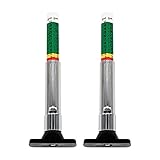
- Accurate measures tire tread depth gauge tool
- Calibrated from 0 to 1 inch in 1/ 32 inch
- Red range on bar: 0-3/32; Yellow Range on bar: 3/32 - 6/32; 5. Green Range on bar: 6/32-32/32
- Pocket-sized gauge, easy handy
- 2 pack
Respect a seller who refuses inspection as a warning
A dealer or private seller may set reasonable logistics, but refusing a normal independent inspection removes a key protection. FTC consumer guidance advises considering another seller when a dealer will not allow an independent inspection. Do not let a short return window or “certified” label pressure you into waiving this step.
Understand the written deal before signing
Dealer purchases
Read the FTC Buyers Guide on the vehicle, not a blank form or a verbal description. It states whether the car is sold “as is” or with a warranty and identifies systems and potential problems. Verify that the final paperwork matches the Guide and any promised repair.
Request an itemized out-the-door price that includes vehicle price, documentation fees, taxes, registration and any optional products. Put every material promise—new tires, fluid service, a recall repair, a warranty term or a price adjustment—in the contract or a signed addendum.
Service contracts are not automatically warranties
If offered an extended service contract, read which systems are covered, exclusions, deductibles, authorization rules, repair locations, cancellation rights and the contract term. A service contract may pay for fewer failures than a warranty and may not cover a pre-existing condition. Compare its coverage with the inspection report before buying it.
Private-party transactions
State rules, title procedures and implied-warranty rights differ for private sales. Confirm that the seller is the titled owner, check lien information through the appropriate state process and obtain a signed bill of sale that identifies the VIN, price, date, mileage and promises. Do not rely on dealer Buyers Guide protections in a transaction where that form is not required.
Recommended Free Tools
Calculate the real first-year cost
Use the mechanic’s written estimates to build a near-term budget before negotiating. Include tires if the set is mismatched or near replacement, overdue scheduled services, fluids, brakes, registration, taxes and insurance. Separate repairs required for safe operation from optional improvements.
Best Value

- 1. Accurately measures tire tread depth gauge tool, Calibrated from 0 to 1 inch in 1/32 inch
- 2. Color coded tire tread depth gauge tool clearly indicates the tire different phase by colors
- 3. Tire tread depth gauge of Red range on bar: 0-3/32; Yellow Range on bar: 3/32 - 6/32; 5. Green Range on bar: 6/32-32/32
- 4. Comes with a pocket clip, easy to carry a tire tread depth gauge tool
- 5. Tire tread depth gauge tool reads in 32nds Suitable for trucks, motorcycles, automobiles and any passenger vehicle
Compare the total with the asking price and with another candidate’s total—not just sticker prices. A lower-priced AWD car needing four tires and drivetrain work may cost more immediately than a better-documented car with a higher purchase price. If the seller will not address a serious finding and the numbers no longer fit your budget, walking away is a valid outcome.
Compare two AWD candidates consistently
When you have more than one vehicle, score the same evidence for each rather than relying on impressions. A simple worksheet can use these rows:
| Comparison area | Evidence to record |
|---|---|
| Title and history | Ownership sequence, accident or salvage entries, mileage continuity and unexplained gaps. |
| Recall status | Open VIN-specific recalls and documentation of completed repairs. |
| Maintenance | Invoices matched to the exact model-year schedule, including AWD-related services. |
| Tires | Size and type conformity, tread measurements, age, damage and estimated replacement cost. |
| AWD and drivetrain | Leaks, noises, vibration, shifting behavior, warning lights and mechanic findings. |
| Inspection | Safety-critical repairs, immediate maintenance, deferred work and written estimates. |
| Deal terms | Warranty or “as is” status, service-contract coverage, total price and written promises. |
| Near-term budget | Purchase total plus repairs and scheduled work you expect during the first year. |
No model can be ranked responsibly from AWD status alone. Condition, documentation, tire conformity and inspection results matter more than a badge or a seller’s claim that the vehicle is “ready for winter.”
What’s actually slowing this PC down?
Pick the symptom - the matching free tool is one click away.
Red flags that should change your decision
- The seller will not provide the VIN or title information before a deposit.
- Mileage differs across the title, history report, inspection stickers and invoices without a credible explanation.
- The title is branded, salvage, flood-damaged or otherwise inconsistent with the advertisement.
- An open safety recall has no documented repair plan.
- The four tires differ in size or show substantial tread variation, and the seller refuses a professional assessment.
- Fresh fluid is visible around a differential, transmission, coupling or driveshaft housing.
- The test drive produces binding, grinding, clunks, shuddering, warning lights or abnormal vibration.
- The dealer will not show the Buyers Guide, provide an itemized total or put promised repairs in writing.
- The seller refuses an independent inspection or insists on a mechanic they selected.
One red flag may have an explainable cause; several together increase the chance that the car’s apparent price is hiding mechanical or legal risk. Pause the transaction until the evidence and cost are clear.
A printable AWD buying sequence
- Obtain the VIN, title status, mileage, records and history report.
- Check VIN-specific recalls and request proof of completed work.
- Find the exact owner’s manual and maintenance schedule.
- Reconcile mileage and scheduled services with the documents.
- Inspect all four tires, the body and accessible drivetrain areas.
- Test-drive the vehicle and record symptoms without diagnosing them.
- Arrange an independent inspection with written findings and estimates.
- Price immediate repairs, tires, overdue maintenance, taxes and fees.
- Review the Buyers Guide, warranty or “as is” disclosure and any service contract.
- Get the final total and every promise in writing, then keep copies of the title, contract, inspection and receipts.
The purchase is ready to proceed only when the VIN and title check out, the maintenance and tire evidence fit the exact vehicle, an independent mechanic has addressed AWD-specific risks, and the written deal still makes financial sense after known repairs.
Quick Recap
Product prices and availability are accurate as of the date/time indicated and are subject to change. Any price and availability information displayed on Amazon at the time of purchase will apply.




