Inspect a four-cylinder cruiser motorcycle in a fixed order before discussing price: verify the VIN and paperwork, review maintenance and recall history, examine tires and wheels, test brakes and controls, check steering, frame and suspension, inspect the engine and fluids, operate every electrical component, and assess the final drive, fasteners and stands. Ask to see the engine start from cold whenever possible. A clean-looking motorcycle can still have unsafe tires, worn bearings, hidden crash damage, poor wiring or neglected fluids.
This is a category-level checklist, not a model-specific service schedule. Four-cylinder cruisers differ in engine design, cooling systems, final drives, tire specifications and inspection limits. Once you identify the exact make, model, year and jurisdiction, use its owner and service manuals for pressures, clearances, fluid procedures and legal paperwork.
As an Amazon Associate I earn from qualifying purchases.
Use the same inspection sequence every time
Consistency prevents a polished bike or an eager seller from making you skip an expensive check. Bring a flashlight, tire-pressure gauge, clean gloves, paper towels, a small mirror and a phone for photographs. Use the gauge only to measure pressure; the correct cold pressure must come from the motorcycle’s specification and must reflect the intended load.
- Identity and history: VIN, title, registration, recalls, ownership and service records.
- Tires and wheels: condition, age clues, pressure, seating, damage and bearing play.
- Brakes and controls: independent brake operation, pads, discs, hoses, throttle and clutch.
- Steering, frame and suspension: crash evidence, bearing movement, forks, shocks and alignment.
- Engine and fluids: cold-start behavior, smoke, noises, levels and leaks.
- Electrical system: lighting, switches, horn, stop control and wiring quality.
- Drivetrain and chassis: chain, belt or shaft, fasteners, stands and visible play.
- Controlled test ride and professional inspection: only after the static checks pass.
Do not ride if a safety-critical defect is apparent. Have a qualified technician assess any uncertainty rather than treating this checklist as a roadworthiness certificate.
#1 Best Overall

- PRO ACCURACY - mechanic recommended, performance tested, & calibrated accurate to professional ANSI 2A standards - with dual pressure sensors certified to ±0.50% FS (0.50 PSI), offering reliable readings up to 100 PSI w/ precise readout resolution of 0.10 PSI - so you can now maintain your tires with a shop-grade mechanic trusted tool
- STRONG & RUGGED - feels solid in the hand & built to last from 100% solid brass & steel parts shielded by our shock-resistant gear-style protective guard to protect against drops & impact. Features ultra soft & strong 10" fully rotational, leak-proof HybridFlex air hose w/ 360 swivel angled air chuck that can be swapped out w/ any 1/4" NPT chuck
- ADVANCED ENGINEERING - all readings lock-on to the display until the "ON" button is pressed once to reset to zero. Features built-in air bleeder valve that bleeds pressure in real time without needing to reset the display - ideal for cars, trucks, motorcycles, bikes, RV & trailers, spare tires, and much more
- SMART DISPLAY - features high-resolution digital 2.5 inch LCD display screen w/ battery life indicator & bright LED backlight for high visibility in the dark. Gauge is programmed to auto shut-off after 150 seconds of inactivity to save battery (2x AAA batteries included)
- 100% Lifetime Warranty by JACO - serving the automotive industry for 35+ years. Enjoy longer-lasting tires, improved fuel economy, and superior vehicle performance & handling with properly inflated tires.
1. Confirm identity, ownership and history
Match the VIN everywhere
Locate the motorcycle’s vehicle identification number and compare it character by character with the title, registration and seller’s paperwork. A unique VIN is part of motorcycle identification under the National Highway Traffic Safety Administration’s federal requirements. A mismatch, altered stamping, missing plate or unexplained paperwork gap is an ownership and identity problem, not a cosmetic imperfection. Pause the transaction until it is resolved through the appropriate authority.
Check the title and local transfer rules
Title, registration, tax and transfer requirements vary by jurisdiction. Confirm the process with your local motor-vehicle authority before handing over money. Establish whether the seller is the titled owner, whether a lien remains, and which documents and signatures are required. Do not assume that a bill of sale alone transfers ownership everywhere.
Ask for records, not assurances
Request invoices, inspection reports, registration history and a written account of ownership, storage, accidents, water exposure, modifications and unresolved repairs. Records should make sense with the mileage and visible condition. Missing records do not prove neglect, but they increase uncertainty and make a professional inspection more valuable.
The Tool Desk
Outbyte Driver Updater FREEScan for outdated or missing drivers - takes under a minuteDriver Scan →Outbyte PC Repair FREERepair Windows errors before they cause bigger problemsFix Now →Run a VIN-specific recall check
Search the motorcycle’s VIN in the manufacturer or government recall system applicable to your country. Recall status is vehicle-specific and can change, so a general statement that a model “had no recalls” is not enough. Ask whether every applicable campaign was completed and request documentation when available.
2. Inspect tires and wheels before looking at performance
Examine the entire tire surface
- Check tread depth and look for a wear pattern that is even across the profile.
- Look for cuts, punctures, bulges, exposed cords, embedded objects and sidewall damage.
- Inspect for cracking or hardening from age and weather exposure.
- Check that the tire bead appears properly seated around the rim.
- Compare the tire sizes and load ratings with the exact motorcycle’s specification.
Uneven wear can indicate incorrect pressure, suspension or alignment problems, aggressive use or a bent wheel. A tire that still has tread can remain unsuitable if it is cracked, damaged or otherwise outside the manufacturer’s limits.
Measure pressure cold
Measure both tires before riding, when they are cold, and compare the readings with the motorcycle’s specified pressures for the intended load. The Motorcycle Safety Foundation’s T-CLOCS checklist states: “Air Pressure: Check when cold, adjust to load.” NHTSA also includes pressure and tread depth in its before-every-ride checks. A gauge tells you the current reading; it does not supply the correct target.
Rank #2

- 90 degree head for those difficult to access valve stems.
- High quality all metal construction.
- 5-50psi (50-300kPa) readout.
- Made by Counteract Balancing Beads.
- Packaged individually. Custom red head with black anodized body with Counteract engraving.
Check wheels and bearings
Inspect cast wheels for cracks, dents and impact marks. On a safely supported motorcycle, check for abnormal wheel-bearing play or roughness if you know the correct procedure; otherwise have a technician do it. Do not improvise a lifting method that could let the motorcycle fall. Look for rim damage that could explain a slow leak or vibration.
Crashes, No Sound, or Screen Glitches?
Random freezes, missing sound and display glitches usually trace back to one bad driver. Find and replace yours safely.Free scan · under a minutePC Slower Than It Used to Be?
A free scan shows the junk files, broken settings and background clutter dragging Windows down - then fixes them in one click.Free scan · Windows 10 & 113. Verify brakes, levers, pedals and cables
Test each brake independently
Operate the front and rear brakes separately while the motorcycle is stationary. The lever and pedal should move in a controlled way and produce firm, predictable resistance. Inspect visible pads and discs for excessive wear, deep scoring, cracks, blue heat marks or contamination. Look for fluid around calipers, master cylinders, banjo fittings and hoses.
Inspect hoses and control movement
Brake hoses should not be swollen, cracked, abraded or leaking. Move the handlebars slowly from lock to lock while checking that hoses and cables do not pull, bind or become tight. The throttle should rotate freely and snap back when released. The clutch control should move smoothly through its range, and the pedal and lever should not be bent or dangerously loose.
Know when to stop
Do not test-ride a motorcycle with questionable brakes, tires, steering, throttle or other safety-critical controls. A qualified technician can determine whether a symptom is adjustment, wear or a deeper hydraulic or mechanical fault. Treat an uncertain brake or control as a reason to pause, not as leverage for an optimistic price assumption.
4. Examine steering, frame and suspension
Search for crash evidence
View the frame from several angles and look for cracks, kinks, deformation, fresh paint over a repair, welds that do not match the factory finish, or fasteners with disturbed tool marks. Inspect handlebars, risers, foot controls, engine cases, exhausts and levers for scrape marks that could indicate a fall. A professional frame inspection is appropriate if alignment or repair quality is unclear.
What’s actually slowing this PC down?
Pick the symptom - the matching free tool is one click away.
Check steering movement and head bearings
With the front wheel unloaded only by a safe, correct method, move the steering through its range. Binding, a notch near center or tight spots can indicate bearing damage or incorrect adjustment. Head-bearing play is difficult to assess safely without the right support; ask a technician if you cannot confidently check it.
Rank #3

- PROCESS LEVEL ACCURACY: Each ETENWOLF’s digital tire pressure gauge is calibrated manually to ANSI B40.7 Grade 2A(plus-minus 1 PSI).Presta valve adapter not included, if used for bicycles, it must be purchased separately
- ACCURACY IN EXTREME PRESSURE RANGE: Whether tire pressure is below 12 PSI or above 140 PSI, ETENWOLF’s digital tire gauge is accurate as well
- ACCURACY IN EXTREME WEATHER: Built-in AI chip with thermal compensation inside, ETENWOLF’s tire gauge works normally even in extreme cold or hot weather(-4°F-130°F/-20°C-54°C)
- PRESSURE RANGE 3-200 PSI : ETENWOLF’s digital tire pressure gauge can measure pressure of all types of vehicles
- REPLACEABLE AAA BATTERIES: Batteries are easy to replace and helps to extend the tire pressure gauge’s life span, with LED light to illuminate dark areas for easy tire pressure reading
Inspect forks, shocks and swingarm
- Look for oil on fork tubes, damaged tubes and pitted or rusty sliding surfaces.
- Compress the suspension carefully and watch for smooth movement and controlled return.
- Inspect rear shocks for leaks, broken springs, damaged mounts and uneven ride height.
- Check the swingarm and linkage area for visible damage, looseness or missing hardware.
- Look along the motorcycle for obvious wheel misalignment.
The Motorcycle Safety Foundation’s checklist specifically calls attention to steering-head bearings, swingarm bushings, forks and rear shocks. Model-specific wear limits and adjustment procedures belong in the service manual.
5. Assess the engine, fluids and leaks
Insist on a cold start when practical
Ask the seller not to warm the motorcycle before you arrive. A cold start lets you judge starting effort, idle stability and smoke more honestly. Confirm that the engine is genuinely cold by carefully comparing the temperature of accessible components; do not touch hot parts. Hard starting, repeated cranking, an unstable idle or warning lights deserve explanation and follow-up.
Observe exhaust and sounds
Watch for heavy or persistent smoke and listen for unfamiliar knocking, rattling, grinding or harsh mechanical noise. A brief vapor in cool conditions is not the same observation as sustained smoke, but any unclear symptom should be diagnosed rather than dismissed. An inspection observation is not a diagnosis.
Check fluids using the correct procedure
Inspect engine oil, coolant, brake fluid and any other fluid specified for the motorcycle. Use the manufacturer’s method for level and condition: some engines must be upright, some require a warm check and some require a particular wait period. Check coolant only when the engine is cool, as the MSF checklist advises. Look for contamination, a burnt smell, missing caps or evidence of repeated top-ups.
Find leaks and their source
Use a flashlight and clean paper towel around the engine, oil filter, drain plug, coolant hoses, radiator, brake components and, where fitted, the final-drive housing. Distinguish old residue from a fresh, wet leak. Fuel, coolant, oil and brake-fluid leaks have different safety implications; do not ride until a qualified person identifies and corrects a leak that could reach a hot surface, tire or brake.
Account for maintenance access
Four-cylinder engines can have more spark plugs, ignition components and valve-train access points than a single- or twin-cylinder design, but the inspection still depends on the exact model. Do not infer service intervals, valve-clearance limits or part compatibility from the engine’s cylinder count. Obtain the matching manual before planning maintenance.
Rank #4
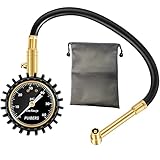
- 1. Reliable Air Pressure Gauge for Tires, full gear precision movement with bronze bourdon tube, no battery required, durable brass construction, accuracy meets ANSI Grade B40.1 Standards, more accurate and reliable than digital tire pressure gauge, maintains good performance for many years.
- 2. Legiable Luminous Dial, glow in the dark, clear display, easy to read even in very low light conditions; Patented design flexible hose and professional 90 degree right angle chuck design, very suitable for motorcycles, car, bike measurement.
- 3. Metric range design, range to 60 psi, meet your reading needs. 60 PSI Right Angle Chuck air gauge tire pressure is perfect for your motorcycle, bike, car, dirt bike, SUV, etc. for Scharder valves.
- 4. Heavy Duty Strong Structure Ensures Its Long Service Life,accurate pressure holding and quick pressure relief function; Larger button is conformed to ergonomic design which makes it more comfortable to press. An ideal gift for Father's Day or Christmas.
- 5. PUIBERS has professional car tire pressure gauge design. After continuous testing, more perfect tire pressure gauge for cars is designed. The quality can be guaranteed and the life-long friendly customer support. Buy with confidence, save a fortune with improved gas mileage, and enjoy a smoother and safer driving experience.
6. Test every electrical function and inspect modifications
Operate all lights and switches
- Headlight on low and high beam.
- Front and rear turn signals and their indicator operation.
- Brake light from both front and rear brake controls.
- Horn, ignition switch, engine stop control and instrument warnings.
- Any auxiliary equipment fitted to the motorcycle.
Check operation with the engine off and, where appropriate, while it is running. A charging or warning light that remains illuminated needs diagnosis, not a reset.
Free tools Windows power users keep installed
One-click scans. No signup required.
Trace the wiring
Look behind side covers, under the seat and near the steering head for chafing, pinched wires, loose connectors, corrosion, unsupported harnesses and poorly executed splices. Excessive electrical tape, household connectors or wires routed against hot or moving parts can signal repair work. An accessory is not automatically a defect; document what was changed and determine whether it is fused, secured and reversible.
Check the battery area
Look for corrosion, a loose hold-down, damaged terminals or acid residue. Ask what battery is fitted and when it was installed if records exist. A weak battery can mimic starting or charging problems, so include it in the professional assessment rather than assuming the engine itself is at fault.
7. Identify and inspect the final drive, chassis and stands
Determine whether it uses chain, belt or shaft drive
Do not apply chain checks to a shaft-driven motorcycle or assume a belt has the same adjustment requirements as a chain. Identify the system from the motorcycle and its manual, then inspect the applicable components.
| Final-drive type | What to inspect | Why the manual matters |
|---|---|---|
| Chain | Lubrication, rust, tight spots, damaged rollers, sprocket-hooking and adjustment or slack. | Slack, alignment and wear limits differ by model. |
| Belt | Cracks, missing teeth, fraying, embedded debris, pulley damage and alignment. | Correct tension and inspection method are model-specific. |
| Shaft | Housing damage, leaks, abnormal play and the specified final-drive fluid level or service history. | Fluid type, level procedure and interval are not universal. |
Inspect fasteners and support equipment
Look for missing, loose or visibly damaged fasteners around the chassis, exhaust, controls and luggage mounts. Check the side stand for secure deployment and a positive return; inspect the center stand if fitted. A stand that does not lock or retract correctly can create an immediate fall hazard.
8. Decide whether and how to test ride
Meet the legal and safety conditions first
Ride only if the motorcycle is legally registered and insured as required, you hold the appropriate license, you are covered to operate it, and the static inspection reveals no immediate safety concern. Wear the required protective gear and agree in advance who bears responsibility for damage. If the seller will not permit a cold start or independent inspection, treat that refusal as information about transaction risk.
Best Value
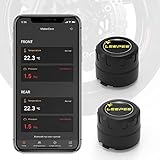
- New upgrade Designed: The LEEPEE TPMS 5.0 provides you with a faster, more accurate and more stable APP wireless connection to monitor the condition of your motorcycle tires in real-time. Only applicable to IOS and Android systems mobile phone, APP name“motorcare” (Not applicable to bicycles)
- Multiple Alert Modes: Tire Pressure Monitoring System monitors your tire condition in real time. Provide a variety of alarm conditions for your car, high and low-pressure alarm, air leakage alarm, high and low-temperature alarm, battery level alarm
- Intelligent Operation: Instantly activates or deactivates for peace of mind. The sensor enters sleep mode after 10 minutes of vehicle inactivity, conserving energy. It reawakens upon vibration and updates in real-time through the APP
- All-Weather Protection: The LEEPEE TPMS features a rugged, waterproof and dustproof construction. Withstanding extreme temperatures, it guards you year-round, accompanying you on all your mountainous and aquatic adventures
- Protection from Tire Pressure Mishaps: Abnormal tire issues can lead to serious incidents. Low pressure degrades riding quality and speeds up tire wear. Cornering risks increase, making rollovers more likely
Start in a controlled area
NHTSA advises riders to become accustomed to an unfamiliar motorcycle in a controlled area before entering traffic. Begin with gentle starts, stops and turns. Check that the clutch engages predictably, the throttle responds smoothly, the gearbox selects gears without abnormal noise, the motorcycle tracks straight and the brakes stop it without pulsing or pulling. Pay attention to vibration, overheating indications and warning lights without attempting aggressive riding.
Do not substitute a ride for an inspection
A short ride can fail to reveal a cold-start issue, a slow leak, worn bearings, hidden frame damage or an improvised wiring repair. Complete the static checklist first and arrange an independent dealership or qualified mechanic inspection when you lack the tools or experience to evaluate a consequential defect.
Compare two candidate motorcycles on the same evidence
Inspect both motorcycles in the same order and record findings rather than relying on memory. The stronger candidate is not automatically the newer or cleaner one; it is the motorcycle with the clearer identity, better documentation and fewer unresolved safety or mechanical questions after allowing for immediate repairs.
Quick wins for a faster PC:
Repair Windows errors before they cause bigger problemsFix Now →Fix the driver behind crashes, sound loss and screen glitchesFind Drivers →Clear out junk files and repair common Windows errorsFree Scan →| Comparison axis | Questions to record for each motorcycle |
|---|---|
| Identity and legal status | Does the VIN match every document? Is the title transferable in your jurisdiction? Are recalls checked by VIN? |
| History | Are maintenance, ownership, damage and modification records credible and complete? |
| Safety hardware | What is the condition of tires, wheels, brakes, controls, steering and suspension? |
| Engine condition | Did it start cold? Were smoke, unusual sounds, warning lights or leaks observed? |
| Electrical quality | Did every function work, and are modifications fused, secured and documented? |
| Drivetrain and chassis | Is the chain, belt or shaft within the model’s limits? Are stands and fasteners sound? |
| Next action | What requires immediate repair, a technician’s diagnosis or confirmation from records? |
The available inspection guidance does not establish model-specific reliability rankings or comparative operating costs. Base a choice on documented condition and the cost and difficulty of resolving known uncertainties, not on the four-cylinder label alone.
When to pay for an independent inspection
Arrange a qualified inspection before purchase if you cannot safely check bearings, suspension play, charging performance, frame alignment, internal noises or final-drive wear. It is especially prudent when records are incomplete, the motorcycle has collision evidence, the engine is already warm, modifications are extensive, a fluid leak is present, or the seller will not answer ownership and repair questions.
Give the technician the VIN, the seller’s description and your observations. Ask for written findings that separate safety-critical defects, likely maintenance items and items that require further diagnosis. A professional inspection cannot guarantee future reliability, but it can reduce the chance of buying an unsafe or unexpectedly expensive motorcycle.
Practical inspection kit
- Cold-capable tire-pressure gauge and the motorcycle’s specified pressure information.
- Flashlight, small inspection mirror, gloves and paper towels.
- Phone or camera for VIN, tire, leak, wiring and frame photographs.
- Notebook or checklist to record each result and unanswered question.
- Access to the exact owner or service manual once the make, model and year are known.
Do not use tools to force a component, open a pressurized cooling system or lift the motorcycle without the correct support equipment. The objective is to identify questions safely, not to perform an improvised repair in the seller’s driveway.
Recommended Free Tools
Safety context for the decision
Condition matters because a motorcycle offers less physical protection than a passenger car. NHTSA reports that in 2024, per vehicle miles traveled, motorcyclists were almost 27 times more likely than passenger-car occupants to die in a motor-vehicle crash and almost five times more likely to be injured. Those figures describe overall road risk, not the condition of any particular motorcycle, but they reinforce why tires, brakes, steering, controls and lighting deserve a strict go/no-go decision.
Quick Recap
Final checklist before money changes hands
- VIN, title and registration agree, and local transfer requirements are understood.
- Recall status has been checked by VIN.
- Maintenance, ownership, damage and modification history has been discussed and documented where possible.
- Tires are suitable, undamaged and measured cold against the exact specification.
- Wheels, bearings, brakes, hoses, throttle and clutch show no unresolved safety concern.
- Frame, steering, forks, shocks, swingarm and alignment show no unexplained damage or play.
- The engine has been observed from cold when practical; smoke, noises, warning lights and leaks have been addressed.
- All lights, switches, horn and stop control work, and wiring modifications are understood.
- The correct chain, belt or shaft inspection has been completed, along with fasteners and stands.
- An independent technician has inspected any area you cannot confidently evaluate.
- Only after these checks do you arrange a legal, controlled test ride and finalize the transaction.
Product prices and availability are accurate as of the date/time indicated and are subject to change. Any price and availability information displayed on Amazon at the time of purchase will apply.




