Quick wins for a faster PC:
Clear out junk files and repair common Windows errorsFree Scan →Fix the driver behind crashes, sound loss and screen glitchesFind Drivers →Repair Windows errors before they cause bigger problemsFix Now →A discounted SUV is a good deal only if the written out-the-door price is real, the specific vehicle is available, and its condition and coverage match what you expect. Before committing, verify the final price and rebate conditions, confirm stock by VIN or stock number, review warranty and service records, and arrange an independent inspection for a used SUV.
The warranty and maintenance checks below mainly apply to used and certified pre-owned SUVs. New-vehicle offers have different warranty and rebate terms, so verify the details on the specific written offer. The consumer guidance cited here is U.S.-focused.


As an Amazon Associate I earn from qualifying purchases.
Start with the complete price and confirm the SUV is in stock
Ask the seller for a written out-the-door quote before visiting. It should make clear what you will pay, which advertised discounts or rebates are included, and what additional charges or dealer add-ons appear. The Federal Trade Commission recommends written quotes so buyers can check the advertised price, stock, discounts, and add-ons before going to the dealership. FTC guidance on buying a used car from a dealer
A headline price is only one part of the offer. A quote lets you see whether the price depends on a rebate you may not qualify for, a particular financing arrangement, or another condition. It also gives you a way to ask about any charge or add-on before you make a trip or begin negotiating. If the written total differs from the advertised number, ask the seller to explain the difference and revise the quote so the terms are clear.
#1 Best Overall
Check the conditions behind the advertised discount
Ask which rebates apply to you and what each requires. A discount may depend on a financing arrangement or eligibility condition; do not assume the advertised figure is available to every buyer. Have the seller identify those conditions in writing and confirm whether the quote assumes a particular loan or other qualification.
Separate the advertised discount from any rebate with eligibility rules. Ask whether each amount is already included in the written price, what you must do to qualify, and whether the offer changes if you do not use the assumed financing. That makes it easier to compare the actual offers available to you rather than two promotional prices built on different assumptions. Do not treat a discount as a saving until you know the written terms under which it applies.
For a useful comparison, match SUVs with similar trim, drivetrain, equipment, mileage, and condition. A lower advertised price is not a reliable comparison if one vehicle has different equipment, higher mileage, or a different condition. There is no universal valuation formula established by the cited consumer guidance; the practical goal is to compare like with like and judge the written total, not just the headline discount.
What’s actually slowing this PC down?
Pick the symptom - the matching free tool is one click away.
Confirm the exact vehicle, not just the model
Ask the seller to identify the SUV by VIN or stock number and confirm that it is physically on the lot, preferably close to the time you plan to visit. An online listing or discount does not establish that a particular vehicle is still available. If the seller cannot confirm the vehicle or changes the price when you arrive, pause and ask for an updated written quote before proceeding.
Availability is specific to an individual vehicle, not merely a model name or trim. A stock number or VIN helps ensure that the quote, vehicle-history report, warranty check, and inspection all refer to the same SUV. If the seller offers a different vehicle when you arrive, treat it as a new comparison: confirm its identity, written price, equipment, condition, and coverage rather than assuming the first offer carries over.
Market availability can vary by model and location. Consumer Reports’ used-car guide, updated July 21, 2026, notes that recent supply shortages have left fewer newer, lower-mileage used cars available; it also says less popular models, including front-wheel-drive SUVs, may have better availability and perhaps better deals. That is broad market context, not a live inventory report or a guarantee that a specific SUV is available or cheaper. Consumer Reports’ used-car buying guide
For a used SUV, read the Buyers Guide before signing
Used vehicles offered by dealers generally have a Buyers Guide displayed on the vehicle. Read it before you agree to buy. It states whether the SUV is sold “as is” or with a warranty, summarizes the systems covered, and explains how repair costs are allocated. The guide is an important written disclosure, not a substitute for reading the actual warranty documents.
Rank #2

- You Will Receive: you can get 10 vehicle inspection report, each containing 31 sets of forms; In total, you will receive 310 forms; The size of each book is 5.5 x 8.5 inches/ 14 x 21.6 cm, 2 layers, with yellow carbonless copy paper, sufficient quantity, enough to meet your usage needs, to ensure that you have enough supply to meet your needs; Whether you drive alone or manage a fleet, this package can fully meet your needs
- Ease of Use and Ideal Size: experience hassle free with our equipment safety inspection report, which measures 5.5 x 8.5 inches/ 14 x 21.6 cm, an ideal size that provides you with enough space for a detailed inspection while also being able to carry these handy reports with you, making it an ideal tool for normal use of heavy equipment inspection reports without the burden
- Reliable Quality: our equipment safety inspection report is made of reliable paper for reliability; The paper material is double layer carbonless copy paper, which is durable and not easy to tear, ensuring that your valuable inspection data is preserved intact; The product includes a cardboard cover so that the pages you fill in will not be transferred to the next set; Contains a checklist of multiple common vehicle items and space for additional comments; Easy to report vehicle condition
- Improve Your Inspection Efficiency: our equipment safety inspection report is carefully designed to help you conduct efficient daily inspections; Simply check the checklist items to ensure a thorough inspection; The organized format can avoid missing important details, thereby improving the overall effectiveness of the inspection; We believe that our vehicle inspection report can improve your business productivity
- Tools for Commercial Fleets: our vehicle inspection report helps record and report required repairs to help maintain a safe workplace; Utility vehicles are ideal for commercial fleets; Whether you manage a single vehicle or a large commercial fleet, our vehicle inspection report is an important tool to ensure operational safety and compliance, ensuring your safety
The “as is” or warranty status matters because it tells you what protection the seller is representing in the sale documents. Do not infer coverage from a salesperson’s description or from the fact that the SUV is at a dealership. Read the Guide for the particular vehicle and ask for clarification if the wording does not match what you were told.
What to verify on the guide and warranty
- Whether the SUV is being sold “as is” or with a warranty.
- Which systems are covered and for how long.
- What share of repair costs the dealer is responsible for, if applicable.
- The warranty provider and the process for getting covered repairs.
- Exclusions or conditions that could affect a claim.
Ask for a copy of any warranty and read its terms, including the repair procedure and exclusions. If you negotiate a change or receive a promise about coverage, have it written into the Buyers Guide and purchase contract. Keep copies of the completed paperwork. Do not rely on a verbal assurance that is absent from the signed documents. FTC guidance on buying a used car from a dealer
Before signing, check that the final Guide and contract agree with the offer you accepted. If the seller agreed to a particular warranty or another coverage term, make sure it is recorded in the written documents rather than left as a conversation. Keep the Guide, warranty, contract, price quote, and any inspection findings together; they document what was represented and what you agreed to purchase.
Verify any remaining factory warranty by VIN
If the seller says the manufacturer’s warranty remains, ask for the warranty documents and verify the coverage with the manufacturer or dealer using the SUV’s VIN. Confirm both the time limit and mileage limit, when coverage expires, which components are covered, and whether any paperwork or other steps are needed to use it.
Recommended Free Tools
Ask about the specific coverage that applies to this SUV rather than relying on a general description of the model’s original warranty. The relevant question is how much coverage remains for this vehicle, given its age and mileage, and what is required to use that coverage. Have the seller provide the documents and confirm any uncertainty with the manufacturer or dealer before treating the coverage as part of the deal.
Do not treat “certified,” “warrantied,” or “covered” as a complete description of protection. A certified pre-owned label, a remaining manufacturer warranty, a dealer warranty, and a separately purchased service contract are different things. Check what the specific written terms cover rather than relying on the label.
For new SUVs, warranty and rebate details are different from used-vehicle Buyers Guide checks. Read the specific written offer and warranty documents, including the conditions attached to advertised incentives. Do not assume that the used-car disclosures or remaining-coverage questions apply in exactly the same way to a new-vehicle promotion.
Compare service records with a vehicle-history report
Request dated maintenance and repair records, then compare them with the odometer reading and a vehicle-history report. Follow up on missing periods, inconsistent mileage, repeated repairs, or long stretches without documentation. Records can help show what work was performed; they do not prove that every problem has been repaired or that the SUV is mechanically sound.
Free tools Windows power users keep installed
One-click scans. No signup required.
Look at the records as a sequence, not just as a stack of invoices. Dates and mileage can help you notice missing stretches, repeat visits for a similar repair, or information that does not line up with the odometer or report. Ask the seller to explain gaps or discrepancies and provide supporting paperwork where available. A missing record is not proof of a particular defect, but it is a reason to ask more questions and rely on an independent inspection rather than guess.
What a history report can—and cannot—tell you
A vehicle-history report may include ownership, accident, repair, or salvage information. The FTC also directs consumers to providers approved for the National Motor Vehicle Title Information System (NMVTIS), whose reports focus on title, insurance-loss, and salvage information. A report is not a complete mechanical diagnosis and may not reveal every defect, so use it alongside records and an inspection. FTC information about used cars
Different reports may emphasize different information. NMVTIS-approved providers are a route to information focused on title, insurance-loss, and salvage data; do not assume that one report captures every repair or mechanical issue. Use whatever report you obtain as one part of the evidence about the SUV, and compare it with its service paperwork and what a mechanic finds.
When records and a report do not agree, ask the seller for an explanation and supporting documents. An unexplained gap or inconsistency is a reason to investigate further, not proof by itself of a particular fault.
The Tool Desk
Outbyte PC Repair FREERepair Windows errors before they cause bigger problemsFix Now →Outbyte Driver Updater FREEScan for outdated or missing drivers - takes under a minuteDriver Scan →Arrange an independent mechanical inspection
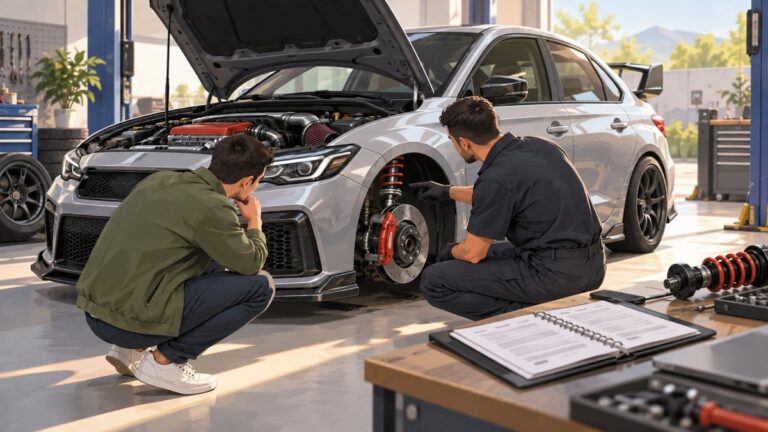
Before purchase, have an independent mechanic inspect the used SUV—even if the dealer says it has been inspected or calls it certified. Ask for written findings that identify the vehicle and VIN, and request repair estimates for any problems found. The FTC advises that a history report does not replace a mechanical inspection. If a dealer will not allow an independent inspection, consider buying from another seller. FTC guidance on buying a used car from a dealer
The inspection answers a different question from the paperwork: what condition is the specific SUV in now, and what repairs does the mechanic identify? A dealer inspection or certification label does not eliminate the value of an independent assessment. Ask for the report in writing so you can review findings, understand estimated repair costs, and compare the vehicle with another offer on more than its advertised price.
Rank #4

- Comprehensive Coverage: our package includes 540 sheets of multipoint vehicle inspection sheets across 6 pads, perfect for all your car inspection needs; Each book has 90 sheets: 30 sheets each of white, pink, and yellow carbonless copies, ensuring a thorough vehicle inspection report every time
- Optimized Size for Professionals: measuring 8 1/2" x 11 3/4" with a 3/4" stub, these vehicle inspection forms provide ample space for thorough documentation; Ideal for mechanics, drivers, and professionals, these forms are essential for maintaining detailed car inspection sheets and vehicle checkup forms
- Effortless Carbonless Copies: our 3 part carbonless multipoint vehicle inspection sheets include white, pink, and yellow pages, allowing clear and efficient record-keeping; Perfect for creating duplicates of your dot inspection forms and stickers, they fit neatly into binders or storage boxes
- Versatile Use: tailored for auto repair shops, service centers, and vehicle fleets, these versatile vehicle inspection reports are ideal for tracking, receipt keeping, or driver logging; Conveniently store in folders or boxes for easy organization and accessibility
- Clear and Simple Printing: features clear, colorful printing and a straightforward design, making recording on these car inspection sheets easy and intuitive; Their crisp layout ensures information is captured accurately and efficiently for every vehicle checkup form
A consumer checklist can help you organize questions and observations, but it is not a diagnostic tool and cannot replace a qualified mechanic’s assessment. Use the inspection report to understand immediate repair needs and likely near-term costs, then decide whether to proceed, negotiate, or walk away. If the seller declines to allow an independent inspection, the FTC guidance is to consider another seller rather than treating the refusal as a substitute for an inspection.
Evaluate a service contract separately from a warranty
A service contract is a promise to pay for or perform specified repairs; it is not itself a warranty. Before paying for one, compare it with any remaining factory or dealer coverage so you understand whether it adds meaningful protection or duplicates coverage you already have.
Read the contract itself, not just a summary of benefits. A contract can cover specified repairs while excluding others, and its value to you depends on the systems covered, deductible, repair rules, term, and overlap with existing coverage. If an advertised or verbal description sounds broader than the written terms, ask which document controls and get the answer before deciding.
Terms to inspect before buying
- Covered systems and exclusions: Identify what repairs qualify and what is specifically excluded.
- Deductible: Check how much you pay for each covered repair or visit.
- Repair locations: Confirm whether repairs must be made at designated facilities or require prior authorization.
- Term and limits: Check duration and any mileage or other limits.
- Transfer and cancellation: Read whether the contract can transfer to another owner and how cancellation works.
- Additional expenses: Check whether the contract covers incidental costs, if relevant to your decision.
Then compare those terms with coverage already in place. If a factory or dealer warranty already covers a system, a contract that substantially overlaps may add less than its sales pitch suggests. If the terms exclude the repairs you are most concerned about, the contract may not answer your concern. No general rule means buying a service contract is necessarily advantageous; read the terms and weigh coverage against existing protection.
The FTC notes that a service contract bought from the dealer within 90 days of a used-car purchase can affect implied-warranty protections for systems covered by the contract. The precise legal effect can depend on state law and circumstances, so do not assume the same result applies to every buyer or contract. Read the documents and seek state-specific guidance if this issue affects your decision. FTC guidance on buying a used car from a dealer
Independent reader supportYour contribution helps us test, update, and keep practical guides available for everyone.Compare discounted SUVs on the same decision checklist
When choosing between two or more vehicles, compare the written offer and the vehicle—not just the advertised discount. Use this side-by-side framework:
| What to compare | What to establish |
|---|---|
| Out-the-door price | Written total, itemized charges and add-ons, discounts included, and rebate conditions. |
| Availability | VIN or stock number and confirmation that the exact SUV is on the lot. |
| Factory or dealer warranty | Coverage remaining in both time and mileage, covered systems, exclusions, and repair process. |
| Service history | Whether dated records are complete and consistent with mileage and the history report. |
| Inspection | Independent findings and written estimates for repairs, especially near-term work. |
| Vehicle match | Comparable trim, drivetrain, equipment, mileage, and condition. |
| Optional service contract | Covered systems, exclusions, deductible, repair-location rules, term, transfer and cancellation terms, and overlap with existing coverage. |
Use the comparison to surface tradeoffs, not to turn unlike vehicles into a false price contest. One SUV may have a lower quoted total but less remaining coverage, less complete records, or repair findings that change the near-term cost picture. Another may cost more on paper but have documented coverage or condition that better fits your needs. The inspection findings and written terms let you make that judgment with fewer assumptions.
Best Value

- DVIR inspection book helps satisfy DOT vehicle inspection regulations 49 CFR 396.11 and 396.13.
- Driver vehicle inspection report books include vehicle inspection checklist that lists specific tractor and trailer parts to help simplify inspection; drivers simply check off parts that need repair.
- DVIR books include key regulations printed on inside front cover to remind drivers of DOT-required procedures.
- This vehicle inspection report book set comes with 10 books. Each book contains 31 sets of DVIR forms. In total, you will receive 310 forms.
- Vehicle inspection forms are 2-ply, carbonless, and measure 5-1/2" x 8-1/2".
A meaningful price difference may disappear once required conditions, fees, add-ons, or likely repairs are accounted for. A slightly higher written price may be preferable if the vehicle’s condition and documented coverage better fit your needs; the decision depends on the actual terms and inspection findings, not the discount label.
Use this order before you commit
- Request a written out-the-door quote. Get the full total, itemized charges and add-ons, included discounts, and the conditions for each rebate.
- Confirm the exact SUV is available. Have the seller verify the VIN or stock number and current on-lot status.
- Review the paperwork. For a used SUV, read the Buyers Guide and warranty documents; make sure negotiated promises appear in the signed documents.
- Check the records. Compare service invoices, mileage, and vehicle-history information, and ask about gaps or inconsistencies.
- Book an independent inspection. Obtain written findings and repair estimates before purchase.
- Assess optional coverage last. Compare the service contract with existing coverage and read its exclusions, deductible, repair rules, and cancellation terms.
Keeping the steps in this order helps separate the vehicle’s advertised price from the terms that determine what you will actually pay and what protection you will have. If a key answer is missing, ask for it in writing before deciding. A deal is easier to evaluate when price, vehicle identity, condition, and coverage are all tied to the same SUV and documented offer.
Frequently Asked Questions
What should I ask for before visiting a dealer about a discounted SUV?
Request a written out-the-door quote that identifies the advertised discounts and rebates, their conditions, charges and add-ons, and the exact SUV by VIN or stock number. Ask the seller to confirm that it is physically on the lot close to when you plan to visit.
Windows Errors? Fix Them Before They Spread
Repair common Windows errors and clear accumulated junk for a smoother, more stable PC - no reinstall needed.Free scan · no reinstallCrashes, No Sound, or Screen Glitches?
Random freezes, missing sound and display glitches usually trace back to one bad driver. Find and replace yours safely.Free scan · under a minuteDoes a vehicle-history report tell me whether a used SUV is mechanically sound?
No. A report may include ownership, accident, repair, or salvage information, and NMVTIS-approved providers focus on title, insurance-loss, and salvage data. It is not a complete mechanical diagnosis. Compare it with service records and arrange an independent inspection.
Is a certified pre-owned SUV automatically covered by the warranty I expect?
No. A certification label is not a complete description of coverage. Ask for the written warranty terms and verify any remaining manufacturer coverage by VIN, including time and mileage limits, covered components, and steps required to use it.
What if a dealer will not allow an independent inspection?
The FTC advises considering another seller. A dealer inspection, certification label, or vehicle-history report does not replace an independent mechanical inspection with written findings and repair estimates.
Is a service contract the same as a warranty?
No. A service contract promises to pay for or perform specified repairs; it is distinct from a warranty. Check its covered systems, exclusions, deductible, repair-location rules, duration, transfer and cancellation terms, and overlap with any existing coverage before paying.
Can a service contract affect implied-warranty protections?
The FTC notes that a dealer service contract bought within 90 days of a used-car purchase can affect implied-warranty protections for systems covered by the contract. The precise effect may depend on state law and circumstances, so read the terms and seek state-specific guidance if it matters to your decision.
The Bottom Line
Before buying a discounted SUV, verify the written out-the-door price and rebate conditions, confirm the exact vehicle is in stock, and compare its warranty, records, and inspection findings with the offer. For used SUVs, read the Buyers Guide, check coverage by VIN, and get an independent inspection. Treat service contracts as separate products and weigh their written terms against coverage you already have. The discount is only a good deal if the specific vehicle and all its terms work for you.
Quick Recap
Product prices and availability are accurate as of the date/time indicated and are subject to change. Any price and availability information displayed on Amazon at the time of purchase will apply.