If your engine stalled, the car may have drawn water into its intake, or an electric vehicle or hybrid may have had battery exposure, do not try to restart or continue driving. Move to a safe location if you can do so without operating the vehicle, and arrange a qualified inspection or tow. Water damage can be hidden, and repeated starting attempts can turn water intrusion into severe engine damage.
If the vehicle is still running normally and no warning signs are present, perform only the basic checks allowed by your owner’s manual: gently test the brakes, then verify the horn, exterior lights, and steering assist. A normal first drive does not prove the car is undamaged; corrosion and electrical faults can appear weeks or months later.
As an Amazon Associate I earn from qualifying purchases.
First decide whether it is safe to keep driving
Floodwater exposure is an immediate safety decision, not just a cleaning or maintenance task. Before checking anything, consider what happened during the crossing and how the vehicle behaves now.
PC Slower Than It Used to Be?
A free scan shows the junk files, broken settings and background clutter dragging Windows down - then fixes them in one click.Free scan · Windows 10 & 11Outdated Drivers Are Slowing You Down
One free scan finds every outdated or missing driver and matches the right update for your exact hardware.Free scan · exact hardware matchStop and do not restart after a stall or possible intake ingestion
If the engine stopped in the water, cranks but will not start, ran roughly afterward, or you have reason to believe water reached the air intake, switch it off and stop attempting to start it. NHTSA’s guidance on hurricane- and flood-damaged vehicles warns that damage may not be visible and that water entering the air filter can damage the engine. A qualified technician should assess the intake and engine before any further starting attempt.
#1 Best Overall

- The Road Guardian- The portable roadside assistance kit is designed and hand picked by a group of experienced veterans and experts to provide every essential tools you need in roadside emergencies. The automotive safety bag contains accessories such as repair cable ties, bungee cords, electrical tape, space blanket, rain poncho, reflective warning triangle, glass breaker, seatbelt cutter, safety gloves, tow rope and more to get your vehicle back on the road and continue your travel.
- Top-Notch Digital Auto Tire Inflator- lightweight and compact air compressor can inflate your standard vehicles tire in seconds. With auto shutoff function, simply plug it into the 12v power outlet and attach the stem to the tire valve, preset the tire pressure and press the power button. The compressor starts the inflating process and stop once your tire reaches at your preset level. This cool gadget also has led light for winter nighttime and three extra nozzles for inflammable bed, others
- Copper-Clad Aluminum 12 Feet 8 Gauge Jumper Cable- A durable battery starter cable is a must-have for your trip. Unlike other kits on the market, our jumper cable has reasonable length to get your cars connected. 8 gauge wires and 300 amp output is more than enough to get your standard vehicle started. UL listed heavy-duty battery jumper cables make you physically and environmentally safer and more reliable.
- Completed 108 Pieces First Aid Kit- By having a completed first aid kit, provide you and your family proper basic wound/hygiene treatment before it possibly get worsened during your road trip. Our kit includes alcohol pads, bandages, cotton tips, knuckle bandages, butterfly bandages, wound pad, sting relief pads, gloves, tape, dressing, PBT bandage, CPR mask, tweezer, safety pins, soap wipe, disinfect wipe, adhesive wound pad, triangular bandage, finger bandage.
- Veteran Owned Company 5-Star Customer Support- Everlit is committed into providing the most comprehensive customer service. We proudly offer the exclusive 60-days hassle-free return among all products. We stand behind the quality of our inventory; all original Everlit products are covered with a 1-year satisfaction warranty.
Do not assume that a short crossing made the vehicle safe. Water height, current, vehicle design, speed, and the location of the intake and electrical components all affect the outcome. The reviewed guidance does not establish a universal depth at which every vehicle remains unharmed.
Stop for warning signs even when the engine still runs
Arrange roadside assistance or a tow instead of continuing if you notice any of the following:
- A brake pedal that feels soft, sinks, grabs, or does not slow the vehicle normally.
- Steering that becomes unusually heavy, jerky, or difficult to control.
- Warning lights, electrical glitches, flickering instruments, or repeated chimes.
- Engine misfiring, unusual knocking, grinding, belt noise, or an exhaust sound that changes suddenly.
- Water, fuel, oil, or other fluid leaking from the vehicle.
- Smoke, a burning smell, or signs of overheating.
- Loss of lights, horn, wipers, or other equipment needed to drive safely.
Park on firm ground away from moving water. Never stand in a current to inspect the underside, and do not drive around barricades or into visibly flooded roads. NHTSA advises turning around when a road is flooded or barriers block it.
Do these 3 things before closing this tab:
1Fix the driver behind crashes, sound loss and screen glitches2Repair Windows errors before they cause bigger problems3Scan for outdated or missing drivers - takes under a minuteChecks to make only when the vehicle is operating normally
These checks come from a vehicle owner manual hosted in NHTSA’s repository. They are not a universal substitute for the instructions for your exact make, model, and year. Carry them out in a safe area, away from traffic, and stop immediately if anything feels abnormal.
Rank #2

- Portable & Compact: The car safety kit is designed to fit neatly into an organizer bag, allowing for easy storage in either the backseat or trunk of your vehicle. This ensures that all essential safety items are kept together and easily accessible in case of an emergency. By keeping the kit organized and readily available, you can be better prepared for unexpected situations while on the road
- Fully Prepared: This kit should include essential tools and supplies to help you in case of an emergency. By being prepared, you can feel more secure while driving and have the necessary resources to handle unexpected situations
- Multi-Purpose Emergency Kit: This emergency kit contains everything you need for emergencies. It's suitable for different occasions such as winter weather, commuting and road trips
- Premium Material: The cable surface is covered by PVC material and the interior is made of premium copper wire. The use of premium materials can significantly enhance the overall quality and value of a product. This universal cable is suitable for small vehicles
- Wonderful Car Safety Kit: This kit is ideal for family and friends, especially for teenagers who are about to own their first car. It's a thoughtful and practical present that will undoubtedly be appreciated by the recipient
1. Test the brakes gently
At very low speed, lightly press the brake pedal to help dry the brakes and confirm that they work, as the manual directs. The pedal should feel consistent, and the vehicle should slow in a straight, predictable manner. Do not perform repeated hard stops to “test” the system. If braking is delayed, noisy, uneven, or requires unusual pedal pressure, stop driving and obtain qualified help.
2. Confirm steering assist
With the vehicle stationary or moving only at walking speed, check that the steering feels normal for that vehicle. A sudden increase in effort, binding, pulsing, or a steering warning light is a reason to stop. Floodwater can affect power-steering components, electric assistance, wiring, and control modules.
3. Check the horn and exterior lights
Operate the horn and check the headlights, tail lamps, brake lamps, turn signals, and hazard flashers. These controls are basic visibility and communication equipment. If a lamp is dim, intermittent, or inoperative, do not treat the vehicle as fully roadworthy, especially at night or in continuing rain.
4. Watch the instrument panel and vehicle behavior
Look for warning lights that were not present before the crossing. Pay attention to transmission shifting, engine temperature, charging indications, and any change in idle or acceleration. A scan tool or clearing a warning light does not establish that flood damage has been ruled out; use professional diagnosis when a warning appears.
Rank #3
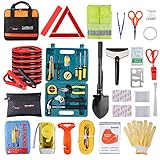
- ESSENTIAL RESOURCES: Packed with practical supplies from jumper cables, reflective triangle and vest to tow rope, and tire presure gauge, we've got everything you need to stay safe during an roadside emergency. But that's not all - it also includes rarely used but essential items like safety hammer, emergency blanket, and survival whistle. With these, you'll be prepared for almost everything the road throws your way.
- RELIABLE JUMPER CABLES: Say goodbye to uncoated jumper cable clamps! Our clamps are fully covered with premium PVC material to protect you from electrical shocks and make sure you can use them safely. The four giant alligator clamps are equipped with strong jagged teeth and springs for an excellent grip force. With a 6 gauge thick inner core, our cables are reliable even in cold winter weather.
- FOLDABLE SURVIVAL SHOVEL: At 16.5 inches, it's a portable size and comes with a carrying pouch. Its versatile design allows for shoveling, digging, hoeing, sawing, and chopping, making it the perfect tool to get you out of any tight situation.
- CAR REPAIR TOOL SET: This handy kit contains all the necessary tools for emergency vehicle repairs and basic household DIY projects, including hammer, wrench, plier, tape measure, PVC tape, digital display test pen, 3 screwdrivers, and 5 hex key. Each tool is neatly organized in a handy case for easy storage and portability.
What floodwater can damage
Water can reach systems that are not visible from outside. AAA Automotive identifies several areas that may require inspection, with the severity depending on how high and how long the water reached the vehicle and on the vehicle’s design.
Engine and air intake
The intake path, air filter, sensors, and cylinders are critical concerns after a stall or suspected intake exposure. Water that enters a cylinder cannot be compressed like air and can bend internal engine components when the engine is cranked. Because you cannot reliably confirm the condition from the driver’s seat, a mechanic should inspect the intake and engine before restarting a suspect vehicle.
Transmission and drivetrain
Floodwater can contaminate transmission fluid, differentials, transfer cases, wheel bearings, and other drivetrain components. Contamination may not produce an immediate symptom. A repair professional can determine whether fluids, seals, breathers, connectors, and mechanical parts need inspection or replacement.
Fuel, brakes, and steering
Water exposure can affect fuel-system components, brake hardware and fluid, and power-steering systems. Wet brake parts may work after drying yet still need examination if the water was contaminated or deep. Steering assistance can be hydraulic or electric, so the inspection path differs by vehicle.
Rank #4

- If your car is parked at the scene of an accident waiting to be rescued, you may need this car emergency kit
- If this roadside assistance kit can help a novice driver or a family member or friend in the event of an accident on the road, they will surely thank you for gifting him this car emergency kit
- Lightweight and compact tire inflator inflates standard vehicle tires in seconds. The surface of the reinforced cable is made of high-quality PVC, which has the characteristics of anti-freezing, anti-cracking, and anti-tangling
- Roadside emergency car kits come in handy during winter weather, hiking, camping, road trips, or traveling in a car or other vehicle
- All of our products are stowed inside a high quality bag to keep our products in the trunk. Perfect for teens, novices, and experienced car enthusiasts
Computers, sensors, wiring, and connectors
Modern vehicles distribute control modules and wiring throughout the cabin, engine bay, doors, floor, and underbody. Moisture trapped in connectors can cause intermittent faults and corrosion long after the surfaces appear dry. The inspection should include accessible modules, grounds, harnesses, fuses, and connectors appropriate to the model, not merely a visual look at the engine compartment.
Why a car can fail weeks or months later
Floodwater often contains dirt, salt, fuel, sewage, and other contaminants. When that mixture remains in connectors, switches, insulation, bearings, or cavities, corrosion can progress after the vehicle is back on dry roads. AAA notes that delayed electrical and mechanical problems may appear weeks or months after exposure.
Tell the repair shop exactly when and where the vehicle encountered water, whether the engine stalled, how long it was immersed, and whether the water was moving or contaminated. Keep records of warning lights, unusual sounds, and any repairs. If a later fault appears, that history helps the technician trace moisture-related damage rather than treating the symptom as an unrelated failure.
Free tools Windows power users keep installed
One-click scans. No signup required.
Special rules for electric vehicles and hybrids
Flooded EVs and hybrids require additional caution. NHTSA warns that a wet or damaged high-voltage battery and related components can create shock or fire hazards. A vehicle that looks normal, unlocks, or powers its displays is not automatically safe after suspected battery exposure.
Best Value

- 【Things you may need】: This roadside assistance packages is a perfect gift.Contain the necessary roadside kits, snow shovel, flashing lights, reflective triangle warning signs, advanced jumpers (8.2 foot), powerful towing rope, safety hammer and seat belt cutters, life blankets, raincoats, compasses and more!
- 【Safe and durable】: UL certified jumper cables are safer and more reliable than other non-UL certified cables. Four huge alligator clips provide excellent grip. The grip of the clip is covered with an insulating rubber sleeve. The surface of the reinforced cable is made of high-quality PVC, which has the characteristics of anti-freezing, anti-cracking, and anti-tangling.
- 【Car repairs tool box】: Small and compact, suitable for any place, the tools are neat and orderly. Including hammer, pliers, utility knife, tape measure, PVC tape, digital display test pen, 3 screwdrivers. Each kit has a separate location. Clean, safe, convenient, light and strong plastic shell can withstand pressure
- 【Upgrade kit】: Our hammer head is made of high-quality high-carbon steel, with a pointed and flat hammer. It helps to use any side of the car escape tool to quickly break the window in an emergency. We provide raincoats and reflective safety clothing, which can be safer to wear when you repair a broken down car.
- 【Emergency car kit】: This emergency kit car, It’s lightweight, compact. that can fit anywhere in your backseat, trunk or even in your spare tire compartment, can handle unexpected things,it also includes preparedness survival tools for outdoor activities like camping, hiking, hunting, act. perfect for family use at home.
- Do not touch exposed high-voltage cables, battery cases, or damaged components.
- Do not attempt to charge, jump-start, move, or dismantle a suspect vehicle unless current manufacturer instructions and qualified personnel say it is safe.
- Keep the vehicle away from buildings and other property when emergency guidance calls for isolation, because a damaged battery can present a delayed fire risk.
- Contact the manufacturer’s roadside or emergency service, a qualified EV technician, or local emergency responders for model-specific handling instructions.
Hybrid vehicles also contain an internal-combustion engine and conventional systems, so the same intake, brake, steering, and electrical checks still matter. The high-voltage system adds a separate hazard that a routine visual inspection cannot clear.
Flood depth and current: what the numbers do and do not mean
NHTSA’s severe-weather guidance states that 12 inches of rushing water can carry away most cars and that two feet of rushing water can carry away most trucks and SUVs. These figures describe the force of moving water, not a safe wading depth and not a diagnostic threshold proving that a vehicle is undamaged after crossing.
Even shallow-looking water can conceal a washed-out road, debris, open drains, or a current strong enough to move a vehicle. If barriers are in place or the road is visibly flooded, the safe action is to turn around. If you are already exposed, use the vehicle’s symptoms and manufacturer guidance—not a guessed depth—to decide whether to stop and seek help.
Quick wins for a faster PC:
Repair Windows errors before they cause bigger problemsFix Now →Fix the driver behind crashes, sound loss and screen glitchesFind Drivers →When a tow or professional inspection is the right next step
Use a tow or roadside service when the engine stalled, water may have entered the intake, any control behaves abnormally, a warning light appears, or the vehicle is an EV or hybrid with possible high-voltage battery exposure. A professional inspection is also prudent after significant immersion even when the first drive seems normal, because hidden contamination and corrosion cannot be ruled out from a short road test.
Tell the technician whether the water was fresh, muddy, salty, or contaminated; the approximate level it reached; how long the vehicle was exposed; and whether the engine was running. Ask for an assessment that covers the intake and engine, fluids and drivetrain, brakes, steering, electrical modules, wiring, connectors, and high-voltage components where applicable. The exact procedure depends on the vehicle and the manufacturer’s service information.
Quick Recap
A practical decision checklist
- Secure the scene. Leave moving water and traffic lanes. Do not enter a current or drive around a barricade.
- Classify the exposure. Note whether the engine stalled, whether water could have reached the intake, and whether the vehicle is an EV or hybrid.
- Choose the safe branch. For a stall, suspected intake ingestion, abnormal controls, warning lights, or high-voltage exposure, shut down and arrange qualified assistance. Do not keep restarting.
- Perform limited checks only if normal operation is clear. In a safe area, gently test the brakes, then check steering assist, horn, exterior lights, and the instrument panel according to the owner’s manual.
- Stop at the first abnormal result. Do not continue simply because the vehicle can move.
- Report the exposure. Give the repair professional a complete account and retain records so delayed faults can be investigated.
What not to assume
- A vehicle that starts is not necessarily free of engine, transmission, electrical, or corrosion damage.
- A brief crossing or a water level below the door does not establish a universal safety margin.
- Dry carpets, a clean air filter housing, or a cleared dashboard light does not rule out moisture in hidden connectors or modules.
- A generic diagnostic scanner, cleaner, or do-it-yourself repair cannot reliably certify a flood-exposed vehicle as safe.
- Instructions from another model’s manual should not replace the manual for your own vehicle.
Product prices and availability are accurate as of the date/time indicated and are subject to change. Any price and availability information displayed on Amazon at the time of purchase will apply.




