Windows Errors? Fix Them Before They Spread
Repair common Windows errors and clear accumulated junk for a smoother, more stable PC - no reinstall needed.Free scan · no reinstallOutdated Drivers Are Slowing You Down
One free scan finds every outdated or missing driver and matches the right update for your exact hardware.Free scan · exact hardware matchAutomakers worldwide share a common cybersecurity problem: connected vehicles create software, communications and supply-chain pathways that can expose personal data, disrupt services or, in some circumstances, affect vehicle operation. The risk is global because modern cars depend on similar building blocks—cellular links, Bluetooth, Wi‑Fi, cloud services, mobile apps, sensors, electronic control units and automated-driving software. The laws, threat levels and technical designs are not identical from one country or manufacturer to another.
That distinction matters. “The same security concern” describes a shared underlying risk, not one worldwide rule or proof that every connected car is easy to hack. Security responsibility is distributed among automakers, component suppliers, software providers, telecommunications companies, service organizations and regulators.
As an Amazon Associate I earn from qualifying purchases.
Why connected cars have a larger security exposure
A traditional vehicle had relatively few digital entry points. A connected vehicle can communicate with cellular networks, cloud platforms, smartphones, roadside infrastructure, charging equipment, diagnostic tools and other vehicles. Each interface must be designed, updated and monitored securely, and each outside dependency can introduce a weakness.
Recommended Free Tools
More interfaces mean more attack paths
The European Union Agency for Cybersecurity (ENISA) identifies connected and automated-vehicle features and vehicle-to-vehicle or vehicle-to-infrastructure interfaces as expanding the attack surface. An attack surface is the collection of points through which an unauthorized person might gain access, send malicious data or extract information. It can include a telematics control unit, an infotainment system, a keyless-entry receiver, a mobile application, a charging connection or a cloud account.
#1 Best Overall

- 2 Stage Shock Sensor
- Door, Bonnet & Boot Protection
- Engine Immobilization
- Parking Light Flash (Arm, Disarm & Trigger)
- Keyless Entry
A weakness does not automatically mean an attacker can take over a vehicle. Exploitation may require specialized access, a vulnerable component, stolen credentials or a particular software configuration. The important issue for manufacturers is that every additional interface creates another security dependency to assess throughout the vehicle’s life.
The vehicle is part of a larger digital ecosystem
Security cannot stop at the dashboard. Connected vehicles exchange data with manufacturer platforms, dealers, fleet systems, mapping providers, emergency services and other third parties. A European Commission consultation on connected and automated mobility reported that 50% of industry respondents had encountered security issues introduced by third parties with access to data infrastructure. That finding reflects the consultation participants, not a measured rate across all automakers.
Non-embedded software is another boundary. The same consultation found that 38.68% of industry respondents reported issues involving software outside the vehicle itself, such as smart devices connected to vehicles. A phone application, cloud account or software-development tool can therefore become relevant to vehicle security even when it is not installed in the car.
What is at stake: privacy, control and physical safety
Automotive cybersecurity has two consequences that are often discussed separately but are connected in practice: protection of information and protection of safety-critical functions.
Personal and operational data
Connected vehicles can generate location histories, trip patterns, charging records, diagnostic information, user identities and information about how a vehicle is used. The U.S. Commerce Department’s Bureau of Industry and Security (BIS) said malicious access to covered vehicle technologies could expose sensitive personal information. Data can also reveal operational details about commercial fleets or public infrastructure.
Data security involves more than encryption during transmission. Manufacturers must control who can access data, authenticate devices and users, limit privileges, retain logs, patch vulnerable services and delete information when it is no longer needed. Contracts must also state which organization is responsible when a data platform or service provider is compromised.
Rank #2

- -Way Security + Remote Start System with 5-Button LCD Transmitter
- 5-button sidekick remote control transmitter
- 1 mile range
- 4-Channel vehicle security system
- Door and trunk triggers
Vehicle functions and safety
Software controls functions that can affect braking, steering, propulsion, driver assistance and access to the vehicle. The U.S. Government Accountability Office (GAO) noted that software controls safety-critical functions. BIS likewise described the possibility of remotely manipulating vehicles through malicious access to covered supply chains.
Free tools Windows power users keep installed
One-click scans. No signup required.
This does not mean every cyber incident becomes a crash. Safety engineering uses isolation, authentication, plausibility checks, fail-safe behavior and other controls to prevent an intrusion in one system from reaching a safety-critical function. The shared concern is that a successful compromise could have consequences beyond lost data or an unavailable app.
“Cars today aren’t just steel on wheels – they’re computers. They have cameras, microphones, GPS tracking, and other technologies that are connected to the internet.”
— Gina Raimondo, U.S. Secretary of Commerce, quoted in the Department’s announcement of its connected-vehicle supply-chain rule
The main pathways automakers must secure
| Pathway | What it connects | Security question |
|---|---|---|
| Vehicle connectivity systems | Cellular, satellite, Wi‑Fi, Bluetooth and telematics functions | Can an unauthorized party reach the vehicle or its data through an external communications module? |
| Cloud and backend services | Accounts, remote commands, diagnostics, updates and fleet platforms | Are identities, application interfaces and administrative tools properly authenticated and monitored? |
| Mobile and smart-device software | Phone apps, digital keys and third-party devices | Could a stolen credential or vulnerable app expose vehicle functions or personal data? |
| Supply chain | Electronic control units, software libraries, cloud providers and service companies | Can the manufacturer verify component security, update support and incident reporting across suppliers? |
| Vehicle-to-everything links | Other vehicles, roadside systems and infrastructure | Can messages be authenticated and rejected when they are false, malformed or replayed? |
What the available figures actually show
The strongest published figures describe professional opinions and reported issues, not the percentage of vehicles hacked. They are useful for showing which weaknesses industry participants consider important, but they must not be presented as global incident rates.
| Finding | What it represents |
|---|---|
| 92.2% of consultation respondents | Believed regulatory measures should secure connected and automated vehicles against cyberattacks. European Commission consultation, 2020; this is an opinion result. |
| 50% of industry respondents | Identified security issues introduced by third parties with access to data infrastructure. European Commission consultation, 2020. |
| 45.28% of industry respondents | Identified insufficiently protected communications interfaces that could lead to unauthorized access to car systems. European Commission consultation, 2020. |
| 38.68% of industry respondents | Reported issues involving non-embedded software, including smart devices connected to vehicles. European Commission consultation, 2020. |
| 37.74% of industry respondents | Reported contractual problems in which responsibilities were not clearly allocated among ecosystem actors. European Commission consultation, 2020. |
| 15 of 32 selected stakeholders | Cited limited transparency, communication and collaboration across automotive supply-chain levels. GAO report GAO-16-350, 2016; selected interview count, not an industry-wide estimate. |
| 13 of 32 selected stakeholders | Cited the cost of incorporating cybersecurity protections. GAO report GAO-16-350, 2016; selected interview count, not an industry-wide estimate. |
There is no single, current cross-industry incident count in these sources that can establish how often automakers worldwide are successfully attacked. A responsible comparison therefore focuses on exposure, controls and governance rather than claiming that one uniform hack rate exists.
Rank #3
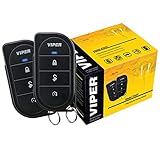
- 3-Channel 1-way Security System with Keyless Entry 4-Button remotes. Additional options include remote starter & GPS Tracking.
- FailSafe starter kill.
- Anti-carjacking & Panic Alarm Feature
- Revenger six-tone soft-chirp siren and parking light alarm response.
- Bright blue status LED warns thieves and gives you info about the system
How cybersecurity is managed across a vehicle’s lifecycle
ISO/SAE 21434:2021 provides an international engineering framework for cybersecurity risk management in road vehicles. ISO describes its scope as the lifecycle of electrical and electronic systems, from concept and development through production, operation, maintenance and decommissioning. The first edition was published in August 2021, and ISO’s listing says it is under revision review.
The standard is not a product, a guarantee that a vehicle is secure or a law that automatically applies everywhere. ISO states that it sets engineering requirements for risk management and can support regulatory readiness and supply-chain alignment.
1. Define the vehicle’s assets and boundaries
Engineers first identify what must be protected: safety-related functions, personal data, communications credentials, update mechanisms, diagnostic services and other assets. They map trust boundaries between in-vehicle networks, external interfaces, cloud services and supplier components.
Do these 3 things before closing this tab:
1Fix the driver behind crashes, sound loss and screen glitches2Clear out junk files and repair common Windows errors3Scan for outdated or missing drivers - takes under a minute2. Analyze threats and potential impact
A threat analysis considers how an attacker might reach an asset, what access would be required and what could happen if a control failed. Consequences may include privacy loss, unauthorized vehicle access, service disruption or a safety impact. The analysis should account for both intentional attacks and weaknesses created by design or configuration.
3. Set security goals and requirements
Teams translate the analysis into requirements such as strong authentication, least-privilege access, secure boot, protected communications, network segmentation, tamper detection, logging and safe handling of failed updates. Requirements should be assigned to the vehicle, its software, its hardware and the relevant suppliers.
4. Verify and validate controls
Testing should cover code, interfaces, update processes and the interactions among components. Security validation continues after launch because vulnerabilities can emerge in third-party libraries, cloud services or connected devices that were not available during initial development.
Rank #4

- 【2-Pack Double Protection】: Each set includes 2 car alarm units + 1 wireless remote, so you can secure two vehicles at once, or place one on the front and one on the rear of a single car. The remote can pair with multiple hosts - great for couples, families, or a car + motorcycle combo
- 【Smart 3D Motion Sensor, Fewer False Alarms】: Built-in 3D acceleration sensor with AI algorithm detects vibration, prying and forced entry, while intelligently filtering out noise from passing cars, rain or thunder - high sensitivity without the constant false alarms that cheap alarms cause
- 【108dB Siren + Red Warning Light】: First vibration triggers a short beep with red flashing as a warning; a second sets off a 30-second loud 108dB siren with strobe-like flashing that scares off thieves. 3 volume levels (108/102/96dB) suit neighborhoods, lots or busy streets
- 【Magnetic Mount, No Drilling】: A strong magnet holds the alarm in place - no tools, no wiring, no sticky residue, and you can move it between cars anytime. The anti-UV PC housing resists high heat and cold, so it stays stable even in a car parked under the summer sun
- 【66ft Wireless Remote & Long Battery】: Arm, disarm or locate your vehicle from up to 66ft (20m) away. Powered by 2 AAA batteries, the unit runs 6+ months and the remote lasts up to 2 years. Also works for home doors, bikes, ebikes, luggage - multi-scene security
5. Monitor, respond and retire systems
Manufacturers need vulnerability intake, incident response, software-update distribution and customer communication processes. Retirement matters as well: unsupported servers, mobile applications, diagnostic tools and vehicles can remain connected after a product is no longer actively sold.
The Tool Desk
Outbyte PC Repair FREERepair Windows errors before they cause bigger problemsFix Now →Outbyte Driver Updater FREEFix the driver behind crashes, sound loss and screen glitchesFind Drivers →Why supply-chain security is a shared industry problem
A vehicle may contain hardware and software from many organizations. One supplier might provide a communications module, another a processor, another an operating-system component and another a cloud service. A weakness can be introduced far from the automaker’s own engineering team.
GAO’s 2016 review found that 15 of 32 selected stakeholders cited a lack of transparency, communication and collaboration across supply-chain levels, while 13 cited the cost of incorporating protections. These findings are historical and come from selected interviews, but they explain why cybersecurity programs emphasize supplier requirements, evidence, coordinated disclosure and information sharing.
GAO also described industry efforts to establish an automotive information-sharing and analysis center, commonly known as Auto-ISAC, where members could collect and analyze threat information and share threat and vulnerability information anonymously. That example demonstrates the value of cooperation; it does not establish the current services or membership status of any particular organization.
Independent reader supportYour contribution helps us test, update, and keep practical guides available for everyone.Regional rules address different parts of the problem
“Worldwide” should not be mistaken for a single legal regime. An engineering standard, an EU policy consultation and a U.S. national-security rule have different purposes and scopes.
Quick wins for a faster PC:
Scan for outdated or missing drivers - takes under a minuteDriver Scan →Repair Windows errors before they cause bigger problemsFix Now →United States: targeted supply-chain restrictions
In a 2025 announcement, the U.S. Commerce Department said its final rule covers specified hardware and software integrated into vehicle connectivity systems (VCS) and software integrated into automated-driving systems (ADS) when the relevant supplier has a sufficient connection to the People’s Republic of China or Russia. Commerce defines VCS to include systems that allow external communications, such as telematics control units and Bluetooth, cellular, satellite and Wi‑Fi modules.
Best Value

- Real-time alerts — Receive notifications for impacts, door openings, and other disturbance alerts so you can act fast.
- Track your vehicle’s location — Use the Ring app to view your vehicle on a map with period updates.
- No ongoing fees — Track and protect your car with no monthly subscription or hidden fees.
- Easy car installation — Start tracking your car right away with no tools, wiring, or complicated setup. Compatible with most vehicles.
- Connects to your OBD-II Port — Powered by your car while driving, with a built-in backup battery that lasts up to 7 days when parked.
The announcement states that the rule applies to passenger vehicles under 10,001 pounds. It lists software prohibitions beginning with Model Year 2027 and hardware prohibitions beginning with Model Year 2030, or January 1, 2029, for units without a model year. The release says the rule became effective March 17, 2025, and that commercial vehicles were outside the rule pending separate rulemaking. These dates and categories describe the announced U.S. rule, not a global ban on connected-vehicle technology.
European context: consultation and broader coordination
The European Commission’s 2020 consultation found that most participating industry respondents considered cybersecurity essential to the safety of the vehicle ecosystem. Respondents highlighted third-party data access, communications interfaces, connected-device software and unclear contractual responsibilities. Consultation results inform policy discussion but do not themselves impose one worldwide technical design or legal obligation.
What automakers can do now
- Inventory every external interface, backend service, supplier dependency and data flow before production.
- Use threat analysis for each vehicle program and update it when features, suppliers or software components change.
- Separate infotainment and convenience functions from safety-critical networks, with tightly controlled gateways between them.
- Require suppliers to document secure development, vulnerability reporting, update support and end-of-life responsibilities.
- Authenticate diagnostic tools, cloud administrators, mobile applications and over-the-air update packages.
- Log security-relevant events and maintain a response process that can reach suppliers and affected customers quickly.
- Minimize collection of location and driver data, restrict internal access and define retention and deletion rules.
- Test failure modes so that a compromised non-safety system cannot silently issue unsafe commands.
- Share actionable threat information with appropriate industry and government channels while protecting confidential customer information.
What vehicle owners and fleet operators should understand
Owners cannot redesign a vehicle’s architecture, but they can reduce avoidable exposure. Install manufacturer updates through official channels, protect connected-service accounts with unique passwords and multifactor authentication when offered, remove former drivers from account access and review which phone apps or digital keys remain authorized.
Do not pair unknown devices, leave diagnostic access unattended or reuse credentials from other services. For fleets, limit administrative privileges, separate driver accounts from maintenance accounts and keep an inventory of telematics and charging providers. If a vehicle behaves unexpectedly after an update or a connected account shows unfamiliar activity, contact the manufacturer or fleet security team through an official channel and preserve relevant logs rather than repeatedly resetting the system.
The practical meaning of the shared concern
Automakers do not face identical threats, legal duties or levels of exposure. They do share the obligation to manage cybersecurity across a connected ecosystem whose boundaries extend beyond the car’s physical body. The central challenge is coordinating engineering, privacy, safety, supplier oversight, incident response and regulation over a vehicle’s entire service life.
Quick Recap
Product prices and availability are accurate as of the date/time indicated and are subject to change. Any price and availability information displayed on Amazon at the time of purchase will apply.




