Robert Sansone’s award-winning motor prototype showed that a magnet-free synchronous-reluctance motor could outperform a conventional design in limited laboratory tests. It did not show that the motor is ready for an electric vehicle—or that it will necessarily make EVs more sustainable.
Sansone was 17 when he won the top award at the 2022 Regeneron International Science and Engineering Fair for the project. His small, 3D-printed prototype reportedly produced 39% more torque and 31% greater efficiency at 300 rpm, plus 37% greater efficiency at 750 rpm, compared with a traditionally configured synchronous-reluctance motor. Those are promising results, but they came from a narrow test range and a prototype that could not survive higher-speed testing.
As an Amazon Associate I earn from qualifying purchases.
What Robert Sansone built
Sansone designed a modified synchronous-reluctance motor, or SynRM. The motor category is established technology; the potentially original part was his rotor geometry and method for improving the performance of a magnet-free design.
A conventional SynRM contains copper windings in the stator and a steel rotor shaped with air gaps, or flux barriers. The stator creates a rotating magnetic field. The rotor naturally moves toward the position that offers magnetic flux the easiest path—the position of lowest reluctance. That attraction produces torque without permanent magnets.
#1 Best Overall

- 6-12V Mini DC Motor -- This compact brushed DC motor is designed for 6V to 12V applications, making it suitable for RC cars, DIY electronics, small electric drills, toy cars, model projects, and hobby repair work.
- 2.3mm Shaft for DIY Compatibility -- The motor features a 2.3mm / 0.09 inch output shaft with approximately 12mm / 0.47 inch shaft length, suitable for compatible gears, pulleys, couplers, and DIY mechanical assemblies.
- Great for RC and Power Wheels Projects -- A practical replacement motor for compatible Traxxas RC vehicles, Power Wheels, toy cars, model cars, and other small motorized equipment. Please check the original motor size, voltage, shaft diameter, and wiring before ordering.
- High Speed, High Torque Performance -- Built for strong output in a small size,low noise, Max 12000RPM DC motor provides reliable speed and torque for replacement, upgrade, and DIY power applications.
- Wide Range of Uses -- Ideal for PCB projects, science experiments, robotics, hobby models, small electric tools, repair parts, DIY hand electric drills, and custom motorized builds.
In simple terms, the stator creates the moving magnetic “pull,” while the rotor’s shape determines where that pull is strongest. Magnetic saliency is the difference between the rotor’s magnetic behavior along different axes; greater saliency can improve reluctance torque.
Sansone attempted to increase that useful difference by modifying the rotor’s magnetic paths and incorporating another magnetic field into the design. The complete design was not publicly disclosed because he hoped to pursue patent protection, according to Smithsonian Magazine’s report.
He reportedly built about 15 versions before reaching a working prototype. The final machine used 3D-printed plastic parts, copper wire and a steel rotor. Electrical meters measured power-related values, while a laser tachometer measured rotational speed.
The Tool Desk
Outbyte PC Repair FREERepair Windows errors before they cause bigger problemsFix Now →Outbyte Driver Updater FREEScan for outdated or missing drivers - takes under a minuteDriver Scan →The project received the $75,000 top prize at the 2022 Regeneron ISEF, as confirmed by Regeneron’s award announcement and the Society for Science project abstract.
Rank #2

- Wide Application -12V/24V CW/CCW permanent magnet DC motors for cotton candy machines, small cutting tables, grinding machines, medical equipment and other 12V/24V CW/CCW DIY generators.
- Motor Specification- Rated power:30W; Rated voltage: 12V-24V both suitable; Rated speed: 3500RPM(12V), 7000RPM(24V); Amperage: 0.5A; Output shaft length: 43mm/1.69inch; Torque: 1kgf.cm(12V), 2kgf.cm(24V).
- Low Noise and High Speed-The motor has high speed and high torque; motor voltage 12-24V can output the speed and torque according to the voltage you choose; with super smooth drive characteristics, almost no noise, super load work, like the refrigerator work hum is still small
- Made of Pure Copper Wire- The stator winding of the motor is made of pure copper wire, low heat generation, low loss, long life, cw/ccw can be realized by switch control (without switch). an external DC controller must be connected, which can realize the function of speed control.
- Ideal for DIY Lab Motors: permanent magnet DC motors with matching motor mounts for installation in various work environments.
What the reported performance figures mean
| Test condition | Reported result |
|---|---|
| 300 rpm | 39% greater torque |
| 300 rpm | 31% greater efficiency |
| 750 rpm | 37% greater efficiency |
| Higher speeds | Not tested because the plastic prototype overheated |
These figures came from comparisons with a reconfigured, more conventional synchronous-reluctance motor—not with a modern production EV motor. That makes the result meaningful as an apparent improvement within the SynRM category, but it does not establish superiority over the permanent-magnet motors used in many electric cars.
“31% greater efficiency” is also a relative improvement, not an efficiency rating of 31%. For example, a motor improving from 50% to 65.5% efficiency would be 31% better in relative terms. The underlying efficiency values and measurement uncertainty are essential for judging the result, but they were not provided in the available coverage.
The speed range is another major limitation. Testing at 300 and 750 rpm does not reveal how a traction motor performs during highway driving, hard acceleration, regenerative braking or sustained high-speed operation. Higher rotational speed also increases mechanical stress and heat, which is why the prototype’s inability to run faster is central to the story rather than a minor footnote.
Do these 3 things before closing this tab:
1Fix the driver behind crashes, sound loss and screen glitches2Repair Windows errors before they cause bigger problems3Scan for outdated or missing drivers - takes under a minuteWhy automakers care about magnet-free motors
Many high-performance EV motors use permanent magnets containing rare-earth elements such as neodymium. Some magnet formulations also use dysprosium or terbium to improve high-temperature performance.
Rank #3

- [Wide Voltage Range]: These mini DC motors support a voltage range of 3V to 12V, offering versatility for various DIY projects and electric toy replacements. Easily adapt to your specific needs with reliable performance.
- [High-Speed Performance]: With an impressive 13500 RPM and 0.5A current, these motors deliver powerful and efficient performance, ideal for high-speed applications in RC boats, DIY airplanes, and model hobbies. Enjoy enhanced speed and reliability.
- [Efficient Power Consumption]: Operating at a low current of 0.5A, these motors ensure energy efficiency, providing long-lasting power for your projects without quickly draining your batteries. Maintain optimal performance with minimal power usage.
- [Included Connectors and Wires]: Each motor comes with 12x 2.8mm insulated connectors and 12x 6-inch 20AWG wires, ensuring easy and secure connections. Simplify your setup and installation process with these ready-to-use components.
- [Pack of Six for Multiple Projects]: This set includes six high-quality motors, providing ample components for various projects. Whether you’re upgrading old devices or building new ones, this pack ensures you have the right parts on hand.
Rare-earth mining and processing can involve substantial energy use, chemical pollution risks and difficult waste-management issues. Supply chains for refined materials and magnets are also geographically concentrated, creating exposure to price volatility and geopolitical disruption. University of Michigan electrical-engineering professor Heath Hofmann described rare-earth materials in electric motors as a sustainability concern in the Smithsonian account.
A motor that delivers equivalent vehicle performance without rare-earth magnets could reduce those risks. It might also simplify some end-of-life material recovery and reduce dependence on magnet suppliers.
But “rare-earth-free” is not the same as “impact-free.” A complete comparison would need to account for copper, electrical steel, aluminum, semiconductors, manufacturing energy, cooling hardware, recycling and service life. If a magnet-free motor needs more copper, a larger inverter, extra cooling or a larger battery because of lower real-world efficiency, those effects could offset some of the avoided magnet impacts.
How magnet-free motor types compare
| Motor type | Permanent magnets | Rare-earth exposure | Main strengths | Typical challenges |
|---|---|---|---|---|
| Permanent-magnet synchronous | Usually | Often | High torque and power density; strong efficiency | Magnet cost, sourcing, heat sensitivity and recycling |
| Induction | No | No | Mature and robust | Rotor losses and efficiency trade-offs |
| Synchronous-reluctance | No | No | Simple rotor; potentially robust and material-flexible | Torque density, power factor and torque ripple |
| Switched-reluctance | No | No | Rugged and magnet-free | Noise, torque ripple and control demands |
| Wound-field synchronous | No permanent magnets | No | Controllable rotor magnetic field | Rotor excitation and added complexity |
These alternatives show that magnet-free traction motors are not a new concept that the automotive industry had overlooked. Automakers and researchers have explored induction, switched-reluctance, synchronous-reluctance, wound-field, magnet-assisted and hybrid-excited machines for years.
Rank #4

- Product Name: DC Brushless Motor; Shaft Diameter: 5mm, Number of Poles: 8; Number of Phase: 3;
- Cable: Orange: U; Grey: V; Brown: W; Red: +5V; Black: GND; Yellow: H1; Green: H2; White: H3;
- The DC Brushless Motor Made of 100% pure copper coils, the life of the DC brushless motor is 5 times that of the traditional motor, reducing maintenance and replacement costs;
- DC brushless motors have a simple structure, and the parts can be installed with precision, ideal for noise-sensitive applications, meet the requirements for highly silent equipment;
- This motor minimizes energy consumption, helping you save on power bills while maintaining superior performance, suitable for a wide range of devices, from cooling fans to robotics, making it a versatile choice for your projects.
The engineering problems still to solve
Permanent magnets provide strong rotor flux without drawing electrical power. Removing them can create several system-level compromises:
- Torque and power density: A motor may need to be larger or heavier to deliver the same output.
- Power factor: A lower power factor can require more current or a larger inverter, adding losses and cost elsewhere in the drivetrain.
- Torque ripple: Rapid changes in torque can produce vibration, noise and harshness. Sansone’s later public update said he was working on reducing torque ripple in another version of the motor. His update also indicated that substantial work remained before another prototype could be evaluated.
- High-speed strength: The rotor must withstand centrifugal forces and repeated acceleration without distorting or failing.
- Thermal management: The stator, rotor and inverter must shed heat continuously at automotive power levels.
- Control and manufacturing: Precise rotor geometry, balancing, tolerances and software control are needed for consistent performance.
- Drive-cycle efficiency: A gain at one low-speed operating point may not reduce energy consumption over a complete vehicle drive cycle.
Prototype versus production EV motor
The available evidence establishes that Sansone built and operated a small prototype, measured torque and efficiency, and reported better results than a conventional SynRM comparator under specific conditions. It does not establish:
- Installation in a road-going electric vehicle.
- Operation at automotive rotational speeds.
- Power or torque density by weight and volume.
- Efficiency across a realistic EV efficiency map or drive cycle.
- Automotive-grade thermal, vibration, fatigue or environmental durability.
- Independent laboratory replication.
- Compatibility with a production inverter, cooling system, gearbox or battery.
- High-volume manufacturing cost or process feasibility.
- A complete vehicle-level life-cycle advantage.
- Commercial availability, an automaker partnership or a granted patent confirming the design.
This is not evidence that the project failed. It is the normal distinction between a proof of concept and a qualified automotive component. Scaling can change electromagnetic behavior, heat removal, structural loads, manufacturing tolerances and cost.
Free tools Windows power users keep installed
One-click scans. No signup required.
What would prove that it is an automotive breakthrough?
A credible next-stage evaluation would need a larger, thermally robust motor tested by independent engineers. Important evidence would include repeated measurements using calibrated torque and power instruments; performance across voltage, speed, load and temperature; continuous-duty operation; high-speed rotor testing; and an efficiency map covering conditions representative of an EV.
Best Value
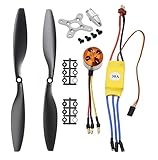
- Name: Brushless Motor; Model : A2212-13; KV : 1000RPM/V
- Motor Part Size : 27.5 x 27mm/ 1.08" x 1.06"(L*D); Shaft Size : 3.17mm/ 0.12"
- Fit for Battery : 2-3S Li-Poly, Fit for ESC : 30A
- 30A ESC Input Voltage: 2-3 cells lithium battery or 6-9S NIMh battery.
- Suitable for RC Glider Quadcopter Helicopter Aircraft Copter Multi-copter
Engineers would also need to measure noise and vibration, inverter requirements, mass, volume, cooling needs, durability and manufacturing cost. Finally, the design would have to be compared with a fair production-relevant permanent-magnet motor and other magnet-free alternatives on a vehicle-level life-cycle basis.
What happened after the award?
The original achievement dates to 2022, when Sansone was 17—not to a recent vehicle launch. In a later public post, he discussed working on version 16 and focusing on torque ripple. The available sources reviewed here do not establish commercial deployment, independent automotive validation or a production partnership.
Bottom line: promising research, not a production EV motor
Sansone’s project matters because it demonstrated an inventive approach to improving a magnet-free motor, earned the top 2022 Regeneron ISEF award and addressed a genuine supply-chain and materials challenge. The reported 300- and 750-rpm results are encouraging within the limited comparison that was performed.
Windows Errors? Fix Them Before They Spread
Repair common Windows errors and clear accumulated junk for a smoother, more stable PC - no reinstall needed.Free scan · no reinstallCrashes, No Sound, or Screen Glitches?
Random freezes, missing sound and display glitches usually trace back to one bad driver. Find and replace yours safely.Free scan · under a minuteBut the evidence does not show that the prototype is ready for automotive use, more efficient than production EV motors, or proven to be more sustainable over its full life cycle. The fairest description is an award-winning, promising small-scale proof of concept—and one contribution to the broader search for practical EV motors that reduce or eliminate rare-earth magnets.
Quick Recap
Product prices and availability are accurate as of the date/time indicated and are subject to change. Any price and availability information displayed on Amazon at the time of purchase will apply.




