PC Slower Than It Used to Be?
A free scan shows the junk files, broken settings and background clutter dragging Windows down - then fixes them in one click.Free scan · Windows 10 & 11Crashes, No Sound, or Screen Glitches?
Random freezes, missing sound and display glitches usually trace back to one bad driver. Find and replace yours safely.Free scan · under a minuteAn air-cooled Porsche 911 is valuable because of the specific car, not simply because it has an air-cooled engine. Generation, exact variant, body style, transmission, factory specification, originality, condition, provenance, maintenance and market context all affect what a buyer will pay. Porsche’s U.S. selling guidance puts it plainly: “A 911 is defined by more than its model year and mileage. Generation, variant, transmission and history all shape its value.”
That means there is no dependable universal price for an “air-cooled 911.” A 1964 model, a 1973 Carrera RS, an ordinary 1980s Carrera and a 1995 Carrera may all be air-cooled cars but belong to very different markets. Establish the car’s exact identity first, then compare it with genuinely similar examples.
As an Amazon Associate I earn from qualifying purchases.
Start with the exact 911
“Air-cooled 911” describes a broad span of cars built across several generations. Before discussing value, verify the vehicle identification number (VIN), model year, engine, transmission, body style and factory equipment. Porsche’s VIN-based selling process identifies the model, generation, engine, transmission, colors and equipment fitted when the car was built.
Two cars with similar mileage can therefore have very different values. A coupe, Targa and Cabriolet are not interchangeable comparisons. Neither are a standard Carrera, a Turbo, a Carrera RS, a limited edition or a car converted from one specification to another. The comparison should be between the same generation and model family wherever possible.
#1 Best Overall
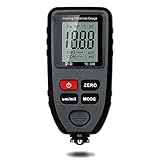
- Auto-Detection for Steel and Aluminum Coatings:This Coating Thickness Gauge utilizes advanced dual technology to automatically recognize ferrous and non-ferrous substrates, making it easy to measure coating thickness on both steel and aluminum without any guesswork
- Ideal for automotive paint inspection, powder coating checks, and metal surface finishing. Commonly used on used cars, anodized aluminum, bathroom fittings, bike frames, stadium seats, lockers, appliances, and more. (Note: Designed for metallic surfaces only.)
- A Must-Have for Used Car Buyers:Don't let hidden repairs catch you off guard. This tool lets you check the paint thickness on each car panel, helping you spot any previous accidents or repairs before buying a used vehicle
- Save Money on Used Car Purchases:When buying used cars, this paint thickness gauge helps you identify potential issues by ensuring the paint thickness is consistent across all panels. Great for detecting accident repairs and verifying if the car has been in a heavy crash
- Important Note: Please note that this gauge is specifically designed to measure coating thickness on metal substrates. It cannot be used on non-metallic materials such as plastic, fiberglass, or wood.
Generation and model year
Early short-wheelbase cars, later long-hood models, impact-bumper 911s and the final 964 generation have different designs, mechanical systems and collector audiences. Even within one generation, a model-year change can alter engine capacity, emissions equipment, brakes, suspension, interior details and production numbers. A buyer who uses a broad “classic 911” average can easily overvalue a common example or undervalue a desirable one.
Variant and body style
The badge matters only when it is genuine and documented. A factory Turbo, Carrera RS or special series has a different market from a standard Carrera wearing replacement badges. Record whether the car is a coupe, Targa or Cabriolet and whether its engine and body correspond to that specification. Factory options, colors and interior combinations can also make one example more sought after than another, but their effect must be judged against comparable sales rather than assumed as a fixed percentage.
The factors that determine value
| Factor | What to verify | Why it changes the comparison |
|---|---|---|
| Identity | VIN, model year, generation, engine, transmission and body style | Defines which market and comparable cars are relevant |
| Specification | Factory options, colors, interior, special editions and equipment | Separates standard cars from unusual or documented factory configurations |
| Originality | Original engine and transmission numbers, body panels, paint and interior | Shows whether the car remains close to its recorded configuration |
| Condition | Corrosion, accident repairs, paint quality, chassis, mechanical operation and interior | A desirable model in poor condition can be worth less than a sound example of a less celebrated variant |
| Provenance | Ownership history, invoices, certificates, photographs and documented work | Reduces uncertainty about identity, care and past repairs |
| Use and mileage | Odometer reading, track use, storage and the pattern of servicing | Explains wear; low mileage alone does not prove good condition |
| Market context | Sale date, geography, channel and whether a figure is an ask, completed sale or appraisal | Makes otherwise similar numbers comparable |
Originality and matching numbers
Originality is valuable because it helps establish what the car is and how it has survived, not because every original component has a universally published premium. Porsche’s Classic Technical Certificate records the original vehicle information and notes whether the current engine and transmission numbers match the records. It also documents the original color, interior and factory options.
Do these 3 things before closing this tab:
1Clear out junk files and repair common Windows errors2Scan for outdated or missing drivers - takes under a minute3Repair Windows errors before they cause bigger problems“Matching numbers” should therefore be treated as a documented condition, not a slogan. Ask which numbers were checked, who checked them and against which factory records. A replacement engine of the correct type may be mechanically appropriate, yet it is not the same as an original, documented engine. The distinction should be stated clearly in any valuation or advertisement.
Rank #2

- HIGH ACCURACY COATING THICKNESS MEASUREMENT – Digital paint thickness gauge for metal surfaces with 0.1 μm (0.01 mils) resolution and ±(3%+2 μm) accuracy, helping detect repainting, repairs, and uneven coating thickness during used car inspection, detailing work, and professional quality control. Suitable for checking doors, hood, roof, fenders, and other painted metal panels where accurate coating evaluation is required.
- EASY & FAST OPERATION — FACTORY CALIBRATED – Factory calibrated and ready to use right after installing batteries. Large backlit LCD with clear readings and simple buttons make this coating thickness meter easy for professionals and first-time users. Ideal for pre-purchase vehicle checks, car dealership inspections, trade-in evaluation, and mobile appraisers who need quick and convenient measurements without complicated setup.
- AUTOMATIC Fe / NFe SUBSTRATE DETECTION – Automatically detects Fe (steel/iron) and NFe (aluminum/copper) and selects the correct measuring method. Ideal for modern vehicles with mixed body materials and accurate results without manual switching. This helps users inspect steel doors, aluminum hoods, and other metal body parts with the correct measurement principle applied automatically.
- WIDE MEASURING RANGE FOR AUTOMOTIVE & INDUSTRIAL USE – Measuring range 0–1500 μm (0–59.1 mils) covers factory paint, repainting layers, and thicker coatings. Suitable for car body panels and industrial coated metal parts. Whether checking original automotive paint thickness or verifying thicker coating applications on metal components, the gauge provides a practical working range for many inspection scenarios.
- DUAL TECHNOLOGY: MAGNETIC INDUCTION + EDDY CURRENT – Uses magnetic induction for ferrous metals and eddy current technology for non-ferrous metals, providing stable, repeatable measurements across steel, iron, aluminum, and copper substrates. This dual-technology design allows one device to cover common automotive body metals without requiring separate meters or manual probe replacement.
Condition can outweigh the badge
Rust, accident repairs and neglected mechanical systems can erase much of the advantage associated with a desirable variant. Porsche’s selling process asks owners to disclose damage, repairs and paint work. A specialist inspection should examine the body, underbody, suspension pickup points, chassis structure, engine, gearbox, cooling and braking systems, electrical equipment, seals and interior.
Descriptions such as “excellent” or “mint” are too vague to support a serious price. Record the actual findings: corrosion at a sill or suspension mount, evidence of a panel replacement, paint thickness inconsistent with factory finish, oil leaks, worn synchronizers, smoke on start-up, cracked dashboard material or incomplete air-conditioning components. A paint-thickness gauge can identify areas that deserve closer examination, but it cannot prove when a repair occurred or whether a car has an accident history.
Provenance and paperwork
A continuous ownership record, original order information, service invoices, inspection reports and photographs help connect the physical car to its claimed history. Documentation is most useful when it is specific: dates, mileage, parts fitted, workshop identity and the work performed. A folder containing only undated receipts is less informative than a shorter sequence that shows how the car was maintained over time.
Porsche offers two different forms of documentation. The Production Specification records the original factory configuration. The Porsche Classic Technical Certificate adds a physical inspection of the current car, checks engine and transmission numbers, includes photographs and provides a technician’s opinion. Porsche says the certificate is ordered through a Porsche Classic Partner or qualified authorized dealer; ask the provider for the current cost and scope before ordering.
Rank #3
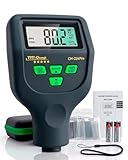
- AUTOMOTIVE PAINT THICKNESS GAUGE – CM-224PRO Designed for measuring coating thickness across vehicle panels during structured professional evaluation. Compare readings on doors, hood, roof and body panels to assess coating consistency and identify thickness variations that may indicate refinishing or prior repair. Suitable for dealerships and inspection professionals.
- 0–59.1 MILS RANGE WITH 0.01 MILS (0.1 µM) RESOLUTION – PROFESSIONAL CONSISTENCY Measures coatings from 0–59.1 mils (0–1500 µm) with stable resolution of 0.01 mils (0.1 µm), supporting consistent and repeatable comparison between factory coating and refinished surfaces during professional inspections.
- FE NFE AND ZINC AUTO DETECTION – AUTOMATIC SUBSTRATE RECOGNITION Automatically identifies steel (Fe), aluminum (NFe) and galvanized surfaces (Zn), supporting inspection of modern vehicles built with mixed body materials without manual switching or mode selection.
- PROFESSIONAL PROBE DESIGN – STABLE AND REPEATABLE CONTACT Engineered probe construction supports consistent surface engagement and repeatable readings during multi-point inspection routines in professional workshop environments.
- FAST PANEL-TO-PANEL MEASUREMENT FLOW – EFFICIENT FULL VEHICLE SCANNING Optimized for efficient professional workflow: place the probe vertically, read the value and continue across panels during dealership and workshop-based inspections.
Maintenance, mileage and use
Mileage is one data point, not a condition grade. A low-mileage 911 that sat for years may need fuel-system, brake, seal, tire and suspension work. A higher-mileage car with regular specialist servicing can be more usable and less risky. Review cold-start behavior, oil-change intervals, valve adjustments where applicable, clutch and gearbox work, suspension refreshes, brake work, cooling-system maintenance and the date and quality of tire replacement.
Track use is not automatically disqualifying, but it changes what should be inspected. Porsche asks sellers to disclose upgrades and track use where relevant. Look for roll-cage or harness installations, altered suspension geometry, brake cooling, engine modifications and evidence of heat or impact stress. Every modification should be identified as factory, period-correct, reversible or custom.
How to verify an air-cooled 911 before buying
- Record the identity. Photograph the VIN and identification plates, write down the engine and transmission numbers, and confirm the body style and model-year details against factory records.
- Request the original specification. Obtain the Porsche Production Specification or equivalent factory documentation showing original color, interior, options and equipment.
- Check current numbers and condition. If the seller claims originality, consider a Porsche Classic Technical Certificate or have a qualified specialist compare the engine and transmission numbers with the records.
- Build the ownership timeline. Organize titles, registrations, bills of sale, service invoices, inspection reports and photographs by date and mileage. Investigate unexplained gaps.
- Inspect the body and structure. Examine wheel arches, floors, sills, suspension mounts, luggage compartments, windshield surrounds and underbody areas for corrosion, repairs and inconsistent seams.
- Measure paint selectively. Use a paint-thickness gauge to find areas that merit closer inspection, then verify findings with visual evidence, panel gaps and repair documentation.
- Have the mechanical systems tested. Use a marque specialist for a compression or leak-down assessment where appropriate, oil-leak evaluation, cold and hot starting, gearbox operation, braking, steering, suspension and electrical checks.
- Separate defects from modifications. List factory equipment, period upgrades, modern replacements and missing parts. Price the work required to return the car to the condition represented by the seller.
- Compare only after inspection. Select completed sales or appraisals of the same generation, variant, body style, transmission and condition. Adjust for geography, date and selling channel.
How to use valuation figures responsibly
First determine what a number represents. An asking price is a seller’s opening position; a completed auction sale reflects one transaction; an insurance value is intended to fund replacement after a covered loss; and a dealer offer reflects the dealer’s costs, risk and expected margin. These figures answer different questions and should not be mixed.
What’s actually slowing this PC down?
Pick the symptom - the matching free tool is one click away.
Every comparable needs a date, market, model, condition and provenance. A headline result from an exceptional concours car does not price an ordinary driver-quality example. Conversely, a distressed sale does not establish the value of a well-documented car.
Rank #4

- 【Auto-ID Dual Tech & Material Note】This paint depth gauge automatically identifies Fe/NFe substrates without manual switching. The device is specifically designed for metal substrates and is not suitable for plastic, carbon fiber, or wood. It is ideal for detecting heavy paint on car bodies, boat hulls, and industrial steel structures to ensure accurate readings.
- 【High Precision & Wide Range】Equipped with a wear-resistant probe, this coating thickness gauge delivers lab-grade stability across a 0-78.7 mils (0-2000μm) range. It features high resolution of 0.004 mil / 0.1μm for 0-3.9 mils (0-99.9μm) and 0.04 mil / 1μm for 3.9-78.7 mils (100-2000μm), accurately detecting minute changes in powder coatings or anodized layers. With a measurement accuracy of ≤ ±(3% H+ 2μm / 0.079mil), it ensures reliable results for professional tasks, from measuring paint on curved bumpers (min radius 5mm/197mils) to verifying films on machinery.
- 【Single/Continuous Scan Mode】This paint meter offers more than just single scans by displaying real-time statistics (Avg, Max, Min) of the last 10 measurements in continuous scanning mode. Users can quickly identify uneven spraying on hoods or thickness variations in industrial furniture powder coatings through statistical data. This method reflects overall process quality better than single-point measurements.
- 【Data Storage & USB Output】This digital thickness gauge features a "Data Hold" function to lock readings after measuring in deep engine bays or narrow gaps. It is equipped with a Type-C interface that supports exporting 30 sets of stored data to a PC for generating professional inspection reports. This capability is perfect for creating check reports for used car sales or quality control logs.
- 【Smart Calibration & Ergonomics】This mil thickness gauge comes with Fe/NFe calibration foils and substrates for zero-point and thickness calibration before work. Operators must ensure no dust, wrinkles, or irregularities exist between the thickness standard sheet and the substrate during use. Pressing the OK key allows users to clear historical calibration records easily.
One documented 1995 example
Hagerty’s report dated July 16, 2024 lists a 1995 Porsche 911 Carrera at $135,000 in #1 concours condition, $101,000 in #2 excellent condition, $83,000 in #3 good condition and $54,000 in #4 fair condition. The same report shows a 15 percent negative adjustment for the Tiptronic transmission and notes that its figures draw on various data sources.
| 1995 Porsche 911 Carrera condition | Reported value in Hagerty’s July 16, 2024 report |
|---|---|
| #1 concours | $135,000 |
| #2 excellent | $101,000 |
| #3 good | $83,000 |
| #4 fair | $54,000 |
| Tiptronic adjustment | -15 percent |
Those figures are not 2026 prices, do not apply to every 964 or 911 Carrera, and should not be transferred to another generation or variant. They illustrate how condition and transmission can create a wide spread even within one model year.
Independent reader supportYour contribution helps us test, update, and keep practical guides available for everyone.Why historic importance can change the outcome
Porsche Museum’s “Number 57” account describes Porsche paying EUR 107,000 for an original red 1964 911 and EUR 14,500 for a gold 1968 911 L. The 1964 car was severely deteriorated, but its chassis identity was confirmed and it retained early details regarded as historically significant. Its engine and transmission were not original units, although they were the identical type.
These were museum acquisitions, reported by Porsche in an account published about 2018, not current market comparables. They show why an important chassis, documented history or unusual surviving detail can matter independently of cosmetic condition—and why a museum’s purpose and budget cannot be used to set a normal retail price.
Best Value

- (*^_^*) [Record Various Data] It can record the average value, maximum value, minimum value, dif at the same time, and supports up to 50 data for statistics, making the numerical data you measure more accurate and convenient. If the auto power off function is on and there is no for 3 minutes, the instrument will automatically shut down to save battery power.
- (*^_^*) [Multifunctional] Thickness gauges are used to measure the thickness of metal coatings and other coatings such as paint/enamel/chrome on steel, paint and anodized coatings on aluminum/copper. Automatic detection of substrate properties. It has small size and high precision battery level indicator. It also has automatic shutdown function, used for FE/NFE.
- (*^_^*) [Precision Integrated Probe] It is important to check the car paint to make sure the paint thickness is about the same on each panel and to determine if the car is in good condition with a car paint inspection thickness gauge when you buy the car. The instrument adopts the principles of electromagnetic induction (F probe) and eddy current effect (N probe) to automatically detect the properties of the substrate.
- (*^_^*) [What Can Be Read and Detect Paint Depth] The large LCD display of the paint depth gauge shows the metal type, operating mode, quantity, battery status and the reading in µm, mm or mils. The thickness gauge has a measurement range of 0-2000um, an accuracy of ±(3%+1um), and a resolution of 0um-999um (1um).
- (*^_^*) [Widely Uses] It is used to non-destructively measure the thickness of coatings and paints. It is an essential equipment for material surface treatment, widely used in manufacturing, metal processing industry, chemical industry, commodity inspection and other fields, and can also work stably in laboratories, workshops and outdoors. Suitable for automotive paints, powder coatings, anodized aluminum, bathroom accessories, bicycle frames, stadium seating, outdoor sheds, furniture, swings, c
Common mistakes when estimating value
- Using one average for every air-cooled car. The label covers too many generations and variants for a single average to be meaningful.
- Pricing from an asking price. A listing proves what a seller wants, not what a buyer paid.
- Assuming low mileage is enough. Storage-related deterioration and missing maintenance can make a low-mileage car expensive to recommission.
- Treating “matching numbers” as self-proving. Require number checks against records and identify which components match.
- Ignoring corrosion because the paint looks good. Underbody and chassis inspection can reveal repairs hidden by refinishing.
- Applying a rare-option premium without documentation. Confirm the option was factory-fitted and compare with sales of the same specification.
- Counting every modification as an upgrade. Non-factory changes can improve usability for one buyer and reduce originality for another.
- Ignoring sale channel and geography. A specialist auction, local private sale and dealer transaction involve different audiences and costs.
A practical valuation process for sellers
Prepare a fact sheet that states the VIN, exact model designation, body style, transmission, engine number, current mileage, colors, factory options, ownership history, accident and paint history, service chronology, modifications and known defects. Scan the strongest documents and label each invoice with its date and mileage.
Next, commission a specialist inspection if the car’s condition is not already documented. Correct safety and mechanical issues before presenting the car, but preserve removed original parts and record all work. Cosmetic restoration should be described precisely, including panel replacement, repainting and any color change.
Finally, build a set of like-for-like comparables. Use the same generation, variant, body style and transmission, then adjust for documented originality, condition, mileage, market and sale date. Present a range with the assumptions stated rather than a single unsupported number. If an appraisal, insurance value or dealer offer is being used, label it as such.
The Tool Desk
Outbyte PC Repair FREERepair Windows errors before they cause bigger problemsFix Now →Outbyte Driver Updater FREEFix the driver behind crashes, sound loss and screen glitchesFind Drivers →What makes one air-cooled 911 worth more than another?
The strongest valuation is the one that another informed buyer can audit: exact identity, factory specification, documented originality, visible condition, credible maintenance history and comparable transactions. Rarity may help, but only when the specific model and evidence support it. A famous badge cannot compensate for an unclear identity, severe corrosion or missing history, while a less celebrated 911 can command strong interest when it is unusually original, well maintained and thoroughly documented.
Quick Recap
Product prices and availability are accurate as of the date/time indicated and are subject to change. Any price and availability information displayed on Amazon at the time of purchase will apply.




