A sportbike can race in the FIM World Superbike Championship only when it is a genuine production model, has completed FIM homologation for the relevant class, and meets that season’s technical regulations. A motorcycle’s road performance, racing appearance or manufacturer marketing does not establish eligibility.
Eligibility belongs to a specific model, championship class and season. Production numbers, inspection documents, component specifications, rule changes, suspensions and homologation expiry can all change the answer. For a current determination, consult the latest FIM homologated-bike list and the applicable WorldSBK regulations rather than relying on an old race entry.
As an Amazon Associate I earn from qualifying purchases.
The three gates every WorldSBK motorcycle must pass
WorldSBK is production-based, but “production-based” does not mean that any fast road-legal motorcycle can enter. Eligibility is best understood as three linked gates:
Quick wins for a faster PC:
Scan for outdated or missing drivers - takes under a minuteDriver Scan →Clear out junk files and repair common Windows errorsFree Scan →- A qualifying production model exists. The manufacturer must build the motorcycle in the quantities and configuration required by the FIM homologation rules.
- The model completes FIM homologation. The manufacturer submits technical and production evidence, parts and drawings, and passes the required inspection process for the class.
- The race motorcycle follows the prevailing technical rules. The race team may use only the changes and parts allowed for that season and class. Homologation does not authorize unlimited modifications.
The FIM’s 2026 Homologation Regulations express the final distinction directly: “However, to compete in the World Superbike Championship the machine must comply with the prevailing regulations.” In practice, a model can be a legitimate homologated production motorcycle yet still be ineligible for a particular event, class or season if its race specification does not comply.
#1 Best Overall

- LEGO Technic Ducati Panigale V4 R model building kit features a 2-speed gearbox - a first for LEGO Technic motorbike models, and front and rear suspension for realistic movement
- Features great attention to detail, with attributes from the original, like realistic turning front wheel and front and back disc brakes
- Discover how the gearbox activates the V4-cylinder engine and feel the smooth ride of different driving techniques with the 2-speed action
- A kickstand, exhaust pipe, windshield & dashboard add the little details that make this superbike model toy so true to the full-size version
- The classic red colour scheme brings the motorcycle to life with true Italian flair; display the sleek silhouette on the Ducati racing stand
Production quantities: proving that the race bike comes from a real model
For Superbike 1000, the 2026 FIM rules divide manufacturers by annual output. A manufacturer producing more than 6,000 motorcycles per year is treated as “big” for this purpose; one producing fewer than 6,000 is treated as “small.” The thresholds are staged so the model must move from an initial inspection quantity to a larger fleet during its first two years of racing.
| Manufacturer category | At FIM homologation inspection | By December 31 of the first racing year | By December 31 of the following year |
|---|---|---|---|
| More than 6,000 motorcycles annually (“big” manufacturer) | 125 motorcycles | 250 motorcycles | 500 motorcycles |
| Fewer than 6,000 motorcycles annually (“small” manufacturer) | 50 motorcycles | 125 motorcycles | 250 motorcycles |
These figures are specifically from the 2026 FIM Homologation Regulations for Superbike 1000. They are not a universal production rule for every WorldSBK category or every year. The manufacturer classification and milestones must therefore be checked against the rulebook in force for the season being considered.
Production evidence is more than a sales claim. The FIM can inspect production motorcycles and compare them with the drawings, documents, sample parts and other material submitted for homologation. A model that exists only as a prototype, a limited demonstrator or a race-only machine cannot satisfy the production-model starting point simply because it resembles a road sportbike.
Outdated Drivers Are Slowing You Down
One free scan finds every outdated or missing driver and matches the right update for your exact hardware.Free scan · exact hardware matchPC Slower Than It Used to Be?
A free scan shows the junk files, broken settings and background clutter dragging Windows down - then fixes them in one click.Free scan · Windows 10 & 11The limited pre-threshold exception
The 2026 regulations allow an SBK Commission-approved manufacturer to compete before it reaches the minimum production quantity. This is a conditional exception, not a way to avoid homologation. The participant cannot score points until the required number of motorcycles has been produced. If the minimum is not met within four months of the model’s first Superbike race outing, the commission may restrict participation for a period it determines.
That arrangement matters when evaluating an early-season entry. Seeing a new motorcycle on the grid does not by itself prove that the production milestones have already been completed or that the entrant is entitled to championship points.
How FIM homologation is completed
Homologation is the formal process that connects the production motorcycle to the World Championship rules. The 2026 procedure has two phases, each with a different purpose.
Rank #2
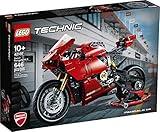
- The model includes a 2-speed gearbox, a first for LEGO Technic motorcycle models, and front and rear suspension for realistic movement
- Features great attention to detail, with attributes from the original, like realistic turning front wheel and front and back disc brakes
- Discover how the gearbox activates the V4-cylinder engine and feel the smooth ride of different driving techniques with the 2-speed action
- A kickstand, exhaust pipe, windshield & dashboard add the little details that make this superbike model toy so true to the full-size version
- The classic red color scheme brings the motorcycle to life with true Italian flair; display the sleek silhouette on the Ducati racing stand
Phase One: establish the production specification
Phase One covers the evidence that the submitted motorcycle is a real, repeatable production model. The manufacturer provides drawings, technical documents, sample parts and production evidence. The FIM may inspect motorcycles from production and compare them with the submitted documentation and the homologated model.
Starting in 2026, Superbike homologation also requires an FIM 3D scan of the complete motorcycle. The scan adds a dimensional record to the written documentation, helping officials identify whether the motorcycle presented for inspection corresponds to the model that was approved.
Phase Two: confirm World Championship eligibility
Phase Two contains requirements specific to eligibility for the FIM World Championships. Completing Phase One does not automatically complete this second stage. A manufacturer seeking WorldSBK eligibility must satisfy the class-specific Phase Two requirements as well as the production and documentation obligations.
Homologation should therefore be treated as a model-level approval with a defined scope. It does not certify every replacement part, software change or later development. The race machine remains bound by the current Superbike technical regulations.
What the race team may change—and what must stay original
WorldSBK motorcycles are heavily prepared competition machines, not untouched showroom motorcycles. The technical regulations specify which modifications and parts are permitted. Items not permitted by those rules must remain as originally produced for the homologated motorcycle.
- Permitted changes: components and modifications expressly allowed by the applicable Superbike regulations.
- Required production specification: any feature for which the rules do not grant an allowance must remain as produced on the homologated model.
- Class-specific limits: an allowance written for another class cannot be carried into Superbike by assumption.
This is why a superbike that looks very different from its showroom counterpart can still be production-based: the visible and internal changes are controlled by the rulebook. Conversely, a spectacular road motorcycle is not eligible if its intended race configuration would require changes that the rules prohibit.
Rank #3

- Faithful 1:18 scale model of the spectacular V4 S Corse
- Attention to detail and iconic red livery in a concentrate of pure emotion for true enthusiasts
- Factory-original equipment, not aftermarket
Superbike and Sportbike are separate eligibility questions
WorldSBK’s Superbike class is distinct from the World Sportbike class. The 2026 FIM Sportbike rules require their own Phase Two homologation and prescribe separate technical specifications. Homologation for one class does not automatically transfer to the other.
| Question | Superbike 1000 | World Sportbike |
|---|---|---|
| Is a separate class approval required? | Yes; Superbike homologation and Superbike Phase Two requirements apply. | Yes; the 2026 rules prescribe separate Phase Two homologation. |
| Can approval in the other class be assumed to carry over? | No. | No. |
| Which technical rules control the race motorcycle? | The prevailing Superbike regulations for that season. | The prevailing Sportbike regulations for that season. |
When someone says a motorcycle is “WorldSBK homologated,” ask which class is meant. A model’s eligibility must be checked against the exact championship category, not just the family name or engine size.
Season, expiry and rule changes can end eligibility
The 2026 FIM Homologation Regulations state an eight-year maximum homologation period for Superbike 1000. Eight years is an upper limit, not a guarantee that a model remains eligible for the entire period. Eligibility can end sooner if the model no longer complies with the applicable rules.
What’s actually slowing this PC down?
Pick the symptom - the matching free tool is one click away.
Annual homologated-bike lists and amendments are consequently important. A motorcycle may have raced successfully in a previous season yet be absent from the current list, suspended, superseded or affected by a technical change. A past race entry is evidence of historical participation, not proof of present eligibility.
For a current answer, verify all of the following together:
- The model appears on the FIM list for the relevant season.
- The listing applies to the intended class, such as Superbike rather than Sportbike.
- The homologation remains within its permitted period and has not been withdrawn or suspended.
- The race specification complies with the latest technical regulations and amendments.
2026 examples: Ducati Panigale V4 R and Kawasaki ZX-10RR
The official WorldSBK announcement for the 2026 season identifies the Ducati Panigale V4 R and Kawasaki ZX-10RR as newly homologated WorldSBK models. They are useful examples of the process because each is a production model named in the season’s official announcement.
Rank #4

- 【Panigale V4 SP2】 - The 1:9 compatible for Ducati Panigale V4 SP2 motorcycle model is a meticulous replica of flagship superbike model, designed to capture the essence of the iconic V4 SP2. The V4 SP2 motorcycle model displays an impressive level of detail, faithfully reproducing the radical styling and sophisticated features of the motorcycle model. With its stunning realism and exquisite craftsmanship, the V4 SP2 motorcycle model is a must-have for enthusiasts and collectors.
- 【Material & Highlight】-The main body of the motorcycle model for Ducati is made of alloy diecast motorcycle model materials and high-quality plastics,the tire part is made of rubber.The intricate details such as rotatable support pedals, twistable front wheels also enrich the motorcycle's realism and appeal. This design not only ensures the excellent durability of the motorcycle model 1:9, but also enhances the overall authenticity and collection value of the 1:9 motor model.
- 【Exquisite Color Matching】 Most of the body of the 1:9 die-cast black motorcycle model is black, which adds a touch of sophistication to the motorcycle model for Ducati. The motorcycle model has a clear logo and V4 SP2 icon printed on its head. These colors enhance the visual appeal for Ducati V4 SP2motorcycle model and make a great collectible gift for adult. Also, this is a motorcycle model cake topper that can be used as a birthday gift for motorcycle model lovers.
- 【SIZE & DETAILS】- The 1:9 mini motorcycle model measures 9.06×3.74×5.12 inches and weighs 0.914 lbs. The exquisite craftsmanship of this metal motorcycle model ensures visual impact and authentic presentation, accurately capturing every intricate feature from the flexible and stable handlebars to the carefully designed body. This compatible for Ducati motorcycle model embodies a high level of restoration and appreciation, making it a great addition to any boy man's collection, giftor cake topper.
- 【Wory-Free Purchash】We maintain strict production standards to ensure the highest quality motor models. Our products are delivered in sturdy packaging to ensure safe shipping, so you can buy with confidence. Your satisfaction is our top priority and we back our Motorcycle Model with a one-year warranty. If any purchasing issues arise, our dedicated customer support team will quickly resolve the issue within 24 hours to ensure a worry-free experience.
The announcement is season-specific. It does not make either model an automatically eligible entry in another year, and it is not a complete list of every motorcycle that may be homologated. The road motorcycle and the race-prepared WorldSBK machine are also not identical products: the latter must be built within the competition rules governing permitted changes.
The Tool Desk
Outbyte Driver Updater FREEScan for outdated or missing drivers - takes under a minuteDriver Scan →Outbyte PC Repair FREEClear out junk files and repair common Windows errorsFree Scan →How to evaluate a candidate motorcycle step by step
Use this sequence when a manufacturer announces a new sportbike or when you are checking whether an older model can return to the grid.
- Identify the exact model and class. Record the full model designation and decide whether the question concerns Superbike 1000 or World Sportbike. Similar names do not establish class approval.
- Check the current FIM homologated-bike list. Look for the model in the list that applies to the season under consideration. Do not rely solely on a manufacturer brochure, a media launch or a historical result.
- Confirm the production bracket. Determine whether the manufacturer falls above or below the 6,000-motorcycles-per-year threshold used in the 2026 Superbike 1000 rules, then compare the model’s production evidence with the appropriate 125/250/500 or 50/125/250 milestones.
- Confirm both homologation phases. Phase One documentation, parts and production evidence must be accompanied by the class-specific Phase Two requirements. From 2026, the Superbike process also includes the FIM 3D scan of the complete motorcycle.
- Check for an exception or restriction. If the model is racing before its production threshold is complete, verify SBK Commission approval, whether it can score points and whether the four-month production deadline has been met.
- Read the current technical regulations. Match the proposed race build against the season’s Superbike rules. Separate permitted modifications from features that must remain in the homologated production configuration.
- Check time limits and amendments. Confirm the eight-year maximum period has not elapsed and look for later rule changes, suspensions or list amendments that affect the model.
This process prevents a common mistake: treating “homologated once” as a permanent, class-wide racing license.
Independent reader supportYour contribution helps us test, update, and keep practical guides available for everyone.Common mistakes when judging eligibility
“It is fast enough, so it qualifies.”
Performance is not the legal test. A road bike can be quicker in a straight line or around a circuit than an existing entry and still fail production, documentation or technical requirements.
“It has a racing kit, so it is a WorldSBK bike.”
Aftermarket race equipment does not create FIM homologation. Eligibility attaches to the manufacturer’s approved production model and to a race motorcycle built within the championship rules.
“A homologated road bike can be modified without limits.”
The regulations define the permitted changes. Anything outside those allowances must remain as originally produced for the homologated motorcycle.
Best Value

- 【Panigal V4 SP2】 - The 1:6 compatible for Ducati Panigale V4 SP2 motorcycle model is a meticulous replica of flagship superbike model, designed to capture the essence of the iconic V4 SP2. The V4 SP2 motorcycle model displays an impressive level of detail, faithfully reproducing the radical styling and sophisticated features of the motorcycle model. With its stunning realism and exquisite craftsmanship, the V4 SP2 motorcycle model is a must-have for enthusiasts and collectors.
- 【Material & Highlight】-The main body of the motorcycle model for Ducati is made of alloy diecast motorcycle model materials and high-quality plastics,the tire part is made of rubber.The intricate details such as rotatable support pedals, twistable front wheels also enrich the motorcycle's realism and appeal. This design not only ensures the excellent durability of the motorcycle model 1:6, but also enhances the overall authenticity and collection value of the 1:6 motor model.
- 【Exquisite Color Matching】 Most of the body of the 1:6 die-cast black motorcycle model is black, which adds a touch of sophistication to the motorcycle model for Ducati. The motorcycle model has a clear logo and V4 SP2 icon printed on its head. These colors enhance the visual appeal for Ducati V4 SP2motorcycle model and make a great collectible gift for adult. Also, this is a motorcycle model cake topper that can be used as a birthday gift for motorcycle model lovers.
- 【SIZE & DETAILS】The 1:6 mini motorcycle model measures 13.39×5.12×8.27 inches and weighs 1.82 lbs. The exquisite craftsmanship of this metal motorcycle model ensures visual impact and authentic presentation, accurately capturing every intricate feature from the flexible and stable handlebars to the carefully designed body. This compatible for Ducati motorcycle model embodies a high level of restoration and appreciation, making it a great addition to any boy man's collection, giftor cake topper.
- 【Wory-Free Purchash】We maintain strict production standards to ensure the highest quality motor models. Our products are delivered in sturdy packaging to ensure safe shipping, so you can buy with confidence. Your satisfaction is our top priority and we back our Motorcycle Model with a one-year warranty. If any purchasing issues arise, our dedicated customer support team will quickly resolve the issue within 24 hours to ensure a worry-free experience.
“Approval in Sportbike means approval in Superbike.”
The classes have separate Phase Two requirements and technical specifications. Always verify the class-specific listing.
“A model that raced last year is still legal.”
Homologation lists, amendments, technical rules and the eight-year maximum period make eligibility time-dependent. Historical participation is not a substitute for the current list.
Announced changes after the 2026 rules
WorldSBK announced a future regulatory roadmap on July 31, 2026. These are planned changes, not additional requirements that should be applied retroactively to 2026 eligibility.
| Planned timing | Announced change | What it means for a 2026 check |
|---|---|---|
| 2027 | Manufacturer-specific rev limits paired with fuel-flow limitation and a 112 dB noise limit. | Do not treat these announced controls as 2026 homologation criteria. |
| 2028 | A new Rank Concession system. | Keep the planned concession framework separate from the current production and homologation gates. |
| 2030 | The engine-capacity limit for four-cylinder engines is planned to extend to 1200 cc. | It does not change the 2026 engine or homologation requirements. |
Because these dates describe a roadmap, the final wording and implementation should be confirmed in the regulations published for each season.
A practical comparison framework for two motorcycles
When comparing two candidate sportbikes, use the same evidence for each rather than judging by reputation or lap-time claims:
- Homologation status: Is each model listed by the FIM for the same class and season?
- Production bracket: Which manufacturer category applies, and have the relevant staged quantities been reached?
- Process completion: Are Phase One and Phase Two requirements complete, including the 2026 Superbike 3D scan?
- Technical compliance: Can the intended race specification be built entirely from changes allowed by the current rules?
- Continuing validity: Is the model within the eight-year maximum, and is there any suspension, amendment or earlier loss of compliance?
This framework separates verifiable eligibility from marketing language. It also makes clear why two motorcycles with similar engine sizes or road equipment can have different championship status.
Bottom line
WorldSBK eligibility is a documented chain: a genuine production model, the correct production quantities, completed FIM homologation for the intended class, and a race motorcycle that obeys the season’s prevailing technical regulations. For 2026 Superbike 1000, the key checkpoints include the 6,000-unit manufacturer threshold, staged 50/125/250 or 125/250/500 production milestones, two-phase homologation with a complete-motorcycle 3D scan, and the eight-year maximum homologation period. Check the current FIM list and rulebook immediately before relying on any model’s status.
Recommended Free Tools
Quick Recap
Product prices and availability are accurate as of the date/time indicated and are subject to change. Any price and availability information displayed on Amazon at the time of purchase will apply.




