A safe motorcycle helmet is a tested system, not a shell material or a certification sticker viewed in isolation. The outer shell spreads and resists impact, the energy-absorbing liner manages crash energy, and the retention system keeps the helmet positioned on your head. The complete helmet must meet the approval required where you ride, fit securely, and be a genuine product with traceable manufacturer and model information.
In the United States, a DOT mark means the manufacturer certifies conformity with Federal Motor Vehicle Safety Standard (FMVSS) No. 218; the National Highway Traffic Safety Administration (NHTSA) does not pre-approve every helmet. UN Regulation No. 22 uses a separate type-approval system, while the United Kingdom’s SHARP program adds model-level comparison tests. None of these labels, by itself, proves that one material, price, style or brand is universally safest.
As an Amazon Associate I earn from qualifying purchases.
A helmet is a complete safety system
Crash protection comes from several parts working together. The shell is the helmet’s outer structural layer. It helps distribute loads, resists penetration and provides the shape needed for the liner and retention hardware to work. Beneath it, the liner is designed to absorb energy by deforming during an impact. The chin strap and its fastening system hold the helmet in the correct position so that the shell and liner can do their jobs.
Those functions overlap. A strong shell with an inadequate liner may transmit too much energy; a good liner in a shell that cracks or allows penetration is not enough; and either design becomes less useful if a loose strap lets the helmet move or come off. Federal requirements therefore test the helmet as a whole. NHTSA summarized this principle in an interpretation of FMVSS No. 218: “Each of these tests measures the performance of a motorcycle helmet as a total system, i.e., the tests are conducted on a motorcycle helmet as a whole, rather than on helmet components.” NHTSA’s interpretation also explains that the standard does not prescribe a particular shell or liner material.
#1 Best Overall

- 2 Visors Included: Clear + Smoked and 1 Neck Scarf for Winter Use
- Streamlined Aerodynamic Design Reduces Wind Noise and Drag
- Advanced and Lightweight Durable ABS Shell
- Quick Release Clasp and Strap and Removable Inner Lining Pads
- Meets or Exceeds FMVSS-218 and DOT Safety Standards
What the shell does
The shell forms the exterior barrier. It must contribute to impact attenuation, resist penetration and maintain enough structural integrity for the rest of the helmet to function. Different manufacturers can use different material combinations and construction methods while meeting the same performance requirements. A material name such as carbon fiber, fiberglass or thermoplastic does not establish a universal safety ranking.
What the liner does
The liner is the energy-absorbing layer between the shell and the rider’s head. NHTSA’s 1995 interpretation noted dense foam as a common characteristic of compliant helmets, but that observation is not a current inspection test or a rule requiring one universal foam type or thickness. You cannot determine a helmet’s protection by looking at liner material alone; the design, dimensions, shell, retention system and test results are evaluated together.
What the retention system does
The retention system includes the chin strap, fastening hardware and the parts that anchor them to the helmet. FMVSS No. 218 includes a retention-system-effectiveness requirement because a helmet that shifts substantially or comes off cannot provide consistent coverage. Check that the strap can be tightened enough to hold the helmet firmly without being painful, and use the fastening method specified by the manufacturer.
What’s actually slowing this PC down?
Pick the symptom - the matching free tool is one click away.
What helmet standards actually test
FMVSS No. 218 lists performance requirements for impact attenuation, penetration resistance, retention-system effectiveness and labeling. The requirements apply to the complete helmet rather than assigning a separate pass or fail to a shell, liner or strap in isolation. The FMVSS No. 218 text provides the regulatory test and labeling details.
Rank #2

- 【DOT Certified & High-Impact Protection】 This full face motorcycle helmet meets or exceeds DOT FMVSS-218 standards, ensuring professional-grade safety. Built with a rugged ABS shell and energy-absorbing EPS, these motorcycle helmets dot approved provide ultimate defense for street bikes, cruisers, and sport bikes
- 【Optimized Airflow for All-Weather Riding】 Experience superior ventilation with 4 strategically placed air intakes and exhaust vents. This full face helmet design minimizes wind resistance and fogging, keeping you cool during summer rides and providing a reliable full face helmet adult option for rainy or cold weather
- 【Quick-Release Dual Visor System】 Adapt to any light condition with ease. Our full face helmet motorcycle features a tool-free quick-release system. Each order includes a pre-installed tinted shield plus a bonus clear visor, making these full face motorcycle helmets for men and women versatile for both bright days and night riding
- 【Washable Lining & Comfort Fit】 Maintain freshness on every journey with our fully removable and machine-washable interior. The moisture-wicking sponge padding makes these motorcycle helmets for adults incredibly comfortable for long-distance trips, ensuring a snug fit for these full face motorcycle helmets dot certified
- 【Complete Bundle & Perfect Sizing】 We include a premium carrying bag for easy storage and scratch protection. Whether you are searching for motorcycle helmets for women or men, TRIANGLE offers 4 sizes (S-XL) to ensure a secure fit. Please measure your head circumference to find the perfect full face motorcycle helmet for women or men
This performance-based approach is why a certification cannot be reverse-engineered from a shopping description. “Carbon,” “lightweight,” “full-face” and a high price may describe construction or convenience, but none substitutes for the required approval, a correct fit and a legitimate product.
DOT certification in the United States
What the DOT symbol means
For a helmet sold for road use in the United States, the DOT symbol represents the manufacturer’s certification that the helmet conforms to FMVSS No. 218. NHTSA relies on manufacturer self-certification rather than granting advance approval to each model. The agency conducts compliance testing on some helmets and can pursue enforcement or a formal recall when a helmet fails to comply.
A current U.S. label includes the manufacturer or brand, model designation, the letters DOT, “FMVSS No. 218” and the word “CERTIFIED.” Check the actual helmet, not only an online listing or a removable hang tag. NHTSA’s motorcycle-helmet buying guidance warns that novelty helmets and counterfeit DOT labels can mislead riders.
Free tools Windows power users keep installed
One-click scans. No signup required.
How to reduce counterfeit risk
- Buy from a seller that can identify the manufacturer, exact model and distribution channel.
- Match the label’s manufacturer and model information to the helmet’s packaging and instructions.
- Be suspicious of an unusually thin shell, a missing or minimal liner, weak-looking straps, incomplete labeling or a product marketed primarily as a novelty.
- Do not assume that a printed DOT logo proves compliance; a counterfeit label can be applied to a noncompliant helmet.
DOT is a U.S. regulatory requirement and certification mechanism. It is not a star rating that orders every compliant helmet from safest to least safe.
Rank #3
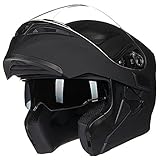
- High Resistance ABS Shell With Micrometrically Adjustable Strap
- Meets or Exceeds FMVSS-218 and DOT Safety Standards
- Helmet Liner / Cheek Pads are Lightweight, Soft and Easily Removable and Washable
- Sleek and Lightweight Design Reduces Wind Noise
- Modular Flip-Up Function Anti-Scratch, Anti-Fog and Wide View Clear Visor
UN Regulation No. 22 and ECE approval
UN Regulation No. 22 is a separate type-approval system used in markets that recognize the United Nations vehicle regulations. The helmet and visor carry an approval mark showing the relevant approval information. The UNECE helmet leaflet illustrates the marking format, but its examples use an older amendment series; do not copy the pictured number as a current 22.06 label. Verify the exact approval on the helmet and check the law where you will ride.
What changed with 22.06
Implementation dates depend on the market. The UK Department for Transport’s SHARP FAQ says Regulation 22.06 became the required standard for new type approvals in Europe from July 2022. Production of helmets approved only to 22.05 was required to stop from July 2023, and retailers were generally expected to stop new 22.05 sales from January 2024. The same FAQ says the UK did not enforce that sales cutoff and lists the standards accepted there. Treat those dates as UK-specific context and recheck current local rules before buying or importing a helmet.
ECE and DOT should not be treated as interchangeable stickers. They arise from different approval and legal systems, and the sources do not support a universal claim that one is “best” for every rider or crash. Use the approval recognized in your jurisdiction, then compare the exact model’s fit, coverage and independent information.
Quick wins for a faster PC:
Scan for outdated or missing drivers - takes under a minuteDriver Scan →Repair Windows errors before they cause bigger problemsFix Now →SHARP: an additional model-level comparison
SHARP is a UK Department for Transport consumer-information program. It tests helmets that already meet the minimum standards required for sale in the UK and publishes a star rating to help consumers compare models. SHARP states that its five-star system lets riders compare the safety of different helmets; it is not a replacement for the legal approval mark.
Rank #4

- Unmatched Protection & Durability:Built Tough for Extreme Adventures, Our Helmet Exceeds Expectations by Meeting FMVSS-218 and DOT Safety Standards. Its Robust Construction Safeguards Ensuring Ultimate Security as You Conquer the Toughest Terrains
- Convenient Flip-Flop Mechanism: Easy Switching Between Full-Coverage Helmet and Open Mode, This Modular Motorcycle Helmet Is Perfect for City Riding and Long-Distance Touring
- Stay Cool and Comfortable with Strategically Placed Vents That Ensure Maximum Airflow and Reduce Heat and Moisture Buildup During the Ride
- Comfortable Interior Lining: Enjoy the Cozy Plush Lining That Provides Long-Lasting Comfort Even on Long Rides
- The Modular Design Makes It Suitable for Snowmobiles, Dirt Bikes, Scooters, Bike Riding and More. With Its Innovative Features, It Is Sure to Be an Ideal Choice for Riders Looking for a Stylish, Comfortable and Safe Helmet!
How SHARP testing works
The published SHARP method uses 30 linear-impact tests and two oblique-impact tests, with at least seven samples across sizes. It uses three impact speeds, including an 8.5 m/s test speed, which is higher than the 8.2 m/s speed stated in the 22.06 requirement described by SHARP. The exact protocol and updates are available on the SHARP testing-method page.
A lower SHARP star rating does not mean a helmet provides no protection. Helmets sold in the UK still have to meet an accepted regulatory standard. SHARP is best used as an additional comparison for the exact model and version you are considering. Ratings can change as the program tests more products, so check the live SHARP ratings list rather than relying on an old screenshot or a similarly named helmet.
How to get a genuinely secure fit
Certification cannot compensate for a helmet that moves, leaves gaps in coverage or is too uncomfortable to wear correctly. Fit is personal because head shape varies even when circumference measurements match. Use this process when trying a helmet:
- Measure and shortlist. Measure your head according to the manufacturer’s instructions, usually around the widest part above the eyebrows and ears. Use the measurement only to select a starting size; do not treat it as a substitute for trying the helmet on.
- Try the exact model. Put the helmet on with the front level and the eye opening in the intended position. A new helmet should feel evenly snug around the crown and cheeks without a sharp pressure point.
- Check movement. Fasten and tighten the chin strap, then hold the helmet and move it gently side to side and up and down. The skin on your head and cheeks should move with the helmet rather than allowing the shell to slide independently.
- Check retention. Follow the manufacturer’s fastening instructions and confirm that the strap remains secure when you open and close your mouth and turn your head. If the helmet can shift toward your eyes, expose the back of your head or loosen substantially, try another size or shape.
- Wear it long enough to find pressure points. Keep the helmet on for several minutes in the store. Persistent pain, numbness or a concentrated hot spot is a fit problem, not something to solve by leaving the strap loose.
- Account for your use. Consider your riding position, ventilation needs, glasses, communication equipment and the amount of coverage you want. Comfort matters because a helmet that distracts you or is left unfastened is not a practical safety choice.
NHTSA and SHARP both emphasize choosing a properly fitting helmet. If two certified models are available, the one that fits your head securely and that you will wear as intended is the more useful choice.
Best Value
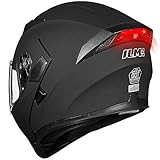
- High Resistance ABS Shell With Micrometrically Adjustable Strap
- Meets or Exceeds FMVSS-218 and DOT Safety Standards
- Helmet Liner / Cheek Pads are Lightweight, Soft and Easily Removable and Washable
- Sleek and Lightweight Design Reduces Wind Noise
- Modular Flip-Up Function Anti-Scratch, Anti-Fog and Wide View Clear Visor
Coverage styles and their trade-offs
Helmet style changes which parts of the head and face are covered. NHTSA notes that a half or open-face helmet has no chin guard, while a full-face helmet includes chin coverage. That difference is a coverage description, not a universal numerical prediction of injury risk. Select the style according to your riding environment, local law, visibility needs and willingness to accept exposed areas.
- Full-face: Covers the head with an integrated chin-bar area and visor. It offers more built-in coverage than an open-face design, but fit, ventilation and visor operation still matter.
- Open-face or half: Leaves the chin area without a chin guard. It may provide a more open feel, but the unprotected area is a deliberate trade-off.
- Modular or convertible designs: Follow the manufacturer’s instructions for the locked or closed position and verify which configuration the approval covers. Do not assume that a movable chin section has the same status in every position.
Use the approval label for the helmet’s actual configuration and your jurisdiction’s rules. Do not infer safety from the style name alone.
Does carbon fiber or a lighter helmet protect better?
There is no evidence here for a universal material ranking. NHTSA’s interpretation of FMVSS No. 218 explicitly says the standard does not mandate particular types or amounts of shell or liner material. Carbon fiber can be part of a manufacturer’s design, but the material name does not prove that one carbon helmet protects better than every fiberglass or thermoplastic helmet.
Likewise, low weight, premium pricing and marketing terms such as “race,” “advanced composite” or “impact technology” are not substitutes for performance evidence. Compare the exact model’s approval, fit, coverage and any credible model-level rating. If a seller cannot identify the model or required approval, stop there regardless of the advertised material.
A practical comparison framework
When comparing two legitimate helmets, evaluate the factors in this order:
| Comparison axis | What to verify | Why it matters |
|---|---|---|
| Jurisdictional approval | The exact DOT, UN Regulation No. 22 or other mark required where the helmet will be used | Legal standards and certification systems differ by market. |
| Model identity | Manufacturer, model designation, size range and configuration | Ratings and approvals apply to specific products, not a brand name in general. |
| Independent comparison | SHARP rating for the exact model, when listed | Provides an additional UK consumer comparison beyond minimum compliance. |
| Fit and retention | Even pressure, stable shell, secure strap and no painful pressure points | A helmet must stay positioned on your head to work as designed. |
| Coverage and use | Face and chin coverage, visor needs, riding position and comfort | Style determines which areas are covered and whether you will wear it correctly. |
| Construction claims | Shell and liner description, weight and features, treated as supporting information | Material and marketing language do not replace whole-helmet test performance. |
Safety benefits and what published figures do—and do not—prove
A UNECE press release dated 18 February 2025 attributes two broad estimates to quality helmets: more than six times lower death risk for drivers and passengers of powered two- and three-wheelers, and up to 74% lower brain-injury risk. Those figures are claims reported by UNECE; the release excerpt does not identify the underlying study population, methods or confidence intervals. They describe population-level findings, not a guarantee for an individual crash or a particular helmet model. See the UNECE release for the attribution and date.
Checklist before you buy or ride
- Confirm the approval system required in the country or state where you will ride.
- Inspect the physical helmet for the complete, legible manufacturer, model and certification information.
- Check that the shell, liner and straps are present and intact; reject novelty-style or suspiciously thin products.
- Try the exact size and shape, fasten the retention system and test for stable, even contact.
- Choose coverage and features suited to your riding rather than assuming a label such as “full-face” or “carbon” settles the decision.
- Look up the exact model in SHARP when that UK resource applies and note the rating’s current listing date.
- Keep the receipt and model information so you can respond to a safety notice or recall.
The safest defensible choice is a genuine helmet approved for your jurisdiction, fitted securely to your head and selected using model-specific evidence where available. Shell material, price and a sticker viewed alone cannot provide that assurance.
Recommended Free Tools
Quick Recap
Product prices and availability are accurate as of the date/time indicated and are subject to change. Any price and availability information displayed on Amazon at the time of purchase will apply.




