A classic coupe is a credible collector-car investment candidate when real buyers are completing sales, the specific car is scarce for a reason, its condition and specification are documented, and the ownership math still works if prices remain flat. The coupe body style alone is not an investment thesis. Appreciation is uncertain, while inspection, repairs, storage, insurance, taxes and selling costs are certain possibilities.
Use completed, condition-matched transactions and a professional inspection to judge a car. Treat price-guide changes as market evidence, not as a promised return. Choose a coupe you would be willing to own and drive without a price increase.
As an Amazon Associate I earn from qualifying purchases.
Collectability is measurable; investment profit is not
Collectability describes why enthusiasts want a car and how readily another buyer may want it later. An investment requires something more: a return after every cost, over a defined holding period, at a price and time you cannot guarantee. The available market sources do not establish typical net returns for classic coupes after purchase costs, restoration, maintenance, storage, insurance, taxes, financing, inflation and selling expenses.
Free tools Windows power users keep installed
One-click scans. No signup required.
That distinction changes the buying question. Instead of asking which coupe will rise the most, ask whether this exact year, engine, gearbox, option package and condition has demonstrated demand, whether it can be maintained, and whether a conservative resale value leaves an acceptable result.
#1 Best Overall
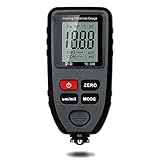
- Auto-Detection for Steel and Aluminum Coatings:This Coating Thickness Gauge utilizes advanced dual technology to automatically recognize ferrous and non-ferrous substrates, making it easy to measure coating thickness on both steel and aluminum without any guesswork
- Ideal for automotive paint inspection, powder coating checks, and metal surface finishing. Commonly used on used cars, anodized aluminum, bathroom fittings, bike frames, stadium seats, lockers, appliances, and more. (Note: Designed for metallic surfaces only.)
- A Must-Have for Used Car Buyers:Don't let hidden repairs catch you off guard. This tool lets you check the paint thickness on each car panel, helping you spot any previous accidents or repairs before buying a used vehicle
- Save Money on Used Car Purchases:When buying used cars, this paint thickness gauge helps you identify potential issues by ensuring the paint thickness is consistent across all panels. Great for detecting accident repairs and verifying if the car has been in a heavy crash
- Important Note: Please note that this gauge is specifically designed to measure coating thickness on metal substrates. It cannot be used on non-metallic materials such as plastic, fiberglass, or wood.
The evidence that supports a collectible coupe
Observed demand and liquidity
Start with completed sales, not advertisements. Record the sale date, market, specification, condition, mileage, originality and whether the transaction actually closed. Repeated sales across auctions, dealers and private transactions show a buyer pool. An unsold listing proves only that a seller wants a particular price.
Liquidity also means realistic time to sell. A model that sells frequently may be easier to exit than a rarer car with only one buyer every few years. Look for repeat demand at several price points, not one exceptional result.
Scarcity paired with demand
Low production or surviving numbers can help, but rarity without interested buyers can make a car harder to sell. Hagerty’s 2026 Collectability Index uses more than 20 weighted factors, including auction saleability, owner ages, engine size and production numbers. That combination is instructive: scarcity is one input, not a verdict.
Recommended Free Tools
Verify whether a claimed limited edition is genuinely different, whether its numbers refer to global production or a market-specific allocation, and how many examples remain usable. A rare color or regional specification deserves a premium only when comparable sales show buyers paying it.
Rank #2

- HIGH ACCURACY COATING THICKNESS MEASUREMENT – Digital paint thickness gauge for metal surfaces with 0.1 μm (0.01 mils) resolution and ±(3%+2 μm) accuracy, helping detect repainting, repairs, and uneven coating thickness during used car inspection, detailing work, and professional quality control. Suitable for checking doors, hood, roof, fenders, and other painted metal panels where accurate coating evaluation is required.
- EASY & FAST OPERATION — FACTORY CALIBRATED – Factory calibrated and ready to use right after installing batteries. Large backlit LCD with clear readings and simple buttons make this coating thickness meter easy for professionals and first-time users. Ideal for pre-purchase vehicle checks, car dealership inspections, trade-in evaluation, and mobile appraisers who need quick and convenient measurements without complicated setup.
- AUTOMATIC Fe / NFe SUBSTRATE DETECTION – Automatically detects Fe (steel/iron) and NFe (aluminum/copper) and selects the correct measuring method. Ideal for modern vehicles with mixed body materials and accurate results without manual switching. This helps users inspect steel doors, aluminum hoods, and other metal body parts with the correct measurement principle applied automatically.
- WIDE MEASURING RANGE FOR AUTOMOTIVE & INDUSTRIAL USE – Measuring range 0–1500 μm (0–59.1 mils) covers factory paint, repainting layers, and thicker coatings. Suitable for car body panels and industrial coated metal parts. Whether checking original automotive paint thickness or verifying thicker coating applications on metal components, the gauge provides a practical working range for many inspection scenarios.
- DUAL TECHNOLOGY: MAGNETIC INDUCTION + EDDY CURRENT – Uses magnetic induction for ferrous metals and eddy current technology for non-ferrous metals, providing stable, repeatable measurements across steel, iron, aluminum, and copper substrates. This dual-technology design allows one device to cover common automotive body metals without requiring separate meters or manual probe replacement.
Exact specification
Model year, engine, transmission, body configuration, factory options and documented original configuration can separate two apparently identical coupes. Establish the vehicle identification number, factory build data and any subsequent changes. Then compare only with sales of the same meaningful specification. A premium inferred from a different engine or a superior restoration is not evidence for the car you are considering.
Condition, originality and restoration quality
Condition is often the largest valuation variable. The UK Hagerty Price Guide publishes four values from fair to concours and combines insured values, public and dealer results and other data while tracking more than 3,000 models. Use the guide as a framework, then place the individual car on the correct condition level using completed sales.
Have a marque specialist inspect structural corrosion, accident repairs, mechanical systems, electrical work, cooling, fuel, suspension, brakes, seals and the quality of any restoration. A paint-thickness gauge can reveal areas that merit investigation, but it cannot assess rust behind panels, poor metalwork or mechanical safety. Hagerty advises consulting experts when applying its valuation information.
Do these 3 things before closing this tab:
1Fix the driver behind crashes, sound loss and screen glitches2Repair Windows errors before they cause bigger problems3Scan for outdated or missing drivers - takes under a minuteOriginality is not automatically superior to a documented, high-quality restoration. What matters is whether the work suits the model, is recorded with invoices and photographs, and matches what buyers in that segment pay for.
Rank #3
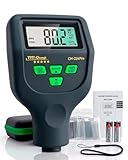
- AUTOMOTIVE PAINT THICKNESS GAUGE – CM-224PRO Designed for measuring coating thickness across vehicle panels during structured professional evaluation. Compare readings on doors, hood, roof and body panels to assess coating consistency and identify thickness variations that may indicate refinishing or prior repair. Suitable for dealerships and inspection professionals.
- 0–59.1 MILS RANGE WITH 0.01 MILS (0.1 µM) RESOLUTION – PROFESSIONAL CONSISTENCY Measures coatings from 0–59.1 mils (0–1500 µm) with stable resolution of 0.01 mils (0.1 µm), supporting consistent and repeatable comparison between factory coating and refinished surfaces during professional inspections.
- FE NFE AND ZINC AUTO DETECTION – AUTOMATIC SUBSTRATE RECOGNITION Automatically identifies steel (Fe), aluminum (NFe) and galvanized surfaces (Zn), supporting inspection of modern vehicles built with mixed body materials without manual switching or mode selection.
- PROFESSIONAL PROBE DESIGN – STABLE AND REPEATABLE CONTACT Engineered probe construction supports consistent surface engagement and repeatable readings during multi-point inspection routines in professional workshop environments.
- FAST PANEL-TO-PANEL MEASUREMENT FLOW – EFFICIENT FULL VEHICLE SCANNING Optimized for efficient professional workflow: place the probe vertically, read the value and continue across panels during dealership and workshop-based inspections.
Provenance and records
Confirm identity, title, ownership history, service records, restoration invoices and the continuity of the vehicle identification number. Competition history or notable ownership may matter for some models, but there is no universal percentage premium for provenance. Substantiate any claimed premium with sales of cars carrying similarly credible documentation.
Parts and specialist support
Parts availability and technician expertise affect both annual costs and usability. Before buying, identify suppliers, known rust or drivetrain problems, electrical specialists, restoration shops and clubs for the exact model. A coupe with a broad support network may attract more buyers because the next owner can keep it running without commissioning one-off fabrication.
A sustainable buyer demographic
Hagerty includes owner ages in its collectability methodology. Demographics can indicate who is buying now and whether the audience is broadening, but they do not independently forecast future prices. Consider geographic reach as well: a model popular in one country may have a much smaller audience elsewhere, with transport and import costs narrowing the buyer pool.
What’s actually slowing this PC down?
Pick the symptom - the matching free tool is one click away.
What recent market data actually shows
Market direction has varied sharply by segment and region. These figures describe guide values or broad market snapshots, not audited investor returns.
Rank #4

- 【Auto-ID Dual Tech & Material Note】This paint depth gauge automatically identifies Fe/NFe substrates without manual switching. The device is specifically designed for metal substrates and is not suitable for plastic, carbon fiber, or wood. It is ideal for detecting heavy paint on car bodies, boat hulls, and industrial steel structures to ensure accurate readings.
- 【High Precision & Wide Range】Equipped with a wear-resistant probe, this coating thickness gauge delivers lab-grade stability across a 0-78.7 mils (0-2000μm) range. It features high resolution of 0.004 mil / 0.1μm for 0-3.9 mils (0-99.9μm) and 0.04 mil / 1μm for 3.9-78.7 mils (100-2000μm), accurately detecting minute changes in powder coatings or anodized layers. With a measurement accuracy of ≤ ±(3% H+ 2μm / 0.079mil), it ensures reliable results for professional tasks, from measuring paint on curved bumpers (min radius 5mm/197mils) to verifying films on machinery.
- 【Single/Continuous Scan Mode】This paint meter offers more than just single scans by displaying real-time statistics (Avg, Max, Min) of the last 10 measurements in continuous scanning mode. Users can quickly identify uneven spraying on hoods or thickness variations in industrial furniture powder coatings through statistical data. This method reflects overall process quality better than single-point measurements.
- 【Data Storage & USB Output】This digital thickness gauge features a "Data Hold" function to lock readings after measuring in deep engine bays or narrow gaps. It is equipped with a Type-C interface that supports exporting 30 sets of stored data to a PC for generating professional inspection reports. This capability is perfect for creating check reports for used car sales or quality control logs.
- 【Smart Calibration & Ergonomics】This mil thickness gauge comes with Fe/NFe calibration foils and substrates for zero-point and thickness calibration before work. Operators must ensure no dust, wrinkles, or irregularities exist between the thickness standard sheet and the substrate during use. Pressing the OK key allows users to clear historical calibration records easily.
| Evidence | What was reported | How to use it |
|---|---|---|
| UK Hagerty guide, year through December 2025 | Nearly 80% of tracked values fell or stayed static. The Hot Hatch and RADwood indices grew, while Classic and Best of British indices declined. | Do not assume a rising segment lifts every coupe; analyze the model and condition separately. |
| UK Jaguar guide values, same period | Average Jaguar value fell 21.4%; the change was substantially influenced by an adjustment to the mean XKSS value. | Read the component and methodology before treating an index movement as a portfolio result. |
| North America, first half of 2025 | Average auction sale price and average dealer asking price were essentially unchanged year over year. Average listing price was 9% below its 2023 high. | Buyers were described as more patient and selective; an asking price is not a completed-sale benchmark. |
| Hagerty UK 2026 list examples | Toyota Supra A80: +41.8% over five years; Ferrari F430 Spider: +19%; MG MGA 1600 Coupe: -10.7%. | These are UK guide comparisons, not forecasts or risk-adjusted owner returns. Hagerty said the Supra peaked in mid-2023 and was relatively flat afterward. |
Hagerty UK editor John Mayhead described the 2026 selections this way: “These cars aren’t those that necessarily will soar in value, but those Hagerty considers offering the best combination of value for money and driveability.” That is a useful ownership standard, not a guarantee of appreciation.
Build an apples-to-apples valuation
For each candidate, assemble at least five to ten recent completed sales where possible. Normalize for currency, location, taxes, buyer fees, mileage, condition, originality, specification and whether a sale was a no-sale or an actual transaction. Separate dealer asking prices from auction hammer prices and from the buyer’s all-in amount.
| Comparison factor | Evidence to collect | Decision question |
|---|---|---|
| Price and frequency | Completed results for the same year and specification; dates and sale venues | Are buyers repeatedly paying in this range, and how long do cars take to sell? |
| Condition | Inspection report, underside photographs, paint readings, compression or leak tests where appropriate | Which Hagerty condition band best fits, and what repairs move the car into that band? |
| Originality and restoration | Build sheet, factory options, invoices, photographs and parts list | Is the work acceptable to the model’s buyer community? |
| Rarity and demand | Production and survival information plus actual sale records | Does scarcity bring buyers, or merely reduce liquidity? |
| Support | Parts sources, specialists, club knowledge and shipping access | Can the car be maintained without unusual downtime or fabrication? |
| Exit economics | Likely selling venue, transport, detailing, marketing, commission and tax costs | What amount would remain after a conservative sale? |
A step-by-step buying process
- Write the ownership thesis. State the model, specification, intended use, maximum purchase price, holding period and the non-financial reasons you would keep it if values decline.
- Define the comparable set. Gather completed transactions for the same drivetrain and body configuration. Exclude superficially similar cars with different engines, transmissions, restorations or provenance.
- Inspect before negotiating. Commission a marque specialist to examine structure, corrosion, crash repairs, drivetrain, cooling, brakes, suspension, steering, wiring, interior and weather sealing. Use a paint gauge only as a supplementary clue.
- Verify documents and identity. Match the vehicle identification number on the chassis, title and records. Check ownership continuity, service intervals, restoration invoices, import status and any liens or title restrictions.
- Price the work, not just the car. Obtain written estimates for immediate safety repairs and likely first-year maintenance. Add transport, storage, insurance, registration, taxes and specialist consumables.
- Stress-test the exit. Model a flat-price case and a lower resale case. Deduct selling commission, detailing, transport, taxes and any work required to present the car. Buy only if the resulting ownership cost is acceptable without appreciation.
- Set a documented walk-away price. Tie your offer to condition-adjusted sales and repair estimates. Do not increase it because an auction listing has a high reserve or because a seller cites a guide’s top condition value.
Calculate ownership economics honestly
Use a simple total-cost framework:
total basis = purchase price + buyer fees + immediate repairs + restoration + maintenance + storage + insurance + taxes + transport + financing
For the exit:
net sale proceeds = conservative sale price − selling commission − preparation − transport − taxes
Best Value

- (*^_^*) [Record Various Data] It can record the average value, maximum value, minimum value, dif at the same time, and supports up to 50 data for statistics, making the numerical data you measure more accurate and convenient. If the auto power off function is on and there is no for 3 minutes, the instrument will automatically shut down to save battery power.
- (*^_^*) [Multifunctional] Thickness gauges are used to measure the thickness of metal coatings and other coatings such as paint/enamel/chrome on steel, paint and anodized coatings on aluminum/copper. Automatic detection of substrate properties. It has small size and high precision battery level indicator. It also has automatic shutdown function, used for FE/NFE.
- (*^_^*) [Precision Integrated Probe] It is important to check the car paint to make sure the paint thickness is about the same on each panel and to determine if the car is in good condition with a car paint inspection thickness gauge when you buy the car. The instrument adopts the principles of electromagnetic induction (F probe) and eddy current effect (N probe) to automatically detect the properties of the substrate.
- (*^_^*) [What Can Be Read and Detect Paint Depth] The large LCD display of the paint depth gauge shows the metal type, operating mode, quantity, battery status and the reading in µm, mm or mils. The thickness gauge has a measurement range of 0-2000um, an accuracy of ±(3%+1um), and a resolution of 0um-999um (1um).
- (*^_^*) [Widely Uses] It is used to non-destructively measure the thickness of coatings and paints. It is an essential equipment for material surface treatment, widely used in manufacturing, metal processing industry, chemical industry, commodity inspection and other fields, and can also work stably in laboratories, workshops and outdoors. Suitable for automotive paints, powder coatings, anodized aluminum, bathroom accessories, bicycle frames, stadium seating, outdoor sheds, furniture, swings, c
The difference between net sale proceeds and total basis is not a complete investment return until you account for the time your money was tied up and inflation. Keep the model in nominal currency, state the geography and date, and run at least three cases: flat market, moderate decline and an optimistic sale supported by actual comparables. No source reviewed here establishes a typical net return after these costs, so do not substitute guide appreciation for a return calculation.
Common traps and how to avoid them
- Confusing an asking price with value: require a completed transaction.
- Buying the rarest badge: confirm a buyer pool and sales frequency.
- Using a top-condition guide value: match the car to fair, good, excellent or concours evidence rather than aspiration.
- Ignoring restoration scope: inspect hidden corrosion, wiring and previous repairs before assuming cosmetic work is finished.
- Counting your labor as free: record your time and opportunity cost even if you do the work yourself.
- Assuming a rising index continues: the UK data show broad declines or stagnation alongside pockets of growth, and the North American snapshot was broadly flat.
- Overlooking geography: import rules, taxes, transport and local tastes can erase a paper premium.
- Neglecting usability: a car that cannot be driven, serviced or insured normally may have a narrower exit market.
Compare two coupes with a repeatable scorecard
Score each candidate from zero to five, using written evidence rather than enthusiasm:
| Category | What a high score requires | What a low score signals |
|---|---|---|
| Liquidity | Frequent, condition-matched completed sales and more than one likely venue | Mostly unsold listings or isolated headline results |
| Specification | Documented desirable configuration with comparable-sale support | Unverified options or a premium based on anecdotes |
| Condition | Independent inspection, sound structure and traceable work | Deferred maintenance, hidden corrosion or vague restoration claims |
| Scarcity and demand | Limited supply plus demonstrated buyer interest | Low production with little evidence of demand |
| Support | Accessible parts, specialists and an active owner community | Long lead times, scarce expertise or custom fabrication |
| Ownership risk | Predictable storage, insurance, tax and maintenance costs | Unpriced repairs, difficult transport or uncertain insurability |
Give greater weight to liquidity, condition and ownership risk than to a low production number. A less exotic coupe with transparent records and broad support can be a stronger financial decision than a rarer car that is expensive to recommission and difficult to sell.
Plan the eventual sale from the day you buy
Keep a digital and paper file containing invoices, inspection reports, photographs, fluid and tire records, parts numbers and every ownership document. Preserve removed original components when appropriate and record work before, during and after completion. These records reduce questions for the next buyer and make it easier to prove the condition represented in your listing.
Choose the likely exit channel early. A specialist auction may provide broad visibility but charges fees and exposes the car to a single sale date. A dealer can simplify logistics but may offer less than a patient private sale. Whichever route you choose, budget preparation, transport, commission and taxes before claiming a gain.
The practical investment test
A classic coupe passes a conservative test when three statements are all true: completed sales support the price for its exact specification and condition; an independent inspection leaves no unpriced structural or mechanical risk; and you would still be satisfied owning it if the market moved sideways or down. If any statement fails, treat the purchase as speculation or enthusiasm rather than a defensible collector-car investment.
Quick Recap
Product prices and availability are accurate as of the date/time indicated and are subject to change. Any price and availability information displayed on Amazon at the time of purchase will apply.




