What’s actually slowing this PC down?
Pick the symptom - the matching free tool is one click away.
Traction usually decides how much of a car’s power becomes acceleration, while horsepower sets the upper limit and launch control helps apply that power consistently. The quickest combination depends on the car, driven wheels, tires, track preparation, weather, drivetrain, class rules and driver. A high-power car that spins its tires can be slower than a lower-power car that hooks cleanly. Launch control cannot create grip or power; it can only manage the launch when the vehicle, surface and regulations support it.
The short answer: usable power beats peak power
In a drag race, acceleration comes from force at the driven tires. Engine or motor horsepower is the source of that force, but the drivetrain has to transmit it and the tires have to turn it into forward motion. That makes horsepower potential rather than a complete prediction of elapsed time.
| # | Preview | Product | Price | |
|---|---|---|---|---|
| 1 |

|
Mickey Thompson ET Front 24.0/4.5-15 | $195.29 | Buy on Amazon |
| 2 |
|
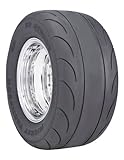
Mickey Thompson ET Street Rad Racing Radial Tire - P275/50R15 | $306.02 | Buy on Amazon |
| 3 |

|
Mickey Thompson ET Drag Racing Bias Tire - 28.0/10.5-15S | $289.49 | Buy on Amazon |
As an Amazon Associate I earn from qualifying purchases.
A useful way to rank the three factors is:
- Traction: determines whether the tires can use the torque arriving at the contact patch.
- Horsepower: determines how much acceleration the car can sustain once it is hooked up.
- Launch control: manages how power is released at the start and can improve repeatability, but only within the limits of the hardware, grip and rules.
This order is not a universal formula. A very powerful, well-prepared car on a suitable surface can outrun a lower-power car, while a low-grip launch can erase a large power advantage. The comparison must always specify the vehicle, drivetrain, tires, track and class.
Do these 3 things before closing this tab:
1Clear out junk files and repair common Windows errors2Fix the driver behind crashes, sound loss and screen glitches3Repair Windows errors before they cause bigger problemsWhat horsepower actually does in a drag race
Power is the acceleration reserve
Horsepower measures the rate at which an engine or motor can do work. More power can increase acceleration at higher speeds and help a car continue pulling through the run. It does not, by itself, determine how quickly the car leaves the starting line. Torque multiplication in the transmission and final drive, gear selection, shift timing, vehicle mass and aerodynamic load all affect how much of that output reaches the driven tires.
#1 Best Overall
- Ultra-Lightweight Design reduces rollong resistance
- Tubeless Construction provides a leak-free seal without the expense and hassle of tubes
- Available in Popular Sizes for a variety of fitments
- Race Use Only, not approved for street use
- Wheels and tires sold separately
When the available grip is lower than the torque demand, additional horsepower can make the car slower by causing wheelspin. The driver or a control system then has to reduce, delay or reshape the power delivery. That is why a dyno number should be treated as one input rather than a complete drag-racing prediction.
Why class and drivetrain matter
NHRA’s descriptions of drag-racing classes show that drivetrain layouts and power-delivery systems differ by category. A rear-wheel-drive car, an all-wheel-drive car and an electric car can have very different ways of distributing torque, transferring weight and managing wheelspin, even if their peak power figures look similar.
Top Fuel illustrates the scale of the number without making it a general rule for ordinary cars. The National Hot Rod Association describes these dragsters as producing about 11,000 horsepower and accelerating from stationary to 100 mph in less than one second. That is a description of a specialized class, not a target specification for a street vehicle.
Quick wins for a faster PC:
Clear out junk files and repair common Windows errorsFree Scan →Fix the driver behind crashes, sound loss and screen glitchesFind Drivers →A more recent NHRA report on the 2026 Ford Mustang Cobra Jet 2200 describes roughly 1,200 horsepower per motor/inverter pair. The figure belongs specifically to that car and report; it cannot be used to rank every electric or combustion-powered drag car.
Why traction is often the deciding factor
The tire is the final link
Traction is the grip between the tire and the prepared racing surface. If the tire slips, some of the drivetrain’s work becomes heat and wheel rotation instead of forward motion. A car can therefore have more horsepower and a slower 60-foot time than a less powerful rival that maintains adhesion.
NHRA’s beginner guide puts the launch objective plainly: "A properly done burnout will heat and clean the surface of your tires to provide maximum traction on launch." The exact burnout method, duration and tire temperature depend on the tire, car and track; the statement does not establish one universal procedure.
Weight transfer changes the available grip
Acceleration shifts load toward the rear of a rear-wheel-drive car. NHRA’s drag-racing glossary notes that this weight transfer makes the rear wheels less likely to spin. Suspension geometry, spring and damper settings, tire construction, pressure, track preparation and the car’s center of gravity all influence how effectively that load reaches the contact patch.
Those variables are why a generic tire pressure, launch rpm or suspension setting is unsafe to prescribe without the make, model, drivetrain, tire and class. The same setting that works on a heavily prepared surface can produce wheel hop or wheelspin on a cooler or less adhesive track.
Grip is a system, not just a tire choice
Traction depends on the entire launch system:
- Surface preparation: rubber buildup and track temperature change the available grip.
- Tire suitability: compound, construction, size and operating temperature must match the car and surface.
- Load transfer: suspension behavior determines how much vertical load reaches the driven tires.
- Torque delivery: gearing and throttle or motor control can prevent an abrupt torque spike.
- Repeatability: a setup that produces the same launch run after run is easier to tune and race.
What launch control can and cannot do
Its job at the starting line
Launch control is a vehicle-control function that limits or shapes engine or motor output during the initial acceleration phase. Depending on the implementation, it may hold a target engine speed, reduce torque, control ignition or throttle, or coordinate motor output with clutch and transmission operation. The aim is to deliver the most usable torque without overwhelming the tires.
Launch control can make a car quicker when the driver cannot repeat the ideal launch manually, when the power curve is difficult to manage, or when the system is calibrated for the tire and surface. It does not add horsepower, increase the coefficient of friction, repair an unsuitable tire or compensate for a poorly set-up drivetrain.
Rank #2
- Soft compound for superior traction on the strip
- Special sidewall construction for quick launches
- Radial construction for excellent ride control
- Low void, directional tread for maximum dry traction
- Works best with auto trans applications
Why conditions determine the result
A launch strategy that works on a warm, heavily prepared track may be too aggressive on a cool or dusty surface. The system also has to match the car’s transmission, clutch, differential, driveshafts and tires. If the control intervention is too conservative, the car leaves slowly; if it is too aggressive, the tires spin or the driveline is shocked.
Free tools Windows power users keep installed
One-click scans. No signup required.
For that reason, launch control should be treated as a tuning and repeatability aid rather than an automatic shortcut to a lower elapsed time.
Rules can make it illegal
Launch-control legality is class-specific. A FIA general-regulations document surfaced for this subject prohibits torque-management systems such as launch control and traction control in specified categories. That document is identified as a 2024 general-regulations PDF, and regulations can be amended. Check the current rulebook for the exact series and class before using or describing a system as legal.
Why the launch matters so much to elapsed time
NHRA’s glossary describes the launch interval as the most accurate measure of the launch and says that, in most cases, it determines how quick the rest of the run will be. A poor first portion of the pass leaves distance that later horsepower may not recover; a clean launch gives the car more speed for every subsequent gear.
This is why racers examine 60-foot and other incremental times instead of looking only at trap speed. A high trap speed can show strong power after the car is moving, while a weak launch can still produce a disappointing elapsed time.
The Tool Desk
Outbyte PC Repair FREERepair Windows errors before they cause bigger problemsFix Now →Outbyte Driver Updater FREEScan for outdated or missing drivers - takes under a minuteDriver Scan →Elapsed time is not the same as winning the race
In a head-to-head race, the car with the lowest elapsed time is not always the winner. Reaction time measures how quickly the driver responds to the starting signal. NHRA explains that a driver can win despite recording a slower elapsed time and speed than the opponent; this is commonly called a holeshot win.
Keep these measurements separate:
- Reaction time: the driver’s response to the start signal.
- Elapsed time: the vehicle’s time from leaving the start line to the finish.
- Incremental times: checkpoints such as the early launch segment that reveal where acceleration was gained or lost.
- Trap speed: speed near the finish, useful for judging power but not sufficient to describe the launch.
How to compare two drag-race setups
When someone asks which of two cars is quicker, compare the following items under the same conditions rather than comparing horsepower alone.
| Comparison area | What to examine | Why it matters |
|---|---|---|
| Usable power | Power and torque delivered at the driven wheels, plus gearing and vehicle mass | Shows how much acceleration the car can sustain after it hooks up |
| Traction | Tire type and condition, surface preparation, temperature and wheel load | Determines whether torque becomes forward motion or wheelspin |
| Drivetrain and launch setup | Drive layout, transmission, differential, clutch or converter behavior and torque ramp | Controls how quickly and smoothly power reaches the tires |
| Repeatability | Consistency of launch rpm, torque delivery, shift behavior and tire performance | A repeatable car is easier to tune and race than one that produces a single exceptional pass |
| Control strategy | Launch-control or traction-control functions and their calibration | May improve application of power, but only when the hardware and surface support it |
| Rules | Current technical regulations for the specific series and class | A system or modification can be prohibited even if it improves performance |
| Race execution | Reaction time in addition to vehicle elapsed time | Determines who wins the head-to-head contest when the start-line advantage is large enough |
If the cars, drivers, track preparation and weather are not specified, there is no defensible way to rank one particular pair from horsepower figures alone.
Independent reader supportYour contribution helps us test, update, and keep practical guides available for everyone.A practical decision framework
If the car spins at launch
More horsepower is not the first fix. Examine tire suitability, surface conditions, weight transfer and torque delivery. A controlled reduction in launch torque may produce a quicker pass than adding power, but changes should be made within the car’s limits and the class rules.
If the car hooks but slows later in the run
Once traction is no longer the limiting factor, usable power, gearing, shift strategy and vehicle mass become more important. This is where a higher-output engine or motor can provide a clear advantage, provided the drivetrain can handle it.
Rank #3
- A proven drag strip winner
- Compounded for maximum traction
- Requires little or no burnout
- Engineered for consistent performance
- Newly improved for better air retention
If launches vary from pass to pass
Repeatability is the priority. Investigate tire temperature, burnout consistency, staging technique, clutch or converter behavior and any available launch-control calibration. A system that produces an identical but slow launch still needs a better torque strategy; consistency does not replace performance.
If the event has strict regulations
Read the current technical rules before changing software, adding a control module or relying on a traction-management feature. The legal answer can change by class, and a feature permitted in one category may be prohibited in another.
Track preparation and safety requirements
Use a supervised drag strip rather than public roads. NHRA notes that sanctioned tracks provide a controlled environment and require technical inspection before a run. Follow the track’s staging, burnout and shutdown procedures, and stay within the vehicle manufacturer’s limits.
Basic pre-run checks include:
- Inspecting for fluid leaks.
- Confirming the battery is securely mounted.
- Checking that the seat belt or harness is functional and correctly fastened.
- Verifying tire condition, wheel torque and clearance.
- Confirming that the car meets the event’s current inspection and safety requirements.
Do not choose tire pressure, launch rpm, control settings or modifications from a generic chart. Those choices require the specific car, drivetrain, tire, intended class, track surface and weather conditions.
Common misconceptions
"The car with more horsepower always wins."
No. Power helps only after the tires and drivetrain can use it. Wheelspin, poor gearing or an inconsistent launch can erase the advantage.
"Launch control automatically makes any car quicker."
No. It can improve consistency and torque application, but its result depends on calibration, grip, hardware and legality.
"A faster trap speed proves the car had the best launch."
No. Trap speed primarily describes performance near the finish. Incremental times and launch data show what happened at the starting line.
Recommended Free Tools
"The quickest elapsed time always wins."
No. Reaction time can give one driver enough of a starting advantage to win a holeshot even with a slower elapsed time.
Bottom line
The quickest drag car is the one that converts the greatest amount of its available power into forward acceleration, consistently and legally. Traction determines whether the launch works, horsepower determines how strongly the car continues once it is moving, and launch control can help meter that power at the critical first moment. Evaluate all three together, then separate the car’s elapsed time from the driver’s reaction time when judging the race result.
Quick Recap
Product prices and availability are accurate as of the date/time indicated and are subject to change. Any price and availability information displayed on Amazon at the time of purchase will apply.




