Recommended Free Tools
GMSL2 HDR cameras supply image data to the perception systems used by outdoor autonomous mobile robots (AMRs) and advanced driver-assistance systems (ADAS). HDR is designed to retain detail across bright and dark parts of a scene, while GMSL2 transports video and bidirectional control between a remote camera and a compatible receiver. Neither feature makes a vehicle or robot autonomous or safe on its own: performance depends on the full camera, optics, processing, software, compute and validation chain.
What the camera does in an AMR or ADAS system
A camera is a perception sensor, not the autonomy system itself. It captures a view of the surroundings; perception software on the host computer can use those images for tasks such as navigation, object detection, obstacle avoidance or surround-view. Innodisk describes its 2MP module for AMR navigation and object detection, and Leopard Imaging lists ADAS, autonomous driving, HDR imaging and robots among its applications. These are manufacturers’ stated use cases, not independent evidence of performance in a particular deployment.

The image is only one input to a system’s decisions. The sensor, lens, exposure and image signal processing (ISP) affect what reaches the perception software, while the host platform and software determine how that data is interpreted and used.
What HDR and GMSL2 contribute
HDR helps with high-contrast lighting
Outdoor scenes can place a shaded object against a bright sky, or include sunlight reflecting off a surface. High-dynamic-range (HDR) imaging is intended to retain useful detail in both bright highlights and darker areas. That can give the perception pipeline more usable image information in challenging light, but an HDR label or a manufacturer’s dynamic-range figure does not establish better object detection or safety. Figures from different products should not be compared without matching measurement methods and test conditions; the available product information does not provide an independent comparison of image quality or downstream detection accuracy.
Quick wins for a faster PC:
Fix the driver behind crashes, sound loss and screen glitchesFind Drivers →Clear out junk files and repair common Windows errorsFree Scan →#1 Best Overall

- High dynamic range (HDR): With a dynamic range of 120dB, the camera can capture scenes with a large difference in brightness without crushing shadows or overexposing highlights.
- High sensitivity, low noise and high resolution: It features noise suppression, enabling it to capture high-quality images, even in low-light environments.
- LED flicker mitigation: The camera reduces flickering from LED light sources, including traffic signals, traffic signs, headlights, and taillights.
- Device drivers support wide-platform compatibility: Offering seamless integration to accelerate efficient development by multi-ECU and SoC connectivity with device drivers.
- GMSL2 interface: The GMSL2 interface allows for long-distance signal transmission and power supply over a single cable connection.
GMSL2 links a remote camera to the host
GMSL2 is a serial link between a camera-side serializer and a compatible receiver or deserializer. For example, Analog Devices says the MAX96717 receives video over MIPI CSI-2 and sends it over a GMSL2 link; the link also carries bidirectional control-channel data. Its specified forward rates are 3 or 6 Gbps, with a 187.5 Mbps reverse channel, and it supports coaxial or shielded twisted-pair media. These are specifications for that component, not a guarantee that every camera, cable and host combination supports the same configuration. See Analog Devices’ MAX96717 product documentation.
A remote link lets a camera be placed away from a central compute platform, which can help with physical installation. Published cable capabilities of up to 12–15 m apply to particular models or configurations, not all GMSL2 systems. Cable construction, connector, receiver, channel design, power-over-coax setup and signal settings all matter.
Rank #2
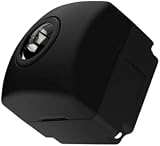
- High dynamic range (HDR): With a dynamic range of 120dB, the camera can capture scenes with a large difference in brightness without crushing shadows or overexposing highlights.
- High sensitivity, low noise and high resolution: C2 maintains the same high sensitivity and low noise as C1, and extends its resolution up to 5.4MP, enabling object recognition at greater distances and capturing a wider field of view.
- LED flicker mitigation: The camera reduces flickering from LED light sources, including traffic signals, traffic signs, headlights, and taillights.
- Autoware compatibility: Fully compatible with Autoware, the open-source operating system for autonomous driving.
- GMSL2 interface: The GMSL2 interface allows for long-distance signal transmission and power supply over a single cable connection.
How example specifications differ
The figures below are manufacturer specifications for the named products, from product pages accessed in 2026. They are not independent comparative test results; in particular, stated dynamic-range values should not be treated as directly comparable without measurement details.
| Camera example | Published specifications | What the example illustrates |
|---|---|---|
| Innodisk EV2F-OOM3-RHCF | 2MP; up to 30 fps; 72° diagonal, 64° horizontal and 39° vertical field of view; HDR; stated 120 dB dynamic range; IP67; Jetson Orin support; link up to 15 m. | A lower-resolution example with a higher stated frame rate and an explicit enclosure rating. |
| Innodisk EVDF-OOM1-RHCF | 13MP; up to 20 fps at maximum resolution; HDR; stated 69 dB dynamic range; IP67; rolling shutter; Jetson Orin support. | More spatial resolution at a lower maximum-resolution frame rate. Its dynamic-range figure should not be directly compared with another model’s without measurement details. |
| Arducam RR-GMSL2-4K-RS-120H-IP67 | 8.3MP/4K; 30 fps; rolling shutter; HDR; default 120° horizontal field of view; IP67; operating range −40°C to 85°C; cable option up to 15 m. | A broad-angle 4K example. The product page says a receiver board is not included by default. |
| Basler ace 2 a2A2048-114mgc | 3.2MP; 114 fps; global shutter; Quad HDR; IP30 housing; operating range −10°C to 60°C. | A contrast in shutter type and frame rate; the listed housing and temperature range do not establish rugged outdoor suitability. |
Sources: Innodisk EV2F-OOM3-RHCF, Innodisk EVDF-OOM1-RHCF, Arducam RR-GMSL2-4K-RS-120H-IP67 and Basler ace 2 a2A2048-114mgc.
Free tools Windows power users keep installed
One-click scans. No signup required.
Rank #3
What to check before choosing a camera
Camera specifications interact. More pixels do not automatically mean a better perception input if the frame rate, lens, exposure, link or host cannot meet the application’s needs. Compare the complete configuration against the robot or vehicle’s operating requirements.
Quick Recap
Best Value

- GMSL 2MP Camera. 2MP | IP67 Water-resistant | GMSL2 communication protocol.
- The GMSL-2MP-Camera-A camera module adopts a 2MP automotive-grade CMOS image sensor and integrates the MAXIM MAX96717F GMSL serializer.
- It includes a professionally calibrated image signal processor (ISP), delivering clear and stable image quality.
- The entire unit features an IP67-rated case and comes with an AA lens, and each unit is precisely focused and glue-secured before shipment, making it well-suited for automotive and other demanding applications.
Rank #4

- VISION SENSOR: VLS-GM2-AR0234-C-S128-IR is a compact vision sensor designed for reliable industrial imaging applications.
- COLOR IMAGING: Features an AR0234 color image sensor for capturing high-quality, detailed visual data in various environments.
- IR CAPABILITY: Built-in infrared (IR) support enables effective imaging in low-light or no-light conditions.
- 128MB STORAGE: Equipped with 128MB of onboard storage (S128) to support image buffering and local data retention.
- INDUSTRIAL GRADE: Engineered for robust performance in demanding industrial settings, ensuring consistent and accurate image capture.
- Resolution and frame rate: Check performance together, including the frame rate available at the chosen resolution.
- Field of view and lens: Compare horizontal and vertical coverage, lens choice, focus and mounting position.
- Shutter: Determine whether rolling or global shutter behavior fits the camera’s motion and perception requirements. The examples include both; the cited product information does not establish one as universally preferable.
- HDR evidence: Ask how HDR is implemented and whether there are comparable test results for the lighting conditions that matter to the application.
- Outdoor ratings: Check ingress protection and operating temperature for the exact model, then assess vibration, weather exposure, mounting and the complete installed system. An IP67 rating or temperature range is a model specification, not a blanket guarantee of suitability for every environment.
- Link hardware: Confirm cable type, FAKRA connector code, length, shielding, receiver compatibility and power-over-coax arrangement from the camera and receiver documentation.
- Host integration: Verify receiver hardware, host capture interface, drivers, configuration package, pixel format, resolution and frame rate.
- Timing and power: Check synchronization or trigger behavior and power requirements for the intended multi-camera or single-camera setup.
Integration checks for a GMSL2 camera
- Match the link: Confirm that the camera’s serializer generation and link configuration are supported by the receiver or deserializer and host capture interface.
- Verify software and modes: Confirm platform-specific drivers and configuration, then check the required pixel format, resolution, frame rate and synchronization behavior.
- Specify the cable path: Match cable type, FAKRA connector code, length, shielding and power-over-coax arrangement to both ends’ documentation.
- Validate the image setup: Check lens field of view, focus, mounting, exposure behavior and shutter suitability for the motion and perception task.
- Assess the installation: Review enclosure and temperature limits alongside vibration and weather exposure, and validate the complete installed system for its operating environment.
- Include the receiver in the bill of materials: Arducam says the cited camera does not include a GMSL2 RX deserializer board by default. Basler notes that its camera and IPC configuration must match and offers a separate evaluation adapter kit.
Product prices and availability are accurate as of the date/time indicated and are subject to change. Any price and availability information displayed on Amazon at the time of purchase will apply.