Do these 3 things before closing this tab:
1Repair Windows errors before they cause bigger problems2Fix the driver behind crashes, sound loss and screen glitches3Clear out junk files and repair common Windows errorsThe Acabion Da Vinci was presented in 2014 as a proposed four- to six-seat solar-electric vehicle—not a production car. Acabion’s reported goals of about 650 km/h (404 mph) and 1,200 mpg-equivalent efficiency were projections, not independently verified results.
What is the Acabion Da Vinci?
Acabion proposed the Da Vinci as a successor to its streamlined GTBO, with room for four to six people and an electric drivetrain. New Atlas described the concept on September 1, 2014, but its report does not establish that the Da Vinci was built or tested as a production vehicle. The available sources do not establish its current development or sales status.
The idea was to use an unusually low-drag shape to pursue both high speed and low energy demand. Acabion’s reported headline figures should be read as aspirations for the concept, not as demonstrated specifications.
Can a car really do 1,200 mpg and reach 650 km/h?
Those numbers were Acabion’s projected targets as reported by New Atlas in 2014: 1,200 mpg-equivalent, also expressed as 0.2 L/100 km, and a top speed of around 650 km/h (404 mph). They are not independent test results. The reviewed sources provide no independently published Da Vinci speed test or efficiency measurement.
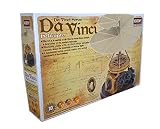
#1 Best Overall

- Vehicle designed by Leonardo da Vinci
- Operated by a mechanical spring
- Snap together; no glue or tools required
- Historically accurate and educational
- No painting required
The figures describe two different ambitions—very low energy use and exceptional maximum speed. Without a documented test, defined test conditions, or a built vehicle, they cannot establish what the Da Vinci would have achieved in real use.
How was the Da Vinci supposed to work?
The proposed design combined aerodynamic bodywork with electric propulsion and unusual passenger and cargo packaging. New Atlas’s description outlines the intended features; it does not demonstrate that they were implemented in a production vehicle.
Rank #2
- Enclosed wheels: aerodynamic shields were intended to cover the four wheels and reduce drag.
- Folding tail: the rear section was designed to fold away for parking, allowing a long, streamlined form in motion.
- Fighter-aircraft-style cockpit cover: the canopy-like cover was part of the concept’s distinctive passenger enclosure.
- Electric hub motors: the proposal placed electric motors in the wheels.
- Solar panels and battery backup: onboard solar power was intended to contribute energy, with batteries as backup.
- Bulky-cargo storage: a trunk arrangement was designed to lift and store larger items.
A reproduced Czech-language interview with project manager Lenka Miková includes further company-side claims about drag, range, and energy use. Those claims are not independent measurements of the Da Vinci.
What does the earlier GTBO tell us—and what doesn’t it?
The Da Vinci followed the Acabion GTBO, a separate streamlined, motorcycle-like vehicle. New Atlas reported that the GTBO did not reach production and that, to the publication’s knowledge, only a few prototypes were built. This history gives context for Acabion’s ambitious vehicle projects, but it does not prove what later happened to the Da Vinci.
Rank #3
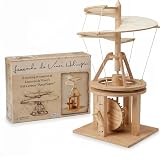
- Build Leonardo da Vinci’s Aerial Screw – Bring history and innovation to life by constructing a working model of da Vinci’s famous helicopter prototype, an early exploration of vertical flight. Takes about 60 minutes to build.
- STEM Learning Through History – Learn about the genius of Leonardo da Vinci and the science behind lift, rotation, and early flight concepts—perfect for classroom or homeschool STEM enrichment
- Spins Like the Original Design – Features a hand-powered rotating screw mechanism inspired by da Vinci’s sketches, encouraging exploration of motion, torque, and mechanical engineering
- Designed for independent builders 14+, but also a fun and educational project for kids 8+ with adult supervision or guidance
- We only make high quality educational toys that are made from fsc natural untreated wood, non toxic and comply with and pass the ASTM toy safety standards for childrens toys / Engineering Toys for Kids 10-12
Swissinfo’s 2008 report gives a 545 km/h maximum-speed figure for the GTBO. That is historical reporting about the earlier vehicle, not a Da Vinci specification or evidence that the Da Vinci reached its projected speed. Figures about the GTBO should not be transferred to its proposed successor.
In that 2008 report, project originator Peter Maskus said, “Progress isn’t a hybrid SUV. To make progress, we’ve got to think outside the box.” It expresses his view of transport design; it is not technical evidence for the Da Vinci’s performance.
Rank #4

- Inspired by Classic Cars: This 3D wooden puzzle car model kit is designed with an admiration for classic automobiles, capturing their timeless elegance and intricate details. A challenging project for 3D puzzle enthusiasts and car lovers alike
- Exceptional Craftsmanship & Detailing: These 3D puzzles for adults are made from high-quality wood and feature precise laser-cut pieces for a seamless fit. The model car kit boasts incredible detailing, showcasing the wood's natural beauty and the car's intricate design elements
- Thoughtful Gift Option: This model kit makes an excellent gift for the puzzle lover, car enthusiast, or hobbyist in your life. Suitable for birthdays, holidays, or special occasions, this wooden car model kit is sure to impress and delight
- Stunning Home Decor Piece: Once assembled, the wooden model car makes a striking and unique addition to any home or office space. Display your craftsmanship on a shelf, mantel, or desk, and enjoy the conversation starter it provides
- Assembly Tips & Precautions: Please follow the included step-by-step instructions carefully to ensure a smooth and enjoyable assembly process. Adult supervision is recommended during assembly, and a gentle touch is necessary to prevent damage to the delicate wooden pieces. You are free to customize the body color yourself
Was the Acabion Da Vinci ever produced or sold?
The available detailed report is from 2014, and the reviewed sources do not establish a later production version, current development, or commercial availability. The absence of evidence here is not proof that no later update exists; it means the Da Vinci’s present status remains unconfirmed by these sources. It is best described as a proposed concept rather than a car buyers can be shown to purchase.
Quick Recap
Best Value

- Renewal Version
- Reproduction of a clock based on an escapement sketched by Leonardo da Vinc
- Assemble in either a wall mounted or standing configuration
- No batteries, paint, or glue required
- English Instruction Included
Product prices and availability are accurate as of the date/time indicated and are subject to change. Any price and availability information displayed on Amazon at the time of purchase will apply.




