Do these 3 things before closing this tab:
1Repair Windows errors before they cause bigger problems2Fix the driver behind crashes, sound loss and screen glitches3Clear out junk files and repair common Windows errorsGood mileage for a used car is mileage that makes sense for the vehicle’s age and is supported by maintenance, condition, and a clean history. As a quick U.S. screening rule, expect roughly 10,800 to 12,000 miles per year. A five-year-old car with about 54,000 to 60,000 miles is broadly average-use—but the odometer alone cannot tell you whether the car is a good buy.
Good mileage for a used car is mileage that makes sense for the vehicle’s age and is supported by maintenance, condition, and a clean history. As a quick U.S. screening rule, expect roughly 10,800 to 12,000 miles per year. Kelley Blue Book commonly uses about 12,000 miles per year as a valuation benchmark, while the Federal Highway Administration reported approximately 10,787 miles per registered light-duty vehicle in 2024.
That makes a five-year-old car with about 54,000 to 60,000 miles broadly average-use. But mileage is not a reliability guarantee. A carefully maintained 140,000-mile car may be a better purchase than a neglected 60,000-mile car, and a low-mileage vehicle can still have age-related problems, title issues, or an inaccurate odometer.
How to estimate normal mileage for a used car
Use this calculation as a starting point:
Expected mileage = vehicle age × 10,800 to 12,000 miles
Windows Errors? Fix Them Before They Spread
Repair common Windows errors and clear accumulated junk for a smoother, more stable PC - no reinstall needed.Free scan · no reinstallCrashes, No Sound, or Screen Glitches?
Random freezes, missing sound and display glitches usually trace back to one bad driver. Find and replace yours safely.Free scan · under a minute#1 Best Overall

- HIGH ACCURACY — READY TO USE FOR CAR INSPECTION: Professional paint thickness gauge with factory-calibrated accuracy for automotive inspection. Delivers precise measurements immediately after battery installation — no calibration required for car body checks. Resolution 0.1 μm (0.01 mils), range 0–1500 μm (0–59.1 mils).
- EASY & FAST OPERATION — NO SETUP REQUIRED: Automatic substrate detection and pre-set factory calibration allow instant use out of the box. Large backlit LCD and intuitive controls make this coating thickness meter ideal for both professionals and first-time users.
- AUTOMATIC Fe / NFe / Fe+Zn SUBSTRATE DETECTION: Automatically recognizes steel (Fe), aluminum (NFe), and galvanized steel (Fe+Zn). Fe+Zn detection helps identify replaced or non-original car body panels during used car inspection.
- DESIGNED SPECIFICALLY FOR AUTOMOTIVE INSPECTION: Accurately evaluates paint thickness, repainting, and filler presence on metal car panels. Ideal for used car buyers, vehicle appraisers, body shops, and detailing professionals.
- DUAL MEASURING TECHNOLOGY FOR METAL SURFACES: Uses magnetic induction for ferrous metals and eddy current technology for non-ferrous metals, ensuring stable and repeatable measurements on steel, aluminum, and copper substrates.
For example, a seven-year-old vehicle would be expected to have approximately 75,600 to 84,000 miles. Being somewhat above or below that range is not automatically a problem. It simply tells you what questions to ask about how the car was used and maintained.
| Vehicle age | Approximate average-use mileage |
|---|---|
| 3 years | 32,000–36,000 miles |
| 5 years | 54,000–60,000 miles |
| 8 years | 86,000–96,000 miles |
| 10 years | 108,000–120,000 miles |
| 12 years | 130,000–144,000 miles |
| 15 years | 162,000–180,000 miles |
These are editorial screening bands derived from annual-use benchmarks, not official limits for reliability. A listing below the relevant range may reasonably be described as low-mileage; one above it may be high-mileage relative to its age. Neither label should replace an inspection.
Why mileage alone does not tell you whether a car is good
The odometer measures distance, not the quality of the miles or the quality of the ownership. Two cars with the same mileage can have very different risk profiles because of:
- Maintenance: Regular oil changes, fluid services, inspections, and repairs usually matter more than a small difference in odometer readings.
- Driving conditions: Long highway trips may be less demanding on some components than constant stop-and-go traffic, although highway use still produces mileage and wear.
- Short-trip operation: Repeated cold starts and brief trips can be harder on an engine, battery, exhaust system, and other components than regular fully warmed-up driving.
- Climate and roads: Road salt, coastal air, flooding, extreme heat, and severe cold can cause corrosion or age components independently of mileage.
- Heavy use: Towing, hauling, off-road driving, commercial service, and rental use may increase wear on the transmission, suspension, brakes, cooling system, and interior.
- Powertrain design: Reliability varies by exact engine, transmission, drivetrain, model year, and maintenance requirements.
A low odometer reading is not automatically reassuring. A car that sat unused for long periods may have aged tires, seals, hoses, fluids, battery components, or rubber parts. Treat unusually low mileage as a prompt to verify the story, not as proof that the vehicle has been preserved perfectly.
Recommended Free Tools
What mileage is considered high for a used car?
There is no universal mileage number at which a used car becomes a bad purchase. In broad terms, a vehicle above the age-adjusted range is high-mileage relative to its age. A 10-year-old car with 180,000 miles is substantially above typical use, while a 15-year-old car with the same odometer reading is closer to the expected range.
High mileage can be acceptable when the vehicle has:
Rank #2
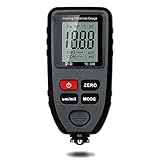
- Auto-Detection for Steel and Aluminum Coatings:This Coating Thickness Gauge utilizes advanced dual technology to automatically recognize ferrous and non-ferrous substrates, making it easy to measure coating thickness on both steel and aluminum without any guesswork
- Ideal for automotive paint inspection, powder coating checks, and metal surface finishing. Commonly used on used cars, anodized aluminum, bathroom fittings, bike frames, stadium seats, lockers, appliances, and more. (Note: Designed for metallic surfaces only.)
- A Must-Have for Used Car Buyers:Don't let hidden repairs catch you off guard. This tool lets you check the paint thickness on each car panel, helping you spot any previous accidents or repairs before buying a used vehicle
- Save Money on Used Car Purchases:When buying used cars, this paint thickness gauge helps you identify potential issues by ensuring the paint thickness is consistent across all panels. Great for detecting accident repairs and verifying if the car has been in a heavy crash
- Important Note: Please note that this gauge is specifically designed to measure coating thickness on metal substrates. It cannot be used on non-metallic materials such as plastic, fiberglass, or wood.
- consistent, documented maintenance;
- a credible mileage record with no unexplained gaps;
- a title and history report without concerning discrepancies;
- a satisfactory independent mechanical inspection;
- a price that accounts for upcoming maintenance and repair risk;
- a powertrain with a reasonable model-specific reliability record; and
- no unresolved safety problem you are unwilling or unable to address.
The financial question is not simply “How many miles are left?” No inspection can promise a specific remaining lifespan. Instead, ask whether the purchase price plus likely near-term repairs makes sense compared with a lower-mileage alternative.
When low mileage should make you cautious
Low mileage deserves extra scrutiny when:
- the seller cannot provide service or inspection records;
- the title, history report, or maintenance records show inconsistent mileage;
- the tires, pedals, driver’s seat, steering wheel, or other wear points look inconsistent with the odometer;
- the vehicle has a branded, salvage, flood, or rebuilt title;
- the car was stored for extended periods without evidence of proper recommissioning; or
- the seller will not provide the VIN or permit an independent inspection.
Age-related deterioration can matter even when the car has barely been driven. Check tire date codes and condition, battery age, leaks, brittle hoses, deteriorated weather seals, brake corrosion, and signs of water intrusion.
Quick wins for a faster PC:
Clear out junk files and repair common Windows errorsFree Scan →Fix the driver behind crashes, sound loss and screen glitchesFind Drivers →Repair Windows errors before they cause bigger problemsFix Now →How to check whether a used-car’s mileage is genuine
Odometer fraud involves disconnecting, resetting, or altering an odometer to change the displayed mileage. The National Highway Traffic Safety Administration explains how to identify and report odometer fraud and estimates that about 452,000 vehicles sold each year have false odometer readings. Digital odometers can be especially difficult to evaluate because tampering may not leave an obvious physical trace.
Build a mileage timeline rather than trusting one document:
- Compare the dashboard with the title. Check the mileage disclosure and look for brands, corrections, or unexplained notations.
- Review service and inspection records. Oil-change invoices, repair orders, emissions inspections, and registration records can establish dated mileage points.
- Look for service stickers. Check common locations such as the windshield, door jamb, glove box, or engine-bay area.
- Compare physical wear. Inspect pedals, the driver’s seat, steering wheel, tires, floor mats, door hinges, and switchgear. Wear is not precise proof, but major inconsistency warrants an explanation.
- Run a VIN-based vehicle-history report. Look for mileage entries that move backward or contain unusually long gaps.
- Pause when the story does not line up. Do not rely on a seller’s verbal explanation unless supporting documentation makes it credible.
A vehicle history report can help reveal title brands, salvage or insurance-loss records, reported accidents, ownership chronology, mileage events, and some service or repair records. The Federal Trade Commission recommends obtaining one before buying a used car. NMVTIS-approved providers can supply title, salvage, and insurance-loss information; commercial providers may add other records, but coverage varies.
A report is not a complete database of everything that happened to a car. An unreported accident, flood, repair, or mechanical fault may not appear. The FTC also does not endorse specific commercial history-report companies. Use the report alongside original records and an inspection.
Rank #3

- Accurate Paint Thickness Measurement: Quickly and precisely check your car’s paint thickness to detect any previous repairs or repainting, helping you make informed decisions when buying used vehicles.
- Magnetic Tip, No Batteries Needed: Designed with a magnetic tip, this paint thickness tester works reliably without batteries, perfect for outdoor use in any weather—even on dirty or wet surfaces.
- Micrometer-Level Precision: Equipped with a color-coded scale, this gauge lets you easily read the thickness of paint and filler layers for thorough vehicle inspections.
- Portable and Durable Design: Lightweight and pen-shaped, this gauge is easy to carry and made from high-quality materials, making it perfect for on-the-go inspections stored conveniently in your glove box or tool kit.
- Versatile Application: Whether you’re a professional appraiser, a used car buyer, or inspecting your own vehicle, this paint thickness tester is a must-have tool to detect hidden bodywork and ensure vehicle integrity.
Why an independent inspection matters more than the mileage number
The FTC recommends an independent mechanical inspection even when a dealer says the vehicle has already been inspected, certified, or covered by a warranty or service contract. A basic safety inspection may determine whether a vehicle is legal or safe to drive today; a pre-purchase mechanical inspection should look more broadly at condition, leaks, diagnostic faults, structural damage, deferred maintenance, and likely repair needs.
Arrange the inspection with a mechanic who is independent of the seller. Ask for a written report that identifies the vehicle and VIN, records observed defects, separates urgent from future repairs, and includes estimated costs. If the seller will not allow the car to leave the lot, the FTC notes that a mobile inspection service may be an alternative. Refusing a reasonable independent inspection is a serious buyer-risk signal.
A consumer OBD2 scanner for cars can supplement this process by reading diagnostic trouble codes and checking for obvious electronic faults. It cannot prove that the car is mechanically sound, confirm that the mileage is genuine, detect every problem, or replace a qualified inspection. Some sellers may clear codes shortly before showing a car, so scan results should be interpreted with the vehicle’s readiness monitors, warning lights, records, and physical condition.
During your own walk-around, check:
- tire wear, tread depth, age, and mismatched tires;
- brake condition, fluid levels, visible leaks, and corrosion;
- uneven panel gaps, paint overspray, and signs of repaired collision damage;
- warning lights during the ignition self-test and after the engine starts;
- engine, transmission, coolant, and exhaust noises;
- air conditioning, heating, windows, locks, lights, cameras, and driver-assistance features;
- underbody rust, damaged components, and evidence of flood or water intrusion; and
- interior wear that agrees—or fails to agree—with the stated mileage.
A tire tread-depth gauge can make the tire check more consistent, but it is only a small inspection aid. Tire condition says nothing conclusive about the engine, transmission, title, or odometer.
Check recalls before buying
Enter the VIN in NHTSA’s recall lookup tool before you close the deal. It can identify unrepaired safety recalls associated with that vehicle. An open recall does not automatically make the car a bad purchase, but confirm whether parts are available, whether the repair is free, and who will arrange it before signing.
A recall search is separate from a history report and a mechanical inspection. A vehicle can have no open recall and still have serious maintenance or accident-related problems.
Independent reader supportYour contribution helps us test, update, and keep practical guides available for everyone.Read the dealer’s Buyers Guide and warranty terms
Dealers must display a Federal Trade Commission Buyers Guide on used vehicles offered for sale. It states whether the car is sold “as is” or with a warranty and provides important warranty information. Before signing:
- compare the Buyers Guide with the sales contract;
- put every promised repair, replacement, discount, or cancellation agreement in writing;
- verify any remaining manufacturer warranty by VIN and confirm its transfer terms;
- ask what a service contract covers, excludes, and costs; and
- confirm who pays the deductible, diagnostic charges, labor, and excluded repairs.
A service contract is not the same as a warranty. An “as-is” sale generally leaves much of the repair risk with the buyer. There is also no automatic federal three-day right to return a used car after purchase. Return or cancellation rights depend on applicable state law and the dealer’s written policy, so verify them before signing rather than assuming a cooling-off period exists.
What’s actually slowing this PC down?
Pick the symptom - the matching free tool is one click away.
Rank #4

- This is a magnetic paint thickness gauge. It’s magnetic tip is extremely convenient in reaching curved surfaces, and in hard to reach places.Its mechanical thickness gauge is water resistant, no batteries needed and can be used in the rain and on a dirty car.
- Colored gauge shows you exactly what you're dealing with as to thickness of metals and the paint on it, and it will easily reveal any damages.
- The tester instrument is highly accurate with a micron-level color scale due to its compatibility with digital thickness gauge. Quickly and accurately check if the vehicle has been painted in the past.
- It’s shaped as a small pen, and is made of high quality materials, making it the perfect choice to carry around and always be prepared.
- Package includes:1* Paint thickness tester
How mileage should affect the price
Mileage should influence value, but it should not be the only pricing input. KBB treats mileage as one factor among condition, options, and market context. To evaluate the asking price:
- Find comparable listings. Compare the same year, make, model, trim, engine, transmission, drivetrain, and broadly similar condition in your local market.
- Adjust for age and mileage. Note whether the vehicle is unusually high- or low-mileage for its age.
- Price known work immediately. Use the inspection report to estimate tires, brakes, fluids, timing-related maintenance, suspension work, or other near-term repairs.
- Account for history. Consider title brands, accident severity, number of owners, commercial use, and service gaps.
- Compare the out-the-door total. Include taxes, registration, dealer fees, financing costs, warranties, service contracts, and add-ons—not merely the advertised price or monthly payment.
A “low-mileage” car with a high price may not be a bargain if its maintenance history is poor. Conversely, a high-mileage car may be fairly priced if records, inspection results, and model-specific ownership costs support it. A used-car value calculator or pricing guide can help establish a market range, but it is not a guarantee of the price you should pay.
Used-car mileage checklist
Before committing to a specific vehicle:
- Calculate mileage relative to the vehicle’s age.
- Identify the exact engine, transmission, trim, and drivetrain.
- Request service, repair, and inspection records.
- Obtain a VIN-based vehicle-history report.
- Verify the title and odometer disclosure.
- Check the VIN for unrepaired NHTSA safety recalls.
- Inspect tires, pedals, body panels, fluids, leaks, warning lights, and interior wear.
- Arrange an independent mechanical inspection.
- Get repair recommendations and cost estimates in writing.
- Review the Buyers Guide, warranty, and service-contract terms.
- Compare the complete out-the-door price with local alternatives.
- Walk away if the seller refuses VIN access, documentation, or a reasonable independent inspection.
Bottom line
For a typical U.S. used-car shopper, approximately 10,800 to 12,000 miles per year is a useful starting benchmark. It is not a pass/fail rule. The best used car is the one whose mileage is credible, whose maintenance and condition are documented, whose title and history make sense, and whose inspection findings fit the price.
Frequently Asked Questions
What is good mileage for a used car?
For a typical U.S. vehicle, multiply its age by about 10,800 to 12,000 miles. A five-year-old car with approximately 54,000 to 60,000 miles is near the conventional average-use range. This is only a screening benchmark; maintenance, condition, history, and the specific powertrain matter more than a precise mileage cutoff.
Is 100,000 miles too much for a used car?
A 10-year-old car with 108,000 to 120,000 miles is broadly within an average-use range. More mileage is not automatically a deal breaker if the vehicle has complete maintenance records, a credible history, a satisfactory independent inspection, and a price that reflects upcoming repairs.
Is low mileage always better?
Not necessarily. Low-mileage vehicles can have age-related problems, storage damage, incomplete records, title issues, or odometer discrepancies. Check the title, service history, VIN report, physical wear, tires, fluids, and inspection results before treating low mileage as an advantage.
How can I tell if a used-car’s mileage is real?
Use a VIN-based history report, compare the odometer with the title and dated service or inspection records, look for service stickers, and examine tires and pedal or interior wear. Any unexplained inconsistency is a reason to pause and investigate. A history report and an OBD2 scan are useful supplements, but neither replaces an independent mechanical inspection.
The Bottom Line
Good mileage is not the lowest mileage. Start with roughly 10,800–12,000 miles per year, then give greater weight to verified records, a clean and consistent history, an independent inspection, model-specific repair risk, and the complete purchase price.
Quick Recap
Product prices and availability are accurate as of the date/time indicated and are subject to change. Any price and availability information displayed on Amazon at the time of purchase will apply.