Tesla lost the first federal trial centered on a fatal third-party crash involving its Autopilot driver-assistance technology. A Southern District of Florida jury found the Tesla driver 67% responsible and Tesla 33% responsible. It awarded $129 million in compensatory damages and $200 million in punitive damages.
That produces two widely reported totals: the jury’s headline award was $329 million, while the amount attributed to Tesla under the liability allocation was approximately $243 million—about $43 million of the compensatory damages plus the $200 million punitive award. On February 19, 2026, the trial judge denied Tesla’s post-trial request for judgment as a matter of law or a new trial. The latest verified development in this research is therefore that the verdict survived Tesla’s district-court challenge; no later appellate merits decision has been established here.
What the jury decided
The case was Benavides v. Tesla, Inc., Case No. 1:21-cv-21940, in the U.S. District Court for the Southern District of Florida. The consolidated actions arose from an April 25, 2019 crash at a T-intersection on Card Sound Road in Key Largo, Florida.
George McGee was driving a 2019 Tesla Model S. The Tesla struck a parked Chevrolet Tahoe, which then hit 22-year-old Naibel Benavides Leon and Dillon Angulo. Benavides Leon died, and Angulo suffered significant injuries.
#1 Best Overall

- 【OEM Fit & Plug-and-Play for Tesla Model Y (2020-2024) and Model 3 (2016-2023)】 Specifically designed for Tesla Model Y and Model 3, this HotSunTesTec CarPlay HUD installs quickly in just 50 minutes without modifying your car. The 9.6-inch HD 2.5D screen with a 1920x480 resolution features an ultra-thin bezel for a sleek look and superior visibility, perfectly blending with your Tesla’s interior.
- 【Seamless 60 FPS Wireless CarPlay and Android Auto】 Enjoy smoother, faster CarPlay and Android Auto integration with 60 FPS performance. Use your favorite navigation, music, and apps on split or full screen. Supports Siri and Google Assistant for voice commands, enabling hands-free convenience.
- 【Automotive-Grade Linux System with High-Performance CPU】 Powered by a Linux system and vehicle-grade CPU, this HUD offers 4x faster performance than the previous model with ultra-low power usage, ensuring a stable, long-lasting experience in all driving conditions.
- 【No AC Vent Obstruction and Customizable Interface】 Unlike other models, this HUD is uniquely optimized for the Tesla Model Y and Model 3 to avoid blocking air conditioning vents. Choose from five unique, high-quality UI designs to personalize your HUD interface for a fun and functional driving experience.
- 【Immersive Driving Features & Real-Time Sync】Available in five colors (white, red, black, blue, grey) to match your Tesla’s exterior, this HUD supports steering wheel control, day/night modes, and OTA updates for easy, worry-free software upgrades. Displays real-time vehicle info like turn signals, brake status, speed, and temperature. Additional safety features include Auto-Pilot alerts, Blind Spot Monitoring, Front Collision Warning, Battery Warming, Passenger Seat Adjustment
The jury did not find Tesla solely responsible. Instead, it assigned 67% of the responsibility to McGee and 33% to Tesla. The verdict nevertheless found a sufficient connection between Tesla’s Autopilot-related technology, its design and warnings, and the collision to impose liability on the manufacturer.
That allocation is the central point of the case. Tesla’s defense focused on the driver’s distraction and speed. The plaintiffs argued that the driver’s conduct was not the entire explanation for the crash because Tesla’s technology and warnings also contributed to the risk.
Why the verdict is described as both $329 million and $243 million
The two figures refer to different calculations, not two separate verdicts.
| Item | Amount | What it means |
|---|---|---|
| Total compensatory damages | $129 million | The jury’s award for the plaintiffs’ compensatory losses before allocating responsibility. |
| Tesla’s share of responsibility | 33% | The percentage of responsibility assigned to Tesla, with 67% assigned to the driver. |
| Approximate Tesla share of compensatory damages | $43 million | Approximately one-third of $129 million, or $42.57 million before rounding. |
| Punitive damages against Tesla | $200 million | An additional award the jury imposed against Tesla. |
| Amount commonly attributed to Tesla | Approximately $243 million | The approximately $43 million compensatory share plus $200 million in punitive damages. |
| Headline jury award | $329 million | The full $129 million compensatory award plus the $200 million punitive award, before applying Tesla’s 33% share to compensatory damages. |
Accordingly, it would be misleading to say without qualification that Tesla was ordered to pay the entire $329 million. The more precise explanation is that the jury awarded $329 million in total, while Tesla’s allocated compensatory share was approximately $43 million and the punitive award against Tesla was $200 million—an attributed total of approximately $243 million under the reported calculation.
Do these 3 things before closing this tab:
1Fix the driver behind crashes, sound loss and screen glitches2Clear out junk files and repair common Windows errors3Scan for outdated or missing drivers - takes under a minuteWhat claims were at issue
Neima Benavides brought the wrongful-death action as personal representative of Naibel Benavides Leon’s estate. Angulo separately sued for his injuries. The cases were consolidated because they arose from the same crash.
The operative claims included:
- Strict products liability for defective design: the plaintiffs argued that the vehicle or its relevant driver-assistance design was unreasonably dangerous.
- Failure to warn: they argued Tesla did not provide adequate warnings about the system’s limitations and the driver’s responsibilities.
- Defective manufacture: the pleadings also included a claim that the product was improperly manufactured.
- Negligent misrepresentation: the plaintiffs challenged representations relating to the technology and its capabilities.
The verdict did not establish that every Tesla vehicle, every version of Autopilot, or every driver-assistance feature is defective. It resolved the evidence and claims presented in this particular case involving a 2019 Model S, the historical software and warnings at issue, and the circumstances of this crash.
Rank #2

- 4-Channel Dash Cam for Complete Vehicle Coverage: This dash cam is equipped with four Full HD 1080P cameras, capturing footage of the front, rear, left, and right sides of your vehicle simultaneously. The adjustable front cameras enhance visibility and offer flexible recording angles, including interior footage.
- Time-Lapse Recording & Parking Mode: With time-lapse recording, 60 minutes of footage is compressed into 1 minute, saving memory card space. Activate parking mode with the optional ACC hardwire kit (sold separately) for security when your vehicle is parked.
- Enhanced Night Vision & WDR Technology: The dash cam features advanced night vision and Wide Dynamic Range (WDR) technology for clear, balanced footage, even in low-light conditions. Eight infrared lights ensure optimal visibility, and WDR adjusts exposure to capture detailed images in varying lighting.
- Optional GPS for Real-Time Vehicle Tracking: Purchase the GPS logger (sold separately) to add location, speed, and time tracking, providing a visual representation of your vehicle's route. This feature is perfect for documenting travel details in case of incidents.
- 5GHz Wi-Fi & App Integration: Share videos easily via Wi-Fi using the mobile app for both iOS and Android devices. This feature allows for quick video downloads and sharing on your preferred platforms.
Tesla’s defense
Tesla argued that McGee’s conduct was the real cause of the collision. The company pointed to evidence that he was distracted and speeding and argued that the vehicle’s warnings were adequate. Tesla also maintained that the evidence did not reliably prove a defective design or a legally sufficient failure to warn.
After the verdict, Tesla asked the court for judgment as a matter of law, a new trial, or reduced damages. Its arguments included claims that:
Recommended Free Tools
- the evidence did not support the findings of defective design or inadequate warnings;
- the driver’s conduct, rather than the Autopilot-related technology, caused the crash;
- the jury had been improperly influenced by evidence concerning Elon Musk’s public statements;
- evidence concerning vehicle data had been mishandled or improperly used;
- punitive damages were legally unavailable or excessive; and
- upholding the verdict could chill automotive safety development and innovation.
Those were Tesla’s litigation positions. They should not be presented as findings adopted by the court.
Why punitive damages mattered
The $200 million punitive award was separate from the $129 million compensatory award. Compensatory damages are intended to compensate for injury and loss. Punitive damages are designed to punish sufficiently blameworthy conduct and deter similar conduct, subject to the governing law and the court’s review.
The plaintiffs argued that Tesla’s conduct was sufficiently reprehensible to justify punitive damages. Their presentation included arguments about the development and promotion of Autopilot and Tesla’s response to earlier Autopilot failures. Tesla argued that punitive damages were not legally available on the record or should be substantially reduced.
Tesla specifically challenged the punitive-damages verdict in its post-trial motion. The February 19, 2026 order denied relief on the punitive award as well as the liability issues, meaning the district court did not accept Tesla’s request to overturn that part of the verdict.
Rank #3
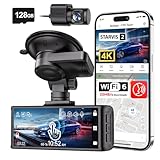
- [4K+1080P Dual Recording] REDTIGER F7N TOUCH captures your drive journey in stunning 4K UHD resolution with STARVIS 2 sensor 170° wide-angle view for the front dash cam and 1080P FHD resolution 140° wide-angle for the rear car camera. Equipped with WDR and HDR technology, the enhanced super night vision ensures better visibility even in low-light situations, providing you with reliable recordings day and night.
- [Voice Control & Touch Screen] F7NTOUCH dashcam features voice commands, allowing for hands-free control of your 4K car camera, which enhances safety by minimizing distractions. The dual camera dash cam also has smart touchscreen that can lock emergency video, turn on wifi, and capture scenery with one click. Redtiger also retains the buttons, multiple control methods are integrated.
- [Built-in GPS & 5.8GHz WiFi] Both Android and IOS users can connect to dashcam WiFi via the REDTIGER Cam app. Although the dash cam is installed wired, you can enjoy wireless control on your smartphone, faster 20MB/s download speed and share your driving experiences in real-time with friends and insurance companies. Car recorder built-in GPS provides traceable location, speed, and accurate route in the recordings.
- [Loop Recording & G-Sensor] REDTIGER F7N TOUCH dual channel dash cam automatically overwrites the oldest footage when the memory is full, ensuring endless recording with the included 128GB card. With a built-in G-sensor that detects sudden movements or impacts, it automatically locks and protects the associated footage when an event is detected on the road, ensuring it won't be overwritten during loop recording.
- [24-hour Parking Monitoring*] REDTIGER Car dashboard camera offers G-Sensor Parking Mode that automatically record when it detects any collisions or sudden motion while vehicles is parked. Time Lapse Parking Mode provides continuous surveillance by offering a condensed overview of any events that may occur during parking periods. *Please note that the parking monitoring function requires a separate hardwire kit.
The disputed vehicle data and Musk evidence
Evidence about Autopilot data and Tesla’s public statements played an important role in the parties’ competing accounts of the crash. The plaintiffs used a forensic data expert to locate evidence that, according to reporting by the Associated Press, Tesla had previously said it did not have. Tesla characterized the handling of the evidence as a mistake rather than intentional concealment.
That distinction matters. The record described in the research establishes a dispute over the availability, recovery, and handling of crash data. It does not support rewriting the case as a blanket judicial finding that Tesla intentionally concealed evidence.
Evidence involving Elon Musk’s public statements was also contested. Tesla argued after trial that plaintiffs’ lawyers had improperly used Musk-related evidence and had misled the jury. Musk was not personally found liable in this case. The defendant was Tesla, Inc.
What happened after the verdict
- April 25, 2019: the crash occurred at the Key Largo intersection.
- August 1, 2025: the federal jury returned its verdict, assigning 67% responsibility to the driver and 33% to Tesla, awarding $129 million in compensatory damages and $200 million in punitive damages.
- September 15, 2025: Tesla filed its post-trial motion seeking judgment as a matter of law, a new trial, or reduced damages.
- February 19, 2026: Judge Beth Bloom denied Tesla’s amended renewed motion for judgment as a matter of law or, alternatively, a new trial. The court concluded that the admitted evidence more than supported the jury’s verdict and that Tesla had not shown an error affecting its substantive rights. The order denied relief on both liability and punitive damages and directed the clerk to close the case.
Tesla’s 2025 Form 10-K also recorded the verdict and its allocation of responsibility. The filing said the company had recorded an immaterial accrual when discussing the post-trial motion. That corporate disclosure provides accounting and status context, but the February 2026 court order is the controlling source for the district court’s ruling on Tesla’s post-trial challenge.
Quick wins for a faster PC:
Scan for outdated or missing drivers - takes under a minuteDriver Scan →Clear out junk files and repair common Windows errorsFree Scan →This research pass verifies the February 2026 district-court order. It does not establish that all possible appellate proceedings have ended or that a later appellate court has ruled on the merits. Any report that goes beyond the district-court result should verify the later docket and appellate orders separately.
Does this mean Autopilot is self-driving?
No. The verdict does not convert Autopilot into a legally or technically autonomous driving system.
Rank #4

- 【4K Ultra HD 3 Channel Dash Cam Front and Rear Inside】The 70mai dash cam T800E is a 3-channel car camera — 4K front, 1080P interior, and 1080P rear — capturing every angle in crystal clarity. With ultra-wide lenses and F1.55 aperture, this dashboard camera delivers excellent visibility day and night, ideal for Uber, Lyft, or family drivers seeking total protection
- 【Night Vision & HDR Technology + Switchable IR for Interior Camera】Equipped with advanced HDR imaging and 3D noise reduction, this car dash cam ensures sharp footage in low-light or nighttime conditions. The 70mai 4K dash cam front and rear captures license plates and road details clearly, day or night. The interior camera features switchable infrared recording, allowing you to turn on IR for even clearer night footage inside the vehicle, or turn it off when not needed
- 【24/7 Parking Monitoring & G-Sensor Emergency Lock】 With parkking surveillance and G-sensor collision detection, this dash carm front and rear 24/7 recording system protects your car even when parked. It automatically records incidents and locks footage during imppact. Compatible with hardwire kit for continuous monitoring (UP06 / UP03) Note: 4G connectivity is notsupported
- 【Built-in 5-Mode GPS, Wi-Fi 6 & Smart Voice Control】The 70mai dash camera for cars features built-in 5-mode GPS for ultra-accurate location, speed, and route tracking. Equipped with Wi-Fi 6, file transfer through the 70mai App is up to 5× faster than standard Wi-Fi 4, reaching speeds up to 10 MB/s. Hands-free voice control lets you take photos, start recording, or lock important footage, making driving safer and more convenient
- 【Easy Installation + 64GB SD Card Included, Supports up to 512GB】This dash cam front and rear inside features a simple adhesive mount and plug-and-play setup for effortless installation. It comes with the RC21 rear camera (Type-C interface) and a 64GB SD card for continuous loop recording — no need for manual deletion. Supports up to 512GB SD card for extended recording, making it perfect for daily commutes, Uber/Lyft rideshare, or semi trucks
Tesla’s current Model S owner manual describes its self-driving features as advanced driver-assistance features, not fully autonomous operation. It tells the driver to pay attention, keep hands on the wheel, remain ready to take immediate action, and understand the system’s limitations. Tesla’s current Autopilot support materials similarly describe Autopilot and Full Self-Driving Capability as systems intended for a fully attentive driver who is prepared to take over.
Those current warnings help explain the distinction between driver assistance and autonomy, but they do not automatically prove what the 2019 Model S displayed, what its software could do, or what warnings were presented at the time of the crash. The case concerned historical evidence. Current Tesla software, terminology, interface behavior, and warnings should not be treated as identical to the 2019 system without specific evidence.
What the case does—and does not—decide
It does decide that:
- the jury found Tesla partly responsible for this crash;
- the driver remained the primary responsible party under the 67% allocation;
- Tesla’s technology and warnings were sufficiently connected to the collision for liability in this case;
- the jury awarded $129 million in compensatory damages and $200 million in punitive damages; and
- the district court denied Tesla’s post-trial effort to overturn the verdict or obtain a new trial.
It does not decide that:
- Tesla was solely responsible for the crash;
- Autopilot is a fully autonomous driving system;
- all Tesla vehicles or all versions of Autopilot are defective;
- Elon Musk is personally liable for the judgment;
- Tesla intentionally concealed crash data as a blanket judicial finding; or
- every possible appeal has been resolved.
Why the verdict matters beyond this crash
The case is significant because it tested a manufacturer’s responsibility when a driver-assistance system and a human driver may both contribute to a fatal collision. The jury’s allocation shows that finding the driver primarily at fault did not, on this evidence, eliminate the possibility of manufacturer liability.
It also puts marketing, warnings, system limitations, crash data, and punitive damages in the same legal discussion. For automakers, the practical issue is not simply whether a driver was warned to pay attention. A jury may also examine how the system is designed, how its capabilities are presented, what limitations are communicated, and whether the evidence shows that the technology contributed to the event.
At the same time, the verdict is fact-specific. It is not a general ruling that driver-assistance technology is defective or that a manufacturer automatically pays for every crash involving a system branded as Autopilot. The driver’s 67% share remains an essential part of the result.
Sources and procedural context
The core legal account comes from the Southern District of Florida’s orders, including the June 2025 order describing the case and evidence and the February 19, 2026 post-trial order. Tesla’s SEC Form 10-K supplies the company’s disclosure of the verdict, fault allocation, post-trial filing, and accounting treatment. Associated Press reporting supplies contemporaneous coverage of the verdict, the damages arithmetic, and the parties’ public positions. Tesla’s current Model S manual and Autopilot support materials provide the manufacturer’s present explanation that these are driver-assistance systems rather than fully autonomous vehicles.
Crashes, No Sound, or Screen Glitches?
Random freezes, missing sound and display glitches usually trace back to one bad driver. Find and replace yours safely.Free scan · under a minutePC Slower Than It Used to Be?
A free scan shows the junk files, broken settings and background clutter dragging Windows down - then fixes them in one click.Free scan · Windows 10 & 11Best Value

- JUNIPER is equipped with its own built-in camera; therefore, this HUD does NOT INCLUDE a camera to prevent functional redundancy and ensure product compatibility.
- Blind Spot Monitoring & Safety Alerts: Visual warnings (yellow/red flashes) for vehicles in blind spots, synchronized with turn signals for safer lane changes./Ultra-HD 10.88-inch Touchscreen: Enjoy crystal-clear visuals with responsive touch controls for effortless navigation through menus, settings, and real-time driving metrics.
- Rainbow Road & Real-Time Data Sync: Displays speed, gear, tire pressure, battery status, and FSD hands-off reminders—just like your Tesla’s native interface.
- Wireless CarPlay & Android Auto: Connect your smartphone via Bluetooth for seamless access to navigation, music, and apps. Supports AirPlay/Miracast screen mirroring too!
- Customizable 3D Car Models & UI Themes: Personalize your dashboard with 5 Tesla models (including Cybertruck) and multiple color options. Switch between day/night modes or auto-sync with Tesla’s system.
The current Tesla materials should be used only as current safety context. They should not be substituted for evidence about the 2019 vehicle or software involved in the Benavides crash.
Frequently Asked Questions
Did Tesla have to pay the full $329 million?
Not under the allocation described in the verdict reporting and Tesla’s SEC disclosure. The jury awarded $329 million in total: $129 million in compensatory damages and $200 million in punitive damages. Tesla was assigned 33% of the compensatory damages, or approximately $43 million, plus the $200 million punitive award—approximately $243 million attributed to Tesla.
Was the Tesla driver found responsible?
Yes. The jury assigned George McGee 67% responsibility and Tesla 33% responsibility. The verdict therefore did not find Tesla solely responsible for the crash.
Did the verdict find that Autopilot is fully self-driving?
No. Tesla’s Autopilot is described in its current materials as an advanced driver-assistance system that requires an attentive driver who can take over immediately. The verdict concerned the specific 2019 Model S, its historical system and warnings, and the evidence in this crash.
Can Tesla still appeal?
The verified research establishes that the district court denied Tesla’s post-trial motion on February 19, 2026 and closed the case at that level. It does not establish a later appellate merits decision or that every possible appellate avenue has been exhausted.
The Bottom Line
Bottom line: Tesla lost the federal trial and its first verified post-trial challenge, but the legally accurate result is more precise than the $329 million headline. The jury assigned 67% of the crash to the driver and 33% to Tesla, awarded $129 million in compensatory damages and $200 million in punitive damages, and left Tesla with an attributed total of approximately $243 million under that calculation. The ruling concerns one 2019 crash and does not establish that Autopilot is fully autonomous or that every Tesla driver-assistance system is defective.
Quick Recap
Product prices and availability are accurate as of the date/time indicated and are subject to change. Any price and availability information displayed on Amazon at the time of purchase will apply.




