Do these 3 things before closing this tab:
1Repair Windows errors before they cause bigger problems2Fix the driver behind crashes, sound loss and screen glitches3Clear out junk files and repair common Windows errorsIf a depot’s electrical supply cannot run every EV charger at full output simultaneously, the fleet must keep charging demand below the site’s safe available capacity. In practice, that means coordinating start times, sharing or throttling charger power, prioritizing vehicles by departure and energy need, reducing other site loads, or increasing the site’s electrical supply. Managed charging can avoid or defer some construction, but only when dwell times and vehicle energy requirements provide enough flexibility. A qualified electrical and operational assessment is needed before deciding how many chargers the depot can support.
The real limit is simultaneous load, not charger count
A depot may have enough parking spaces for dozens of chargepoints yet lack the electrical capacity to operate them all together. The constraint is the highest combined demand from chargers, the building and site equipment, and the vehicles’ charging profiles at the same moment.
As an Amazon Associate I earn from qualifying purchases.
Each charger’s nameplate rating is only one input. The assessment also has to account for the service entrance, transformers, switchgear, feeders, panels, protection settings, existing building loads, utility allocation and the times when vehicles are plugged in. A fleet with fewer high-power chargers can create more peak demand than one with more lower-power units.
What’s actually slowing this PC down?
Pick the symptom - the matching free tool is one click away.
Vehicle schedules matter just as much. A vehicle that remains parked for 10 hours may be able to charge at a reduced rate, while a vehicle returning shortly before a morning departure may require a higher allocation. The supportable number of chargers therefore cannot be inferred from charger count alone.
#1 Best Overall

- Earn Revenue with Every Charge: Set custom pricing and idle fees. Monthly payouts and usage reports included.
- Fleet and Public Use Ready: Control access with RFID , or app. Great for apartments, hotels, or commercial fleets.
- Fleet and Public Use Ready: Control access with RFID, or app. Great for apartments, hotels, or commercial fleets.
- Commercial EV charging station. Great for Hotels, Retail, Restaurants, Rentals, Workplaces, Apartment Buildings, Resorts, Destinations and more...Commercial EV charging station. Great for Hotels, Retail, Restaurants, Rentals, Workplaces, Apartment Buildings, Resorts, Destinations and more...
- Commercial EV Charging Station – OCPP-Compliant, Revenue-Generating Charger with Driver Pay App – Compatible with Level 2 and DC Fast Charging – Powered by EV Range Software
What happens with unmanaged charging
Unmanaged charging starts a session when a driver plugs in, without considering grid capacity, facility demand or electricity prices. If many vehicles return at the same time, their chargers can start together and create a coincident peak. That peak can exceed the site’s electrical limits, trigger protective equipment, raise demand-related electricity costs, or force an upgrade.
The U.S. Department of Energy (DOE) describes these capacity and cost risks in its federal-fleet guidance on managed EV charging. A depot should not rely on a charger’s ability to connect and begin charging as proof that the electrical system can safely support simultaneous operation.
Four immediate responses when capacity is short
1. Cap total charging power
A charge-management system can enforce a ceiling for the depot, such as the maximum current allowed by the service equipment. It then divides that ceiling among active vehicles. When the site approaches its limit, the system can lower individual charging rates, pause flexible sessions, or move them to a later period.
Networked equipment can make these adjustments using charger status, building-load measurements, fleet schedules, vehicle energy requirements and, where available, utility signals. The control objective must be explicit: protect the site, meet departure state-of-charge targets, minimize demand peaks, or balance those goals.
2. Schedule and prioritize sessions
Charging can be sequenced instead of allowing every vehicle to begin immediately. A practical priority order might give first access to vehicles leaving soon, vehicles assigned to the next mission, or vehicles with the largest energy shortfall. Vehicles with long dwell times can wait for lower-load periods.
This approach depends on reliable operational data. The system needs expected arrival and departure times, route energy requirements, current battery state of charge where available, charger location and connector compatibility. If schedules change but the control system does not know, a nominally adequate plan can still leave a vehicle short of energy.
3. Free capacity elsewhere on the site
Operators can review whether non-charging loads can be reduced or shifted. Examples include moving discretionary processes outside the fleet’s charging window or changing the timing of other large electrical loads. The UK government’s chargepoint-connection guidance recommends reviewing overall electricity needs and freeing existing capacity where possible.
Quick wins for a faster PC:
Scan for outdated or missing drivers - takes under a minuteDriver Scan →Repair Windows errors before they cause bigger problemsFix Now →Fix the driver behind crashes, sound loss and screen glitchesFind Drivers →Any reduction must be practical and safe for the depot. A load that is merely moved to another hour may create a new peak, and critical building systems cannot be switched off to meet a charging target without an engineering review.
Rank #2

- AI-POWERED SMART CHARGING & APP CONTROL – This ev charger level 2 uses Autel’s AI-integrated smart app to schedule charging around time-of-use utility rates, helping lower your monthly bill while boosting station utilization. Start or stop sessions remotely, adjust current from low to high amps, view real-time energy data, and get alerts if anything looks off.
- ULTRAFAST 80A PERFORMANCE FOR HOME – Delivering up to 19.2 kW / 80A, this charger adds about 70 miles of range per hour and powers your EV up to 14x faster than a standard Level 1 outlet, so you can fully recharge overnight or between customer visits. This 80 amp ev charger is a high-power level 2 ev charger that future-proofs your setup for larger-battery EVs and busy households.
- BUILT FOR 24/7 RELIABILITY & THEFT PROTECTION – Engineered for a 10-year lifespan with internal temperature monitoring and a flame-retardant enclosure. Dual-network Wi-Fi + Wi-SUN keep your charger online with >99.9% uptime, so drivers always find a live station. Custom tamper-resistant screws plus remote locking provide double theft protection for both residential and commercial installs.
- FAST INSTALL & FLEXIBLE STATION MANAGEMENT – Hardwired design for maximum power and reliability (100A circuit recommended for full 80A output; professional electrician install suggested). One-click configuration lets installers set up a charging station in about 10 minutes, then you can easily manage pricing, access, and usage in the app.
- CSA CERTIFIED, REBATE READY & UNIVERSAL J1772 – UL certified by CSA and eligible for many U.S. rebates, incentives, and tax credits to help reduce your installation cost. The 25 ft SAE J1772 cable works with all EVs and PHEVs in North America and with Tesla vehicles when used with a NACS adapter (not included). Backed by a 5-year warranty, 24/7 expert support, and Autel’s proven EV charger technology for long-term peace of mind.
4. Increase the available supply
If the fleet’s required energy cannot fit within the existing envelope, the site may need electrical work or a larger utility connection. Scope can include new service equipment, transformer or switchgear changes, feeder upgrades, protection studies, civil work and utility-side reinforcement. The exact work, cost and lead time depend on the site and the local network operator.
Start the utility conversation early. The operator will need the proposed charger ratings, expected simultaneous demand, operating schedule, growth plan and site information before it can confirm connection conditions. Do not assume that a connection approval in one jurisdiction applies elsewhere.
How to determine whether managed charging is enough
Managed charging is viable only when the depot has enough time and power to deliver each vehicle’s required energy before departure. The calculation is operational, not just electrical.
Build a vehicle-and-site inventory
- List every vehicle, battery capacity or usable energy requirement, connector type and charging power limit.
- Record route energy needs, expected arrival and departure times, minimum departure state of charge and any mission-critical assignments.
- Map each charger to its panel, feeder and service equipment, including charger level and nameplate rating.
- Measure or obtain interval data for building loads, seasonal variation and existing peak demand.
- Document available transformer, switchgear, panel and utility capacity, along with protection and code constraints.
New Jersey Department of Environmental Protection guidance on charging infrastructure emphasizes site assessment, charging patterns and early utility engagement. Its examples are state-specific; use them as an assessment model rather than as a national rule.
Define the control objective
Decide what the system must protect and what it must guarantee. A common hierarchy is: never exceed safe site capacity; guarantee the departure energy of priority vehicles; then allocate remaining energy to flexible vehicles while controlling demand charges. The objective should identify whether the ceiling is based on a fixed electrical limit, a live building-load measurement or a utility signal.
Quantify flexibility
For each vehicle, compare the energy still needed with the hours remaining before departure. If the required energy divided by available dwell time is below the vehicle’s allowable charging rate, that session has scheduling flexibility. If the required rate is close to or above the available rate, delaying it may make the departure target impossible.
Repeat the calculation for the worst operating case, such as a late return, a cold-weather energy increase, a missed charging window or several vehicles departing together. A plan that works only on an average day is not a dependable fleet plan.
The Tool Desk
Outbyte Driver Updater FREEFix the driver behind crashes, sound loss and screen glitchesFind Drivers →Outbyte PC Repair FREERepair Windows errors before they cause bigger problemsFix Now →Select interoperable controls
Choose chargers and software that can communicate with the vehicles, the fleet schedule and the site’s load measurements. DOE implementation guidance calls for setting objectives, coordinating with the utility, assessing flexibility, selecting a solution, commissioning it, communicating with drivers and maintaining the system.
Rank #3

- Freestanding EV Charger Pedestal – Securely mount your Wallbox Pulsar Plus chargers with this durable, space-saving stand, perfect for home or commercial EV charging setups.
- Built for Stability & Durability – Constructed from high-quality, weather-resistant materials, ensuring a sturdy and reliable charging station in any environment.
- Seamless Compatibility – Designed exclusively for Wallbox Pulsar Plus chargers, providing a perfect fit and clean installation for a professional look.
- Ideal for Indoor & Outdoor Use – The rugged, weatherproof design makes it suitable for garages, driveways, parking lots, workplaces, and commercial charging stations.
- Easy to Install & Maintain – Comes with all necessary mounting hardware for a quick, hassle-free setup, making it easy to install and maintain over time.
Interoperability should be verified before purchase or installation. Confirm connector compatibility, charger power limits, network communications, open interfaces or required integrations, fallback behavior during a communications outage, and the ability to export session and load data.
Commission and monitor the system
Commissioning should test normal operation and failure modes: simultaneous plug-ins, a lost network connection, a failed meter, a vehicle that does not report expected data, a utility signal change and a charger that becomes unavailable. Verify that the site ceiling is respected and that priority vehicles receive their planned energy.
After commissioning, compare scheduled energy with actual energy, peak demand, missed departure targets, overrides and alarms. Adjust the rules as routes, vehicle mix, tariffs or building loads change. Smart charge management is an operating system, not a one-time configuration.
Free tools Windows power users keep installed
One-click scans. No signup required.
Options compared
| Approach | What it can do | Main condition or limitation |
|---|---|---|
| Managed charging and power sharing | Caps depot charging demand and allocates power among vehicles over time. | Dwell times and energy needs must allow slower or delayed sessions; integration, metering and monitoring are required. |
| Scheduling and prioritization | Charges mission-critical or soon-departing vehicles first and moves flexible sessions. | Requires accurate schedules, route energy data and dependable state-of-charge information. |
| Reducing or shifting facility loads | Releases existing electrical capacity for charging. | Changes must be operationally practical and must not create a different peak. |
| Electrical or utility upgrade | Raises the available site capacity when operations cannot fit within the existing supply. | Scope, cost, approvals and lead time are location- and utility-specific. |
| Onsite storage or generation | May shave peaks or provide backup flexibility. | Requires engineering, operating and economic analysis; it is not universally suitable. |
| Public or other offsite charging | Supplements depot energy when onsite space or capacity is insufficient. | Route, availability, connector compatibility, reliability and operating time must be checked. |
Evaluate every option against the same questions: Can every vehicle meet its route and departure-energy requirement? What peak power is needed and when? What construction, approval and utility work is involved? How much operational flexibility is lost? Will the equipment integrate with vehicles, chargers, schedules and utility signals? How will tariffs and demand charges change?
When an upgrade is unavoidable
An upgrade becomes the leading option when the fleet has little dwell-time flexibility, vehicles require high energy before tightly grouped departures, or the required charging power remains above the safe site limit even after scheduling and load reduction. It may also be necessary when future fleet growth would consume all available headroom.
Do not treat a managed-charging calculation as a substitute for an electrical design. A qualified professional should confirm conductor ampacity, equipment ratings, fault-current and protection requirements, voltage drop, grounding, fire and building-code implications, and the utility’s interconnection conditions.
Connection rules differ by jurisdiction. UK government guidance updated 3 April 2023 states that, from 1 April 2023, demand-connection customers such as EV chargepoints applying for a connection would no longer be charged for distribution-network reinforcement needed to accommodate the connection. That is a dated, UK-specific statement; confirm current terms with the relevant distribution network operator before using it in a business case. It does not establish the cost treatment for a U.S. depot or any other country.
Storage, generation and offsite charging: useful but conditional
Onsite batteries or generation
The DOE Alternative Fuels Data Center identifies storage or generation as options that may shave peak usage or provide backup flexibility. A battery can discharge during a charging peak and recharge later; generation can support selected loads where permitted. Both add equipment, controls, maintenance, space, safety and economics that must be assessed for the specific site. Neither option automatically eliminates the need for a utility upgrade.
Rank #4
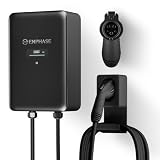
- 15× FASTER CHARGING: Deliver up to 88 miles of range per hour (22.1 kW / 80 A) to keep fleets, workplaces, and commercial sites moving with less downtime.
- BUILT-IN CELLULAR CONNECTIVITY: Built-in 4G LTE cellular connectivity keeps chargers online—no on-site Wi-Fi required. Ideal for sites with limited or unreliable network infrastructure.
- OPEN PLATFORM INTEGRATION: Native OCPP 1.6J and OCPP 2.0.1 support enables seamless integration with any Charging Station Management System (CSMS).
- API + LOCAL EMS READY: Integrate with building EMS, fleet platforms, and custom dashboards. Local EMS control supports load management and demand response during cloud interruptions.
- REVENUE GRADE METER: Accurate utility-grade energy measurement supports billing, cost allocation, and eligibility for applicable rebate programs.
Offsite charging
Public or another depot’s chargers can supplement energy, but the solution shifts the constraint to route planning and charger availability. Check travel time, queue risk, access hours, connector and vehicle compatibility, payment or access arrangements, weather exposure and whether a missed session would disrupt the next assignment.
A UK local-authority zero-emission-fleets toolkit that discussed depot constraints and alternatives is explicitly withdrawn. Use it as background only, not as current operative UK guidance.
Independent reader supportYour contribution helps us test, update, and keep practical guides available for everyone.Common failure modes and fixes
All vehicles plug in at once
Symptom: a sudden peak, alarms or charging sessions that trip protective equipment.
Fix: enforce a site-wide power ceiling, add a start-delay rule and reserve capacity for priority departures. Confirm the rule with measured load data rather than charger count.
Vehicles leave undercharged
Symptom: the depot stays within its electrical limit but a vehicle misses its required state of charge.
Fix: add departure time and energy need to the control logic, recalculate after late arrivals, and create an exception path for mission-critical vehicles. If the arithmetic cannot meet the target, increase capacity, add time, or change the operating plan.
Building loads consume the charging headroom
Symptom: a schedule works during a light-load period but fails when HVAC, refrigeration or other equipment starts.
Recommended Free Tools
Fix: use live building-load measurement or a conservative operating limit, and identify which non-charging loads can safely move. Recheck seasonal conditions.
Best Value
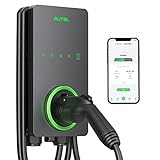
- 【Trusted Brand】Autel has been making automotive intelligent diagnostic, inspection, and analysis products since 2004. The MaxiCharger AC Home was developed over 2 years from a full team of designers and engineers to bring you the safest, smartest, and one of the best looking chargers on the market.
- 【High speed Charging】With 12kW up to 50A charging, speed will never be an issue. Add 37 miles per charging hour. Don't waste time waiting on your EV to fully charge with slower chargers. An updated 25-Foot durable cable is flexible no matter how cold the season is so you can charge with confidence in even the coldest of temperatures(-40℃).
- 【CSA Certified & NEMA Type 4】Eligible for the Federal rebate program. With NEMA Type 4 you are protected in any type of weather including snow, rain, hail, and sleet. Hang it up outside your house or inside a garage and it will operate efficiently. Fire resistant, over current, over voltage, and over temperature protection. Your level 2 charger will run better and last longer, saving you money in the long term.
- 【Smart APP Control】Use Autel Charge APP to control your charger and manage charge times, schedule charging while you're away, and optimize your charging to take advantage of off peak electricity. Bluetooth enabled, Wi-Fi connectivity, and Ethernet access make sure your automatic over the air (OTA) remote firmware updates keep you connected at the times you need.
- 【High Reliability】The MaxiCharger is easy for any electrician to install. A 3-year warranty, APP automatic updates, and around-the-clock support from Autel's service team means you'll never have to worry about quality and service.
Communications or data fail
Symptom: chargers revert to an unsafe default, stop charging, or lose priority information.
Fix: specify a documented fail-safe mode, local fallback limits, alarms, manual override procedures and regular data-quality checks. Test these behaviors during commissioning.
The utility process starts too late
Symptom: vehicles or chargers are ordered before connection capacity, approvals and construction timing are known.
Fix: engage the utility or network operator during feasibility, provide a staged load forecast, and align vehicle delivery with the confirmed electrical plan.
A practical decision sequence for fleet operators
- Measure the baseline. Obtain interval demand data and verify the ratings and spare capacity of service equipment, transformers, switchgear, panels and feeders.
- Map the operation. Build a time-based schedule of arrivals, departures, routes, required energy and charger assignments.
- Model the unmanaged case. Calculate the coincident peak if every connected charger starts at its allowed rate, including building loads.
- Model managed cases. Test fixed ceilings, power sharing, departure priorities, shifted facility loads and realistic late-return scenarios.
- Check feasibility. Confirm that every vehicle can receive its required energy before departure under the worst credible schedule.
- Engage the utility and authorities. Request connection requirements, studies, approval steps, tariffs and indicative timing for the actual jurisdiction.
- Choose a staged plan. Specify what can be installed now, what capacity is reserved for growth, and what trigger would require an upgrade.
- Commission and improve. Test safety limits and exceptions, train drivers and dispatchers, monitor performance, and revise rules as the fleet changes.
What the evidence can—and cannot—tell you
DOE federal-fleet material explains the distinction between managed and unmanaged charging, smart-charge implementation and integration requirements. DOE fleet-training material identifies Level 2 EV supply equipment as common in commercial applications. DOE’s Alternative Fuels Data Center discusses storage and generation as possible peak-shaving or backup options.
New Jersey guidance provides a state-level example of site assessment and utility engagement. UK government connection guidance addresses UK network processes and includes the dated reinforcement-charge statement described above. A U.S. Department of Transportation fleet toolkit, last updated 6 December 2023, frames utility coordination as a core fleet-planning question.
These sources do not establish a universal charger count, upgrade price, savings amount or construction timeline. Those values require the depot’s electrical data, fleet schedules, design, jurisdiction and utility response.
Windows Errors? Fix Them Before They Spread
Repair common Windows errors and clear accumulated junk for a smoother, more stable PC - no reinstall needed.Free scan · no reinstallOutdated Drivers Are Slowing You Down
One free scan finds every outdated or missing driver and matches the right update for your exact hardware.Free scan · exact hardware matchQuick Recap
Product prices and availability are accurate as of the date/time indicated and are subject to change. Any price and availability information displayed on Amazon at the time of purchase will apply.




