Do these 3 things before closing this tab:
1Fix the driver behind crashes, sound loss and screen glitches2Clear out junk files and repair common Windows errors3Scan for outdated or missing drivers - takes under a minuteCold weather can cut an electric vehicle’s range because cold cells deliver energy less effectively, heating the cabin uses electricity, and mechanical losses rise. In DOE-reported Argonne dynamometer tests, average BEV range was 41% lower at 20°F and 54% lower at 0°F than at 72°F, with the cabin kept at 72°F. Those are controlled-test averages, not a prediction for every car or winter trip. Preconditioning while plugged in, using localized heat when comfortable, and planning for conditions can help make cold-weather driving more manageable.
Why does an EV lose range in cold weather?
Several effects can reduce the distance an EV travels on a charge:
- Cold battery cells: Low temperatures reduce battery-cell chemical performance, so less energy is readily available for driving.
- Cabin and battery heating: An EV must draw electrical energy to warm the cabin and, depending on its design and controls, condition the battery. That energy is then unavailable for propulsion.
- Greater mechanical power losses: Cold-weather conditions can increase the power needed to move the vehicle.
The balance varies by vehicle and trip. Thermal-system design, outside temperature, route, speed, and heating use all matter. The U.S. Department of Energy’s overview of the Argonne testing describes these factors at DOE Vehicle Technologies Office: BEV range in hot and cold conditions.
How much range can an EV lose in the cold?
In Argonne National Laboratory dynamometer testing reported by the DOE Vehicle Technologies Office in 2024, average BEV range was 41% lower at 20°F and 54% lower at 0°F than at a 72°F ambient reference. The tests held the cabin at 72°F and used weighted city/highway driving cycles. These results describe the tested vehicles and conditions; they are not a guaranteed loss for a particular EV or route.
#1 Best Overall

- Thinsulate thermal insulation helps maintain battery temperature in warm or cold weather
- 36" (91cm) length, 5" (12. 7cm) height, 1/2" (1. 1cm) width, complete with 30" (76cm) ground cord for ease of use
- CSA approved blanket warms battery core to 60 Degree - 70 Degree above ambient temperature for quick starts
- Volts: 120 AC, Watts: 80, Plug type: 120 volt, 15 amp
- Fits batteries: Series 24, 24F, 24H, 24R, 24T, 25, 27, 27F, 27H, 31, 34, 34R, 35, 38, 74
A separate DOE 2020 fact sheet reported nearly 40% lower all-electric-vehicle fuel economy in cold temperatures in controlled laboratory tests, while noting that real-world results vary with the vehicle and conditions. It uses a different source and framing, so it should not be combined with the later Argonne figures as though the measurements were identical: DOE: Cold-weather impact on all-electric-vehicle fuel economy.
What can you do to improve winter range?
Precondition the car while it is plugged in
If your vehicle supports it, schedule or start cabin and battery conditioning before departure while connected to power. This can shift some heating energy to the grid rather than drawing it from the battery during the trip. Use the vehicle’s current owner’s manual for the exact controls and any charging constraints.
Rank #2
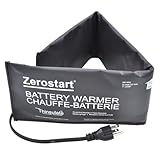
- Thinsulate thermal insulation helps maintain battery temperature in warm or cold weather
- 28" (71cm) length, 5" (12. 7cm) height, 1/2" (1. 1cm) width, complete with 30" (76cm) ground cord for ease of use
- CSA approved blanket warms battery core to 60 Degree - 70 Degree above ambient temperature for quick starts
- Volts: 120 AC, Watts: 50, Plug type: 120 volt, 15 amp
- Fits batteries: Series 22NF, 26, 26R, 51, 51R, 70
In Argonne AMTL test data reported by the DOE, preconditioning was associated with 9%–20% lower energy consumption in a 7.5-mile regulatory city cycle at 20°F. That is a specific short-trip test result, not a guaranteed saving on every journey. See the DOE program record.
Use heated seats or a heated steering wheel when they meet your comfort needs
Localized heat warms occupants without relying as heavily on warming all the air in the cabin. The DOE technical record reports approximately 50 W per heated seat, compared with 2,000–4,000 W for convection-based cabin HVAC in its discussion. These are technology figures cited in that record, not power-use guarantees for every vehicle. Keep the cabin warm enough for comfort and use defogging or defrosting as needed for clear visibility.
What’s actually slowing this PC down?
Pick the symptom - the matching free tool is one click away.
Rank #3
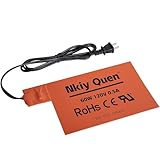
- Efficient Heating:Features built-in precision heating wires that quickly generate uniform heat, directly acting on the bottom of the battery to effectively enhance battery activity in low-temperature environments, ensuring stable cold start current and preventing vehicle start-up difficulties caused by severe cold weather.
- Constant Temperature:Built-in thermostat automatically cuts off power when the overall temperature reaches approximately 122°F, preventing overheating and potential battery damage. Temperature may rise briefly during the heating process due to rapid heat transfer, and requires 15-20 minutes of continuous heating for the most accurate temperature. Due to the difference in the distribution of the heating wire, there may be a slight temperature difference between different locations. The thermostat is constructed with secondary insulation, resulting in a delay in heat transfer.
- Safety Specifications:The silicone heating pad measures 8.2 inches × 5.5 inches. Its ultra-thin design allows it to seamlessly integrate into the bottom of most battery trays or battery boxes without occupying additional space. No modifications to the installation structure are required—simply place it and use it.
- Quality Material:The outer layer is made of high-quality orange silicone, which is soft, wear-resistant, and resistant to battery acid corrosion. It also has excellent insulation properties to prevent electrical leakage hazards and is suitable for a variety of complex working conditions.
- Easy Installation:Simply place it directly under the battery, connect it to a 120V AC power source, and it will start working. Be sure to unplug it promptly after use. Please note: This product is not suitable for lithium-ion batteries, nickel-cadmium batteries, ABS battery cases, or insulated battery boxes.
Understand the car’s heating system
A heat pump can use less energy than radiant or resistance heating in many conditions. In the vehicles described in a 2024 DOE program record, BEVs with heat pumps were reported as 3–4 times more efficient than BEVs with radiant heating. The same record says heat pumps become less effective in extreme cold, and some vehicles supplement them with resistance heaters. It is a result for the tested vehicles, not a universal comparison across all cars. See the DOE technical record on cold-weather range and heating.
Plan for the route and weather, not just the displayed estimate
Leave a margin when cold, highway speeds, elevation changes, cargo, or weather could raise energy use. The DOE Alternative Fuels Data Center identifies extreme temperatures, higher highway speeds, rapid acceleration, heavy loads, and steep climbs as factors that can reduce range: Alternative Fuels Data Center: Electricity and vehicle range factors.
Rank #4

- Widely Used: Applicable to a variety of vehicles, especially in cold regions. Keep the battery warm to maintain the available cold cranking current required during cold weather
- Thermostatic Control Technology: Just plug into 120V AC for 10-30 mins and this pad starts to works. Built-in Thermostat is set to Turn Itself off at 68°F ( + - 10 degrees), safe and reliable, ensuring that the temperature stays within the proper range
- High Performance: 60 watts of power, 120 volts, fast and even heating, ensuring normal startup in cold environments and preventing low temperatures from affecting device performance
- Strong Durability: Covered with silicone coating, it has excellent durability and flexibility to adapt to various complex environments. Long-term use is not easy to deformation or damage, long service life
- Easy to Use: Plug and play design, no need for complex tools or wiring modifications. Convenient to use, save time and effort
On a longer winter drive, set your charging plan for the conditions and trip distance rather than assuming an ordinary commute’s charge needs will be enough. Charging behavior and cold-weather guidance differ by vehicle and charger, so follow their instructions.
Independent reader supportYour contribution helps us test, update, and keep practical guides available for everyone.When is a charging-port cover useful?
If you charge outdoors, a magnetic inlet cover or bag can help protect an exposed connector from freezing in heavy snow or sleet, according to DOE winter guidance. It protects the charging connection; it does not extend driving range. Check compatibility with your vehicle before buying one. The DOE guidance also discusses preconditioning: DOE: Winterizing your electric vehicle.
Crashes, No Sound, or Screen Glitches?
Random freezes, missing sound and display glitches usually trace back to one bad driver. Find and replace yours safely.Free scan · under a minuteWindows Errors? Fix Them Before They Spread
Repair common Windows errors and clear accumulated junk for a smoother, more stable PC - no reinstall needed.Free scan · no reinstallBest Value
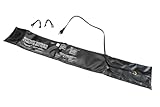
- Product Type:Auto Accessory
- Item Package Dimensions:4.826 cm L X 14.224 cm W X 27.432 cm H
- Item Package Weight:0.34 kg
- Country Of Origin: China
What to compare when choosing an EV for winter driving
- Heating system: Check whether the car has a heat pump, resistance heating, or both, and how the system behaves in extreme cold.
- Occupant heat: Look for heated seats or a heated steering wheel if you want localized warmth.
- Preconditioning controls: Confirm whether the vehicle can condition the cabin and battery while plugged in, and how scheduling works.
- Your regular conditions: Consider temperatures, trip length, highway speeds, elevation, cargo, and access to charging when evaluating your needs.
- Outdoor charging: If the connector is exposed to snow or sleet, consider connector protection for that purpose—not as a range accessory.
There is no single cold-weather range-loss percentage or habit that applies to every EV. Model-specific guidance belongs in the current owner’s manual, while the published test figures are useful reference points for their stated conditions.
Quick Recap
Product prices and availability are accurate as of the date/time indicated and are subject to change. Any price and availability information displayed on Amazon at the time of purchase will apply.




