Gordini is Renault’s historic performance and competition identity. On a Renault, the name signals that a normal production car was given serious sporting engineering associated with Italian-born tuner and racer Amédée Gordini. The badge does not describe one engine layout or a single trim level: it represents factory-backed tuning, meaningful mechanical upgrades and an ambition to bring competition-style performance to ordinary-road buyers.
What the Gordini name means
Amédée Gordini was an Italian-born constructor, engine tuner and former racing driver. Renault’s histories place his sporting partnership with the company in the late 1950s: Renault says he joined its motorsport work in 1958, while the company’s Dauphine history describes him beginning work with Renault in 1957. His ability to extract speed and reliability from modest engines earned him the nicknames “the wizard” and “the sorcerer.”
As an Amazon Associate I earn from qualifying purchases.
In practical terms, a Gordini was a Renault production model developed with competition in mind. Gordini and Renault worked on engines, gearboxes and race preparation rather than simply adding visual trim. That is why the name carries more weight than a stripe package. It identifies a performance philosophy: take an accessible Renault, improve the parts that determine speed and control, and make the result usable on the road as well as credible on a circuit.
Renault’s own description captures the historical significance: “By giving the Gordini name to a sporty version of a production model, Renault made advanced performance affordable a decade before the GTI phenomenon took off.” The wording matters because Gordini predates the later hot-hatch formula. It belongs to an earlier period when a small saloon or family car could become a serious enthusiast machine without being transformed into an exotic.
#1 Best Overall
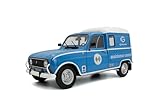
- SOLIDO BRAND QUALITY: Solido is known for producing high-quality diecast model cars with exceptional detail, durable construction, and accurate representations of real vehicles. Each model is crafted with precision and built to last.
- RENAULT OFFICIALLY LICENSED MODEL: This Renault 4LF4 Gordini Service vehicle replica is produced as an officially licensed Renault model. It represents the support vehicle used by the Gordini racing division during the 1970s, reflecting Renault’s motorsport heritage and the role of service vehicles in rally and racing operations. Official licensing allows Solido to reproduce Renault trademarks, body design, and historical markings associated with the Renault 4LF4 Gordini Service vehicle.
- FEATURES & DETAILS: This 1:18 scale Renault 4LF4 Gordini Service model measures approximately 8 inches in length and reproduces the compact proportions of the classic Renault 4 utility vehicle. The diecast replica features opening front doors that reveal interior details including seating and dashboard elements. Finished in the blue Gordini Service livery representing the 1976 support vehicle, the model is designed for display and does not include a separate display base.
- TOP QUALITY MATERIALS: Produced using a diecast metal body with carefully molded plastic components, this model provides durability while maintaining fine visual details. The paint finish and Gordini Service graphics are applied to reproduce the appearance of the real support vehicle. Exterior body lines, interior elements, and wheel details demonstrate Solido’s approach to creating collectible diecast replicas with recognizable automotive styling.
- COLLECTIBLE DISPLAY ITEM: Designed for collectors aged 14 and above, this Renault 4LF4 Gordini Service model is intended as a collectible display piece rather than a toy. Its historic service livery, detailed craftsmanship, and accurate scale proportions make it an appealing addition to classic car or motorsport collections. This diecast model also makes a thoughtful gift option for Renault enthusiasts and collectors of historic automotive vehicles.
How Amédée Gordini’s work became a Renault identity
Gordini’s contribution was not limited to one famous model. His tuning background connected road cars, rallying and circuit racing. Renault used that expertise to develop sporting derivatives that retained the basic practicality and affordability of their production counterparts.
The relationship also explains why “Gordini” can appear on cars with different layouts. The badge follows the engineering intent and the partnership with Gordini, not a permanent rule such as rear-wheel drive, front-wheel drive or a particular engine position. The Renault 8 and Renault 12 demonstrate that change clearly.
Dauphine Gordini: the first production expression
Renault says Gordini worked on the Dauphine’s engine and gearbox, producing the Dauphine Gordini that was shown at the 1957 Paris Motor Show. The Originals Renault Museum records 178,223 Dauphine Gordini units built from 1961 to 1968. Its listed specification is an 845 cc four-cylinder engine, 38 hp, a 126 kph top speed and rear-wheel drive.
Those figures look modest by modern standards, but the context is important. The Dauphine was a light, affordable rear-engined car, so improving its power delivery and transmission could produce a noticeably more sporting driving experience without requiring a large engine. Gordini’s work made the car a recognizable performance derivative while preserving the compact format that made the Dauphine accessible.
The 178,223 figure refers specifically to Dauphine Gordini production recorded by The Originals Renault Museum on its 2026 page. It should not be confused with total Dauphine production: Renault Group gives more than 2.1 million Dauphines across all versions.
Rank #2

- 1/24 car in metal
- Vehicle screwed on base, in blister: no box
- A great gift idea!
Renault 8 Gordini: the model that defined “Gorde”
The Renault 8 Gordini, launched in 1964, is the model most closely associated with the name. Renault describes it as a rear-engined, rear-wheel-drive saloon with 95 hp. The car also received redesigned drivetrains and improved braking, making the upgrades functional rather than cosmetic.
Its blue body and twin white stripes became the visual shorthand for Gordini. The appearance helped create a strong enthusiast identity, but the mechanical specification is what made the car significant. A family-sized production saloon was prepared to deliver the responses and durability expected of a competition-derived car.
Do these 3 things before closing this tab:
1Clear out junk files and repair common Windows errors2Fix the driver behind crashes, sound loss and screen glitches3Repair Windows errors before they cause bigger problemsThe later 1,300 cc version
The later 1,300 cc Renault 8 Gordini added a five-speed gearbox and reached a maximum speed of 175 kph. Renault’s heritage specification presents those changes as part of the model’s development, not as optional decoration. The extra ratio in the gearbox helped the engine stay in a useful part of its rev range, while the higher output and improved braking made the car better suited to fast road driving and organized competition.
Why the R8 became a cultural icon
The R8 Gordini was small, visibly distinctive and attainable compared with purpose-built racing machinery. Owners could recognize one another by the blue paint and white stripes, while drivers could use the same basic car for everyday travel and amateur competition. That combination turned “Gorde” into an enthusiast shorthand and gave Renault a durable performance image.
Renault 12 Gordini: the philosophy changes layout
The Renault 12 Gordini carried the blue-and-white identity into a newer architecture. Unlike the rear-engined, rear-wheel-drive Renault 8, the Renault 12 Gordini used a front-mounted engine and front-wheel drive. Renault presents it as more powerful, more reliable and safer, showing that Gordini described a development philosophy rather than a fixed mechanical recipe.
Rank #3

- SOLIDO BRAND QUALITY: Solido is known for producing high-quality diecast model cars with exceptional detail, durable construction, and accurate representations of real vehicles. Each model is crafted with precision and built to last.
- RENAULT OFFICIALLY LICENSED MODEL: Officially licensed Solido replica of the 1975 Renault 4LF4, finished in White and reproducing the distinctive appearance of Renault's compact light commercial vehicle.
- FEATURES & DETAILS: 1:18 scale diecast model featuring opening front doors, directional wheels, White exterior finish and styling based on the original 1975 Renault 4LF4 panel van.
- TOP QUALITY MATERIALS: Diecast metal body with molded plastic components, detailed interior, White paint finish, reproduced trim, wheels and exterior styling matching the original vehicle.
- COLLECTIBLE DISPLAY ITEM: Designed for collectors ages 14 and up. Intended for display by Renault enthusiasts, automotive collectors and diecast model fans, making an excellent gift choice.
This change is one of the best ways to understand the badge. A buyer should not assume that every Gordini has the same driving characteristics. The R8’s rear-engine layout gives it a very different weight distribution from the R12’s front-engine, front-drive arrangement. What links them is the attention to performance engineering and the connection to Renault’s competition program.
Free tools Windows power users keep installed
One-click scans. No signup required.
Link to Formula Renault
Renault’s motorsport history links the Renault 12 Gordini engine to the first Formula Renault cars and to the first French Formula Renault championship in 1971. That connection shows how road-car development and single-seater racing informed one another. The Gordini name therefore belongs not only to showroom models but also to the technical pipeline that fed Renault’s junior formula racing.
Key Gordini models at a glance
| Model | Period or status | Engine and output stated by Renault sources | Engine position and driven wheels | Notable engineering or role |
|---|---|---|---|---|
| Dauphine Gordini | Shown in 1957; production recorded from 1961–68 | 845 cc four-cylinder, 38 hp | Rear engine, rear-wheel drive | Gordini work on the engine and gearbox; 126 kph top speed; 178,223 units recorded by The Originals Renault Museum (2026) |
| Renault 8 Gordini | Launched in 1964 | 95 hp; later version with 1,300 cc engine | Rear engine, rear-wheel drive | Redesigned drivetrains, improved braking, blue paint and twin white stripes; later version used a five-speed gearbox and reached 175 kph |
| Renault 12 Gordini | Successor to the R8 Gordini | More powerful than the preceding model; exact output not stated in the cited material | Front engine, front-wheel drive | Renault describes it as more powerful, reliable and safer; its engine was linked to early Formula Renault cars |
| Renault 8 Gordini Concept | Modern all-electric heritage concept | Electric specification not stated in the cited release | Not stated in the cited release | Exploratory design inspired by the historic R8 Gordini; no series-production or retail-launch date announced |
What made a Gordini different from an ordinary Renault?
The exact parts varied by model, but the documented upgrades fall into several categories.
Engine preparation
Gordini’s work began with extracting more useful performance from engines such as those in the Dauphine and Renault 8. The R8’s 95 hp and the later 1,300 cc version’s higher-speed capability illustrate the progression. The available specifications do not establish every internal change, so it is more accurate to describe the cars as engine-tuned and competition-oriented than to assign undocumented camshafts, compression ratios or fuel systems.
Gearbox and driveline development
Renault specifically records Gordini work on the Dauphine’s gearbox, redesigned drivetrains on the R8 Gordini and a five-speed gearbox on the later 1,300 cc R8. These details matter because acceleration and high-speed usability depend on how effectively the engine’s output reaches the wheels.
Rank #4
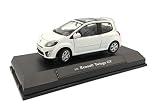
- Scale 1:24
- Metal vehicle
- With opening parts
Braking and control
The R8 Gordini received improved braking. That is a crucial distinction between a genuine performance derivative and a standard car wearing sporty graphics: extra speed must be matched by the ability to slow repeatedly and safely.
Competition preparation
Gordini versions were intended to work in a competition environment as well as on public roads. Renault’s use of the cars in one-make racing made that purpose visible to customers. The road car was not merely inspired by racing; it provided a practical route into organized motorsport.
Independent reader supportYour contribution helps us test, update, and keep practical guides available for everyone.The Renault 8 Gordini Cup and enthusiast culture
Renault says the R8 Gordini’s popularity led to the Renault 8 Gordini Cup in 1966, an early one-make racing series. A one-make format places drivers in closely related machinery, making preparation, racecraft and driver ability more important than buying a fundamentally different car. For Renault, it also created a direct link between showroom customers and factory-supported competition.
The Cup strengthened the badge’s cultural meaning. Blue paint and white stripes were not just period styling; they became symbols of a community built around affordable racing. That heritage helps explain why the name still attracts attention when Renault revisits the R8 design language.
Outdated Drivers Are Slowing You Down
One free scan finds every outdated or missing driver and matches the right update for your exact hardware.Free scan · exact hardware matchPC Slower Than It Used to Be?
A free scan shows the junk files, broken settings and background clutter dragging Windows down - then fixes them in one click.Free scan · Windows 10 & 11Is Gordini Renault’s version of Abarth?
The comparison is useful only at a broad level. Both names are associated with performance versions of mainstream cars and with a founder or specialist whose tuning work became part of a manufacturer’s sporting identity. Gordini, however, specifically refers to Amédée Gordini’s Renault partnership and to Renault’s own competition-derived production cars.
Best Value

- 1/24 car in metal
- Vehicle screwed on base, in blister: no box
- A great gift idea!
It is therefore better to treat Gordini as a Renault heritage identity than as a universal badge category. The name does not guarantee one drivetrain, one body style or one level of equipment. To understand a particular car, check its model, generation and documented mechanical specification.
How to tell whether a Gordini claim is meaningful
Paint and stripes are associated with the R8, but appearance alone does not establish the identity of a historic car. When evaluating a period Renault described as a Gordini, separate visual clues from evidence of the underlying specification.
- Identify the exact model and generation, because Dauphine, R8 and R12 Gordinis have different layouts and equipment.
- Check the engine displacement and output against the period specification. The cited figures include 845 cc and 38 hp for the Dauphine Gordini, 95 hp for the R8 Gordini and a later 1,300 cc R8 version.
- Confirm the gearbox and braking equipment, especially on an R8 where the redesigned drivetrain, improved brakes and later five-speed transmission are central to the model’s development.
- Look for period documentation, restoration records and identification details rather than relying on the blue-and-white appearance alone.
These checks do not replace a specialist inspection, but they prevent the common mistake of treating a cosmetic conversion as equivalent to a factory-developed Gordini.
Quick wins for a faster PC:
Repair Windows errors before they cause bigger problemsFix Now →Scan for outdated or missing drivers - takes under a minuteDriver Scan →Are modern Gordini cars still made?
Renault has shown a modern all-electric Renault 8 Gordini Concept. Renault describes it as an exploratory heritage project inspired by the historic R8 Gordini. The cited announcement does not announce series production, a retail version or a launch date.
That distinction is important. A concept can demonstrate how Renault might reinterpret the badge for electric performance without proving that customers can buy a production Gordini today. At present, the modern project is best understood as a design and heritage statement, while the established Gordini production cars are historical models.
Why the badge still matters
Gordini matters because it joined three ideas that rarely appeared together in the 1950s and 1960s: factory-backed engineering, competition credibility and affordability. The Dauphine Gordini established the relationship; the Renault 8 Gordini made it famous through its rear-drive layout, 95 hp, upgraded driveline and distinctive stripes; and the Renault 12 Gordini proved that the identity could survive a move to front-wheel drive.
When you see Gordini on a Renault, read it as a promise of intent rooted in that history. The specific car still requires its own examination, but the name points to Amédée Gordini’s tuning legacy and Renault’s effort to put serious sporting performance within reach of ordinary drivers.
The Tool Desk
Outbyte Driver Updater FREEFix the driver behind crashes, sound loss and screen glitchesFind Drivers →Outbyte PC Repair FREERepair Windows errors before they cause bigger problemsFix Now →Quick Recap
Product prices and availability are accurate as of the date/time indicated and are subject to change. Any price and availability information displayed on Amazon at the time of purchase will apply.




