UTQG means Uniform Tire Quality Grading, the U.S. system that compares passenger-car tires for relative treadwear, wet straight-line traction and resistance to heat. A sidewall marking such as TREADWEAR 220 / TRACTION A / TEMPERATURE A contains three separate ratings—not a prediction of how many miles the tire will last.
How to read a UTQG marking
Look for the three-part UTQG statement on the tire sidewall or its product information:
As an Amazon Associate I earn from qualifying purchases.
| Part | Example | What it compares |
|---|---|---|
| Treadwear | 220 | Relative wear against a government control tire |
| Traction | A | Wet, straight-line braking performance |
| Temperature | A | Resistance to heat generation and heat-related deterioration |
Read each value independently. A high treadwear number does not make a tire automatically better in wet conditions, and a strong traction grade does not tell you whether the tire fits your vehicle or works well in snow.
Windows Errors? Fix Them Before They Spread
Repair common Windows errors and clear accumulated junk for a smoother, more stable PC - no reinstall needed.Free scan · no reinstallOutdated Drivers Are Slowing You Down
One free scan finds every outdated or missing driver and matches the right update for your exact hardware.Free scan · exact hardware matchWhat the treadwear number means
It is a relative index, not a mileage warranty
The National Highway Traffic Safety Administration (NHTSA) uses a control tire rated 100. Under the specified comparison conditions, a tire marked 200 is presented as wearing at roughly twice the control tire’s rate. The number is therefore a ratio for comparison, not a promise of 200,000 miles or any other fixed distance.
#1 Best Overall

- Product Overview: The Fullway HP108 are 205/55R16 91V SL-Standard Load, 4 Ply Rated Performance Tires Manufactured For Passengers
- Driving Conditions: All Season Traction, UTQG 380AA
- Styling and Construction: Four Black Sidewall, Radial Construction, 16 Inch Tires
- Load Index and Speed Rating: Load Index 91 Supports up to 1356 lbs Per Tire and Speed Rating V Certified to 149 mph
- Additional Note: Tires Only - Rims/Wheels Not Included
Actual service life depends on inflation, alignment, rotation, driving style, vehicle loading, road surfaces, climate, maintenance and the tire’s design. Use the manufacturer’s mileage warranty—when one is offered—only as a separate, conditional reference.
What the controlled test tells you
Bridgestone’s tire-selection guidance describes a controlled treadwear test covering 6,000 miles (9,600 km). That test distance is part of the comparison procedure; it is not the expected life of the tire on your car.
Where current treadwear ratings cluster
NHTSA’s current TireWise guidance reports this distribution of ratings:
What’s actually slowing this PC down?
Pick the symptom - the matching free tool is one click away.
Rank #2

- Patented tread pattern: Provides a comfortable and quiet ride
- Efficient fuel-saving tread compound: Offers grip in wet, dry, snow, and ice
- Specially formulated rubber compound and tread features: Low rolling resistance, for eco-friendly driving
- Optimized contact area with the road: Provides reliable tread life
| Treadwear range | Share of tires |
|---|---|
| Below 200 | 15% |
| 201–300 | 25% |
| 301–400 | 32% |
| 401–500 | 20% |
| 501–600 | 6% |
| Above 600 | 2% |
These percentages describe the reported rating population in that guidance, not a prediction for a particular brand or model.
What the traction grade means
Grades from highest to lowest
| Grade | Relative position |
|---|---|
| AA | Highest category |
| A | Second-highest category |
| B | Below A |
| C | Lowest category |
Traction grading measures wet, straight-line braking. It does not grade cornering grip, dry-road handling, hydroplaning resistance, snow or ice performance, or emergency maneuvering. Treat an A or AA as one useful wet-braking comparison rather than an all-purpose handling score.
How common each grade is
NHTSA’s current TireWise figures list 15% of tires as AA, 77% as A, 7% as B and only four tire lines as C. Because most products fall into AA or A, independent wet-braking and handling tests can be important when two candidates share the same letter.
Rank #3

- Enjoy peaceful drives: optimized pitch design guarantees a quiet ride ,enhancing your driving experience. Size: 225/65R17, Tire Only - Wheel/Rim Not Included.
- Premium Quality Backed by 5-Year Warranty: Rigorously tested and protected by 5-Year Limited Manufacturer's Warranty. 50,000 Mile Limited Tread Wear Out Warranty and Three-Year Road Hazard Warranty.
- All-season Performance: M+S Rated for year-round versatility, delivering dependable traction in rain, light snow, and variable road conditions. Featuring circumferential grooves, these four wide drainage channels effectively prevent hydroplaning while delivering dependable traction in all seasons.
- Long-lasting Radial Tire: Features premium rubber compounds and 4-ply radial construction for durable, long-lasting tread life in all seasons. It is specifically engineered to reduce rolling resistance and support better fuel economy.
- Flexible steering & Efficiency : Optimized center rib design provides razor-sharp steering response and exceptional cornering stability for dynamic driving. Symmetrical tread pattern promotes even treadwear, ensuring long-lasting performance and consistent fuel efficiency.
What the temperature grade means
Grades from highest to lowest
| Grade | Heat resistance |
|---|---|
| A | Highest category |
| B | Middle category |
| C | Lowest category |
Temperature grading concerns a tire’s ability to resist heat and heat-related deterioration under the grading system. Sustained heat can accelerate deterioration, so correct inflation, load limits and speed practices still matter regardless of the letter.
Free tools Windows power users keep installed
One-click scans. No signup required.
How common each grade is
NHTSA’s current TireWise distribution is 62% A, 34% B and 4% C. The percentages are a snapshot of reported ratings, not a ranking of every tire’s real-world durability in every climate.
Is a higher UTQG rating always better?
No. “Higher” depends on which part you are comparing and what you need. A larger treadwear number generally indicates greater relative wear resistance in the standardized comparison, while AA is above A for traction and A is above B and C for temperature. Those advantages can involve design trade-offs, and UTQG does not measure comfort, noise, dry handling, snow grip, ride quality or fuel economy.
Rank #4
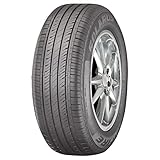
- 50,000 mile warranty
- All-Season Touring Tire
- Ideal for consumers looking for plenty of miles, good traction and fuel economy
- M+S Rated (mud and snow)
- Manufactured by Cooper Tire & Rubber Company
Before comparing numbers, confirm that every candidate is appropriate for your vehicle and use:
- Required tire size and construction
- At least the vehicle’s required load index
- At least the required speed rating
- Season, climate and likely snow or ice exposure
- Wet-braking and handling evidence beyond the UTQG letters
- Expected wear, warranty terms, price and local availability
What UTQG cannot tell you
- Exact tire life: the treadwear number is relative and operating conditions vary.
- Vehicle fit: UTQG does not confirm wheel clearance, size, load or speed requirements.
- Winter capability: the grades do not describe snow or ice traction.
- Cornering performance: the traction test is for wet, straight-line braking.
- Current condition: a sidewall grade cannot reveal remaining tread, uneven wear, damage or tire age.
Inspect the tires themselves and follow the vehicle maker’s replacement specifications. A tread-depth gauge measures the tread that remains today; it does not measure UTQG.
Who assigns UTQG ratings?
Tire manufacturers assign and report the grades within the federal framework. NHTSA sets that framework but does not pre-approve each rating. In its Interpretation 8292, the agency states: “NHTSA neither reviews nor approves the ratings prior to their assignments by the manufacturers.”
Best Value

- Features an all-season tread design
- Sports a black sidewall
- Comes with a 50,000-mile limited manufacturer tread life warranty
- Closed shoulder design helps reduce tread noise for a quieter ride and improves steering response
- Chamfered tread blocks and a reinforced groove base enhance durability and extend the tire's lifespan
That division of responsibility is why UTQG works best as a standardized comparison aid alongside fitment checks and independent performance information, not as a government quality seal.
A practical way to use UTQG when buying tires
- Start with the vehicle specification. Record the exact size, load index and speed rating shown on the vehicle placard or in the owner’s manual.
- Filter for the intended season and climate. Remove options that are unsuitable for your normal snow, ice, heat or rain conditions.
- Compare treadwear within the same type of tire. Use the number to estimate relative wear, never a guaranteed mileage total.
- Use traction and temperature as screening grades. Prefer stronger categories when other requirements and performance evidence are comparable.
- Check evidence outside UTQG. Look for wet braking, handling, snow testing, warranty conditions and reviews that match your vehicle and roads.
- Verify the delivered tire. Confirm the sidewall markings, manufacturing date, size and ratings before installation, then maintain pressure and alignment.
Bottom line on UTQG
UTQG is a three-part comparison label: relative treadwear, wet straight-line traction and heat resistance. Use it to narrow compatible passenger-car tires, but do not convert the treadwear number into miles or treat the traction letter as a complete handling grade. Fit, season, actual condition and performance evidence should decide the final choice.
Quick Recap
Product prices and availability are accurate as of the date/time indicated and are subject to change. Any price and availability information displayed on Amazon at the time of purchase will apply.
Recommended Free Tools




