The Tool Desk
Outbyte Driver Updater FREEFix the driver behind crashes, sound loss and screen glitchesFind Drivers →Outbyte PC Repair FREEClear out junk files and repair common Windows errorsFree Scan →BEV means battery electric vehicle: a car propelled by one or more electric motors using energy stored in a rechargeable battery. You recharge it by connecting the vehicle to an external electricity supply. It has no combustion engine for propulsion.
A conventional hybrid (HEV) combines a gasoline or diesel engine with an electric motor but cannot be plugged in. A plug-in hybrid (PHEV) also combines an engine and motor, but its larger battery accepts external charging and can drive electrically for a limited distance before the engine takes over.
As an Amazon Associate I earn from qualifying purchases.
What is a BEV?
A battery electric vehicle stores electricity in a high-voltage traction battery and sends that energy to electric motor(s). The motor turns the wheels through the vehicle’s drive system; there is no internal-combustion engine supplying propulsion. The United Kingdom Department for Transport defines a battery electric vehicle as “propelled by an electric motor only” and classifies it as “pure electric.” You can read the full definition in the Department for Transport’s vehicle-licensing notes and definitions.
To replenish the battery, a BEV must connect to mains electricity through suitable charging equipment. The U.S. National Highway Traffic Safety Administration likewise describes these vehicles as powered by electricity and plugged in to charge; its overview of electric and hybrid vehicles also explains the safety and charging terminology.
#1 Best Overall

- Flex Level 1 EV Charger - The EVDANCE Level 1 electric car charger is compatible with J1772 electric vehicles and plug-in hybrid vehicles (North American Standard). *Tesla requires a SAE J1772 adapter.
- Convenient to Use - This charger has both NEMA 6-20 plug for 16A 240V charging (3.68kW, 10-12 mi/h) and a NEMA 6-20 to 5-15 plug adapter for 12A 120V charging (1.44kW, 2-5 mi/h). The included bag makes it easier to carry on the go. It also has a 25ft cable length, you can use it flexibly from anywhere in the garage or driveway.
- Check Your Outlet Type -This charger works with standard 120V NEMA 5-15/5-20 outlets (2-5 mph charging speed) and 240V NEMA 6-20 outlets (10-12 mph) . It's not compatible with NEMA 6-15/10-30/14-30/14-50/6-50 outlets – you'll need a NEMA 14-50/14-30/10-30/6-50 to 6-20 adapter (sold separately) to connect.
- Compatible EV Models -This EV charger works with most major electric vehicles, including Ford, Chevrolet, Hyundai, Audi, Nissan Ariya, Rivian R1S, Kia, and others. However, it's not compatible with Mini Cooper Electric Hardtop,Toyota Prus Prime/Z4X/RAV4Prime, Porsche Taycan Base/4S/Turbo/Turbo S or Tesla models (Tesla requires a J1772 to Tesla Adapter, sold separately). For a full list of compatible models, check out the Full Compatibility List on our product page.
- Indication Displays - LED display that can tell you the status as well as indicate errors while charging your electric vehicle.
“Electric vehicle” is sometimes used as a broad label for several electrified powertrains. In a technical comparison, define the term as BEV (all-electric) or specify HEV or PHEV so readers know whether an engine is present. The U.S. Department of Energy’s Alternative Fuels Data Center uses “all-electric vehicle” for the BEV category in its electric-vehicle reference.
How a conventional hybrid (HEV) works
A conventional hybrid, abbreviated HEV, has both a combustion engine and an electric motor. Its battery is relatively small compared with a BEV’s and is charged while driving rather than from a plug. The engine can run a generator or drive the wheels, while the motor assists during acceleration and may move the car by itself under limited conditions.
Energy normally lost while slowing is captured through regenerative braking and sent back to the battery. The engine can also replenish the battery. Because the vehicle carries an engine and fuel tank, an HEV continues operating at a fuel station even when its battery’s usable charge is low. The U.S. Energy Information Administration explains that an HEV battery is charged by the engine and regenerative braking, not by an external cable, in its transportation energy overview.
Recommended Free Tools
What “hybrid” means in an advertisement
“Hybrid” on its own usually means an HEV, but the word is not precise in every market. Some sellers use “hybrid” as an umbrella term for HEVs and PHEVs. Check the specification sheet for a charging port and for an explicit PHEV designation. If there is no external charging connection, it is the conventional HEV type described here.
Rank #2

- 【Efficient Charging】VDLPOWERVP level 2/level 1 EV charger is equipped with NEMA 6-20 Plug(220V/240V), it offers 16A current and up 3.5kW output. Two charging options, low current charging can effectively reduce battery wear and prolong service life. Choosing to connect the conversion line for charging can realize a full day's commute mileage in one night.
- 【Level 1 & Level 2 EV Charger Adapter】This portable ev charger is equipped with NEMA 6-20 plug (Level 2, 240V, 16A) and NEMA 5-15 adapter (Level 1, 110V, 12A), you can connect our electric vehicle chargers to a standard household socket or a dedicated industrial socket, use it flexibly from anywhere in the garage or driveway.
- 【Intelligent Charging-Durable and Safe】The intelligent chip design of its control box can keep monitoring the charging status at any time, provides multiple safety protections such as lightning protection and leakage protection. This electric vehicle charger is made of premuim and sturdy materials and is FCC certified. EV Control box is IP65 waterproof and dustproof.
- 【Easy Charging and Indication Displays】Just connect to the outlet and the car, the ev charger can work properly. LED indicators that can tell you the status as well as indicate errors while charging your electric vehicle. It can help you get the charging station status information quickly.
- 【Portable Design】The ev charger has a 20ft charge cable, which is long enough for you to charge without getting tangled.The appropriate cord length and weight allow you to easily put it in the trunk of an electric car whether you are visiting friends or renting a vacation house.
How a plug-in hybrid (PHEV) works
A plug-in hybrid electric vehicle, or PHEV, combines a combustion engine, an electric motor and a battery that can be charged from an external source. Its battery is generally larger than an HEV’s, allowing a stated electric-only driving range. The car can then blend electric power and engine power or operate the engine after the available electric range has been used.
The U.S. Energy Information Administration describes the sequence plainly: a PHEV runs on electricity for a certain range and then switches to its internal-combustion engine when the battery is depleted. That transition is the defining practical difference from a BEV. A PHEV still needs fuel for trips that exceed its electric range, and its gasoline-mode efficiency is not the same as its electric-mode result.
Two operating modes mean two sets of figures
For a PHEV, do not treat one advertised efficiency or range number as universal. The Environmental Protection Agency’s PHEV label guide shows separate information for electric operation and for gasoline operation after the battery has been emptied. Look for:
What’s actually slowing this PC down?
Pick the symptom - the matching free tool is one click away.
- Electric-only range or the range available before the vehicle begins relying on its engine.
- Electric-operation efficiency, commonly expressed in an electricity-consumption unit on the local label.
- Gasoline fuel economy after the vehicle enters its engine-powered operating mode.
Those values are model-specific and can vary with equipment, temperature, speed, load and how consistently the owner charges.
Rank #3

- 【Reliable Safety with PBE & LRC Tech】Powered by ELEGRP's exclusive PBE technology, this level 2 EV charger provides reliable protection against surges, leakage, and overloads—trusted by over 300 million households since 2000. The J1772 charger features advanced LRC tech for better conductivity, cooler operation, and stable charging speed
- 【Dual Charging Model】Charging speed depends on your outlet type. Use the NEMA 6-20 plug for Level 2 240V fast charging at up to 3.84kWh (11-14 miles/hr). For slower Level 1 charging 120V, use the included 5-15 adapter, offering 1.44kWh (4-5 miles/hr)
- 【Max 25FT Reach &and IP67 Weatherproof Reliability】 Our 25FT portable cable offers the maximum length allowed by NEC safety standards for garage, wall, or outdoor use. This electric car charger is IP67 waterproof and built for cold weather, from -21°F to 121°F, including heavy rain, or snow
- 【U.S.-Based Expert Support & and 2-Year Warranty】Get real help from our U.S.-based support team, available Mon–Sat (5 AM–3 PM PT) for fast, professional assistance. Every ELEGRP charger is backed by a 2-year replacement warranty, so you can charge your vehicle with confidence
- 【Universal J1772 Compatibility】Compatible with all SAE J1772 certified EVs, BEVs, and PHEVs. For Tesla owners: a J1772-to-NACS adapter (sold separately) may be required. Please verify your car compatibility before purchase and contact our support team with any questions
BEV vs. HEV vs. PHEV at a glance
| Vehicle type | Combustion engine for propulsion? | Can it plug in? | What happens when the battery’s usable charge is depleted? | Can it drive all-electric? |
|---|---|---|---|---|
| BEV (battery electric vehicle) | No | Yes | It must recharge before continuing; it cannot switch to gasoline propulsion. | Yes, for all propulsion. |
| HEV (conventional hybrid) | Yes | No | The engine and hybrid system continue operating; regenerative braking and engine operation replenish the battery. | Sometimes, usually for limited conditions or distance. |
| PHEV (plug-in hybrid) | Yes | Yes | It can use its combustion engine after its electric-only range is exhausted. | Yes, until the vehicle’s electric range or chosen operating strategy requires the engine. |
The table describes the powertrain categories, not the specification of one particular model. A PHEV’s electric range, battery size and fuel economy must be checked on that vehicle’s label and documentation.
How the energy flow differs while you drive
BEV: electricity in, electric drive out
When you connect a BEV, charging equipment transfers electricity to the traction battery. Power electronics regulate that energy and deliver it to the motor when you press the accelerator. During deceleration, the motor can operate as a generator, returning some kinetic energy to the battery. The car remains an all-electric vehicle throughout the trip; there is no engine to start when the battery gets low.
HEV: fuel and braking energy support a smaller battery
An HEV’s control system chooses among engine power, motor assistance and regenerative braking. The battery provides short bursts of electric support and absorbs recovered braking energy. Since there is no plug, the vehicle’s usable electric energy is replenished from fuel burned by the engine and from deceleration rather than from a household or public charger.
Free tools Windows power users keep installed
One-click scans. No signup required.
PHEV: external charging plus a fuel-based backup
A PHEV can begin a trip with energy supplied from the grid, then use its electric motor until the battery reaches the system’s charge-sustaining level. Depending on the design and driving conditions, the engine may start earlier for heating, high power demand or other control requirements. Once the electric-only range is gone, the engine supplies the required propulsion while regenerative braking and engine operation maintain the hybrid battery.
Rank #4
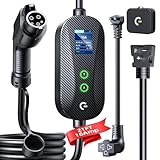
- Universal J1772 EV Charger: Compatible with all J1772-equipped EVs and PHEVs, this portable EV charger seamlessly powers brands like Ford, GM, Nissan, Audi, BMW, Kia, Hyundai, Honda, and Chevy. No more compatibility worries—just plug in and charge confidently. Whether you’re at home or on the road, this versatile electric car charger ensures your vehicle is always ready to go
- Smart Charging, Your Way: Customize your charging experience with adjustable current settings (8A, 10A, 12A, 16A) and a flexible 0–12H delay timer. Simply press and hold the “A” or “T” button for 3 seconds to start the adjustment, then press briefly to select, and finally hold again for 3s to confirm. The bright LCD screen displays real-time data like voltage, current, and power, putting you in command. Note: Once charging has started, the settings cannot be adjusted. You will need to stop charging before making any changes
- Plug Anywhere, Charge Anytime: No matter where you are, power up confidently. Supports NEMA 5-15 / 5-20 (120V丨8-12A) and NEMA 6-20 (240V丨8-16A) outlets—ideal for home, garage, or road trips. Compact and portable, it’s the perfect balance of power and freedom
- Safety You Can Trust: Built with triple overcurrent protection, a fireproof PC shell, and an IP67 waterproof rating, this portable EV charger ensures safety in any condition. It operates reliably in temperatures from -22°F to 122°F, so you can charge worry-free, rain or shine. Trust in advanced engineering that puts your safety first—because every charge should be secure
- 2-Year Professional Care & Support: If any compatibility or operational issues arise, contact the Grasside Team via Amazon Message Center for a prompt response within 12 hours. Backed by a 2-Year Grasside Care, this J1772 charger offers long-term support and peace of mind
What happens when the battery is “empty”?
The word “empty” refers to the vehicle’s usable operating window, not necessarily every electron in the pack. The distinction matters because the three categories respond differently:
- BEV: A low state of charge triggers warnings and eventually prevents normal driving. You must connect to a compatible charger; there is no onboard gasoline engine to extend the trip.
- HEV: A low displayed battery level does not strand the vehicle. The engine continues to provide power and the hybrid system manages the battery, including through regenerative braking.
- PHEV: After its electric range is consumed, it behaves as a hybrid and uses fuel. It can still recover braking energy and use the battery for assistance even though it is no longer operating in its initial charge-depleting electric mode.
These behaviors are why a PHEV is not simply a BEV with a bigger range and why an HEV is not a vehicle that can be charged at a parking-space outlet.
Independent reader supportYour contribution helps us test, update, and keep practical guides available for everyone.How to compare a specific model correctly
Powertrain labels tell you the category, but they do not tell you whether a particular car suits your routes. Use the vehicle’s official label and manual in this order:
Quick wins for a faster PC:
Fix the driver behind crashes, sound loss and screen glitchesFind Drivers →Repair Windows errors before they cause bigger problemsFix Now →Scan for outdated or missing drivers - takes under a minuteDriver Scan →- Confirm the category. Look for BEV, HEV or PHEV and verify whether an engine is listed.
- Check charging capability. A BEV and PHEV should specify the charging connection and supported charging equipment. An HEV should not claim plug-in charging.
- For a BEV, record the rated driving range and charging information. Treat the rating as a standardized comparison value, not a guarantee for every season, speed or load.
- For a PHEV, record both operating modes. Note the electric-only range, electric efficiency and gasoline fuel economy after the battery is depleted. The EPA label format is designed to present these as separate results.
- Check local conditions. Vehicle labels, terminology, testing cycles and available charging connectors differ by market. Confirm the figures for the country and model year in which you will register the car.
Do not compare a PHEV’s electric-mode result with a BEV’s all-trip result as though they measure the same use case. Nor should you assume that two vehicles with the same badge category have identical range, charging speed or fuel economy.
Best Value
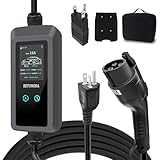
- 2026 CHARGING UPGRADE: The upgraded J1772 charger features four adjustable current levels (8A/10A/13A/16A) and an intelligent delay timer from 1 to 12 hours. Whether you're charging at night or during off-peak hours, you can enjoy smarter energy usage, lower costs, and complete convenience — all on your own schedule.
- ONE CHARGER FOR EVERY J1772 EV/PHEV: Works seamlessly with all SAE J1772 electric vehicles and plug-in hybrids—from Tesla (with adapter) to Ford, GM, Nissan, Audi, BMW, Kia, Hyundai, Honda, Chevy, and more. Ideal for both home and travel, this 16A Level 1 & 2 charger keeps your EV fully charged and ready whenever you hit the road.
- LEVEL 1 & 2 PORTABLE CHARGER ANYTIME: Designed for maximum flexibility, the BETUMODA Level 1 & 2 EV charger features both 5-15 and 6-20 plug compatibility. Whether you're charging at home, at a friend’s house, or on the road, you can stay powered up anywhere. NEMA 6-20 plug for Level 2 EV charging (240V, 16A, 3.68kW, 9–12 miles/hr) and a NEMA 5-15 adapter for Level 1 EV charging . NOTE: The 5-15 adapter is compatible only with 5-15 outlets and should not be used above 16A—protecting both your vehicle and your home’s electrical system.
- COMPLETE CONTROL INSTANTLY: Many EV chargers only show minimal information, leaving you guessing. Our upgraded charger, equipped with a 2.8-inch Touch LED display, provides comprehensive, real-time updates on voltage, current, and power load. The built-in delayed start timer lets you set charging exactly when it’s convenient for you. With just one glance, you can monitor and manage every aspect of your charging session—making each charge smarter, safer, and more efficient.
- BUILT FOR SAFETY AND DURABILITY: Charge with confidence every time. This portable EV charger is equipped with advanced protection features—including overheat, overvoltage, and overcurrent protection—and is FCC and CE certified. Its intelligent control box features a smart monitoring chip to track charging status in real time. With an IP65-rated housing, every charge is safe, reliable, and worry-free.
Charging and daily-use implications
BEV charging
Regular BEV use requires access to external charging. Many owners charge at home using dedicated home charging equipment, while others use workplace or public stations. Installation depends on the property’s electrical capacity, local code, parking arrangement and the equipment’s connector and power rating. A vehicle’s manual and the equipment installer should establish compatibility; a generic household socket may charge more slowly and may not be suitable for continuous high-load use in every installation.
On longer journeys, route planning must include compatible public chargers and time for charging. Because a BEV cannot change to gasoline when its battery is low, the usable charging network and your ability to reach it are part of the vehicle’s practical range.
HEV refueling
An HEV does not require a charging stop or a dedicated parking-space connection. You refuel it like a conventional engine vehicle, while the hybrid system manages its battery automatically. That convenience comes with continued dependence on liquid fuel and engine maintenance.
PC Slower Than It Used to Be?
A free scan shows the junk files, broken settings and background clutter dragging Windows down - then fixes them in one click.Free scan · Windows 10 & 11Outdated Drivers Are Slowing You Down
One free scan finds every outdated or missing driver and matches the right update for your exact hardware.Free scan · exact hardware matchPHEV charging discipline
A PHEV offers its greatest opportunity for electric driving when it is charged regularly. If you rarely plug in, many trips will use the engine and the vehicle’s heavier hybrid hardware may provide less benefit than the label’s electric-mode figures suggest. If you can charge at home or work and most daily trips fit within the electric range, you can use the plug-in capability more often; longer trips retain the engine backup.
“Zero emission” needs a precise explanation
Some official classifications call BEVs “zero emission.” In that context, the phrase refers to tailpipe emissions during vehicle operation: a BEV has no exhaust pipe producing combustion gases. It does not mean that manufacturing the vehicle or generating the electricity has no environmental impact. The Department for Transport’s classification uses “zero emission” in this vehicle-category sense, so do not present it as a full lifecycle assessment.
Which powertrain fits your driving?
Choose a BEV when
- You want propulsion powered solely by electricity and can reliably charge where you park or along your routes.
- Your regular driving can be planned around the vehicle’s rated range and available charging options.
- You accept that a low battery requires charging rather than a fuel stop.
Choose an HEV when
- You want an engine-and-motor system without installing or seeking external charging.
- Your priority is conventional refueling and automatic battery management.
- You do not need meaningful plug-in electric range.
Choose a PHEV when
- You can charge regularly and want electric driving for shorter trips.
- You frequently make longer journeys where an engine backup is useful.
- You are prepared to evaluate two sets of efficiency figures and to use the charging port rather than treating the car as an ordinary HEV.
There is no category-wide “best” choice. The relevant question is whether the vehicle’s charging access, electric range, fuel requirements and local infrastructure match your actual routes.
Common terminology mistakes to avoid
- Calling every electrified car a BEV: A BEV has no combustion engine for propulsion; HEVs and PHEVs do.
- Calling an HEV plug-in: A conventional hybrid recharges through its engine and regenerative braking, not a cable.
- Assuming a PHEV is always electric: It can run electrically, but it is designed to use fuel after its electric range is exhausted or when operating conditions call for the engine.
- Using one PHEV efficiency number: Read the electric and gasoline sections separately on the label.
- Interpreting zero tailpipe emissions as zero lifecycle emissions: Keep the claim limited to operation at the exhaust.
- Applying one model’s range to another: Range, charging performance and fuel economy are vehicle-specific and market-specific.
The short answer
BEV stands for battery electric vehicle. It plugs in, uses an electric motor for all propulsion and cannot switch to gasoline when its battery is depleted. An HEV combines an engine and motor without plug-in charging. A PHEV combines an engine and motor with a rechargeable battery, drives electrically for a stated range and then can use its engine. When comparing cars, verify the exact category, charging requirements and the model’s separate electric and fuel-use figures rather than relying on the word “hybrid” alone.
Quick Recap
Product prices and availability are accurate as of the date/time indicated and are subject to change. Any price and availability information displayed on Amazon at the time of purchase will apply.




