Self-driving taxi operators collect two broad kinds of information: continuous sensor data that lets the vehicle perceive and navigate its surroundings, and rider-and-service data generated when you book, take and manage a trip. The second category can include pickup and drop-off locations, route history, account and payment details, app activity, support communications, and—depending on the operator and circumstances—interior audio or video.
Those practices are not uniform. Waymo, Tesla and Zoox describe different cabin-recording triggers, retention criteria and rider controls. Their privacy notices explain what each company says it does; they are not an independent technical audit of every vehicle or a universal rule for the robotaxi industry.

As an Amazon Associate I earn from qualifying purchases.
The two data layers inside a robotaxi service
A useful way to understand robotaxi privacy is to separate the information needed to drive from the information needed to provide a transportation service.
Quick wins for a faster PC:
Repair Windows errors before they cause bigger problemsFix Now →Fix the driver behind crashes, sound loss and screen glitchesFind Drivers →Clear out junk files and repair common Windows errorsFree Scan →| Layer | Typical information | Why it exists |
|---|---|---|
| Automated-driving data | Lidar returns, camera imagery, radar detections, vehicle position, roadway features and detected sounds such as sirens | To locate the vehicle, perceive traffic and obstacles, predict what may happen and choose a driving action |
| Rider and service data | Account details, booking and trip history, pickup and drop-off locations, route and device location, payment, app and in-car interactions, support communications, and selected audio or video | To request and complete rides, provide support, investigate incidents, secure the service, process payment and improve products |
A single trip can generate both layers at once. The car may be classifying lane markings outside while the app records your destination and payment method. Whether those records are connected to your account, transmitted off the vehicle or retained for a particular period depends on the operator and the type of event.
#1 Best Overall
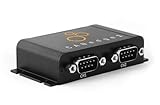
- PLUG & PLAY - configure in 2 mins, then connect & forget (<1W power usage)
- 100% STANDALONE - log CAN data to industrial 32GB SD card for months (no pc needed)
- RTC TIMESTAMP - 50 microsecond resolution time & date added to data
- PRO SPECS - 2 x CAN channels. CAN FD. Filters, transmit lists, silent mode, cyclic logging & more
- OPEN SOURCE GUI/API - powerful tools let you easily DBC convert & create plots
What the vehicle senses to drive
Waymo’s external sensor suite
Waymo describes its Waymo Driver as a combination of lidar, cameras, radar and an artificial-intelligence compute platform. The company says the combined system provides a 360-degree view and uses sensor information to determine where the car is, understand what surrounds it, anticipate what could happen next and select an appropriate action.
Waymo says its external cameras can detect traffic lights, road works and other relevant surroundings. It also describes external audio detection for police and emergency-vehicle sirens, with technical and procedural safeguards intended to limit the collection of human voice data. In an August 24, 2026 privacy post, Waymo said cameras support route mapping, safe service delivery and technology improvement, and stated that they are not used to surveil people or identify individuals through facial recognition or other biometric-identification technologies. That is Waymo’s published policy, not an independently verified assessment of the system.
Tesla’s two categories of external camera recording
Tesla’s Robotaxi notice distinguishes between safety-event recordings and fleet-learning recordings that may be eligible for transmission. Tesla says fleet-learning footage helps it learn roadway features such as lane lines, street signs and traffic-light positions. It also says those recordings are not linked to the rider’s Tesla account. A safety-event recording has a different rationale: preserving information relevant to a crash, dangerous maneuver or other event identified by the service.
Crashes, No Sound, or Screen Glitches?
Random freezes, missing sound and display glitches usually trace back to one bad driver. Find and replace yours safely.Free scan · under a minuteWindows Errors? Fix Them Before They Spread
Repair common Windows errors and clear accumulated junk for a smoother, more stable PC - no reinstall needed.Free scan · no reinstallThe notice also distinguishes information that remains on the vehicle from information shared with Tesla. That distinction matters because “the car captured it” does not necessarily mean “the company received or attached it to your account.”
What external sensing does not tell you
Sensor descriptions explain why the car needs cameras, lidar or radar, but they do not establish how long every raw frame, point cloud or detection is kept. They also do not prove that all operators use the same retention, access or deletion process. Those details must be read in the operator’s current privacy and support materials.
What rider and trip information is collected
Waymo
Waymo’s privacy policy lists geolocation information, including pickup and drop-off points, route details and a device’s location during a trip. It also lists account and contact information, commercial and payment data, app and device activity, communications, information a user supplies, and audiovisual information. From those records, Waymo says it may derive inferences such as frequently visited destinations or suggested pickup and drop-off locations.
Rank #2

- SIMULTANEOUS POWER MONITORING: This current and voltage data logger tracks AC performance in real time, combining a voltage tester and current probe to capture single phase activity, ideal for monitoring compressor and fan run cycles
- ACCURATE VOLTAGE MEASUREMENT: Measures within voltage range 0 to 500 volts AC, delivering consistent readings and supporting stable performance across various electrical monitoring applications
- HIGH CAPACITY DATA RECORDING: This voltage meter and data logger stores up to 10,750 data points for detailed review; Ideal for AC monitoring, it enables long-term tracking and simplifies analysis of electrical system performance
- FLEXIBLE CURRENT DETECTION: Equipped with an external current probe, this device provides accurate current tracking across applications, supporting efficient observation of equipment cycles and operational consistency
- VISUAL ALERT AND CONTROL: Featuring voltage monitor functionality, this device includes over and under alarm indicators for both current and voltage, helping users quickly identify changes during tasks
In practical terms, the service relationship can reveal more than the destination you entered. The account, the phone used to summon the car, the route and previous trips can form a connected history, subject to Waymo’s account and privacy settings.
Recommended Free Tools
Zoox
Zoox’s notice dated August 3, 2026, as summarized in the company’s indexed notice, lists trip history; interactions with its app and in-vehicle interfaces; wait times; pickup, drop-off and route locations; audiovisual and sensor data; device, browser and network information; and support phone numbers. It says information may also come from identity-verification services and publicly available sources. Because the detailed notice text was not fully accessible in the published material available for this article, treat that list as a summary and check Zoox’s current notice for exact wording and exceptions.
Tesla
Tesla says it collects information needed to request and complete rides, determine location, process payment and provide customer support. Its notice also discusses in-vehicle infotainment analytics. Third-party entertainment services in the vehicle are governed by those providers’ own policies, so using an entertainment feature can create a separate data relationship from the ride itself.
| Operator | Rider or trip categories expressly described | Important qualification |
|---|---|---|
| Waymo | Account, payment, pickup and drop-off, route and device location, app/device activity, communications, user-provided and audiovisual information; inferences about destinations | Categories come from Waymo’s privacy policy and vary by feature and interaction |
| Zoox | Trip history, app and in-car interactions, wait times, locations and routes, audiovisual/sensor, device/browser/network and support-phone data; possible identity-verification and public-source data | List reflects the August 3, 2026 indexed notice summary; verify the live notice for detail |
| Tesla | Ride-request and completion data, location, payment, support and infotainment analytics | Notice separates on-vehicle information from information transmitted to Tesla; entertainment providers have separate policies |
When the cabin camera or microphone is involved
Interior recording is one of the biggest differences among operators. A statement that a robotaxi has an interior camera does not answer when it is active, whether a person reviews the result or whether audio leaves the vehicle.
Waymo’s stated cabin uses
Waymo says an interior camera can help support riders, check cleanliness, confirm seatbelt use and locate items left behind. Its rider help information says riders are heard when they are on a support call or when they actively choose to turn microphones on. That description is narrower than a policy of continuously listening to every passenger.
Free tools Windows power users keep installed
One-click scans. No signup required.
Tesla’s stated transmission conditions
Tesla says cabin-camera data is not sent during an active ride unless ride support is initiated, occupancy detection requires it or a safety event occurs. It also describes opt-in sharing for cabin-camera analytics. For sound detection, Tesla says account-associated audio is transmitted when a rider initiates support or when a safety event occurs. Siren detection is processed locally unless the rider opts in to share sound-detection data.
Rank #3

- Real Time measurement: Temp data logger; simultaneous and real time recording of atmospheric conditions with a wide measurement range Temperature: -30 to 70°C (-22 to 158 °F); Humidity 0.1 to 99.9 %; Barometric pressure 300 to 1100hpa (8.9 to 32.5inHg)
- Professional: No extra cable; USB driver no reader is required; Plug in the USB data logger to your computer (must be of Windows OS) and you can easily get a detailed report; in PDF (with graphics) and Excel format; via a built in software
- Customizable: Sampling interval; alarm range; measurement unit and password can be changed as you prefer on computer; The built-in software and reports so generated support 6 different languages (English; German; French; Italian; Spanish and Portuguese)
- Large Storage Capacity: This USB temperature data logger can store up to 16,000 groups of raw data (temperature; humidity and pressure)
- Statistic: Helpful in data comparison of different samples; The Mark function allows you to leave a mark in the midst of the report to signify changes in recording target/environment without need to stop recording; Maximum; minimum and real time modes
Tesla’s notice places responsibility on the rider to confirm that other occupants consent to the relevant collection or sharing. That is especially important when children, colleagues or other passengers are in the car.
Zoox’s incident-review language
Zoox describes audiovisual and sensor data and says recordings may be reviewed in response to emergency, safety or support incidents and reports. The statement describes a review purpose, not a claim that every interior recording is continuously watched by a person.
How companies say they use the data
Driving and roadway understanding
Sensor data can help a vehicle recognize traffic controls, road works, lane lines, signs, other vehicles and emergency sirens. Waymo describes using its sensor information to locate the car, perceive surroundings, anticipate events and choose a driving action. Tesla describes fleet-learning footage for improving recognition of lane lines, signs and traffic-light positions. These are operator-specific descriptions, not proof that every company applies the same algorithms or keeps the same raw records.
Do these 3 things before closing this tab:
1Repair Windows errors before they cause bigger problems2Scan for outdated or missing drivers - takes under a minute3Clear out junk files and repair common Windows errorsBooking and operating the ride
Account, location, route, payment and communications data support the ordinary mechanics of a trip: accepting a request, sending a vehicle to the correct pickup point, navigating to the destination, charging the fare and answering a support question. App and in-vehicle interface activity can show which controls were used or where a rider encountered a problem.
Safety and incident response
Companies describe using relevant information for emergency response, rider assistance, seatbelt or occupancy checks, investigation of collisions and complaints, insurance claims and lost-item or cleanliness issues. Interior footage may therefore be accessed after a reported event even when it was not transmitted as part of ordinary ride activity.
Service improvement and development
Waymo lists research, development, troubleshooting, analytics and product improvement among its purposes. Tesla identifies fleet learning and infotainment analytics. Zoox describes review and use of data in connection with safety, support and service development. The fact that a company lists “improvement” as a purpose does not mean every data type is used for every improvement project; the applicable notice and settings determine the scope.
Rank #4

- Multi-use temperature data logger, 32,000 recording points, with wide measuring range -30℃~70℃ / -22℉~158℉. Up to 6 months battery life, replaceable battery, low power consumption.
- Built-in USB connector, no cable or reader required to download data or generate PDF report.
- Powerful LCD indication, easy to view temperature data, logged points, alarm status, and more key information, etc. Fahrenheit/Celsius switchable through free software.
- IP65 protection grade and temperature alarms, suitable to use on dry ice and vaccine storage, transportation and etc.
- PLEASE EMAIL/MESSAGE US FOR THE CALIBRATION CERTIFICATE. 24/7 US Technician Support via Email and Phone.
Security, fraud and legal obligations
Waymo, Tesla and Zoox disclosures describe business, security and legal uses such as preventing fraud, enforcing service terms, complying with legal obligations and responding to valid government or law-enforcement requests. Waymo’s support information says such requests should follow valid legal processes.
How long is the data kept?
There is no common robotaxi retention period established by the operators’ published materials. Retention depends on the category of information, the reason it was collected, whether an incident or dispute is open, legal requirements and the company’s relationship with the rider.
Waymo says account-associated information such as a name, email address and trip history is retained while the account remains active. It says other information may be kept for legal obligations and business purposes including dispute resolution, investigations, product improvement, safety, fraud prevention and customer protection, with the duration depending on several factors.
Tesla says it retains personal data only as long as necessary for stated purposes or as required by law, considering the use of the data, the relationship with the rider, consent and legal requirements. That is a criteria-based description, not a single number of days.
Who can receive the information, and what can riders control?
Sharing and disclosures
Waymo says it may share information with service providers and disclose it for legal, safety and other listed reasons. It also distinguishes vehicle camera and sensor information from advertising technologies used on its websites and apps: Waymo says it does not sell personal information collected by vehicle cameras and sensors, while its broader web privacy policy discusses advertising-related sharing or sales under certain U.S. state-law definitions. Those are different data contexts and should not be merged.
Tesla’s notice separates data that stays on the vehicle from data sent to Tesla and notes that third-party entertainment services operate under their own policies. Zoox describes information access or review in connection with emergency, safety and support incidents. None of these statements creates a universal rule for all robotaxi operators.
Waymo controls described for riders
Waymo says riders can view or edit trip history, update account information, delete an account, change location permissions, download a copy of personal information and exercise applicable privacy rights. The exact rights and response process can depend on the rider’s jurisdiction.
A practical pre- and post-ride checklist
- Read the operator’s current privacy notice and the cabin-camera or microphone help page, not just the general app summary.
- Check location, microphone, camera and notification permissions on the phone used to book the ride.
- Look for cabin-camera, sound-detection and analytics choices in the app or in-vehicle controls; note whether a setting is opt-in, opt-out or required for a safety feature.
- Tell fellow passengers when a service’s policy places consent responsibility on the rider.
- Use the operator’s account tools to review trip history, correct account details, download data or request deletion where available.
- If a safety or support incident occurs, ask which recordings or trip records are relevant, who may access them and how long they will be retained.
What the published disclosures do—and do not—establish
The operator materials establish categories, purposes and controls in qualitative terms. They do not provide a single industry statistic for how many gigabytes a robotaxi collects, how often a particular camera activates or how frequently a human reviews recordings. No representative figure for all operators or jurisdictions can be inferred from these notices.
They also describe company policy rather than independently testing vehicle behavior. Policies can change with software, service area, local law or a new feature, so the notice that applies to your account and ride is the authoritative place to check current conditions.
Waymo’s August 24, 2026 post summarized its stated data-minimization principle as: “We collect what we need to operate safely and to improve our service.” That sentence expresses the company’s position; it does not by itself define what is necessary, how long each record lasts or how another operator handles the same situation.
Bottom line
A self-driving taxi can collect far more than a conventional taxi receipt: roadway sensor observations, account and payment records, precise trip locations, app and interface activity, support communications and, under specified conditions, interior audio or video. The driving layer exists to perceive and improve navigation and safety; the service layer enables booking, payment, support, security and product development. Because cabin triggers, retention rules, sharing and rider controls differ, evaluate the specific operator’s notice rather than assuming one privacy standard applies to every robotaxi.
Quick Recap
Product prices and availability are accurate as of the date/time indicated and are subject to change. Any price and availability information displayed on Amazon at the time of purchase will apply.




