Recommended Free Tools
A high-pitched squeal that comes and goes while driving is usually linked to the brakes, serpentine-belt system, or a rotating wheel component. The fastest way to narrow it down is to notice what changes the sound: braking, engine speed, road speed, turning, acceleration, or switching on the air conditioning.
Do not diagnose it by pitch alone. A brake wear indicator and a slipping belt can sound surprisingly similar from inside the cabin.
As an Amazon Associate I earn from qualifying purchases.
Start with the timing of the squeal
Before replacing anything, note when the noise appears and disappears. This symptom pattern often tells you which system needs inspection.
What’s actually slowing this PC down?
Pick the symptom - the matching free tool is one click away.
| When the squeal occurs | Most likely areas to inspect |
|---|---|
| Only while braking or lightly touching the brake pedal | Brake pads, wear indicator, rotor surface, debris, clips, or caliper hardware |
| While coasting, but it stops when you apply the brakes | Pad wear indicator or another brake component lightly contacting the rotor |
| For the first few stops after rain or overnight parking | Moisture, surface rust, or cold-brake vibration |
| During acceleration or when the A/C switches on | Serpentine belt, tensioner, idler pulley, or belt-driven accessory |
| At the same road speed regardless of engine RPM | Wheel, brake, tire, or driveline component |
| When turning left or right | Wheel bearing, tire interference, brake shield, or loose hardware |
| Along with a battery light, overheating, or loss of accessories | Serpentine-belt or belt-driven-component failure |
Most common causes
1. Worn brake pads or a brake-wear indicator
Many brake pads have a small metal wear tab. When the friction material becomes thin, the tab touches the rotor and produces a sharp warning squeal. The brakes may still work apparently normally at this stage, so normal stopping performance does not rule out worn pads.
#1 Best Overall
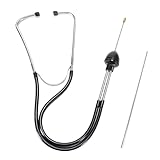
- Accurate Location: The mechanical stethoscope has a sensitive acoustic chamber to pinpoint the source of the noise, helping to accurately locate abnormal engine noise. Suitable for diagnosing valve train, bearings, transmission, gears and other engine problems
- High Quality: The engine stethoscope is made of high quality stainless steel and heavy-duty vinyl tubing, sturdy, reliable, abrasion-resistant, not easy to rupture
- How To Use: mechanical stethoscope probe can pinpoint the source of the sound, earplugs isolate the outside noise, and the audio shock amplifier ball amplifies the sound; simply follow the loudest sound in the engine and make contact between the probe and the surface to confirm it; if you can't detect the problem right away, you can check other places
- Packages Include: this mechanic tools set includes 2 metal probes: 3.3 inch medium needle probe and 8.4 inch extension probe
- Easy Installation: Attach the threaded end of the expansion probe to the centre pin probe of your car's stethoscope, which can be extended to 11.7 inches in length for easy access to hard-to-reach spaces
A squeal that changes or stops when you lightly press the brake pedal is a strong reason to have the pads and rotors inspected. If the sound occurs while driving but disappears with gentle brake pressure, the pad or wear sensor may be moving into a different position against the rotor.
2. Moisture, surface rust, or debris in the brake assembly
Overnight condensation, rain, or washing can leave a thin layer of rust on the rotor. The first few brake applications may produce a squeal or light scraping sound until the pad cleans the surface.
Small stones, sand, or other road debris can also become trapped between the pad and rotor. A bent dust shield or backing plate may rub the rotor intermittently, particularly when the wheel moves or the vehicle travels over uneven pavement.
Noise that disappears after several normal stops is less alarming than a squeal that continues on every trip, but persistent noise still deserves an inspection. Do not spray lubricant on the rotor or brake pad. Contaminating the friction surfaces can reduce braking performance.
Rank #2

- Dual Purpose Set Detects Both Mechanical and Air Induced Sounds
- Use the black diaphragm chamber and screw-in metal probe to detect mechanical sounds from bearings, engines, transmissions, etc
- For air induced sounds, attach the vinyl hose to the hollow tube and funnel assembly
- The funnel amplifier will detect noises from vacuum leaks, exhaust leaks, air leaks and wind noise.
- For hard to reach locations, remove the funnel and use the hollow tube
3. Brake hardware, caliper, or installation trouble
Brake squeal can result from a pad that is not seated correctly, damaged or incorrectly installed clips, missing shims, restricted caliper guide pins, or a caliper that is beginning to stick. A wear sensor can also vibrate against the rotor.
If the noise began immediately after a brake job, return to the installing shop and ask for a complete inspection of the pad fit, clips, shims, guide hardware, rotor condition, and caliper operation. Replacing the pads again may not fix a hardware or installation problem.
A sticking caliper may create more than noise. One wheel can become unusually hot, the car may pull to one side, and a burning smell may appear after driving.
4. Serpentine belt, tensioner, or pulley
If the squeal comes from under the hood and follows engine RPM rather than road speed, inspect the accessory-belt drive. Belt slip is more likely when accelerating, turning the steering wheel, or switching on the air conditioning because those actions increase the load on the belt system.
Rank #3

- Quickly pinpoints the source of noises in engines, transmissions, differentials and bearings.
- Features a super think diaphragm to help pinpoint the source of the noise
- Unique sound chamber amplifies sound
- Hollow tube for effortless functioning in hard-to-reach areas
Possible causes include:
- A worn or contaminated serpentine belt
- Insufficient belt tension
- A weak or damaged automatic tensioner
- A misaligned pulley
- A failing idler-pulley bearing
- A noisy alternator, water pump, air-conditioning compressor, or other belt-driven accessory
Do not assume the belt is healthy because it has no visible cracks. Many newer EPDM belts can lose material and become worn without showing the cracking associated with older belt designs. A technician should check belt condition, alignment, tension, and pulley bearings.
Keep hands, hair, clothing, and tools away from a running engine. Belt noise can be diagnosed safely with the correct procedure, but casual probing near moving pulleys is dangerous.
5. Wheel bearing or another rotating wheel component
A wheel-related noise generally follows vehicle speed, not engine RPM. A worn wheel bearing more commonly produces a hum, rumble, or growl than a sharp squeal, but it remains one possibility—especially if the sound changes as the vehicle turns left or right.
Before condemning the bearing, inspect the brake rotor, dust shield, pad hardware, and tire. A sharp metallic squeal is often caused by brake or shield contact rather than the bearing itself.
Rank #4

- STOP GUESSING ENGINE NOISE: This professional automotive mechanic stethoscope helps you pinpoint the exact source of mysterious engine sounds quickly and accurately. It acts as a powerful engine noise detector and essential diagnostic tool to eliminate costly guesswork before repairs
- FAST & ACCURATE FAULT DETECTION: Effortlessly identify hidden issues in valves, bearings, water pumps, and transmissions. This reliable fault detection device is the perfect vehicle noise detection tool for both professional technicians and DIY car enthusiasts
- CLEAR SOUND AMPLIFICATION & ISOLATION: Designed with a highly sensitive acoustic chamber, this automotive engine diagnostic tool amplifies even the smallest internal vibrations while effectively reducing background garage noise for a crystal-clear diagnosis
- DURABLE AUTO REPAIR DIAGNOSTIC TOOL: Built to last with premium stainless steel and heavy-duty, oil-resistant tubing. This rugged mechanic stethoscope is specifically engineered for long-term, repeated use in demanding real-world garage and shop environments
- EXTENSION PROBE FOR HARD-TO-REACH AREAS: Includes a 12-inch extension probe to safely access tight engine spaces and deep-seated components. This versatile stethoscope with extension probe is ideal for diagnosing problems in cars, trucks, motorcycles, and tractors
6. Tire, fender liner, or body interference
A tire can rub against a fender liner or suspension component during tight turns, over bumps, or when the vehicle is heavily loaded. Look for fresh scuff marks on the tire sidewall, tread edge, inner wheel, or plastic liner.
A loose underbody shield, wheel-well liner, or trim panel can create an intermittent high-pitched rubbing sound as airflow or road movement changes. If the noise occurs only during turns or over bumps, inspect for physical contact rather than focusing only on the brakes.
How to narrow it down safely
- Notice whether the sound follows engine RPM or road speed. If it changes when you rev the engine while stationary, the belt drive becomes more likely. If it follows how fast the car is moving, look at the brakes, wheels, tires, or driveline.
- Apply the brakes gently in a safe, empty area. If the squeal changes immediately, arrange a brake inspection. Do not perform repeated hard stops just to reproduce the noise.
- Observe the effect of the A/C. A squeal that starts or becomes louder when the compressor engages points toward the belt, tensioner, pulley, or accessory load.
- Pay attention to steering angle. A noise that changes during left or right turns can indicate a wheel bearing, tire rubbing, or brake-shield contact.
- Check for visible evidence after the vehicle is parked and cooled. Look for tire scuffs, a loose shield, a damaged belt, or unusual brake dust. Do not touch a wheel immediately after driving; a dragging brake can make it dangerously hot.
- Have the correct system inspected before buying parts. Describe exactly when the noise occurs and whether braking, RPM, A/C use, or turning changes it.
When to stop driving
A squeal by itself may be a minor moisture or brake-vibration issue, but stop driving and arrange prompt professional help if it is accompanied by:
Do these 3 things before closing this tab:
1Scan for outdated or missing drivers - takes under a minute2Clear out junk files and repair common Windows errors3Fix the driver behind crashes, sound loss and screen glitches- Grinding, scraping, or a loud metallic rub
- A soft, low, or spongy brake pedal
- Longer stopping distances
- Pulling to one side while braking
- Brake, ABS, battery, or other critical warning lights
- A burning smell, smoke, or an unusually hot wheel
- Steering-wheel or brake-pedal vibration
- Engine overheating or loss of electrical accessories
These signs can indicate severely worn or overheated brakes, a hydraulic fault, a dragging component, or a belt problem that could leave the vehicle without charging or cooling-system operation.
Best Value

- Pinpoint Engine Issues: This stethoscope helps you diagnose engine problems in valvetrains, bearings, transmissions, gears, and more.
- Two Probes Included: With 80mm and 205mm probes, you can easily locate the source of problem noises throughout the engine.
- High-Quality Tool: Our mechanic's stethoscope meets or exceeds ANSI standards, ensuring reliable and accurate results.
- Easy to Use: Detailed instructions with usage photos are included to help you quickly and easily pinpoint specific engine noises.
- Versatile: This stethoscope is perfect for diagnostic engine work and troubleshooting, making it a must-have tool for any mechanic or DIY enthusiast.
Common assumptions that lead to the wrong repair
- “Any brake squeal means the pads are worn out.” Moisture, surface rust, debris, pad material, cold brakes, and normal pad vibration can also cause it.
- “New brake pads should never squeal.” New pads may make noise during break-in, or because of rotor condition, pad material, hardware, or installation.
- “A serpentine belt is fine if it has no cracks.” Modern belts may wear through material loss without obvious cracking.
- “Replacing the pads alone always fixes brake squeal.” Clips, shims, guide pins, wear sensors, calipers, rotors, or vehicle-specific brake characteristics may be the actual cause.
FAQ
Is it safe to drive with an intermittent high-pitched squeal?
It depends on the cause. A brief squeal after rain may be harmless, but noise with grinding, poor braking, pulling, a hot wheel, burning odor, warning light, or vibration should be inspected immediately and may make continued driving unsafe.
Why does my car squeal when I brake lightly?
Common causes include a brake-pad wear indicator, pad vibration, moisture or surface rust, debris, and brake hardware. Light braking can make certain pad and rotor combinations vibrate more audibly than firm braking.
Why does the squeal get louder when I turn on the A/C?
Turning on the A/C increases the load on the belt-driven compressor. A worn or contaminated serpentine belt, weak tensioner, misaligned pulley, or failing accessory bearing may then squeal.
Can a wheel bearing make a high-pitched squeal?
It can, but wheel-bearing problems more commonly sound like a hum, rumble, or growl that changes during turns. A sharp metallic squeal should also prompt inspection of the brake rotor, dust shield, pad hardware, and tire clearance.
The Bottom Line
The most useful diagnosis is based on what controls the sound: brake pedal, engine RPM, road speed, A/C load, or steering angle. Brake wear and hardware are common when the noise changes with braking; the serpentine belt and pulleys are more likely when it follows RPM or accessory load. If the squeal comes with impaired braking, heat, smoke, warning lights, grinding, or overheating, stop driving and have the vehicle inspected.
Quick Recap
Product prices and availability are accurate as of the date/time indicated and are subject to change. Any price and availability information displayed on Amazon at the time of purchase will apply.




