Free tools Windows power users keep installed
One-click scans. No signup required.
Real-world electric-motorcycle range is the usable energy in the battery divided by the energy your ride consumes. Speed, acceleration, hills, road surface, temperature, weather, rider and cargo weight, tire pressure, regenerative-braking use, and maintenance all change that consumption. A number on a specification sheet is therefore a test result under defined conditions, not a guaranteed distance for every rider.
The most reliable estimate compares the motorcycle’s test method with your own average speed, route, weather, load, and state of maintenance. No single percentage reduction or universal calculator applies to every electric motorcycle.
As an Amazon Associate I earn from qualifying purchases.
What an electric motorcycle range figure actually means
Range is an energy-budget question. The battery can supply only a finite amount of usable energy, while every kilometre requires energy to move the motorcycle, rider, and cargo against air resistance, rolling resistance, hills, and repeated acceleration. Accessories and auxiliary systems also draw from that same battery. A ride that demands energy quickly reaches the battery’s usable limit sooner than a slower, smoother ride over the same distance.
Do these 3 things before closing this tab:
1Clear out junk files and repair common Windows errors2Fix the driver behind crashes, sound loss and screen glitches3Repair Windows errors before they cause bigger problemsManufacturers publish a maximum or test-cycle range to make models comparable. That result is tied to a procedure, speed profile, temperature, rider or test load, and route assumptions. It does not describe every combination of traffic, weather, terrain, and rider behaviour. A manufacturer help centre summarizes the issue plainly: published maximum-range figures and real-world results can differ significantly. Read that warning as a description of test conditions, not as evidence that a particular motorcycle will always fall short by a fixed amount.
#1 Best Overall

- PRO ACCURACY - mechanic recommended, performance tested, & calibrated accurate to professional ANSI 2A standards - with dual pressure sensors certified to ±0.50% FS (0.50 PSI), offering reliable readings up to 100 PSI w/ precise readout resolution of 0.10 PSI - so you can now maintain your tires with a shop-grade mechanic trusted tool
- STRONG & RUGGED - feels solid in the hand & built to last from 100% solid brass & steel parts shielded by our shock-resistant gear-style protective guard to protect against drops & impact. Features ultra soft & strong 10" fully rotational, leak-proof HybridFlex air hose w/ 360 swivel angled air chuck that can be swapped out w/ any 1/4" NPT chuck
- ADVANCED ENGINEERING - all readings lock-on to the display until the "ON" button is pressed once to reset to zero. Features built-in air bleeder valve that bleeds pressure in real time without needing to reset the display - ideal for cars, trucks, motorcycles, bikes, RV & trailers, spare tires, and much more
- SMART DISPLAY - features high-resolution digital 2.5 inch LCD display screen w/ battery life indicator & bright LED backlight for high visibility in the dark. Gauge is programmed to auto shut-off after 150 seconds of inactivity to save battery (2x AAA batteries included)
- 100% Lifetime Warranty by JACO - serving the automotive industry for 35+ years. Enjoy longer-lasting tires, improved fuel economy, and superior vehicle performance & handling with properly inflated tires.
For planning, treat the advertised number as a reference point. Then adjust your expectations using the variables below and leave a reserve for an unplanned hill, detour, cold weather, or a charging stop that is unavailable.
Speed, acceleration, and riding smoothness
Why high speed uses energy quickly
Air resistance rises sharply as speed increases. The motor must deliver more power to overcome it, so a motorcycle ridden near its top speed can consume energy much faster than one moving through slower urban traffic. Electric Motion’s 2026 user and maintenance manual lists high-speed travel as a lower-range condition. Maeving likewise says that its RM2 can travel farther in slow-moving city conditions than when ridden at top speed or over hilly terrain.
Neither source supplies one universal reduction for a particular speed. The effect depends on the motorcycle’s aerodynamics, gearing, motor map, battery, rider position, and route. Do not turn a single model’s experience into a rule such as “doubling speed halves range.” Instead, compare the expected average speed and the amount of sustained high-speed riding with the conditions behind the published figure.
PC Slower Than It Used to Be?
A free scan shows the junk files, broken settings and background clutter dragging Windows down - then fixes them in one click.Free scan · Windows 10 & 11Crashes, No Sound, or Screen Glitches?
Random freezes, missing sound and display glitches usually trace back to one bad driver. Find and replace yours safely.Free scan · under a minuteAcceleration, stops, and smooth control
Repeated hard acceleration converts battery energy into speed and then often into heat in the brakes or motor. Stop-and-go traffic can therefore consume more energy than a steady ride, even when the average speed is low. Electric Motion identifies aggressive driving as a lower-range condition and says that smoother driving increases range. Its manual states: “The smoother the driving, the greater the vehicle’s range.”
Use progressive throttle inputs, anticipate traffic lights, and maintain a steady pace when conditions allow. Regenerative braking can recover some energy during deceleration, but the amount depends on the motorcycle’s control system and the way it is used. Electric Motion lists regenerative-braking actions among the factors affecting range; the manual does not provide a universal recovery percentage. Regeneration cannot return all the energy spent accelerating, so it should be treated as one part of a smooth riding technique rather than a guarantee of extra distance.
Rank #2

- 90 degree head for those difficult to access valve stems.
- High quality all metal construction.
- 5-50psi (50-300kPa) readout.
- Made by Counteract Balancing Beads.
- Packaged individually. Custom red head with black anodized body with Counteract engraving.
Route, hills, road surface, and weather
Elevation and gradients
Climbing converts battery energy into gravitational potential energy. A route with repeated climbs can use substantially more energy than a flat route of the same map distance. Electric Motion’s manual places high elevation on the lower-range side of its comparison, while Maeving specifically warns that hilly terrain can drain the RM2’s batteries faster. Descending can return some energy through regeneration, but losses in the motor, inverter, battery, and tires mean the climb’s energy is not recovered completely.
Road condition and surface
Uneven, soft, or damaged surfaces increase rolling resistance and may force frequent speed changes. The Electric Motion manual lists bad road conditions as a lower-range condition and good road conditions as a higher-range condition. A route planner that shows only distance can miss this difference: two 40-kilometre routes can demand different amounts of energy if one is smooth and level while the other is rough and hilly.
What’s actually slowing this PC down?
Pick the symptom - the matching free tool is one click away.
Weather and wind
Weather affects range through temperature, road wetness, visibility, traffic, and the rider’s need to change speed. The Electric Motion manual includes weather conditions among its range factors and associates bad weather with lower range. Headwind is a plausible contributor because it increases the air speed over the motorcycle, but the cited manual excerpt does not quantify a separate wind penalty. Avoid assigning a fixed percentage to wind without model-specific data.
Temperature: useful figures, but only for the named models
Cold temperatures can reduce the energy available from a battery and may increase rolling resistance. Electric Motion’s 2026 manual gives the following figures for its covered Epure Race, Factor-e, and Escape R models, measured against a 25 °C reference. These are manufacturer-published values for those models and stated conditions, not a universal temperature curve for every electric motorcycle.
| Temperature | Published range change versus 25 °C | How to interpret it |
|---|---|---|
| −15 °C | −30% | Electric Motion figure for the covered 2026 models |
| −10 °C | −25% | Electric Motion figure for the covered 2026 models |
| 0 °C | −15% | Electric Motion figure for the covered 2026 models |
| 40 °C | −3% | Electric Motion figure for the covered 2026 models |
| 55 °C | −4% | Electric Motion figure for the covered 2026 models |
The pattern is not a permission to apply the same percentages to another brand or battery design. Battery chemistry, thermal management, software limits, tire choice, and test procedure all matter. If you ride in cold conditions, use the motorcycle’s own guidance, allow for a larger reserve, and compare the displayed state of charge over several similar trips rather than relying on a generic correction.
Rank #3

- PROCESS LEVEL ACCURACY: Each ETENWOLF’s digital tire pressure gauge is calibrated manually to ANSI B40.7 Grade 2A(plus-minus 1 PSI).Presta valve adapter not included, if used for bicycles, it must be purchased separately
- ACCURACY IN EXTREME PRESSURE RANGE: Whether tire pressure is below 12 PSI or above 140 PSI, ETENWOLF’s digital tire gauge is accurate as well
- ACCURACY IN EXTREME WEATHER: Built-in AI chip with thermal compensation inside, ETENWOLF’s tire gauge works normally even in extreme cold or hot weather(-4°F-130°F/-20°C-54°C)
- PRESSURE RANGE 3-200 PSI : ETENWOLF’s digital tire pressure gauge can measure pressure of all types of vehicles
- REPLACEABLE AAA BATTERIES: Batteries are easy to replace and helps to extend the tire pressure gauge’s life span, with LED light to illuminate dark areas for easy tire pressure reading
Rider, passenger, luggage, and tire pressure
Total payload
The motor must accelerate and lift the combined mass of the motorcycle, rider, passenger, and luggage. Electric Motion lists total payload as a range factor and identifies low payload with higher-range conditions. Maeving says rider weight affects the RM2’s actual range. Its published test riders weighed 75–110 kg; that is the context for Maeving’s own test, not a general standard for all motorcycles.
When planning a trip, include a passenger, panniers, top box, protective equipment, and any cargo in the expected load. A short solo commute and a two-up touring trip should not be planned from the same range assumption.
Correct tire pressure
Under-inflated tires flex more and increase rolling resistance. Electric Motion’s manual places properly inflated tires on the higher-range side of its comparison. Check pressure when the tires are cold and use the pressure specified for your motorcycle, its load, and the riding conditions; a generic pressure from another model is not a safe substitute. Recheck after a puncture repair, prolonged storage, or a major temperature change.
Maintenance condition
The manual associates poor general maintenance with lower range. A dragging brake, misaligned wheel, worn bearing, loose chain or belt, or a tire that is losing air can turn battery energy into friction. Include routine inspections in range troubleshooting rather than assuming the battery is at fault immediately.
Why test-cycle range differs from your route
SAE J2982 for on-highway electric motorcycles
SAE International’s J2982 Riding Range Test Procedure for On-Highway Electric Motorcycles describes a defined method for estimating range. The standard, revised October 13, 2022, incorporates dynamometer test procedures that include stop-and-go urban riding and commuting trips with freeway operation. It also describes a constant-speed on-road method for developing dynamometer coefficients, because an electric motor cannot be fully disengaged in the same way as an engine during coastdown testing.
The Tool Desk
Outbyte Driver Updater FREEFix the driver behind crashes, sound loss and screen glitchesFind Drivers →Outbyte PC Repair FREERepair Windows errors before they cause bigger problemsFix Now →Rank #4
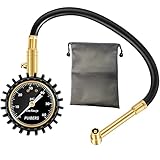
- 1. Reliable Air Pressure Gauge for Tires, full gear precision movement with bronze bourdon tube, no battery required, durable brass construction, accuracy meets ANSI Grade B40.1 Standards, more accurate and reliable than digital tire pressure gauge, maintains good performance for many years.
- 2. Legiable Luminous Dial, glow in the dark, clear display, easy to read even in very low light conditions; Patented design flexible hose and professional 90 degree right angle chuck design, very suitable for motorcycles, car, bike measurement.
- 3. Metric range design, range to 60 psi, meet your reading needs. 60 PSI Right Angle Chuck air gauge tire pressure is perfect for your motorcycle, bike, car, dirt bike, SUV, etc. for Scharder valves.
- 4. Heavy Duty Strong Structure Ensures Its Long Service Life,accurate pressure holding and quick pressure relief function; Larger button is conformed to ergonomic design which makes it more comfortable to press. An ideal gift for Father's Day or Christmas.
- 5. PUIBERS has professional car tire pressure gauge design. After continuous testing, more perfect tire pressure gauge for cars is designed. The quality can be guaranteed and the life-long friendly customer support. Buy with confidence, save a fortune with improved gas mileage, and enjoy a smoother and safer driving experience.
That detail matters: a standardized figure is repeatable only within its test framework. Your route may have a different speed distribution, more hills, colder air, heavier luggage, or more aggressive acceleration. The SAE procedure makes the test basis clearer; it does not promise that every rider will reproduce the resulting distance.
Maeving’s RM2 example
Maeving’s 2025 help page, What is the range of the RM2?, reports an RM2 figure of up to 80 miles. Maeving says the range is verified by WMTC and describes three equal phases: urban, rural, and motorway riding. It also says actual range varies with average speed, riding conditions and style, rider weight, and hills. The 75–110 kg test-rider range belongs to that test context. Treat “up to 80 miles” as a model-specific, test-qualified claim rather than a benchmark for electric motorcycles generally.
| Range claim or method | What it establishes | What it does not establish |
|---|---|---|
| SAE J2982 | A defined on-highway procedure using dynamometer and constant-speed road methods | Your exact distance on a personal route |
| Maeving RM2 WMTC result | An RM2 result based on urban, rural, and motorway phases | A universal value for other models or loads |
| Electric Motion temperature figures | Model-specific changes versus 25 °C for covered 2026 models | A temperature correction for every battery or motorcycle |
How to estimate range for your own ride
Use the motorcycle’s documentation and your observed trips, not a blanket discount. This process keeps each assumption visible.
- Record the exact motorcycle and battery configuration. Note the model, battery capacity or available-energy information supplied by the manufacturer, software mode, and whether a second battery is fitted.
- Identify the published test basis. Look for WMTC, SAE J2982, a manufacturer-specific test, or a statement that the number is an “up to” maximum. Record the test phases, temperature, rider load, and route information that are provided.
- Describe the planned route. Mark total distance, elevation, steep sections, road surface, traffic density, and any motorway or high-speed segment. A round trip must include the return distance and its gradients.
- Set the expected riding pattern. Estimate average speed, time at high speed, number of stops, acceleration intensity, and regenerative-braking use. Be honest about whether the ride will be smooth or rushed.
- Add real conditions. Include rider, passenger, luggage, forecast temperature, rain or other weather, and the tire pressure specified for that load.
- Reserve energy for uncertainty. Keep a margin for detours, headwinds, traffic, cold-soaked batteries, and a charger that is occupied or unavailable. The sources do not support one universal reserve percentage, so choose a conservative margin appropriate to the consequence of arriving low.
- Validate with repeated trips. After similar rides, record distance, starting and ending state of charge, temperature, load, average speed, and terrain. Comparisons are meaningful when most variables stay consistent.
A practical pre-ride range checklist
- Confirm the battery is fully charged according to the motorcycle’s instructions and that no charge-limit setting has reduced the usable energy.
- Set cold tire pressures to the manufacturer’s specification for the expected load.
- Inspect for brake drag, wheel or bearing resistance, chain or belt problems, and visible tire damage.
- Check the forecast temperature, rain, and wind, then compare them with the conditions behind the published figure.
- Plan hills, high-speed sections, and charging points rather than relying on map distance alone.
- Account for protective equipment, passenger weight, and luggage.
- Use a smooth throttle strategy and anticipate stops when traffic conditions permit.
- Carry a route alternative if a charger is unavailable or the weather worsens.
What to do when real-world range is unexpectedly low
First, check the conditions
Compare the ride with the conditions used for the published number. A cold day, strong weather, steep route, heavy load, low tire pressure, or sustained high speed can explain a large difference without a battery defect. Look for repeated patterns across several rides rather than judging from one trip.
Then check the motorcycle
Measure tire pressure with a reliable gauge, inspect for a dragging brake or damaged tire, and verify that routine maintenance is current. If the motorcycle displays battery-temperature, power-limit, or fault warnings, follow the manufacturer’s diagnostic procedure and stop riding if safety is affected.
Best Value
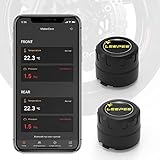
- New upgrade Designed: The LEEPEE TPMS 5.0 provides you with a faster, more accurate and more stable APP wireless connection to monitor the condition of your motorcycle tires in real-time. Only applicable to IOS and Android systems mobile phone, APP name“motorcare” (Not applicable to bicycles)
- Multiple Alert Modes: Tire Pressure Monitoring System monitors your tire condition in real time. Provide a variety of alarm conditions for your car, high and low-pressure alarm, air leakage alarm, high and low-temperature alarm, battery level alarm
- Intelligent Operation: Instantly activates or deactivates for peace of mind. The sensor enters sleep mode after 10 minutes of vehicle inactivity, conserving energy. It reawakens upon vibration and updates in real-time through the APP
- All-Weather Protection: The LEEPEE TPMS features a rugged, waterproof and dustproof construction. Withstanding extreme temperatures, it guards you year-round, accompanying you on all your mountainous and aquatic adventures
- Protection from Tire Pressure Mishaps: Abnormal tire issues can lead to serious incidents. Low pressure degrades riding quality and speeds up tire wear. Cornering risks increase, making rollovers more likely
Separate energy use from the range display
A range estimate on the dashboard is usually based on recent consumption. A ride dominated by hills or hard acceleration can make the estimate fall quickly, while a later gentle descent may change it again. Compare the state-of-charge change over a known route and record the conditions; do not treat a single displayed number as a laboratory measurement.
What the available evidence can—and cannot—tell you
A 2023 paper in Energies, Factors Influencing the Real-World Electricity Consumption of Electric Motorcycles, reports developing an onboard measurement device to collect real-road speed and electricity-consumption data from a test electric motorcycle. The available abstract establishes that measurement approach, but it does not provide a general-population statistic that can be applied to every rider or model here.
The strongest quantified evidence in the cited material is therefore model-specific: Electric Motion’s temperature figures for its covered 2026 motorcycles and Maeving’s RM2 test context and rider-weight range. The broader factors—speed, smoothness, terrain, weather, load, tire pressure, and maintenance—are consistently identified by manufacturer guidance, but no source supplies a universal calculator or one blanket percentage reduction.
Bottom line for trip planning
Start with the target motorcycle’s own test-qualified range, then judge how your speed, acceleration, hills, road, temperature, weather, load, tires, and maintenance differ from that test. Smooth riding, correct tire pressure, a sensible payload, and a route with manageable speed and gradients improve the odds of reaching the destination, while cold, hills, high speed, aggressive inputs, and poor maintenance reduce the margin. The only dependable personal number comes from repeated rides under conditions that resemble the trip you intend to make.
Quick Recap
Product prices and availability are accurate as of the date/time indicated and are subject to change. Any price and availability information displayed on Amazon at the time of purchase will apply.




