Diesel fuel economy is shaped by how you drive, how long the engine idles, tire pressure and rolling resistance, payload, terrain, traffic, weather, maintenance and the vehicle’s configuration. The most reliable first moves are gentle acceleration and braking, less unnecessary idling, removing unneeded weight, maintaining tires at the vehicle maker’s specified pressure and following the service schedule. Passenger diesels and heavy trucks need different solutions: a pickup may benefit mainly from driving and load changes, while a fleet can justify route planning, aerodynamic equipment, low-rolling-resistance tires and idle-reduction technology.
No universal percentage improvement can be promised for an individual diesel. Measure your own vehicle over comparable routes, loads and weather before and after each change.
As an Amazon Associate I earn from qualifying purchases.
What determines diesel fuel economy?
Official guidance treats fuel economy as an operating result, not a fixed engine specification. The same diesel can return very different mileage in city traffic, on a motorway, while towing, or while sitting at a job site. EPA identifies speeding, quick acceleration, hard braking and unnecessary idling as mileage-reducing behavior. Its guidance is summarized in Your Mileage May Vary.
Recommended Free Tools
| Factor | Why it changes consumption | Practical response |
|---|---|---|
| Speed and driving style | Higher speeds increase aerodynamic drag; rapid acceleration and hard braking waste energy. | Accelerate and brake smoothly, obey speed limits and use cruise control where conditions make it appropriate. |
| Idling | The engine burns fuel while the vehicle is stationary and accumulates operating hours without adding miles. | Shut down during avoidable stops, while observing safety, climate, regeneration and local idling requirements. |
| Tires | Underinflation increases rolling resistance. Tire construction, compound and tread also affect resistance. | Set cold pressures from the door-jamb placard, glove box label or owner’s manual—not the maximum molded on the sidewall. |
| Payload and accessories | Extra cargo, trailers, roof racks and external equipment require more energy to move. | Remove items you do not need and use the lightest safe configuration for the trip. |
| Route and conditions | Stop-and-go traffic, hills, poor roads, short trips and extreme temperatures reduce real-world mileage. | Combine short errands, choose a less congested route when practical and compare like-for-like journeys. |
| Maintenance | A fault, failed emissions test or neglected service can impair operation; service condition varies by vehicle. | Follow the manufacturer’s maintenance schedule and investigate warning lights or a sudden mileage change. |
| Vehicle configuration | Gearing, four-wheel-drive hardware, body style, trailer shape and engine calibration affect the energy required. | Compare vehicles or equipment in the configuration you actually operate, not a lighter or differently geared version. |
How to measure your real diesel MPG before changing anything
Start with a baseline so a weather change or a different route does not look like a fuel-saving modification. At a fill-up, record the odometer (or trip reading) and the gallons or litres added. At the next fill, divide miles driven by fuel added for miles per gallon; if you track litres, convert units consistently. Repeat for several tanks and note payload, trailer use, traffic, temperature, tire pressure and idle time.
#1 Best Overall

- EASY TO USE: Pour into the fuel tank and drive normally; one 12 oz bottle treats 30-40 gallons of diesel. Use every 5,000 miles or as needed
- RAPID-ACTING DEEP CLEAN: Concentrated diesel fuel system cleaner designed to work quickly on performance-robbing deposits to restore the fuel system
- CLEANS INJECTORS FAST: Removes injector deposits and restores spray patterns for smoother running, improved response, and more efficient combustion
- RESTORES DPF PERFORMANCE: Reduces deposit buildup to support a cleaner DPF and reduce regeneration frequency
- TURBO DEPOSIT CONTROL: Reduces deposit buildup that affects turbo response, supporting smoother acceleration and restored boost
- Fill the tank to the same stopping point each time; do not compare a partial fill with a full tank.
- Record the date, odometer, fuel quantity and whether the vehicle was towing or carrying an unusual load.
- Keep the route and driving pattern as similar as practical while testing one change.
- Compare averages across multiple tanks rather than treating one tank as proof.
This approach cannot isolate every variable, but it prevents claims based on a single unusually favorable or unfavorable trip.
Driving changes that help diesel cars and pickups
Use steady speed and gentle inputs
EPA lists speeding, quick acceleration and hard braking among factors that decrease MPG. Build speed progressively, look ahead to avoid unnecessary braking and leave enough following distance for smooth deceleration. Cruise control can help on a steady, relatively flat road; it may be inappropriate on slippery surfaces, winding hills or heavy traffic. Slowing down within legal limits is more useful than chasing a specific target speed, because the best result depends on the vehicle, gearing, traffic and terrain.
Plan around traffic and short trips
Congested stop-and-go travel repeatedly converts fuel into heat through braking. Combining errands, choosing a route with fewer repeated stops and allowing the engine to reach normal operating temperature can improve a tank’s result, although the gain varies with conditions. Cold weather, very hot weather, hills and poor road surfaces can all lower mileage; compare a change only with trips made in similar conditions.
PC Slower Than It Used to Be?
A free scan shows the junk files, broken settings and background clutter dragging Windows down - then fixes them in one click.Free scan · Windows 10 & 11Crashes, No Sound, or Screen Glitches?
Random freezes, missing sound and display glitches usually trace back to one bad driver. Find and replace yours safely.Free scan · under a minuteCarry only what the trip needs
Remove tools, sports equipment and other cargo that has no role in the journey. A roof rack or box adds aerodynamic drag even when it is empty, and a trailer combines extra mass with additional drag. Never remove safety equipment or exceed the vehicle’s rated payload or towing limits in pursuit of economy.
Rank #2

- CLEANS FUEL SYSTEM: Hot Shot’s Secret Diesel Extreme is designed to thoroughly clean, lubricate, and safeguard all components of your engine & fuel system, such as valves, pumps, rings, pistons, and upper cylinders.
- CLEANS FUEL INJECTORS: Designed to eliminate & prevent the buildup of Internal Diesel Injector Deposits (IDIDs), External Diesel Injector Deposits (EDID's), as well as other stubborn varnish and deposits, this will keep your engine running smoothly.
- BOOSTS CETANE: Increases cetane (up to 7 points), for a more efficient combustion process, improved fuel economy, & increased engine power. It also helps reduce the frequency of DPF regenerations, ensuring a smoother driving experience.
- FIXES ISSUES: Non-alcohol-based water dispersant, fortified with military-grade rust and corrosion inhibitors, stabilizes & prevents rust, effectively dispersing moisture, this product ensures to improve overall engine performance.
- EASY TO USE: With a simple application of 8 oz. for every 20 gallons, this product is easy to use! Just pour it into your fuel tank during your next fill up or every 6,000 miles
Idling: the easiest fuel loss to overlook
Idling consumes fuel while the vehicle is not moving. The U.S. Department of Energy’s Alternative Fuels Data Center states: “Reducing vehicle idling time saves fuel and money, cuts pollution, and contributes to U.S. energy security.” Its page reports an Argonne National Laboratory estimate of more than 6 billion gallons of gasoline and diesel lost to idling each year across U.S. road vehicles; that is a national total, not a per-vehicle savings promise. See Idle Reduction Benefits and Considerations.
Passenger vehicles
Turn the engine off for avoidable waiting when doing so is safe and compatible with the vehicle’s needs. Do not shut down in a location where you need power for safety, defrosting, climate control, battery charging or an emissions-system process. Follow the owner’s manual, local anti-idling rules and any instructions associated with diesel particulate-filter regeneration.
Heavy trucks
Long-haul trucks may idle for heating, cooling, battery charging or sleeper-cab operation, so eliminating all idle time is neither practical nor necessarily safe. EPA’s truck page estimates the consequences of long-duration truck idling at 1 billion gallons of fuel, 11 million tons of carbon dioxide, 180,000 tons of nitrogen oxides and 5,000 tons of particulate matter annually. These are EPA estimates reported on the page, not a current measurement for every fleet; details are at Learn About Idling Reduction Technologies (IRTs) for Trucks and School Buses. Behavioral rules, automatic shutdown systems, auxiliary power units and other idle-reduction approaches must be matched to the truck, duty cycle, climate and rest-stop requirements.
Do these 3 things before closing this tab:
1Clear out junk files and repair common Windows errors2Scan for outdated or missing drivers - takes under a minute3Repair Windows errors before they cause bigger problemsTire pressure and rolling resistance
Use the pressure specified on the vehicle’s door-jamb placard, glove-box label or owner’s manual. The maximum pressure printed on a tire sidewall is not the vehicle’s recommended setting. Check pressures when tires are cold and inspect for uneven wear, damage and slow leaks.
Rank #3

- COMPLETE FUEL SYSTEM CLEANER: Diesel Extreme works through your entire fuel system removing harmful deposits, water, and sludge while improving cetane for smoother, more efficient combustion.
- PERFORMANCE BENEFITS: Results in easier starts, stronger acceleration, and reduced emissions for optimal diesel engine performance.
- PREMIUM FORMULA: Advanced diesel fuel additive containing cumene that enhances fuel quality and combustion efficiency.
- CONVENIENT SIZE: 16 oz bottle treats multiple tanks, providing long-lasting fuel system protection and maintenance.
- MADE IN USA: Manufactured in the United States with dimensions of 7.80 x 2.70 x 2.70 inches and weighs 1.04 pounds.
The U.S. Department of Energy’s 2021 consumer guide says correct inflation improves fuel economy by 0.6% on average and by up to 3% in some cases. Those figures describe the effect of proper inflation in general vehicle guidance; they are not a guarantee for a particular diesel. Tire construction, material and tread design also influence rolling resistance. The guide is available as a PDF at Consumer Guide to Fuel Economy.
A pressure gauge is useful because it lets you check the condition that affects economy; the gauge itself does not improve MPG. For pickups and trucks, maintain the pressure appropriate to the axle load and tire specification, and confirm whether a loaded or towing condition requires a different manufacturer-approved setting.
Maintenance: what actually helps
Follow the maker’s schedule
Use the service intervals and fluid, filter, belt and emissions-system specifications in the owner’s manual or manufacturer service information. A sudden MPG decline, hard starting, smoke, warning lamp, loss of power or unusual regeneration behavior deserves diagnosis rather than an economy additive or a guessed part replacement.
What’s actually slowing this PC down?
Pick the symptom - the matching free tool is one click away.
Repair proven faults
The DOE/EPA guide cites an average 4% mileage improvement from fixing a noticeably out-of-tune vehicle or one that failed an emissions test. It also qualifies the result: the outcome depends on the repair and workmanship, and the figure is general car guidance rather than a diesel-specific guarantee. A vehicle that already runs correctly should not be expected to gain 4% simply from routine service.
Rank #4

- TWO-STEP FUEL SYSTEM RESET: Includes AR6400-D Diesel Fuel System Cleaner + AR6500 Diesel Treatment (40 oz) for a complete clean-and-maintain solution
- HOW IT WORKS: Use AR6400-D first for a deep clean (12 oz treats 30-40 gallons), then use AR6500 at every fill-up for ongoing protection (40 oz treats up to 400 gallons)
- FOR ALL DIESEL ENGINES: Suitable for all diesel vehicles and equipment, including modern HPCR systems
- CLEANS INJECTORS & RESTORES RESPONSE: Removes injector deposits and restores spray patterns for smoother running, improved response, and more efficient combustion
- IMPROVES LUBRICITY (ASTM D6079): AR6500 is tested to improve lubricity by 43% to protect fuel system components, including wear-sensitive parts like the CP4 pump
Do not rely on the clogged-air-filter myth
For modern fuel-injected, computer-controlled diesel engines, the same guide says replacing a clogged air filter does not improve fuel economy, although it may improve acceleration. Replace the filter when the manufacturer’s inspection or service procedure calls for it, or when it is damaged or contaminated; do not promise an MPG gain solely because a new filter was installed.
Independent reader supportYour contribution helps us test, update, and keep practical guides available for everyone.Heavy-duty trucks: fleet measures that differ from car advice
Fleet equipment operates for more hours, carries more mass and spends more time exposed to aerodynamic drag and idling. Evaluate truck interventions against the actual tractor, trailer, route, load profile and annual idle hours rather than transferring passenger-car percentages to a commercial vehicle.
Route and driver management
Route planning can reduce detours, congestion and unnecessary empty miles. Train drivers to accelerate and brake smoothly, observe appropriate speeds and limit avoidable idle time. The UK Driver and Vehicle Standards Agency’s commercial-vehicle guidance also emphasizes driver behavior, maintenance, tire management, route planning and aerodynamics; see Guide to maintaining roadworthiness.
Aerodynamics and low-rolling-resistance tires
EPA identifies SmartWay-designated tractors and trailers, aerodynamic devices and low-rolling-resistance tires as relevant truck technologies. Fairings, gap reducers and trailer treatments must be compatible with the specific combination and loading pattern. Tire choices require attention to load rating, retread policy, durability, wet grip and total cost—not rolling resistance alone.
Best Value
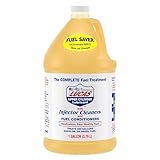
- The world’s #1 fuel additive for both gasoline and diesel engines
- A great tune-up in a bottle – treats gasoline, diesel fuel and increases MPG
- Cleans and lubricates the fuel system, including fuel injectors, carburetor and combustion chamber
- Improves fuel economy by burning excess exhaust emissions
- Increases power and acceleration by improving fuel flow and reducing deposit buildup
Idle-reduction systems
Auxiliary power units and other idle-reduction technologies can provide cab heating, cooling or electrical power without running the main engine continuously. Confirm installation space, battery and fuel requirements, maintenance, climate performance, anti-idling regulations and compatibility with the truck’s controls before selecting one.
What the EPA’s 20% figure means
EPA states: “Switching to a SmartWay tractor and trailer can reduce fuel use by up to 20 percent.” The page was updated May 18, 2026, and the wording applies to switching to a SmartWay tractor and trailer as a combination. It is not a universal result for one generic aerodynamic retrofit, a passenger pickup or every operating route. Read the qualification at SmartWay Technology for Trucks and School Buses.
Passenger diesel versus heavy-truck priorities
| Operating situation | Highest-value checks | Do not assume |
|---|---|---|
| Diesel car | Speed, smooth inputs, short-trip planning, tire pressure, unnecessary idling and scheduled maintenance. | That a new air filter or an additive will create a measurable MPG gain when no fault exists. |
| Diesel pickup | Payload, towing, roof equipment, tire pressure for the load, route, traffic and driving style. | That unloaded EPA-style results apply while towing or carrying a large payload. |
| Long-haul tractor-trailer | Idle hours, route design, aerodynamic combination, low-rolling-resistance tires, driver coaching and maintenance. | That a fleet technology percentage transfers directly to a single truck or a light-duty vehicle. |
| Vocational or urban truck | Stop frequency, PTO or auxiliary loads, idle policy, tire condition and duty-cycle-compatible equipment. | That shutting down every idle event is safe, legal or operationally possible. |
How to choose a fleet fuel-saving technology
Compare options using the same operating assumptions. A technology that looks efficient on a motorway may deliver little benefit on a low-speed vocational route, while an idle-reduction system may matter most where trucks spend long rest periods stationary.
Free tools Windows power users keep installed
One-click scans. No signup required.
- Document each truck’s annual miles, route mix, payload, trailer type, average speed and idle hours.
- Confirm compatibility with the tractor, trailer, tires, electrical system, emissions controls and maintenance procedures.
- Use verified technology status where available and request installation, inspection and maintenance requirements.
- Estimate fuel use over the real route and load profile; do not substitute a headline maximum for a fleet-specific calculation.
- Include purchase, installation, downtime, service, replacement and training costs in total operating cost.
- Pilot the change on comparable vehicles and compare normalized fuel use before expanding it.
The official sources establish that these technologies exist, but they do not provide a current model-by-model purchasing comparison or an individual payback calculation. A fleet should therefore obtain vehicle-specific quotes and use its own measured data.
Diagnosing a sudden drop in diesel MPG
- Check the measurement first: verify fill volume, odometer accuracy, fuel type and whether the comparison used similar routes, weather and loads.
- Inspect tires: check cold pressure against the placard or manual, look for leaks and examine uneven wear.
- Review behavior and idle time: compare average speed, harsh acceleration, braking, traffic delays and stationary engine hours.
- Account for configuration: note a new roof rack, trailer, four-wheel-drive use, winter tires, payload or route change.
- Check service indicators: follow the manufacturer’s procedure for warning lights, emissions faults, regeneration issues, smoke, power loss or hard starting.
- Use a qualified technician: do not mask a drivability or emissions problem with a fuel-economy claim.
What improvement should you expect?
The defensible answer is vehicle-specific. Proper tire inflation is associated with a 0.6% average improvement and up to 3% in some cases in the 2021 DOE guide; repairing a noticeably out-of-tune or emissions-test-failed vehicle is associated with a 4% average in the same general guidance. EPA’s up-to-20% statement concerns switching to a SmartWay tractor-and-trailer combination, not a universal retrofit. Idling totals cited by DOE and EPA describe national impacts, not what one driver will save.
For an individual diesel, combine the low-cost basics—smooth driving, less avoidable idling, correct tire pressure, sensible loading and scheduled maintenance—then measure over comparable tanks. For a fleet, add route analysis and truck-specific technology evaluation. That process produces a defensible result without turning broad official estimates into promises your vehicle cannot support.
Quick Recap
Product prices and availability are accurate as of the date/time indicated and are subject to change. Any price and availability information displayed on Amazon at the time of purchase will apply.




