Recommended Free Tools
There is no single guaranteed real-world mileage figure for every TVS Radeon. Autocar India lists a reported ARAI figure of 73.69 km/l (2026), while its 2018 road test recorded 57.7 km/l in the city and 78.5 km/l on the highway. TVS separately advertises “15% more mileage,” but the retrieved manufacturer page does not identify the comparison baseline or give an absolute km/l result. Your own consumption will depend on traffic, speed, load, tyre pressure, fuel, maintenance and how you measure it.
The TVS Radeon mileage figures, separated by source
These numbers are not interchangeable. A standardized test-cycle result, an independent road test and an owner’s tank-to-tank calculation answer different questions.
As an Amazon Associate I earn from qualifying purchases.
| Figure | Source and date | What it represents | How to use it |
|---|---|---|---|
| 15% more mileage | TVS mileage page; date not stated in the retrieved passage | A manufacturer comparison claim. The baseline and test conditions are not stated. | Do not convert it into a guaranteed km/l figure or assume it applies equally to every model year, variant or rider. |
| 73.69 km/l | Autocar India mileage page, 2026 | A reported ARAI mileage figure from a standardized test cycle. | Use it as a comparison reference, not a promise of everyday fuel economy. |
| 78.5 km/l highway | Autocar India road test, 2018 | A historical highway result from that test’s route, speed and motorcycle condition. | Useful for showing what controlled, steady riding can produce; it is not a current universal benchmark. |
| 57.7 km/l city | Autocar India road test, 2018 | A historical urban result from the same road test. | It demonstrates the effect of stops, acceleration and traffic on consumption. |
| Owner reports | Displayed in Autocar India’s mileage coverage | Individual reports under differing routes, loads, maintenance states and measurement methods. | Look for repeated measurements made under comparable conditions rather than treating one report as an average. |
TVS describes the Radeon as using a 109.7 cc engine. A Digi-Cluster variant also provides a real-time mileage display, but that display is feedback about current riding conditions, not a laboratory measurement.
Why the same Radeon can return different mileage
The TVS Radeon owner’s manual states: “The on-road mileage of TVS Radeon is dependent on several factors like road condition, quality of fuel, riding speed, operation of clutch and brake, tyre inflation, maintenance / timely servicing of vehicle, load etc. and hence will differ from the mileage given under standard test conditions such as in recognised institutes.”
#1 Best Overall

- PRO ACCURACY - mechanic recommended, performance tested, & calibrated accurate to professional ANSI 2A standards - with dual pressure sensors certified to ±0.50% FS (0.50 PSI), offering reliable readings up to 100 PSI w/ precise readout resolution of 0.10 PSI - so you can now maintain your tires with a shop-grade mechanic trusted tool
- STRONG & RUGGED - feels solid in the hand & built to last from 100% solid brass & steel parts shielded by our shock-resistant gear-style protective guard to protect against drops & impact. Features ultra soft & strong 10" fully rotational, leak-proof HybridFlex air hose w/ 360 swivel angled air chuck that can be swapped out w/ any 1/4" NPT chuck
- ADVANCED ENGINEERING - all readings lock-on to the display until the "ON" button is pressed once to reset to zero. Features built-in air bleeder valve that bleeds pressure in real time without needing to reset the display - ideal for cars, trucks, motorcycles, bikes, RV & trailers, spare tires, and much more
- SMART DISPLAY - features high-resolution digital 2.5 inch LCD display screen w/ battery life indicator & bright LED backlight for high visibility in the dark. Gauge is programmed to auto shut-off after 150 seconds of inactivity to save battery (2x AAA batteries included)
- 100% Lifetime Warranty by JACO - serving the automotive industry for 35+ years. Enjoy longer-lasting tires, improved fuel economy, and superior vehicle performance & handling with properly inflated tires.
That distinction explains why a test-cycle number and your fuel-pump calculation can both be valid. Standardized testing controls variables so different motorcycles can be compared. Daily riding does not: a short trip through congested traffic may use more fuel than a longer ride at a steady speed, even if the odometer distance is similar.
Traffic and route
Frequent starts, queues, hills, rough surfaces and repeated stops require energy that a steady, level road does not. A city result is therefore especially sensitive to signal timing, congestion and how often the engine is left running while stationary.
Speed, gear and throttle
Higher speed increases aerodynamic resistance, while abrupt throttle openings demand more fuel. Riding in a gear that makes the engine labour can also be counterproductive. Select a gear that keeps the engine responsive without unnecessary revs, and let traffic and safety—not an arbitrary number—determine your speed.
Do these 3 things before closing this tab:
1Scan for outdated or missing drivers - takes under a minute2Clear out junk files and repair common Windows errors3Fix the driver behind crashes, sound loss and screen glitchesMotorcycle condition and load
Under-inflated tyres, an over-tight or poorly adjusted clutch, excess chain slack, restricted air flow, old oil, dragging brakes or extra weight can all change the result. The manual and TVS maintenance guidance identify these checks because they affect rolling resistance, engine operation or the amount of throttle needed.
How to measure your Radeon’s real fuel economy
A consistent tank-to-tank calculation is more useful for your motorcycle than a single dashboard snapshot. It smooths out the inaccuracies caused by a partially filled tank and by short-term changes in traffic.
Rank #2

- 90 degree head for those difficult to access valve stems.
- High quality all metal construction.
- 5-50psi (50-300kPa) readout.
- Made by Counteract Balancing Beads.
- Packaged individually. Custom red head with black anodized body with Counteract engraving.
- Fill the tank consistently. Use the same fuel station and pump position when practical. Stop at the same point each time; do not repeatedly top off after the nozzle stops.
- Reset or record the trip distance. Write down the odometer reading or reset a trip meter immediately after filling.
- Ride normally for a meaningful interval. Several rides or a substantial portion of a tank is more representative than a few kilometres. Record unusual conditions such as a long highway trip, heavy cargo or extended idling.
- Refill using the same method. Record the litres dispensed and the new odometer or trip reading at the next consistent fill.
- Calculate the result. Divide kilometres travelled by litres added. In code notation,
mileage (km/l) = distance travelled (km) ÷ fuel added (l). - Repeat before drawing a conclusion. Compare several fills made under similar conditions. A single unusually low or high result may reflect traffic, a different fill level or a temporary mechanical issue.
Keep city-heavy and highway-heavy records separate when possible. Combining them can hide a route change and make a maintenance problem harder to spot. Record tyre pressure, passenger or cargo load and major route changes alongside each result.
How to improve TVS Radeon mileage
1. Open the throttle smoothly
TVS recommends gentle acceleration and warns that racing starts waste fuel. Pull away progressively, shift when the engine is comfortable and avoid repeatedly accelerating hard only to brake a moment later. Smoothness does not mean crawling or obstructing traffic; it means using only the power the situation requires.
Free tools Windows power users keep installed
One-click scans. No signup required.
2. Avoid unnecessary idling
Prolonged idling burns fuel while producing no useful distance. If you are stopped in a situation where switching off is legal, safe and practical, avoid leaving the engine running for an extended period. Do not apply this advice where stopping the engine could create a traffic or personal-safety hazard.
3. Anticipate traffic instead of braking late
The owner’s manual advises anticipating corners, slopes and traffic to reduce unnecessary braking. Look well ahead, roll off the throttle early and maintain a safe gap. This avoids the accelerate-brake cycle that turns fuel into heat in the brakes. Never coast in a way that removes necessary control, and always follow local traffic rules.
4. Check tyre pressure every week
Low pressure increases rolling drag, can reduce fuel economy and may affect handling. TVS’s May 2026 guidance gives 30–32 psi for the front and 36 psi for the rear, but those values must be checked against the exact model-year manual or tyre-pressure label for your variant and load before use. Measure when the tyres are cold, use a reliable gauge and inspect for slow leaks at the same time.
Rank #3

- PROCESS LEVEL ACCURACY: Each ETENWOLF’s digital tire pressure gauge is calibrated manually to ANSI B40.7 Grade 2A(plus-minus 1 PSI).Presta valve adapter not included, if used for bicycles, it must be purchased separately
- ACCURACY IN EXTREME PRESSURE RANGE: Whether tire pressure is below 12 PSI or above 140 PSI, ETENWOLF’s digital tire gauge is accurate as well
- ACCURACY IN EXTREME WEATHER: Built-in AI chip with thermal compensation inside, ETENWOLF’s tire gauge works normally even in extreme cold or hot weather(-4°F-130°F/-20°C-54°C)
- PRESSURE RANGE 3-200 PSI : ETENWOLF’s digital tire pressure gauge can measure pressure of all types of vehicles
- REPLACEABLE AAA BATTERIES: Batteries are easy to replace and helps to extend the tire pressure gauge’s life span, with LED light to illuminate dark areas for easy tire pressure reading
5. Keep up with scheduled servicing
Use the maintenance intervals and specifications for your exact Radeon model year. TVS identifies clean engine oil and a clean air filter as important to engine operation, and calls out tyre condition and correct clutch adjustment. A service is not a mileage treatment by itself: its value comes from restoring the settings and component condition the motorcycle was designed to use.
6. Inspect the drive chain and wheel movement
The manual warns that excess chain slack can increase fuel consumption and recommends checking that the wheels move freely. Follow the specified slack, lubrication and adjustment procedure rather than tightening the chain by feel. With the motorcycle secured, a qualified technician should investigate a wheel that does not rotate freely, a brake that drags or a bearing that feels rough.
7. Use a sensible cruising gear and speed
TVS’s May 2026 article suggests 50–60 km/h in fourth gear and identifies 3,000–6,000 rpm as an efficiency-oriented band. These are manufacturer editorial guidelines, not a command to hold a particular speed everywhere. Use the gear and speed appropriate for the road, legal limit, traffic, gradient, load and engine response. Do not lug the engine in a high gear simply to keep revs low.
8. Reduce avoidable load and resistance
Carry only what you need, secure luggage so it does not interfere with control and keep the tyres and chain in proper condition. A passenger, cargo, strong headwind or steep route can legitimately reduce the number shown on a trip. Treat that as a condition to record, not automatically as a fault.
9. Use good measurement habits rather than additives
Fuel quality is one of the factors TVS lists, so use fuel from a reputable source and avoid repeatedly changing brands while trying to compare results. There is no supported evidence here for a fuel additive, “mileage booster,” electronic mileage chip or similar device delivering a guaranteed improvement. Diagnose the motorcycle and riding conditions first.
Rank #4
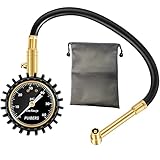
- 1. Reliable Air Pressure Gauge for Tires, full gear precision movement with bronze bourdon tube, no battery required, durable brass construction, accuracy meets ANSI Grade B40.1 Standards, more accurate and reliable than digital tire pressure gauge, maintains good performance for many years.
- 2. Legiable Luminous Dial, glow in the dark, clear display, easy to read even in very low light conditions; Patented design flexible hose and professional 90 degree right angle chuck design, very suitable for motorcycles, car, bike measurement.
- 3. Metric range design, range to 60 psi, meet your reading needs. 60 PSI Right Angle Chuck air gauge tire pressure is perfect for your motorcycle, bike, car, dirt bike, SUV, etc. for Scharder valves.
- 4. Heavy Duty Strong Structure Ensures Its Long Service Life,accurate pressure holding and quick pressure relief function; Larger button is conformed to ergonomic design which makes it more comfortable to press. An ideal gift for Father's Day or Christmas.
- 5. PUIBERS has professional car tire pressure gauge design. After continuous testing, more perfect tire pressure gauge for cars is designed. The quality can be guaranteed and the life-long friendly customer support. Buy with confidence, save a fortune with improved gas mileage, and enjoy a smoother and safer driving experience.
How to read the Radeon’s real-time mileage display
On a Digi-Cluster-equipped Radeon, the real-time display can show how throttle position, speed, traffic and gradients affect consumption. It is useful coaching: if the figure falls during hard acceleration or stop-and-go riding, you can see the immediate effect of those conditions.
Do not report one display reading as the motorcycle’s standardized mileage. The value can change rapidly, may be averaged over a moving interval and does not replace litres measured at refuelling. Use the display to adjust your riding, then verify the result with repeated tank-to-tank calculations.
If your mileage suddenly drops
Compare the change with your recent route and load before assuming a major engine problem. The following order catches common, measurable causes without encouraging random parts replacement.
| Symptom or change | Checks to make | Next action |
|---|---|---|
| Lower result after carrying a passenger, luggage or riding in heavy traffic | Review the route, idling time, speed and load recorded for that tank. | Repeat a controlled measurement under comparable conditions before changing parts. |
| Drop accompanied by a soft or unstable feel | Check cold tyre pressures, tyre condition and signs of a slow puncture. | Inflate to the exact manual/label specification and repair defects promptly. |
| Engine revs rise without a matching increase in road speed | Have clutch adjustment and clutch condition inspected. | Use the model-specific service procedure; do not compensate with aggressive throttle. |
| Noise, tight spots or visible excessive chain slack | Inspect chain slack, lubrication and wheel free movement. | Adjust or service the drive system to specification and investigate brake or bearing drag. |
| Hard starting, uneven running or weak response | Check service history, engine oil, air-filter condition and other items in the applicable schedule. | Book diagnosis with a competent motorcycle technician if basic checks do not resolve it. |
| Only the dashboard number looks low | Compare it with litres used and distance travelled; note whether the display is real-time or averaged. | Trust a repeatable tank-to-tank calculation for personal records. |
If the motorcycle also has warning lights, overheating, fuel leaks, braking problems or a major loss of power, stop treating the issue as a mileage experiment and have it inspected before continued riding.
What’s actually slowing this PC down?
Pick the symptom - the matching free tool is one click away.
Maintenance and measurement checklist
Use this short routine to make mileage comparisons meaningful:
Best Value
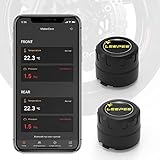
- New upgrade Designed: The LEEPEE TPMS 5.0 provides you with a faster, more accurate and more stable APP wireless connection to monitor the condition of your motorcycle tires in real-time. Only applicable to IOS and Android systems mobile phone, APP name“motorcare” (Not applicable to bicycles)
- Multiple Alert Modes: Tire Pressure Monitoring System monitors your tire condition in real time. Provide a variety of alarm conditions for your car, high and low-pressure alarm, air leakage alarm, high and low-temperature alarm, battery level alarm
- Intelligent Operation: Instantly activates or deactivates for peace of mind. The sensor enters sleep mode after 10 minutes of vehicle inactivity, conserving energy. It reawakens upon vibration and updates in real-time through the APP
- All-Weather Protection: The LEEPEE TPMS features a rugged, waterproof and dustproof construction. Withstanding extreme temperatures, it guards you year-round, accompanying you on all your mountainous and aquatic adventures
- Protection from Tire Pressure Mishaps: Abnormal tire issues can lead to serious incidents. Low pressure degrades riding quality and speeds up tire wear. Cornering risks increase, making rollovers more likely
- Check cold tyre pressure weekly and after carrying an unusual load.
- Record odometer distance and litres at consistent refuelling points.
- Note traffic, route, passenger, cargo and extended idling in your log.
- Use the exact model-year service schedule, oil specification and chain adjustment specification.
- Confirm that the clutch is correctly adjusted and the wheels and brakes move freely.
- Keep the air filter, oil and tyres in the condition specified for the motorcycle.
- Compare several fills rather than reacting to one dashboard reading.
- Never trade safe speed, legal riding or engine control for a target number.
How to choose a fair benchmark
When comparing your result with a published figure or another owner, match as many of these variables as possible:
- Source and date: a 2018 road test is historical, while a 2026 listing may reflect a newer model year or a different publication method.
- Test type: ARAI/test-cycle, independent road test and owner calculation are different categories.
- Environment: city traffic, highway flow, hills, road surface and weather can change fuel use.
- Motorcycle: identify the variant, model year, maintenance condition, tyre state and odometer history.
- Measurement: determine whether the figure came from litres and distance, a display, or an unspecified estimate.
A comparison is strongest when both riders use the same calculation and similar routes. Avoid averaging the 73.69 km/l reported ARAI figure with the 57.7 and 78.5 km/l road-test results; that would create a number with no defined test meaning.
What the available evidence does—and does not—establish
The published figures establish that the Radeon can post different results under different test conditions and that standardized and road-use numbers should be kept separate. They do not establish a representative current owner-average mileage for every Radeon, a guaranteed improvement percentage from any riding technique, or a universal pressure setting for every variant and load.
For a practical answer, start with your own repeatable baseline, correct pressure and basic maintenance, then change one riding or maintenance variable at a time. That approach tells you whether an improvement is real on your motorcycle without turning a manufacturer comparison claim or a single test result into a promise.
Final takeaway
Use 73.69 km/l as the reported 2026 ARAI reference, and view the 2018 road-test spread of 57.7 km/l in the city versus 78.5 km/l on the highway as evidence of how strongly conditions matter. TVS’s “15% more mileage” statement is comparative, not an absolute guarantee. The most dependable path to better Radeon economy is smooth acceleration, less unnecessary idling and braking, weekly pressure checks, correct chain and clutch adjustment, and servicing to the model-specific schedule—verified with repeated tank-to-tank measurements.
Quick Recap
Product prices and availability are accurate as of the date/time indicated and are subject to change. Any price and availability information displayed on Amazon at the time of purchase will apply.




