Short answer: For an Indian buyer who wants the stronger published performance figures and adjustable chassis settings, the current standard KTM 390 Duke is the specification-led choice. The TVS Apache RTR 310 makes more sense if you value selectable power delivery, its 6D-IMU-based cornering braking system and a broad electronics package. Neither specification sheet can establish comfort, reliability, service quality or actual ownership cost, so obtain same-city on-road quotes and ride both motorcycles before deciding.
The two motorcycles you are actually comparing
Model names can hide important version differences. This comparison is for the Indian-market TVS Apache RTR 310 and the current standard KTM 390 Duke listed by KTM India in 2026. It is not a comparison with an older-generation Duke, and it is not a comparison with the separately listed 390 Duke R.
As an Amazon Associate I earn from qualifying purchases.
TVS Apache RTR 310
TVS lists a 312.12 cc engine for the Apache RTR 310. Its published output depends on the selected riding mode: Sport, Track and SuperMoto are listed at 35.6 PS at 9,700 rpm and 28.7 Nm at 6,650 rpm, while Urban and Rain are listed at 27.1 PS at 7,500 rpm and 27.3 Nm at 6,600 rpm. TVS also describes a 6D IMU-based cornering braking system and a wide electronics package on the product page. These are manufacturer specifications, not independent test measurements.
Do these 3 things before closing this tab:
1Scan for outdated or missing drivers - takes under a minute2Clear out junk files and repair common Windows errors3Fix the driver behind crashes, sound loss and screen glitchesStandard KTM 390 Duke
KTM India’s current standard 390 Duke is listed with a 349.32 cc engine, 41.5 PS at 8,600 rpm and 33.5 Nm at 7,000 rpm. The product page also lists ride modes, adjustable suspension, cornering ABS, Supermoto ABS, launch control and a track screen. Those features can vary by market, model year or exact variant, so confirm the equipment on the motorcycle you are being quoted.
#1 Best Overall

- Compatible For TVS Apache RTR 160/200 4V Motorcycle Front Headlamp LED
- - Quality LED Headlights: Our Motorcycle LED Headlight is designed with premium materials to ensure durability and longevity, providing you with reliable illumination on every ride
- - Enhanced Visibility: This Inch Round LED Headlight delivers superior brightness compared to traditional options, significantly improving visibility for safer nighttime rides and adverse weather conditions
- - Versatile Motorcycle Parts: Compatible with various motorcycle models, our Motorcycle Headlight Assembly is an essential upgrade for any rider looking to enhance their motorcycle's performance and aesthetics
- - Easy Installation: The Motorcycle Front Headlamp is designed for straightforward installation, allowing you to quickly replace your old headlight without the need for professional assistance
Do not call the standard Duke a 398 cc bike
KTM’s 2026 brochure separately lists the 390 Duke R at 398.63 cc, 46 PS at 8,500 rpm and 39 Nm at 6,500 rpm. Those figures belong to the Duke R, not the standard 349.32 cc 390 Duke. Older comparison pages may also describe a different Duke generation. Check the displacement and model designation on the current Indian listing before comparing prices or performance.
At-a-glance specification comparison
| Buying axis | TVS Apache RTR 310 | Current standard KTM 390 Duke | What the difference means |
|---|---|---|---|
| Engine displacement | 312.12 cc | 349.32 cc | The KTM has the larger listed engine. |
| Maximum published power | 35.6 PS at 9,700 rpm in Sport, Track and SuperMoto; 27.1 PS at 7,500 rpm in Urban and Rain | 41.5 PS at 8,600 rpm | The KTM has the higher published peak. TVS output changes substantially with mode. |
| Maximum published torque | 28.7 Nm at 6,650 rpm in Sport, Track and SuperMoto; 27.3 Nm at 6,600 rpm in Urban and Rain | 33.5 Nm at 7,000 rpm | The KTM has the higher listed torque; a ride is needed to judge response at normal speeds. |
| Ride-mode information | Sport, Track, SuperMoto, Urban and Rain figures are published | KTM lists ride modes, but one maximum-output figure is published on the product page | Ask the dealer to demonstrate what each mode changes on the exact bike. |
| Braking and rider aids | 6D IMU-based cornering braking system; broad electronics package listed by TVS | Cornering ABS, Supermoto ABS, launch control and track screen are listed | Feature counts do not prove that one motorcycle works better for every rider. |
| Chassis adjustment | Specific adjustment details are not stated on the supplied product information | Adjustable suspension is listed | Confirm which suspension components and settings are adjustable before paying a premium. |
| Published price reference | Variant- and city-dependent prices are shown through TVS’s selector; exact amount depends on the selection | ₹2,77,268 ex-showroom Delhi on KTM India’s current standard Duke page | Use written, same-city on-road quotations for the exact variants and date. |
Manufacturer output figures are not a substitute for an independent acceleration, braking or fuel-economy test. No comparative mileage, reliability, maintenance-cost or resale study is established here, so those subjects should be treated as questions for your local dealer and as items to assess during ownership research.
Engine performance: the KTM wins on paper, while the TVS gives you a deliberate low-output mode
What the published numbers say
The standard 390 Duke has a clear numerical advantage: 41.5 PS and 33.5 Nm versus the Apache RTR 310’s 35.6 PS and 28.7 Nm in its higher-output modes. The KTM’s peak power is also listed at a lower engine speed than the TVS’s 35.6 PS figure. That combination makes the KTM the logical specification pick for a rider who regularly seeks stronger acceleration or wants more headroom for fast open-road riding.
The difference is not a promise of a particular real-world speed or overtaking time. Rider weight, luggage, fuel load, gearing, tyre condition, road gradient, wind and the motorcycle’s running-in state all affect what you feel. A test ride on your usual roads is more informative than treating the peak figures as a guaranteed outcome.
How the TVS modes change the decision
TVS publishes the Apache RTR 310’s higher figures for Sport, Track and SuperMoto, but lists only 27.1 PS and 27.3 Nm for Urban and Rain. The lower-output settings may appeal if you prefer a gentler response in traffic or wet conditions. They also mean that a quoted 35.6 PS does not describe every ride; the selected mode matters.
Ask the showroom representative to show how mode selection is made, whether the mode remains selected after the ignition is cycled, and which rider aids change with each mode. Those operating details are more useful to you than a generic statement that the motorcycle has several modes.
Rank #2

- Integrated Vibration Dampening Structure:Built‑in vibration absorption design lessens road vibration transfer during riding, helps reduce vibration impact to your smartphone.
- Multi‑point Secure Clamping & Quick‑Release Mechanism:Multi‑point contact clamps hold your phone steadily. Quick‑release structure supports fast installation and removal of your smartphone for convenient access while stopping.
- Reinforced Durable Build & Multi‑Angle Adjustment:Key connecting parts use reinforced material for extended service life. The mounting base supports multi‑angle rotation, you can adjust to your preferred viewing position effortlessly.
- Broad Phone Compatibility & Multiple Color Options:Accommodates 4.9‑7.3 inch smartphones even with protective cases. 3 different colors are available to match your motorcycle style.
- Complete Hardware for Straightforward Installation:All required mounting accessories are included. No extra modification needed. Please verify your motorcycle handlebar diameter before purchase to ensure proper fit.
What to check on the KTM
KTM lists ride modes as well as launch control and a track screen. Confirm the exact menu path, whether launch control is enabled in the variant you are buying, and whether any feature requires a particular mode or operating condition. Do not assume that the presence of a track display changes the underlying engine output or that a mode is automatically safer on public roads.
The Tool Desk
Outbyte PC Repair FREERepair Windows errors before they cause bigger problemsFix Now →Outbyte Driver Updater FREEScan for outdated or missing drivers - takes under a minuteDriver Scan →Chassis, braking and electronics: compare the functions you will use
Apache RTR 310: IMU-supported cornering braking
TVS describes a 6D IMU-based cornering braking system. An inertial measurement unit can provide the control system with information about the motorcycle’s movement while it is leaned, allowing the braking strategy to account for cornering conditions. The description does not establish a particular stopping distance or prove superiority over another system. During a ride, pay attention to lever feel, confidence while braking upright and the clarity of the warning or intervention indicators.
TVS’s product page presents a broad electronics package, but the supplied specifications do not provide a complete, itemised list for every variant. Have the dealer mark each included feature on the written quotation rather than relying on a photograph, an older review or a verbal promise.
390 Duke: adjustable suspension and multiple control functions
KTM lists adjustable suspension, cornering ABS, Supermoto ABS, launch control and a track screen for the current standard 390 Duke. Adjustable suspension can be valuable when a rider’s weight, passenger use or luggage changes, but its practical benefit depends on which components are adjustable and whether you are prepared to set them. Ask what adjustment range is available at the front and rear, and request the owner’s manual or setup guidance.
Supermoto ABS and launch control are specialist functions. They may be useful to an experienced rider in an appropriate environment, but their presence should not outweigh everyday factors such as reach to the controls, low-speed balance and dealer support. Use electronic aids as assistance, not as a reason to exceed public-road limits.
Free tools Windows power users keep installed
One-click scans. No signup required.
Why a feature-count victory is not enough
One motorcycle can list more named functions while another feels easier to operate. Software calibration, switchgear layout, display readability and how intrusive an intervention feels are not captured by the headline specification. Compare the exact screens and controls during the test ride, and ask for a demonstration with the motorcycle stationary before you leave the dealership.
Rank #3

- Dual Charging System: Features up to 15W wireless charging and a 33W Type-C wired charging interface. The electrical system includes a 150cm cable, an independent power switch, a built-in fuse, and a water-resistant cap for the charging port to ensure stable energy transfer during your ride.
- Anti-Theft Design & 360 Degree Adjustability: Features an aluminum alloy connecting rod that allows for 360-degree rotation to achieve the optimal viewing angle. The specialized anti-theft clamp arm requires an included custom tool to open or adjust, deterring unauthorized removal.
- Upgraded Stainless Steel Structure: Built with a stainless steel telescopic rod that resists deformation over time. This material upgrade offers significant improvements in stability and structural integrity compared to standard plastic models, ensuring the mount holds firmly even during high-speed riding conditions.
- One-Handed Operation & Mechanical Lock: Designed for mechanical securing with a 1-second quick placement and release mechanism. You can easily insert or remove your device with one hand, while the mechanical lock ensures the clamping arms maintain a tight grip on the road.
- Shock Absorbing & Device Protection: Equipped with a four-pillar shock-absorbing module that effectively reduces vibrations. The clamping arms are fully wrapped in soft silicone pads to securely hold your device without scratching the edges or blocking the camera lens.
Price: compare on-road totals, not isolated ex-showroom numbers
What is currently published
KTM India’s current page shows ₹2,77,268 ex-showroom Delhi for the standard 390 Duke. TVS provides a city and variant selector for the Apache RTR 310 and an on-road-price path. TVS states that quoted ex-showroom prices exclude mandatory and other accessories. Because the TVS model page and selector can display different variant amounts, record the selected city, variant and date whenever you save a price.
Why ex-showroom is not your purchase cost
Registration, insurance, taxes or statutory charges, and any accessories can move the final amount materially. The Delhi figure for the KTM is therefore a dated ex-showroom reference, not a promise of the amount payable in another state or city. A TVS selector result is likewise not interchangeable with a quote for a different variant.
Request comparable written quotes
- Choose the exact variant and colour for each motorcycle.
- Use the same city and the same quotation date.
- Ask for ex-showroom price, registration charges, insurance premium, handling or documentation fees, accessories and any discount as separate lines.
- Confirm whether the insurance policy, accessories and extended coverage are optional or mandatory for the quoted deal.
- Check that the vehicle identification details and delivery timing are written on the quotation.
Do not decide from a single online number when the two dealers are quoting different variants or adding different accessory bundles.
Quick wins for a faster PC:
Fix the driver behind crashes, sound loss and screen glitchesFind Drivers →Clear out junk files and repair common Windows errorsFree Scan →Service access and ownership questions you must answer locally
A buyer discussion on r/indianbikes uses the question “RTR 310 vs Duke 390 – which one should I buy?” and raises concern about the quality of a nearby TVS service centre. That post is one person’s question, not evidence of brand-wide service performance. It is a useful reminder to investigate your own support network for both motorcycles rather than assuming either brand will be equally convenient everywhere.
Check the nearest authorised outlets
- Measure the actual distance and travel time to the nearest authorised showroom and service centre for each brand.
- Call both centres and ask how service bookings are made, how far ahead appointments are normally scheduled and whether routine parts are stocked locally.
- Ask for the recommended service schedule and whether the first inspection has a separate labour or consumables charge.
- Request a written explanation of warranty requirements, roadside assistance terms and the process for raising a technical complaint.
- Speak with owners in your city about response times, but treat individual reports as anecdotes rather than proof of a universal result.
No verified comparative maintenance cost, reliability rate or resale statistic is available in the supplied material. Do not fill that gap with a mileage claim or an internet rumour; use the service centres’ current schedules and your own budget.
Which rider should choose which motorcycle?
Choose the standard KTM 390 Duke when these priorities dominate
- You want the higher published output: 41.5 PS and 33.5 Nm.
- You expect to use the additional performance on open roads and value more engine capacity than the TVS offers.
- You specifically want adjustable suspension and the listed cornering ABS, Supermoto ABS, launch-control and track-screen functions.
- Your local KTM dealer and service centre are demonstrably convenient and transparent about costs and parts.
This is a specification-based recommendation, not a claim that the Duke will be more comfortable, more reliable or cheaper to own.
Rank #4
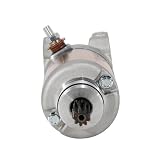
- High Quality Construction**: Our motorcycle starter motor is designed with premium materials to ensure durability and a long service life, providing reliable performance for your motorcycle every time you start your engine.
- Perfect OEM Fit**: This Motorcycle Starter Motor is engineered as a direct factory replacement, making it compatible with a wide range of motorcycle models. Make sure to check your vehicle's year and model before purchase for an optimal fit.
- Easy Installation**: Designed for hassle-free setup, this starter motor requires minimal tools, allowing you to replace your old starter with ease and get back on the road quickly.
- Powerful Performance**: Experience strong and efficient starting power with our 12V Motorcycle Starter. This Motor Magneto is crafted to provide exceptional torque and reliability, ensuring your motorcycle starts smoothly under any conditions.
- Excellent Customer Support**: We stand behind our Motorcycle Parts Starter with a commitment to quality and customer satisfaction. Enjoy peace of mind with our reliable after-sales support for any queries or assistance you may need.
Choose the Apache RTR 310 when these priorities dominate
- You prefer the ability to select between higher-output Sport, Track and SuperMoto settings and the lower-output Urban and Rain settings.
- The TVS’s 6D-IMU-based cornering braking system is a feature you understand and genuinely expect to use.
- The local TVS outlet is easier to reach, gives clearer written answers and can support your expected service needs.
- The exact TVS variant delivers the equipment you want at a better same-city on-road total.
The RTR 310 is not merely a lower-powered alternative. Its mode-dependent output and electronics approach create a different ownership proposition, although the specification alone cannot predict which motorcycle you will find easier to live with.
Recommended Free Tools
When neither headline advantage should decide the purchase
If most of your riding is short urban travel, the KTM’s extra peak output may matter less than throttle smoothness, heat management, reach, steering effort and low-speed balance. If you ride with luggage or a passenger, the available suspension adjustment may matter more than a track display. These are test-ride and setup questions, not facts that can be inferred from displacement alone.
Independent reader supportYour contribution helps us test, update, and keep practical guides available for everyone.A practical test-ride method
Ride both motorcycles in comparable conditions and take notes immediately. Do not rely on a short lap around a dealership to answer every question.
- Set your position. Wear the clothing and footwear you normally use. Check whether you can support the motorcycle confidently at a stop, reach the levers without stretching and see the mirrors without an awkward shoulder position.
- Start in the most useful everyday mode. On the TVS, try Urban or Rain first, then compare Sport or Track when traffic allows. On the KTM, ask the demonstrator to identify each available ride mode before you move off.
- Assess low-speed control. Perform slow turns, a U-turn if the road is safe, and repeated starts and stops. Note clutch effort, throttle response, brake smoothness and how easy the motorcycle is to balance.
- Evaluate the controls. Change modes only when stationary and safe. Check the display in direct sunlight, the switchgear logic and whether warnings are easy to understand.
- Use a safe, legal open-road section. Observe how each engine responds during normal overtakes and roll-on acceleration without chasing a top speed. The goal is to compare usable response, not to create an unofficial performance test.
- Brake progressively. Test gentle and firm braking in a straight line on a clean, dry surface. Do not deliberately trigger ABS on public roads or attempt cornering experiments.
- Check suspension reactions. Cross ordinary bumps at legal speed and notice whether the ride remains controlled. Ask the KTM dealer to explain the standard suspension settings and make only safe, documented adjustments.
- Repeat with your likely load. If you regularly carry a passenger or luggage, ask whether the dealer permits a controlled assessment and how the suspension should be set for that load.
- Write down the result. Record the mode, route, weather, tyre condition and any settings. This prevents a more powerful first impression from replacing a fair comparison.
Questions to put on the dealer’s quotation
- Which model year, variant and exact engine specification is being offered?
- For the KTM, is the quote for the standard 349.32 cc 390 Duke rather than the distinct 390 Duke R?
- For the TVS, which of the listed riding modes and electronic features are included on this variant?
- What is the complete on-road total in your city, with registration, insurance and accessories itemised?
- What is the expected delivery date, and can the motorcycle identification details be recorded on the order?
- Where is the authorised service centre, what is the service booking process and which parts are normally stocked?
- What warranty, roadside assistance and cancellation terms apply to this exact order?
Common comparison mistakes
Mixing generations
Copying an older Duke specification into a 2026 comparison can produce the wrong displacement, power and price. Start with the current Indian product page and write down the 349.32 cc figure before comparing anything else.
Using the Duke R figures for the standard Duke
The 398.63 cc, 46 PS and 39 Nm figures belong to the separately listed 390 Duke R. They should never be used to describe the standard 390 Duke.
What’s actually slowing this PC down?
Pick the symptom - the matching free tool is one click away.
Treating one TVS output figure as universal
The RTR 310’s 35.6 PS and 28.7 Nm figures apply to Sport, Track and SuperMoto in TVS’s listing. Urban and Rain are listed at 27.1 PS and 27.3 Nm. State the mode whenever you quote the number.
Best Value

- Compatible For TVS Apache RTR 160/200 4V Motorcycle Front Headlamp LED
- Excellent lighting effect:able to clearly illuminate the road ahead at night or in dim environments, effectively improving cycling avoiding accidents caused by unclear visibility.
- Equipped with spotlight function: it can concentrate and project light, allowing riders to accurately see the details of road conditions.
- Fast response speed:providing sufficient lighting immediately upon activation, without the need for long waiting times.
- Long service life: reducing the trouble and cost of frequent headlight replacement.
Comparing a Delhi ex-showroom price with a local on-road offer
The KTM’s ₹2,77,268 figure is ex-showroom Delhi. A city-specific TVS selector amount, an insurance bundle and registration charges are not directly comparable until every line is aligned.
Turning an anecdote into a service verdict
A forum post can prompt a useful question about your nearest service centre, but it cannot establish comparative service quality. Inspect both outlets and obtain their procedures in writing.
Bottom line for an Indian buyer
The current standard KTM 390 Duke is the stronger specification choice: it has the larger 349.32 cc engine, 41.5 PS, 33.5 Nm and listed adjustable suspension with several performance-oriented rider aids. Select it when that extra output and chassis adjustability align with your routes and your local KTM support is satisfactory.
The TVS Apache RTR 310 is the more mode-focused alternative. Its 312.12 cc engine can deliver the listed 35.6 PS and 28.7 Nm in Sport, Track and SuperMoto, or the lower 27.1 PS and 27.3 Nm figures in Urban and Rain, and TVS highlights a 6D-IMU-based cornering braking system. Select it when those controls, the exact variant’s equipment and your local TVS support fit your priorities better.
Before signing, compare written same-city on-road quotes for identical equipment, verify the model year and variant, inspect both service options and complete a back-to-back test ride. That process answers the ownership questions the specification sheets cannot.
Quick Recap
Product prices and availability are accurate as of the date/time indicated and are subject to change. Any price and availability information displayed on Amazon at the time of purchase will apply.




