Short answer: A slide-in camper is technically a truck-bed camper, because it rides in a pickup bed. In everyday shopping language, however, “truck-bed camper” often means a shell or topper with a sleeping platform, while “slide-in camper” means a removable, self-contained living unit. Shell-style setups are usually lighter, simpler, and less expensive; slide-ins generally provide more headroom, beds, kitchen equipment, water, and electrical systems at the cost of weight, price, loading work, and tighter truck-compatibility requirements. Neither is universally better. The right choice depends on your truck’s actual ratings and how much comfort you need at camp.
What the two terms mean
Industry terminology causes much of the confusion. Broadly, a truck camper is any camper carried in a pickup bed, so a shell-based sleeping platform and a fully equipped slide-in both fit that definition. For this comparison, truck-bed camper means a shell-style or topper-based arrangement, while slide-in camper means a removable unit loaded into the factory bed and secured to the truck.
As an Amazon Associate I earn from qualifying purchases.
Shell-style truck-bed camper
A shell or topper encloses the bed and creates a protected place for a mattress, sleeping platform, bicycles, tools, or camping boxes. The truck bed remains the basic floor plan. Bed-rail clamps or similar hardware commonly attach the shell, and the setup can stay relatively close to the truck’s original height and weight.
Cab-height shells can make sitting upright on a raised sleeping platform difficult. High-rise toppers add useful clearance, but they still do not automatically provide a standing interior, kitchen, plumbing, or a dedicated dinette. Dimensions and features vary, so treat those as general tendencies rather than specifications for every product.
#1 Best Overall

- Usage Scenario:The tie down device can provide a connection point and fix your camper on the truck lathe.
- High Quality Materials:Truck bed tie downs are coated with black powder.The attached neoprene pad can protect your paint. The special structure and ultra wide clamp can provide excellent clamping strength.
- Simple Installation:Install the bracket on the side without drilling,just tighten two bolts.
- Installation Requirements:The tie down is suitable for most full-size non double pickup trucks.The height of the outer bed railing cannot exceed 5-1/2".The edge of the bed railing needs at least 2" space.It is not compatible with the embedded bed lining, bed railing,double arm bed or side step bed.
- Package Includes:4 fixtures with cleats,necessary accessories and rubber pads.
Self-contained slide-in camper
A slide-in is built as a complete removable module. Depending on the model, it may include an over-cab bed, dinette, kitchenette, water tank, electrical system, furnace, refrigerator, and a compact wet bath. Every added system consumes payload, interior volume, maintenance time, and purchase budget.
Pop-up slide-ins lower their roof for travel and raise it at camp. That reduces the moving profile and can improve fuel economy or clearance compared with a tall hard-sided unit, but it adds a campsite setup step and introduces soft-sided sections. A hard-sided slide-in avoids roof-raising but may be taller, heavier, and more restrictive in interior layout.
At-a-glance comparison
| Factor | Shell-style truck-bed setup | Self-contained slide-in |
|---|---|---|
| Primary use | Protected sleep and cargo space | More complete living accommodation |
| Typical complexity | Low; the truck bed remains the main interior | High; integrated furniture, appliances, water, and power vary by model |
| Headroom | Limited in cab-height designs; high-rise shells add some clearance | Usually more usable interior height; pop-ups expand at camp |
| Loading | Often installed with clamps or shell-specific hardware | Must be lifted, aligned, checked for clearance, and secured to approved tie-down points |
| Truck demands | Usually lower weight, but bed dimensions and attachment points still matter | Payload, axle limits, center of gravity, bed length, cab clearance, and securement all have to match |
| Camp setup | Open the shell and arrange bedding or gear | May require roof raising, leveling, hookups, and deploying interior equipment |
| Truck-bed access | Most of the bed is occupied by the sleeping platform and gear | Furniture and tanks occupy much of the bed; exterior cargo capacity depends on the design |
| Transit profile | Generally low and simple | Pop-ups can be low while traveling; hard-sided units are taller |
| Cost pattern | Lower entry cost is common, but options and installation still add up | Higher purchase and installation cost is common because the unit contains more systems |
Cost: compare complete truck-ready packages
There is no defensible category-wide dollar gap from the available evidence. A shell can be a bare enclosure or a highly optioned composite build, while slide-ins range from compact pop-ups to large hard-sided campers. Compare a specific shell and a specific slide-in that fit the same truck, and request an itemized quote.
Rank #2

- 【Sliding Camper Hold downs】Our truck camper tie downs are provide attachment points for securing your camper to your truck bed. slide in camper tie downs's a full clamp on design, easy to install and to remove, no drilling required. Each camper tie down simply clamps onto the bed rails of your truck with the included hardware and clamping plates, No damage to your truck
- 【Ultra-Rugged Materials】These camper truck tie downs are made of 10mm thick sturdy and durable structural steel, with black powder coated finishing to hold up against the elements, resist rust and corrosion
- 【Supreme Hold】Each slide on camper tie down has a threaded rod down with a large contact area, The wide clamps provide superior holding strength, that would make contact with the inside of your truck bed
- 【Protect Truck】Camper tie downs for pickup truck are come with 16 of those neoprene pads, so you can place those anywhere on the clamps that make contact with the truck to protect the finish or paint on your truck
- 【Installation Notes】Truck camper tie down kit is designed for most full size non dual pickup trucks. Measure your truck before purchasing: your external bed rail width cannot exceed 5-1/2 inches, requires at least 2'' of space beneath lip of bed rail. And slide in truck camper frame tie downs are not compatible with drop in bed liners, plastic bed rails, double walled beds or sidesteps at beds
Published examples, not market averages
| Product example | Published figure | What the figure means |
|---|---|---|
| RADICA MoonLander | $5,600 for a 5-foot bed through $7,000 for an 8-foot bed | Seller-listed starting prices, before options; accessed October 13, 2026 |
| RADICA MoonLander X | $7,950 for a 5-foot bed through $9,650 for an 8-foot bed | Seller-listed starting prices, before options; accessed October 13, 2026 |
| Total Composites Lynx shell | Not a price comparison; 540 lb (5-foot version) or 606 lb (7-foot version) | Manufacturer specifications for particular shell versions |
| Overland Explorer Vehicles Back Country 6.85 | Not a price comparison; 1,275 lb dry | Manufacturer dry-weight specification for one slide-in model |
| Broad editorial range | $5,000–$80,000 | A broad figure reported by MotorTrend without a consistent current date or common inclusion basis; do not use it as a precise current quote |
RADICA states that its prices vary with bed length and add-ons such as windows, insulation, fans, solar, power equipment, and roof accessories. Those items can change both the invoice and the truck’s loaded weight. Recheck seller pricing when you buy; the figures above are not guaranteed current prices or industry averages.
Build a like-for-like budget
- Base camper or shell price.
- Options that affect comfort, weather sealing, ventilation, electrical capacity, and roof loading.
- Installation, tie-downs, turnbuckles, rails, spacers, or a clearance platform.
- Truck changes recommended by the manufacturer or a qualified installer. Do not treat a suspension modification as an increase to the truck’s manufacturer-rated payload.
- Storage when the camper is removed, lifting equipment, and a safe place to keep the unit.
- Routine service for batteries, seals, appliances, plumbing, fabric panels, and fasteners.
Space, comfort, and usable cargo
What a shell does well
A shell protects bedding and equipment from weather while keeping the system mechanically simple. It is attractive when you spend most of the day outside, need a secure place to sleep, or want to remove the camper and use the pickup as a normal cargo vehicle. You can organize the bed with bins, a drawer system, or a raised platform, but every inch used for storage reduces sleeping or sitting room.
Cab-height designs are best viewed as sleeping and hauling spaces, not miniature rooms. A high-rise shell improves vertical clearance but does not create a full kitchen or standing area. Ventilation, condensation control, and access to nighttime essentials deserve as much attention as the shell’s exterior shape.
Rank #3

- Vehicle Compatibility - The Camper Tie Down Fits Full-size Pickups. It is not suitable for use on 1988 or newer mid-size Ford Ranger trucks and 2011 and newer pickups. Replace with frame mounted tie downs. And it is not recommended for use with campers over 8 feet in overall length.
- Reliable Performance - Tab lock anchors are designed to secure tie-downs to the truck rail, preventing them from lifting and twisting during transportation. This helps ensure that your camper remains securely fastened in place while on the move, providing added safety and stability.
- Stable Structure - The Camper Tie Down are made of durable high quality steel. It can withstand external pressures and maintain structural stability. And powder coated has high wear resistance, which can effectively resist wear and scratch to extend the lifespan.
- Package Include - You will receive 4 x Camper Tie Downs with mounting hardware as the picture shown.
- Easy Installation - Bolt-on installation. And installation instructions are also included. Professional Installation is Highly Recommended.
What a slide-in adds
A self-contained unit can separate sleeping from gear, provide an over-cab bed, and include a dinette, kitchenette, water, electrical service, and sometimes a wet bath. Those features make longer stays and poor weather easier, but tanks, batteries, cabinetry, appliances, and plumbing all add mass and maintenance. Two slide-ins with similar exterior dimensions can have very different payload demands and interior comfort.
Pop-up versus hard-sided slide-in
A pop-up lowers for highway travel and expands at camp. You gain a lower travel profile and often lower structure weight, but you must raise and latch the roof every trip and maintain the soft-sided panels. A hard-sided camper is ready to use without that roof operation and generally offers a more enclosed shell, but its fixed height and structure can increase weight and wind exposure.
Weight and truck compatibility: the non-negotiable checks
Never match a camper to a truck by badge, cab style, or nominal “half-ton” or “three-quarter-ton” class alone. The relevant combination is the exact truck, its factory options, the exact camper, and the camper’s fully loaded condition.
Rank #4

- Compatibility- The camper tie down is designed specifically for full-size pickup trucks. ATTENTION: Not compatible with mid-size Ford Ranger pickups (1988 or later models) or pickup models manufactured in 2011 or later. Also not compatible with campers exceeding 8 feet in length.
- Durability- Crafted from robust steel, it offers exceptional strength and rigidity, ensuring long-lasting durability without bending or breaking
- Great Performance- These tie-downs effectively secure the camper latch anchors to the truck rails, avoid any accidental lifting or twisting during transport to ensure the motorhome remains stable and securely in place
- Powder Coated Surface: Powder coating surface treatment provides superior rust protection by sealing out moisture and air, thereby extending the service life of the tie downs
- Installation&Package: 4 camper tie downs+mounting accessories+installation instruction in the package. Mounting by screws, simple and sturdy
Calculate the loaded condition
Start with the camper’s published dry weight, then add factory and dealer options, batteries, propane, water, food, clothing, tools, recovery equipment, bedding, and every occupant. A shell’s advertised weight is not the weight of a weekend-ready truck. The 540-pound and 606-pound Lynx figures and the 1,275-pound Back Country 6.85 figure are manufacturer specifications for named products, not independent category averages or loaded weights.
Check every relevant truck limit
- Payload rating for the exact vehicle configuration.
- Front and rear axle ratings, because a camper’s over-cab section can shift load forward while tanks and gear alter rear loading.
- Gross vehicle and combination ratings where applicable.
- Camper center-of-gravity location and whether it falls within the truck maker’s permitted zone.
- Bed length, wheel-well geometry, tailgate clearance, and the position of tie-down points.
- Cab-roof, bed-rail, and rear-window clearance throughout loading and suspension movement.
Ford’s 2007 Ford/Lincoln RV & Trailer Towing Guide explains that center-of-gravity information is calculated for individual trucks based on their equipment. A vehicle not recommended for camper use will not show that data on its consumer information sheet. The guide’s model-year ratings are historical; use the current owner’s manual, door-jamb labels, current towing or camper guide, and the camper maker’s fit information for a vehicle you are buying today.
PC Slower Than It Used to Be?
A free scan shows the junk files, broken settings and background clutter dragging Windows down - then fixes them in one click.Free scan · Windows 10 & 11Outdated Drivers Are Slowing You Down
One free scan finds every outdated or missing driver and matches the right update for your exact hardware.Free scan · exact hardware matchMeasure before you load
Ford’s guide states: “Be sure to measure your slide-in camper before attempting to install it onto the bed of the truck.” Measure the camper’s floor length and width, cab-over height, side-wall positions, center of gravity, and the truck’s bed length, rail height, cab clearance, and wheel-well spacing. Provide those dimensions to the camper manufacturer or dealer before purchase.
Best Value
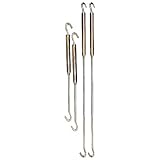
- Replacement standard turnbuckle set
- (4) turnbuckles
- (2) FM-TBS (Spring Loaded)
- (2) FM-TBR (Stress Guard)
- Fully adjustable
Some combinations need a platform to clear the bed rails or cab roof. The same guide says, “A dimensionally stable block spacer is recommended between the headboard of the pickup box and the forward edge of the camper floor.” Use only the spacer or platform arrangement approved for your specific camper. Do not improvise with compressible lumber, loose blocks, or hardware that can shift.
Use approved securement
A slide-in must be aligned so its floor bears correctly in the bed and then attached through the manufacturer-approved tie-down method. The Ford guide advises: “Consult your camper manufacturer/dealer for details regarding proper installation of your slide-in camper.” That advice matters because tie-down locations, turnbuckle tension, bed reinforcement, and required clearance hardware differ by truck and camper. A generic tie-down kit is not automatically suitable.
Independent reader supportYour contribution helps us test, update, and keep practical guides available for everyone.Loading, removal, and campsite setup
Installing a shell-style setup
- Verify that the shell matches the truck’s exact bed length, cab profile, rail shape, and tailgate arrangement.
- Inspect the bed rails and clamping surfaces; remove debris that could prevent an even seal.
- Place the shell with enough help or lifting equipment to avoid twisting it or striking the cab.
- Center it, close the tailgate, and check that doors, windows, and emergency exits operate.
- Tighten the specified clamps or fasteners evenly, then inspect seals and wiring for lights or fans.
- After the first drive, recheck fastener torque and look for movement, dust trails, or water entry.
Loading and securing a slide-in
- Confirm the truck’s payload and axle limits using the camper’s loaded-weight estimate, not its dry figure alone.
- Inspect jacks, lifting points, tie-downs, turnbuckles, spacers, and any approved platform before moving the camper.
- Raise the camper high enough for the truck to reverse underneath without contacting the cab, rails, or bed.
- Use a spotter and move slowly; stop if the camper shifts, a jack binds, or clearance changes unexpectedly.
- Lower the camper until its floor is fully supported as specified by the manufacturer, with the center of gravity in the approved position.
- Install and tension the approved securement hardware. Do not use tie-downs to pull a misaligned camper into place.
- Connect electrical or other systems only as directed, close all jacks and access doors, and perform a walk-around.
- Drive a short distance, stop on level ground, and recheck tension, clearances, and movement before highway travel.
Removing and storing a slide-in
Removal is the reverse operation but is not trivial. Choose firm, level ground, disconnect systems safely, support the camper on its approved jacks or storage stands, and leave enough clearance to drive the truck out without scraping the camper. Storage must protect seals, fabric, batteries, and plumbing from weather and freezing conditions. If you lack a level site, lifting equipment, or a spotter, use a qualified installer rather than treating removal as a one-person job.
Quick wins for a faster PC:
Repair Windows errors before they cause bigger problemsFix Now →Scan for outdated or missing drivers - takes under a minuteDriver Scan →Setting up at camp
A shell usually needs bedding arranged, ventilation opened, and gear organized. A pop-up slide-in adds roof raising and latching; a hard-sided slide-in skips that step but may need leveling and system checks. If the camper has water, propane, batteries, solar, or a wet bath, follow the maker’s operating and winterization instructions instead of assuming all systems work like a household installation.
Which arrangement fits which use case?
Choose a shell-style setup when simplicity is the priority
- You mainly need a dry sleeping platform and secure gear storage.
- Your truck has limited payload and you want to preserve as much margin as possible.
- You remove the camper frequently for hauling, commuting, or seasonal use.
- You prefer fewer appliances, tanks, seals, and components to maintain.
Choose a slide-in when living space matters more
- You take multi-day trips where a dinette, kitchen, water, power, or indoor shelter materially improves comfort.
- You need an over-cab bed or separated sleeping and living areas.
- You are prepared for loading equipment, storage, inspections, and truck-specific installation.
- Your exact truck/camper combination remains within payload, axle, center-of-gravity, and clearance limits when fully loaded.
Choose a pop-up slide-in for a middle path
A pop-up can deliver more amenities than a shell while keeping a lower travel profile than a hard-sided camper. It is a compromise, not a free gain: the roof must be raised at camp, and soft-sided sections require inspection and weather care.
A buyer’s inspection and quote checklist
- Write down the truck’s VIN-specific payload, axle ratings, bed length, cab style, and factory options.
- Obtain the camper’s dry weight, center-of-gravity location, floor dimensions, and maximum loaded weight.
- Ask which options are included in the quoted weight and price.
- Request a diagram showing required clearance, spacers or platforms, and approved tie-down points.
- Price installation, tie-down hardware, wiring, lifting, and storage separately.
- Calculate the truck’s ready-to-travel weight with people, water, fuel, food, tools, and recreational equipment.
- Have the seller or a qualified installer confirm fit before paying a deposit.
- Inspect the completed installation after an initial short drive and again before a long trip.
Bottom line
Use a shell-style truck-bed setup when you want the lightest, simplest way to sleep in the pickup and can live with limited headroom and amenities. Use a slide-in when a genuine living unit is worth the added price, weight, loading effort, and maintenance. The deciding test is not the label: it is whether one named camper, fully loaded, fits one specific truck’s ratings, dimensions, center of gravity, and approved securement method.
Quick Recap
Product prices and availability are accurate as of the date/time indicated and are subject to change. Any price and availability information displayed on Amazon at the time of purchase will apply.
The Tool Desk
Outbyte PC Repair FREEClear out junk files and repair common Windows errorsFree Scan →Outbyte Driver Updater FREEScan for outdated or missing drivers - takes under a minuteDriver Scan →



