Do these 3 things before closing this tab:
1Repair Windows errors before they cause bigger problems2Scan for outdated or missing drivers - takes under a minute3Clear out junk files and repair common Windows errorsNo—you do not need track experience to obtain a UK motorcycle licence. Licence preparation is built around road riding: completing Compulsory Basic Training (CBT), passing the motorcycle theory test, developing low-speed control and observation, and passing the practical test. An instructor-led track day is optional supplementary training. It can sharpen braking and cornering technique in a predictable environment, but it cannot replace roadcraft, statutory training or either part of the practical test.
What the UK motorcycle licence route actually requires
The licensing sequence matters because each stage develops a different group of skills. Track riding fits, if at all, around this route rather than instead of it.
As an Amazon Associate I earn from qualifying purchases.
- Complete CBT. The normal course has five parts: an introduction and eyesight check, on-site training, on-site riding, on-road training and on-road riding. Once CBT is completed, a learner can ride a motorcycle up to 125cc and 11kW on the road with L plates, or D plates in Wales, subject to the conditions set by GOV.UK.
- Pass the motorcycle theory test. The theory test must be passed before the motorcycle practical test can be taken. It checks the knowledge needed to identify hazards and make safe, lawful decisions, not your ability to circulate quickly on a circuit.
- Practise the practical-test manoeuvres. Training needs to cover slow-speed balance, observation, U-turns, controlled cornering, braking and competent starts and stops.
- Pass the practical test on the road and in the manoeuvre exercises. The examiner is looking for controlled machine handling combined with observation and safe road behaviour. A clean lap or fast corner is not a substitute for those requirements.
The official DVSA Guide to Riding – the essential skills is the appropriate baseline reference when planning lessons and checking what the test expects.
Windows Errors? Fix Them Before They Spread
Repair common Windows errors and clear accumulated junk for a smoother, more stable PC - no reinstall needed.Free scan · no reinstallOutdated Drivers Are Slowing You Down
One free scan finds every outdated or missing driver and matches the right update for your exact hardware.Free scan · exact hardware matchWhich skills are tested for a motorcycle licence?
Low-speed balance and the U-turn
A U-turn is a control and observation exercise, not a test of how tightly you can turn at speed. You need to keep the motorcycle balanced at low speed, select an appropriate pace, look where you intend to go and check the area before moving. Poor head movement, putting a foot down or allowing the motorcycle to run wide can expose a lack of control even when the turn itself is completed.
#1 Best Overall

- 2 Visors Included: Clear + Smoked and 1 Neck Scarf for Winter Use
- Streamlined Aerodynamic Design Reduces Wind Noise and Drag
- Advanced and Lightweight Durable ABS Shell
- Quick Release Clasp and Strap and Removable Inner Lining Pads
- Meets or Exceeds FMVSS-218 and DOT Safety Standards
Track riding rarely reproduces this exact demand. Circuits are designed for flowing movement, while a licence course requires deliberate, slow manoeuvring in a confined area. Practise the U-turn on the road-training site and in realistic low-speed spaces rather than assuming that fast, smooth circuit laps will create the same skill automatically.
Controlled cornering and braking
The practical test includes a cornering exercise followed by a controlled stop. DVSA examiner guidance gives a target approach speed of 30–50 km/h (20–30 mph) before braking. That is a target range, not a minimum: there is no minimum speed requirement. The objective is to demonstrate safe control and a controlled stop, not to carry the greatest possible speed into the turn.
Safe Driving for Life guidance for the described manoeuvres says to keep the motorcycle upright and not brake while cornering. That instruction is important for test preparation. Learners should complete braking in the appropriate phase, straighten the motorcycle as required and avoid treating the exercise as a racing corner.
What’s actually slowing this PC down?
Pick the symptom - the matching free tool is one click away.
Rank #2

- 【DOT Certified & High-Impact Protection】 This full face motorcycle helmet meets or exceeds DOT FMVSS-218 standards, ensuring professional-grade safety. Built with a rugged ABS shell and energy-absorbing EPS, these motorcycle helmets dot approved provide ultimate defense for street bikes, cruisers, and sport bikes
- 【Optimized Airflow for All-Weather Riding】 Experience superior ventilation with 4 strategically placed air intakes and exhaust vents. This full face helmet design minimizes wind resistance and fogging, keeping you cool during summer rides and providing a reliable full face helmet adult option for rainy or cold weather
- 【Quick-Release Dual Visor System】 Adapt to any light condition with ease. Our full face helmet motorcycle features a tool-free quick-release system. Each order includes a pre-installed tinted shield plus a bonus clear visor, making these full face motorcycle helmets for men and women versatile for both bright days and night riding
- 【Washable Lining & Comfort Fit】 Maintain freshness on every journey with our fully removable and machine-washable interior. The moisture-wicking sponge padding makes these motorcycle helmets for adults incredibly comfortable for long-distance trips, ensuring a snug fit for these full face motorcycle helmets dot certified
- 【Complete Bundle & Perfect Sizing】 We include a premium carrying bag for easy storage and scratch protection. Whether you are searching for motorcycle helmets for women or men, TRIANGLE offers 4 sizes (S-XL) to ensure a secure fit. Please measure your head circumference to find the perfect full face motorcycle helmet for women or men
Starts, stops and positioning
Road riding assessed in the practical test includes ordinary stopping, an angle start—pulling out from behind a parked vehicle—and a hill start where possible. These tasks combine clutch, throttle and brake coordination with an effective all-round check before moving. A rider who can operate the controls but fails to observe properly is not demonstrating test-standard riding.
Observation and roadcraft
The licence test is designed for public-road safety. That means recognising developing hazards, choosing a legal and visible position, adjusting speed for what can be seen, and responding to traffic and junctions. The road environment also includes vulnerable road users, changing weather, imperfect surfaces and visibility limits. Those demands continue after the test and are not removed by good circuit technique.
What track riding can add
The DVSA enhanced rider scheme syllabus describes alternative environments, including road-based track days, as places where riders can develop advanced control skills on road, track and off-road surfaces. It specifically notes that “instructor-led track days can be fun and informative – practise cornering and braking skills off-road”.
Rank #3
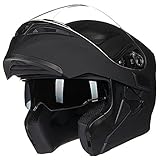
- High Resistance ABS Shell With Micrometrically Adjustable Strap
- Meets or Exceeds FMVSS-218 and DOT Safety Standards
- Helmet Liner / Cheek Pads are Lightweight, Soft and Easily Removable and Washable
- Sleek and Lightweight Design Reduces Wind Noise
- Modular Flip-Up Function Anti-Scratch, Anti-Fog and Wide View Clear Visor
More repeatable braking practice
A circuit gives you repeated opportunities to explore braking force under an instructor’s supervision, with the same sequence of bends and fewer traffic conflicts. You can concentrate on how progressively you apply the brakes, how the motorcycle settles and how your release of the brakes affects the turn. That feedback can make later road braking calmer and more deliberate.
Corner entry, turn-in and line choice
On a track, the direction of the next corner is known and the surface is generally more predictable than a public road. This allows practice of looking through a turn, choosing a line and making smooth steering inputs. The machine-control lesson can transfer to ordinary riding, provided you apply it at legal road speeds and leave a margin for hazards you cannot see.
Understanding grip changes
Supervised track work can help a rider feel how throttle, braking, steering and surface changes affect available grip. That is useful knowledge, but a road rider must expect the unexpected: damp patches, debris, repairs, painted surfaces, poor visibility and traffic may appear without warning. A circuit cannot teach you every version of those hazards.
Rank #4

- Unmatched Protection & Durability:Built Tough for Extreme Adventures, Our Helmet Exceeds Expectations by Meeting FMVSS-218 and DOT Safety Standards. Its Robust Construction Safeguards Ensuring Ultimate Security as You Conquer the Toughest Terrains
- Convenient Flip-Flop Mechanism: Easy Switching Between Full-Coverage Helmet and Open Mode, This Modular Motorcycle Helmet Is Perfect for City Riding and Long-Distance Touring
- Stay Cool and Comfortable with Strategically Placed Vents That Ensure Maximum Airflow and Reduce Heat and Moisture Buildup During the Ride
- Comfortable Interior Lining: Enjoy the Cozy Plush Lining That Provides Long-Lasting Comfort Even on Long Rides
- The Modular Design Makes It Suitable for Snowmobiles, Dirt Bikes, Scooters, Bike Riding and More. With Its Innovative Features, It Is Sure to Be an Ideal Choice for Riders Looking for a Stylish, Comfortable and Safe Helmet!
Track riding versus road riding: the practical differences
| Factor | Public-road riding | Track riding | Relevance to the licence |
|---|---|---|---|
| Traffic and hazards | Traffic, junctions, parked vehicles and vulnerable road users create changing conflicts. | Traffic is managed by the organiser, so ordinary road conflicts are reduced but not represented. | Essential. The test assesses safe interaction with the road environment. |
| Surface and direction | Surface quality, weather, visibility and the direction of hazards are uncertain. | The circuit layout and direction are known, and conditions are usually more predictable. | Helpful for machine control, insufficient for hazard perception. |
| Observation and legality | You must scan, signal or position appropriately, obey speed limits and respond to what is visible. | Instruction focuses on riding the circuit safely; normal road-law decisions are not the central task. | Essential. Track practice cannot replace road observation or legal compliance. |
| Braking practice | Braking must account for traffic, junctions, surface and visibility. | Repeated braking points allow focused practice of pressure and release under supervision. | Track work can supplement lessons; test braking still has to be practised in the required exercise. |
| Cornering practice | Corner speed is limited by sight lines, hazards, legal limits and changing grip. | Known corners allow work on turn-in, line and smooth control. | Transferable control skill, but not a licence exemption. |
| Speed control | Speed must be legal, appropriate to hazards and low enough to stop within what you can see. | Speed is managed for the circuit, session rules and rider ability. | The test rewards control, not lap times; the cornering exercise targets 30–50 km/h (20–30 mph) before braking. |
| Licensing status | CBT, theory and the practical test are statutory steps. | Track days are optional development activities. | No track attendance is required to obtain the licence. |
Is track riding harder than road riding?
They are difficult in different ways. A track removes many variables but asks for consistent, precise control through a sequence of corners. The pace can feel intense because the same decisions recur quickly, yet the direction and layout are known.
Road riding is less predictable. You may need to interpret a junction, a parked vehicle, a pedestrian, a changing surface and a restricted view at the same time. The machine-control demands may be less repetitive than on a circuit, but the observation and decision-making burden is greater. Someone who is comfortable on a track can still be an inexperienced road rider; someone who rides safely on the road may have no interest in circuit pace.
The Tool Desk
Outbyte PC Repair FREEClear out junk files and repair common Windows errorsFree Scan →Outbyte Driver Updater FREEScan for outdated or missing drivers - takes under a minuteDriver Scan →Can a track day teach you to pass the off-road manoeuvre test?
It can help with selected physical skills, but it cannot teach the complete test in isolation. The following distinction prevents the most common misunderstanding:
Best Value
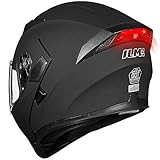
- High Resistance ABS Shell With Micrometrically Adjustable Strap
- Meets or Exceeds FMVSS-218 and DOT Safety Standards
- Helmet Liner / Cheek Pads are Lightweight, Soft and Easily Removable and Washable
- Sleek and Lightweight Design Reduces Wind Noise
- Modular Flip-Up Function Anti-Scratch, Anti-Fog and Wide View Clear Visor
| Practical-test requirement | What a supervised track session may help with | What still needs road-based practice |
|---|---|---|
| Controlled braking | Feeling progressive brake pressure, weight transfer and a repeatable stopping process. | Stopping at the required point while observing, staying within the exercise parameters and adapting to real surfaces. |
| Controlled cornering | Looking through a turn, making smooth steering inputs and understanding how line choice affects control. | Keeping the motorcycle upright as directed, avoiding braking while cornering in the described manoeuvre and selecting a safe speed for the sight line. |
| Low-speed U-turn | General throttle, clutch and balance awareness if the instructor includes low-speed work. | The actual slow-speed U-turn, including observation and balance in the test layout. |
| Road starts and stops | Basic coordination between the controls. | Stopping, the angle start from behind a parked vehicle and a hill start where possible, with full observation and road positioning. |
| Hazard perception | Little direct practice, because the circuit environment is managed and predictable. | Recognising traffic, junctions, vulnerable road users, visibility limits, weather and surface hazards on public roads. |
Therefore, a track day may make one part of your control more consistent, but it does not replace the statutory training sequence or the on-road preparation needed for the practical test.
Independent reader supportYour contribution helps us test, update, and keep practical guides available for everyone.Which environment is safer for learning?
A supervised track can reduce ordinary traffic conflicts and give an instructor room to focus on braking and cornering. That makes it a useful environment for a rider who already has basic control and wants structured practice. It is not automatically safe: the activity still involves motorcycles, changing grip and the possibility of errors, so the organiser’s rules and the instructor’s limits matter.
Road training is indispensable because the licence authorises road use, not circuit use. It teaches you to manage uncertainty, visibility and other road users. The safest progression is to learn the fundamentals on the road with a qualified instructor, add track work only when it supports a defined control goal, and then return to the road to apply that skill conservatively.
A sensible way to combine road and track training
- Finish CBT thoroughly. Treat all five CBT parts as learning stages, not a formality. Get comfortable with basic control before adding an optional environment.
- Pass the theory test early. Knowledge of hazards and safe decisions gives your practical lessons a framework and is required before the practical test.
- Build low-speed control on the training site. Practise balance, observation, stopping and the U-turn until you can repeat them without rushing.
- Develop roadcraft on public roads. Work on starts, stops, junctions, positioning, speed choice and responses to traffic, weather and surface changes.
- Add an instructor-led track session only for a clear purpose. Suitable goals include progressive braking, smooth corner entry or understanding how line choice affects control. Do not use the session as a race or as a substitute for test practice.
- Translate the lesson back to the road. Use the same smooth control at legal speeds, with a margin for limited sight lines and hazards. A track line is not automatically the correct line on a public road.
- Book the practical test when your road performance is repeatable. You should be able to perform the manoeuvres while observing properly, not merely complete them once under ideal conditions.
Common mistakes when riders rely too heavily on track experience
- Chasing speed instead of control. The test has a 30–50 km/h (20–30 mph) target for the cornering approach and no minimum speed. Going faster does not earn extra credit.
- Braking in the corner during the described exercise. Follow the guidance to keep the motorcycle upright and complete braking in the appropriate phase.
- Neglecting the U-turn. Fast cornering does not prove low-speed balance or the observation required for a confined turn.
- Assuming a predictable surface will always be available. Public roads can have weather-affected grip, debris, repairs and poor visibility.
- Ignoring legal and traffic decisions. A circuit cannot rehearse every junction, vulnerable road user or speed-limit decision you will meet after licensing.
- Treating a track instructor as a licence examiner. Track coaching may improve technique, but only the statutory test establishes whether you meet the licensing standard.
How to choose an optional track session
Look for instruction rather than an unsupervised attempt to ride quickly. Before booking, confirm the organiser’s current licence and insurance arrangements, required equipment and learner-eligibility rules. There is no single universal rule for who may attend, what motorcycle can be used or what protective equipment is required, so check the provider’s terms directly.
Tell the instructor that your objective is road-safe control, not lap performance. Ask for feedback on braking smoothness, observation and line choice, and explain that you are preparing for a UK motorcycle test. A useful session should leave you with one or two specific habits to practise on the road, not a general instruction to increase pace.
Readiness checklist for the practical test
Before booking, check that you can consistently:
- Complete a deliberate all-round observation before moving, stopping or starting.
- Maintain balance and control through the U-turn without relying on speed.
- Approach the cornering exercise within the 30–50 km/h (20–30 mph) target range, then make a controlled stop.
- Keep the motorcycle upright and avoid braking while cornering in the described manoeuvres.
- Perform an ordinary stop, an angle start from behind a parked vehicle and a hill start where possible.
- Choose a legal, visible road position and adjust speed for traffic, junctions, vulnerable road users, weather, surface and visibility.
- Repeat the sequence on different roads and in changing conditions rather than only on a familiar route.
Bottom line: road skills earn the licence; track skills can support them
For a UK motorcycle licence, prioritise CBT, the theory test, low-speed balance, observation, U-turns, controlled cornering and braking, starts and stops, and competent road riding. Track riding is an optional, instructor-led way to practise braking and cornering with fewer traffic variables. Use it as a supplement, then return to public-road training: the test and the licence are about controlling a motorcycle safely among real hazards, not completing laps.
Quick Recap
Product prices and availability are accurate as of the date/time indicated and are subject to change. Any price and availability information displayed on Amazon at the time of purchase will apply.




