Toyota and Yamaha really did develop a hydrogen-burning 5.0-liter V-8 based on the Lexus RC F engine. That is the part of the story worth getting excited about. The misleading part is the suggestion that Toyota has announced an upcoming production engine capable of “burying” electric vehicles.
No verified Toyota or Lexus announcement currently provides a launch date, vehicle application, price, range, customer-order plan, or production specification for this V-8. It remains a prototype and development program—an impressive one, but not a replacement for the battery-electric car on the evidence available today.
As an Amazon Associate I earn from qualifying purchases.
What Toyota’s hydrogen V-8 actually is
The engine is a hydrogen internal-combustion engine. It burns hydrogen inside cylinders, broadly following the operating principle of a gasoline engine. That makes it fundamentally different from the Toyota Mirai, which uses a hydrogen fuel cell to produce electricity for an electric motor.
Quick wins for a faster PC:
Repair Windows errors before they cause bigger problemsFix Now →Scan for outdated or missing drivers - takes under a minuteDriver Scan →Clear out junk files and repair common Windows errorsFree Scan →The starting point was the naturally aspirated 5.0-liter V-8 used in the Lexus RC F. Yamaha worked with Toyota on adapting the engine to hydrogen combustion while preserving the sound, throttle response, and mechanical character associated with a conventional performance engine.
#1 Best Overall

- Horizon puts renewable energy technology into the hands of our future scientists
- Fuel Cell Car Science Kit uses a PEM fuel cell to combine electrolysis and power conversion
- Watch as oxygen and hydrogen gases are formed to power the car
- Combining cutting-edge science, education and fun for all!
- Includes PEM fuel cell and car, education manual and experiment guide
Contemporary reporting that cited Yamaha described the prototype at approximately 449 horsepower and 398 lb-ft of torque. Those figures should be treated as reported test-engine numbers, not as an official retail specification. Toyota and Yamaha have not announced a production Lexus or Toyota vehicle using this engine.
| Claim | What is verified |
|---|---|
| Engine type | Hydrogen-burning internal-combustion V-8 |
| Base engine | 5.0-liter naturally aspirated Lexus RC F V-8 |
| Reported output | About 449 hp and 398 lb-ft, based on contemporary reporting |
| Production vehicle | None announced by Toyota or Lexus |
| Launch date or price | Not announced |
Why a hydrogen combustion engine appeals to Toyota
The attraction is not simply “hydrogen is cleaner.” Toyota is trying to preserve some of the qualities that battery-electric drivetrains do not reproduce in the same way: rapid changes in engine speed, exhaust sound, traditional gearing, and the emotional connection of a combustion powertrain.
A hydrogen V-8 can also use much of the existing combustion-engine knowledge base. It still requires substantial changes to fuel delivery, combustion control, storage, calibration, and emissions treatment, but it does not require replacing the entire vehicle experience with a motor-and-battery layout.
Recommended Free Tools
Yamaha says its hydrogen engine produces no CO2 from the combustion of hydrogen itself. That is a narrower claim than saying the vehicle has no emissions. Trace oil consumption is excluded from Yamaha’s statement, and hydrogen combustion can still create nitrogen oxides.
Hydrogen combustion is not a “water-powered” engine
Hydrogen is the fuel. Water is not poured into the engine and converted into free energy.
Hydrogen can be made by splitting water through electrolysis, but that process requires electricity. The resulting hydrogen must then be compressed or liquefied, transported, stored, and dispensed. Each step consumes energy and affects the vehicle’s total environmental footprint.
The source of that electricity matters. Hydrogen produced with renewable electricity can have a substantially different climate impact from hydrogen made using fossil energy. Toyota’s own hydrogen strategy discusses several production routes, including electrolysis and biogas, rather than treating every kilogram of hydrogen as automatically carbon-free.
Rank #2

- The Hydrogen fuel trolley uses zinc particles and food grade citric acid to synthesize hydrogen, and then uses the produced hydrogen and air to generate electricity to drive the trolley.
- During the experiment, please use 80℃ hot water for Combination reaction (if the water temperature is low, the amount of hydrogen and air pressure from the Combination reaction are insufficient, the fuel cell cannot be used for power generation), and then take off the plug of the vent pipe at the lower part of the fuel cell, release the gas in the rubber hose immediately, and then plug it back immediately, so that only pure hydrogen and air are in the fuel cell, so that the fuel cell can generate hydrogen air power.
Does it produce only water?
No—not in the same straightforward sense as a fuel-cell vehicle.
A fuel-cell electric vehicle combines hydrogen and oxygen in a fuel cell to generate electricity. The main tailpipe outputs are water vapor and warm air. In a hydrogen internal-combustion engine, hydrogen is burned in air at high temperatures. That combustion can form nitrogen oxides, or NOx, even though the hydrogen itself contains no carbon.
Toyota’s hydrogen HiAce pilot illustrates the issue. Its V-6 hydrogen engine uses selective catalytic reduction to control NOx and meet Euro VI requirements. That is a useful reminder that hydrogen combustion still needs an exhaust-purification system.
| Powertrain | How it uses hydrogen | Tailpipe considerations |
|---|---|---|
| Hydrogen fuel-cell vehicle | Converts hydrogen into electricity for an electric motor | Primarily water vapor and warm air |
| Hydrogen combustion vehicle | Burns hydrogen inside an engine | No fuel-derived CO2, but NOx can form |
| Battery EV | Uses electricity stored in a battery | No tailpipe emissions |
Toyota’s current programs do not confirm a V-8 road car
Toyota’s public hydrogen-combustion work has continued, but the programs currently documented by the company point to development and commercial applications rather than a production 5.0-liter V-8 passenger car.
The Tool Desk
Outbyte PC Repair FREERepair Windows errors before they cause bigger problemsFix Now →Outbyte Driver Updater FREEFix the driver behind crashes, sound loss and screen glitchesFind Drivers →- Hydrogen combustion development began in Japan in 2017. Toyota subsequently raced a hydrogen-powered Corolla Sport in 2021, using motorsport to develop combustion, fueling, and durability technology.
- The GR Corolla H2 remains a race and concept program. Toyota’s newer work includes liquid-hydrogen storage, combustion efficiency, fuel-pump durability, and faster, safer refueling. Toyota describes these efforts as technology development for possible future production vehicles, not as a finalized consumer launch.
- The Australian HiAce pilot uses a different engine. It has a turbocharged V-6 modified for compressed hydrogen, making 120 kW and 354 Nm. The van carries three hydrogen tanks and uses SCR for NOx control. It is not the RC F-derived 5.0-liter V-8.
- Commercial vehicles and infrastructure are increasingly central. Toyota’s North American hydrogen announcements have emphasized Class 8 fuel-cell trucks, infrastructure, stationary power, and next-generation fuel-cell stacks. None announces a production hydrogen V-8 passenger vehicle.
Why the V-8 is unlikely to bury EVs
The prototype solves one problem—showing that a high-performance combustion engine can run on hydrogen. It does not yet solve the larger problems that determine whether a powertrain can replace battery EVs at scale.
1. The energy chain is less efficient
Electricity used directly in a battery EV avoids several conversion steps. With a hydrogen vehicle, electricity may be used to produce hydrogen, compress or liquefy it, transport it, and then convert it into motion through either a fuel cell or an engine.
The U.S. Department of Energy notes that fuel cells can be two to three times more efficient than internal-combustion engines. A hydrogen combustion V-8 would add another efficiency disadvantage compared with a hydrogen fuel-cell vehicle, while a battery EV generally avoids the hydrogen-production and distribution chain altogether.
Rank #3
- The Hydrogen fuel trolley uses zinc particles and food grade citric acid to synthesize hydrogen, and then uses the produced hydrogen and air to generate electricity to drive the trolley.
- During the experiment, please use 80 ℃ hot water for Combination reaction
- And then take off the plug of the vent pipe at the lower part of the fuel cell, release the gas in the rubber hose immediately, and then plug it back immediately, so that only pure hydrogen and air are in the fuel cell, so that the fuel cell can generate hydrogen air power.
2. Refueling infrastructure is limited
Hydrogen stations remain concentrated in a small number of markets, and availability can be inconsistent even where stations exist. A mass-market hydrogen-ICE fleet would need reliable high-pressure or liquid-hydrogen infrastructure, compatible transport and storage equipment, and a large supply of affordable fuel.
Free tools Windows power users keep installed
One-click scans. No signup required.
That is a much higher hurdle than proving that an engine can combust hydrogen on a test track. It also affects vehicle packaging: hydrogen tanks are large, technically demanding, and consume space that a gasoline tank would not require.
3. There is no confirmed production business case
Toyota and Yamaha have not published a customer price, maintenance schedule, certified fuel economy, driving range, crash certification, or production timeline for the V-8. Without those details, there is no basis for claiming that it will outperform EVs on cost, convenience, range, or ownership.
4. Hydrogen does not automatically remove climate impact
The engine can eliminate carbon dioxide produced directly by burning a carbon-free fuel. That is valuable, but the full result depends on how the hydrogen is made and delivered. A vehicle using hydrogen from a carbon-intensive supply chain is not equivalent to one using renewable hydrogen.
Independent reader supportYour contribution helps us test, update, and keep practical guides available for everyone.What the prototype could still change
Calling the project irrelevant would be just as inaccurate as calling it an EV killer. Hydrogen combustion could have a role in applications where battery weight, charging time, operating cycles, or driver expectations make electrification difficult.
Motorsport is particularly useful because it exposes fuel-system, thermal-management, lubrication, durability, and refueling problems under extreme conditions. Toyota’s racing programs may eventually transfer improvements into commercial vehicles, specialty cars, or other applications.
The technology may also appeal to enthusiasts who want a lower-carbon route to retain a conventional engine’s sound and response. That is a narrower opportunity than replacing mainstream EVs, but it is a credible reason for Toyota and Yamaha to keep developing the concept.
Rank #4
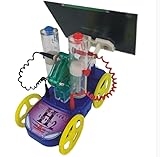
- Hydrogen Fuel Cell and Solar Power Generate Car
What would need to happen before it becomes a production engine?
- Toyota would need to identify a specific production vehicle and market.
- The engine would need certified emissions results, including NOx performance under real-world driving conditions.
- Hydrogen storage would need to meet crash, durability, packaging, and refill-time requirements.
- Toyota and its partners would need a dependable supply of competitively priced, low-carbon hydrogen.
- The company would need to publish verified power, range, efficiency, warranty, and service information.
- A refueling network would need to exist where customers could actually use the vehicle.
None of those milestones has been publicly confirmed for a production 5.0-liter hydrogen V-8.
FAQ
Is Toyota making a production hydrogen-powered 5.0-liter V-8?
Toyota and Yamaha developed and tested a 5.0-liter hydrogen V-8 prototype based on the Lexus RC F engine. No verified Toyota or Lexus announcement confirms a production vehicle, launch date, price, or customer-order plan for it.
Is the Toyota hydrogen V-8 a fuel-cell vehicle?
No. It is an internal-combustion engine that burns hydrogen inside its cylinders. A fuel-cell vehicle, such as the Toyota Mirai, converts hydrogen into electricity to power an electric motor.
Does a hydrogen combustion engine produce only water?
No. Hydrogen combustion can avoid fuel-derived CO2, but high-temperature combustion can produce nitrogen oxides. Toyota’s hydrogen HiAce pilot uses selective catalytic reduction to control NOx.
Could the hydrogen V-8 replace battery EVs?
There is no current evidence for that conclusion. The prototype demonstrates the viability of hydrogen combustion, but efficiency, hydrogen production, infrastructure, storage, cost, and the lack of a production program remain major obstacles.
The Bottom Line
The Toyota-Yamaha hydrogen V-8 is a legitimate and technically interesting prototype, not a confirmed upcoming production engine. It shows that hydrogen can preserve the character of a large combustion engine while removing carbon from the fuel itself. It does not eliminate NOx, infrastructure problems, hydrogen-production emissions, or the efficiency advantage of using electricity directly in a battery EV. Until Toyota announces a vehicle, specifications, pricing, and a refueling plan, “potential to bury EVs” is headline drama—not an established automotive forecast.
What’s actually slowing this PC down?
Pick the symptom - the matching free tool is one click away.
Quick Recap
Product prices and availability are accurate as of the date/time indicated and are subject to change. Any price and availability information displayed on Amazon at the time of purchase will apply.




