There is no evidence-based, universal winner between the Toyota Tundra V6 and Ford F-150 EcoBoost. The names cover different engines, model years, drivetrains and trims, while ownership cost changes sharply with fuel prices, mileage, towing, insurance, financing and depreciation. A broad RepairPal comparison favors the Tundra on aggregate reliability and average annual repair-cost measures, but it is not a controlled comparison of the current engines. The most important current reliability issue is vehicle-specific: certain 2022–2024 Tundras with the V35A engine are covered by NHTSA recalls involving possible manufacturing debris and engine failure.
This guide compares the latest clearly documented specifications—Ford’s 2026 F-150 2.7L and 3.5L EcoBoost V6 engines with Toyota’s 2025 3.4L i-FORCE gas V6 and i-FORCE MAX hybrid—then gives you a method for calculating the cost of a particular truck. Treat the figures as year- and configuration-specific, not as proof that one badge is inherently more reliable or cheaper.

As an Amazon Associate I earn from qualifying purchases.
What exactly is being compared?
“Tundra V6” can mean Toyota’s 3.4L twin-turbo i-FORCE gasoline engine or the related i-FORCE MAX hybrid powertrain. “F-150 EcoBoost” can mean the 2.7L or 3.5L twin-turbo gasoline V6. Ford also sells a 3.5L PowerBoost hybrid, but that is a separate configuration and should not be mixed into a gas-EcoBoost comparison.
The Tool Desk
Outbyte Driver Updater FREEFix the driver behind crashes, sound loss and screen glitchesFind Drivers →Outbyte PC Repair FREERepair Windows errors before they cause bigger problemsFix Now →The specification references below use a 2025 Tundra brochure and Ford’s 2026 F-150 information. Those are different model years, so a purchase decision should match the same year, cab, bed, axle ratio, drive system and trim before comparing prices, fuel economy, warranty or towing.
#1 Best Overall

- 1:18 Special Edition. Detailed die-cast precision model. Large - approx 9.5" replica.
- Die-cast metal body. Opening doors and engine compartment.
- Full functioning steering. Four-wheel suspension.
- Detailed chassis with separate exhaust system.
- Mounted on plastic stand.
Generation matters as much as displacement. A used 2022 Tundra, a new 2025 Tundra and an older F-150 may have different software, cooling hardware, warranty language, emissions equipment and service histories even when their engine names sound similar. Record the vehicle identification number and build details before relying on an online specification or a dealer listing.
Power, torque and capability
| Truck and engine | Model-year reference | Maximum output | Powertrain description |
|---|---|---|---|
| Ford F-150 2.7L EcoBoost V6 | 2026 | 325 hp and 400 lb-ft | Gasoline twin-turbo V6 |
| Ford F-150 3.5L EcoBoost V6 | 2026 | 400 hp and 500 lb-ft | Gasoline twin-turbo V6 |
| Toyota Tundra 3.4L i-FORCE V6 | 2025 | Up to 389 hp and 479 lb-ft | Gasoline twin-turbo V6; output varies by grade |
| Toyota Tundra i-FORCE MAX | 2025 | Up to 437 hp and 583 lb-ft | Hybrid powertrain; output varies by grade and drivetrain |
These are manufacturer maximums for specified versions. They describe performance potential, not expected failure rates, fuel bills or long-term durability. Toyota’s 2025 EPA-estimated table reaches up to 22 mpg combined for select Tundra hybrid configurations. That is not a lineup-wide number; use the window-sticker rating for the exact cab, drive system, axle and trim.
Ford’s 2026 F-150 information lists a maximum 13,500-pound gas towing rating for certain properly equipped configurations. It does not apply to every EcoBoost truck. Payload, tongue weight, cooling equipment, passenger weight, axle ratio and trailer-brake requirements can reduce the practical rating. Select the exact truck’s trailering guide rather than applying the headline maximum.
Free tools Windows power users keep installed
One-click scans. No signup required.
How to interpret the engine choices
The 2.7L EcoBoost may be sufficient when the truck is primarily a commuter or carries moderate loads; the 3.5L’s 400 hp and 500 lb-ft provide more reserve for demanding trailers, but a larger engine can bring a higher purchase price or fuel expense depending on the configuration. The Tundra gas V6 and i-FORCE MAX hybrid likewise serve different use cases. The hybrid’s published peak output and selected 22-mpg combined rating cannot be assigned to a gas Tundra or to every body style. Compare the exact window sticker and payload label.
Maximum tow ratings are laboratory and configuration limits, not a promise of comfortable performance in every situation. A trailer near the limit leaves less capacity for passengers, cargo, hitch weight and hot-weather operation. For a frequent tower, verify payload first, then trailer rating, axle ratio, cooling equipment and hitch hardware. Include the cost of trailer tires, brake service and more frequent consumable replacement in the ownership estimate.
What the reliability evidence actually shows
A significant Tundra recall is VIN-specific
NHTSA campaign 25V767, published November 12, 2025, covers certain 2022–2024 Toyota Tundras equipped with the V35A engine. The notice says manufacturing debris may contaminate the engine, cause main-bearing failure, and lead to an engine stall and loss of drive power. It lists 126,691 potentially affected vehicles across the specified Toyota and Lexus models. That count is the population covered by the campaign, not the number of confirmed engine failures.
NHTSA campaign 26V320, published May 22, 2026, expands the earlier work to certain 2024 Tundras with a V35A engine and lists 43,566 potentially affected vehicles. The two figures describe different notices and may overlap; do not add them together. At the time of those notices, the remedy was reported as under development. Recall remedies and affected VIN ranges can change, so check the actual VIN with NHTSA and Toyota immediately before buying, selling or publishing a vehicle assessment.
Crashes, No Sound, or Screen Glitches?
Random freezes, missing sound and display glitches usually trace back to one bad driver. Find and replace yours safely.Free scan · under a minuteWindows Errors? Fix Them Before They Spread
Repair common Windows errors and clear accumulated junk for a smoother, more stable PC - no reinstall needed.Free scan · no reinstallRank #2

- SCALE DETAILS: Precisely crafted 1:46 O scale die-cast metal model of the 2019 Dodge Ram 1500 pickup truck, measuring approximately 5 inches in length
- AUTHENTIC DESIGN: Features detailed black exterior finish, realistic wheels, and accurate body styling matching the full-size 2019 Ram 1500 truck
- CONSTRUCTION: Built with durable die-cast metal construction and high-quality plastic components for long-lasting play value
- DISPLAY QUALITY: Perfect for collectors and enthusiasts, with authentic detailing including grille, headlights, and body contours
- RECOMMENDED AGE: Suitable for ages 3 years and up, makes an ideal gift for truck enthusiasts and young collectors
An open recall is not automatically proof that every engine will fail, and a completed recall is not a substitute for checking maintenance and condition. Ask the dealer to show the campaign status and retain the repair order. If no remedy is available, ask how the truck will be supported, whether a loaner or towing assistance is offered, and whether you are comfortable carrying that uncertainty. Do not assume that a 2022, 2023 or 2024 badge alone identifies an affected vehicle.
What is known about F-150 EcoBoost reliability
The official specifications provide Ford’s power ratings and towing information, but they do not establish an engine-specific, longitudinal failure rate for either the 2.7L or 3.5L EcoBoost. Horsepower, marketing language and owner anecdotes cannot be converted into a comparable probability of failure. Reliability also depends on model year, maintenance, cooling load, towing use, software updates, accident history and how a previous owner operated the truck.
For a used EcoBoost, look for consistent oil-service records, evidence that cooling and turbocharger systems were maintained, and diagnostic scans without unresolved warning codes. A clean inspection of one truck is more useful than a generalized reputation attached to an entire engine family. Ask whether the truck spent its life towing, idling commercially or operating in severe conditions, because those uses can affect wear and service needs.
How to use the RepairPal comparison
RepairPal’s broad comparison places the Tundra ahead on its aggregate reliability and average annual repair-cost measures. That is useful context when comparing large populations, but it does not isolate the current-generation 3.4L V6, the i-FORCE MAX hybrid, the 2.7L EcoBoost or the 3.5L EcoBoost. It also does not control for age, mileage, trim, regional labor rates, severity of repairs or individual maintenance history. Use the ranking as a prompt to investigate a specific truck, never as a guarantee of lower bills.
What’s actually slowing this PC down?
Pick the symptom - the matching free tool is one click away.
Warranty and recall questions to ask
Warranty terms are model-year documents, not permanent brand promises. Toyota’s published 2023 information listed a 3-year/36,000-mile basic warranty and a 5-year/60,000-mile powertrain warranty, with separate coverage for the hybrid battery. Those figures provide historical context only. Obtain the warranty guide for the exact 2025 or 2026 vehicle, including exclusions, mileage caps, transfer rules and any required maintenance documentation.
Ask whether the truck is still within bumper-to-bumper and powertrain coverage, whether a certified-used program changes the terms, and which components are excluded. Recall repairs are separate from ordinary warranty repairs. A dealer may be able to sell a vehicle with a campaign pending, but you should know whether parts and a remedy are available before signing. Save VIN lookup results, repair orders and written promises.
Why ownership cost cannot be reduced to a reliability ranking
Total cost is the sum of costs over the period you own one particular truck. Two trucks with similar purchase prices can produce different results because one is driven 8,000 miles per year and the other 25,000, or because one tows frequently, uses four-wheel drive and carries heavy loads.
Rank #3
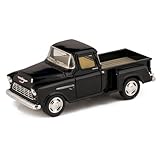
- CLASSIC DESIGN: Authentic 1:32 scale replica of the iconic 1955 Chevrolet Step Side pickup truck in vibrant paint finish with detailed exterior features
- FUNCTIONAL FEATURES: Working doors that open and close, plus pull-back action mechanism for interactive play value
- QUALITY CONSTRUCTION: Die-cast metal body construction with plastic components and rubber tires for enhanced durability and detail
- PERFECT SIZE: Compact 5-inch length makes it ideal for display or play while maintaining impressive detail and authenticity
- REALISTIC DETAILS: Features authentic styling elements including chrome-look trim, detailed grille, and period-correct wheel designs
Purchase price, taxes and financing
Compare transaction prices for the same model year, cab, bed, drivetrain, axle ratio and equipment. Include sales tax, registration, documentation fees, delivery charges and finance interest. A lower advertised price can disappear when it carries a higher interest rate, fewer warranty benefits or expensive options you would otherwise add later. Compare the total amount paid, not just the monthly payment, and account for the value of a trade-in separately from the truck’s true purchase price.
Fuel
Use the exact EPA or window-sticker combined rating for each candidate. Estimate annual fuel cost with this calculation:
annual fuel cost = annual miles ÷ vehicle mpg × local fuel price
Replace the sticker rating with a conservative personal estimate if your use is dominated by towing, short trips, winter operation, high speeds or heavy payloads. The 22-mpg figure applies only to select 2025 Tundra hybrid configurations; it should not be assigned to every Tundra, the gasoline V6 or an F-150 without a matching rating. Run low, expected and high fuel-price scenarios because fuel prices and real-world consumption are uncertain.
Scheduled maintenance and consumables
Request the maintenance schedule for the exact year and engine. Budget oil and filter services, inspections, fluids, brake work, alignment, battery replacement, wiper blades and tires. Tire size and load rating matter: an off-road or heavy-duty package can cost more than a road-oriented tire, and towing can accelerate wear. Obtain written estimates from shops in your area rather than using a national average.
Recommended Free Tools
Hybrid ownership adds components and coverage questions, but the presence of a hybrid does not by itself establish lower or higher lifetime cost. Ask for the hybrid-specific maintenance and warranty documents, confirm battery coverage, and price replacement tires and brakes for the actual trim. Do not compare a hybrid’s best fuel rating with a gas truck’s worst rating or vice versa.
Repairs, warranty and recall work
Ask for invoices and confirm which repairs were performed by the owner, a dealer or an independent shop. Separate routine maintenance from a major repair when comparing vehicles. Check the remaining bumper-to-bumper and powertrain coverage, mileage limits, exclusions and transfer rules for the specific model year. Recall repairs are distinct from ordinary warranty work; confirm that every open campaign has a completed remedy or obtain the dealer’s written status.
Rank #4
Insurance, financing and depreciation
Insurance premiums can differ substantially by ZIP code, driver, deductible, safety equipment, replacement value and claim history. Get quotes using the exact VIN or an identically equipped vehicle. Add loan interest, expected resale value and depreciation over the number of years you expect to keep the truck. A truck that costs slightly more up front can still be cheaper over five years if it retains more value, but resale is local and assumption-sensitive.
A repeatable comparison for two actual trucks
- Define the candidates. Record model year, generation, trim, cab, bed length, two- or four-wheel drive, engine, axle ratio, mileage and equipment. Do not compare a Tundra hybrid with a gas EcoBoost while calling the result a V6-only comparison.
- Match the job. Write down annual miles, typical passengers, payload, trailer weight, trailer frequency, terrain and parking constraints. Eliminate trucks that cannot meet the required payload or trailer rating with the intended configuration.
- Verify the VIN. Run each VIN through the NHTSA and manufacturer recall tools. Save the campaign numbers, remedy status and repair invoice. For a V35A Tundra, treat this step as mandatory because the cited campaigns are not safely resolved by a model-year headline.
- Collect operating inputs. Use the exact window-sticker fuel rating, your local fuel price, annual mileage, tire quotes, scheduled-service prices and insurance quotes. Ask the seller for maintenance records and recent repair bills.
- Calculate annual and holding-period totals. Add fuel, maintenance, tires, insurance, financing, taxes and expected repairs. Subtract estimated resale value from purchase and ownership costs. Show optimistic and conservative fuel, repair and resale assumptions instead of presenting one false-precision number.
- Adjust for risk. Give a used truck with incomplete records, an unresolved recall or a failed inspection a larger contingency reserve. A general reliability ranking cannot compensate for evidence that a particular vehicle was neglected.
- Stress-test the result. Recalculate if annual mileage rises, fuel prices change, a second set of tires is needed, or the holding period shortens. Note which assumption changes the answer most; that is where a quote or inspection adds the greatest value.
How the choice changes by buyer type
The high-mileage commuter
Fuel economy and insurance may dominate this buyer’s budget. Compare a year-matched hybrid Tundra only with an F-150 configuration whose verified EPA rating and transaction price make sense for the mileage. Calculate fuel from local prices; do not assume the Tundra’s best hybrid figure applies to every body style. A lower-mileage buyer may find that purchase price, financing and depreciation outweigh small fuel savings.
The frequent tower
Start with payload and trailer requirements, not the engine badge. Confirm the exact tow rating, payload sticker, axle ratio, cooling equipment and hitch hardware. Ford’s 13,500-pound maximum applies only to certain gas F-150 configurations, while Tundra capability also varies by grade and drivetrain. Include fuel consumption, tire wear and service intervals under trailer use in the cost model. Leave a practical margin below the published maximum for passengers, cargo, weather and grades.
The used-truck buyer
Condition and documentation should outweigh a broad brand score. Favor a truck with complete service records, a clean inspection, verified software and recall completion, and tires and brakes with useful remaining life. Price an independent pre-purchase inspection before committing, especially when a recall remedy is pending or the seller cannot explain an engine repair. Verify that the VIN on the title, dashboard and recall records matches.
The long-term owner
Estimate depreciation, warranty expiration, insurance and likely maintenance over the years you will keep the truck. Confirm whether hybrid components have separate coverage. Toyota’s 2023 published terms, for historical context, listed a 3-year/36,000-mile basic warranty and a 5-year/60,000-mile powertrain warranty, with separate hybrid-battery coverage. Those terms are not a substitute for the warranty guide for a 2025 or 2026 vehicle. Keep a repair reserve after the factory warranty ends and reassess insurance as the truck’s value changes.
Independent reader supportYour contribution helps us test, update, and keep practical guides available for everyone.Inspection checklist before purchase
- Match the VIN, engine and build information to the advertised model and trim.
- Check open recalls and obtain documentation for completed repairs.
- Review oil-change, transmission-service, cooling-system and differential records.
- Look for warning lights, rough starts, smoke, fluid leaks, overheating evidence and abnormal turbo or drivetrain noises.
- Measure tire wear and confirm that all four tires match when the truck uses four-wheel drive.
- Inspect frame, hitch, wiring and suspension for corrosion, impact damage or signs of heavy commercial towing.
- Test four-wheel drive, trailer-brake operation, cameras, sensors, infotainment and climate controls.
- Have an independent technician scan modules and perform a road test before purchase.
- Obtain insurance quotes and confirm financing terms for the actual VIN.
- Ask for a cold start and inspect the truck before the seller warms it up; note any delayed starting, unusual smoke or warning messages.
Practical decision rule
Choose the Tundra when the specific truck meets your payload and towing needs, has a clean VIN and service history, and its purchase price, verified fuel rating and warranty position produce the better calculation for your driving pattern. Give special attention to V35A recall status on affected 2022–2024 and certain 2024 trucks.
Choose the F-150 EcoBoost when its exact configuration better fits your trailer or payload requirements, local pricing and insurance are more favorable, or its documented condition is materially stronger than the comparable Tundra. Select between the 2.7L and 3.5L based on the work you actually do; the 3.5L’s 400 hp and 500 lb-ft are not automatically worth its additional fuel or purchase cost for a light-duty commuter.
Best Value

- SCALE DETAILS: Precisely crafted 1:46 O scale die-cast metal model of the 2019 Dodge Ram 1500 pickup truck, measuring approximately 5 inches in length
- AUTHENTIC DESIGN: Features detailed black exterior finish, realistic wheels, and accurate body styling matching the full-size 2019 Ram 1500 truck
- CONSTRUCTION: Built with durable die-cast metal construction and high-quality plastic components for long-lasting play value
- DISPLAY QUALITY: Perfect for collectors and enthusiasts, with authentic detailing including grille, headlights, and body contours
- RECOMMENDED AGE: Suitable for ages 3 years and up, makes an ideal gift for truck enthusiasts and young collectors
The defensible conclusion is conditional: current evidence does not support calling either lineup universally more reliable or cheaper to own. Match the engine, year and equipment, verify the VIN, and calculate costs from your mileage, fuel price, insurance quote, maintenance records and holding period.
Frequently Asked Questions
Is the Tundra V6 more reliable than the F-150 EcoBoost?
There is no controlled, engine-specific comparison establishing that result. RepairPal’s broad population-level comparison favors the Tundra, while NHTSA recalls identify a specific V35A issue in certain Tundras. Judge the exact model year, VIN, condition and service history rather than a badge.
Which engines are included in this comparison?
The Tundra label covers the 3.4L twin-turbo i-FORCE gas V6 and i-FORCE MAX hybrid. F-150 EcoBoost refers to the 2.7L or 3.5L gas twin-turbo V6. Ford’s 3.5L PowerBoost is a separate hybrid configuration.
Does every 2022–2024 Tundra have the engine recall?
No. NHTSA campaigns 25V767 and 26V320 apply to specified VINs and V35A-equipped vehicles. Check the individual VIN through NHTSA and Toyota; model year alone is not enough.
Can I use the 22-mpg Tundra figure for any Tundra?
No. Toyota’s 2025 brochure lists up to 22 mpg combined for select hybrid configurations. Use the EPA or window-sticker rating for the exact cab, drivetrain, axle and trim.
Does the F-150 tow 13,500 pounds in every EcoBoost configuration?
No. Ford lists that as a maximum for certain properly equipped gas F-150 configurations. Payload, axle ratio, cooling equipment, passengers, cargo and tongue weight can lower the usable rating.
What should a used-truck buyer verify first?
Verify the VIN and recall status, then obtain service records and an independent inspection. Check engine, cooling, drivetrain, frame, suspension, tires, brakes, electronics and evidence of heavy towing before relying on a general reliability ranking.
Quick wins for a faster PC:
Clear out junk files and repair common Windows errorsFree Scan →Fix the driver behind crashes, sound loss and screen glitchesFind Drivers →Repair Windows errors before they cause bigger problemsFix Now →How should I calculate which truck costs less?
For each exact truck, add purchase taxes and fees, financing, fuel, scheduled service, tires, insurance and expected repairs, then subtract estimated resale value for your holding period. Run conservative and optimistic assumptions instead of one unsupported total.
Are Toyota’s published warranty terms current for 2025 or 2026?
Toyota’s cited 3-year/36,000-mile basic and 5-year/60,000-mile powertrain terms are from its 2023 information. Confirm current warranty and hybrid-battery terms in the guide for the specific model year and VIN.
The Bottom Line
Bottom line: Neither the Toyota Tundra V6 nor Ford F-150 EcoBoost is proven to be the universal reliability or cost winner. Match the exact engine and model year, verify recalls by VIN, obtain condition and service evidence, and compare fuel, maintenance, insurance, financing and depreciation for your own use. For affected V35A Tundras, confirm the current NHTSA/Toyota remedy before purchase.
Quick Recap
Product prices and availability are accurate as of the date/time indicated and are subject to change. Any price and availability information displayed on Amazon at the time of purchase will apply.
Do these 3 things before closing this tab:
1Scan for outdated or missing drivers - takes under a minute2Repair Windows errors before they cause bigger problems3Fix the driver behind crashes, sound loss and screen glitches



