What’s actually slowing this PC down?
Pick the symptom - the matching free tool is one click away.
Toyota Tundra engine failure is not one diagnosis. Toyota has attributed specific manufacturing-debris conditions to certain engines and issued VIN-specific recalls, but a knocking noise, rough running, no-start condition, or loss of power does not prove that a truck has the recalled defect. Check the vehicle identification number (VIN) in Toyota’s recall tool, then confirm the campaign and current remedy with an authorized dealer. If the truck is losing power or running abnormally, ask the dealer whether it is safe to drive and arrange transport if necessary.
What owners should do first
A Tundra that knocks, runs roughly, will not start, or loses motive power needs prompt attention. Toyota warns that loss of motive power at higher speeds can increase crash risk. Do not keep driving to see whether the noise clears, and do not treat an inexpensive scan tool, oil additive, or parts replacement as a way to confirm or repair the recall condition.

As an Amazon Associate I earn from qualifying purchases.
- Record the VIN and enter it in Toyota’s official owner recall lookup.
- Note whether the lookup shows an open or completed safety recall, the campaign number, and any remedy description.
- Call a Toyota dealer, describe the exact symptoms, and ask whether the vehicle should be driven or transported.
- If the truck cannot be driven, ask about dealer-arranged pickup. Toyota’s 2024 remedy notice specifically provides for pickup when a vehicle experiencing the described condition cannot reach the dealership safely.
Eligibility is determined by VIN, not simply by the badge, engine family, or model year printed in a sales listing.
What “engine failure” means in the Tundra recall context
Toyota’s notices describe a production-related possibility: machining debris may remain inside an engine after manufacturing. The debris can contaminate engine oil and damage a main bearing. Toyota Canada’s May 2026 notice says its investigation found a wear pattern at the number-one main bearing that matched earlier recalled production periods. That explanation applies to the configurations and production groups covered by the relevant campaigns; it is not a universal explanation for every Tundra engine problem.
#1 Best Overall

- Compatible with Toyota Tundra (2WD and 4WD) 2007-2019
- Compatible with Toyota Sequoia (2WD and 4WD) 2008-2019
- Paperback
A damaged main bearing can progress from abnormal noise to severe internal damage. If bearing damage becomes extensive, the engine may run poorly, stop, fail to start, or cease providing power. Those outcomes explain why the recalls are safety campaigns, but the same symptoms can also result from unrelated mechanical or electrical faults.
Which Tundras are covered?
U.S. records identify three related campaigns. Their populations overlap in concept but are not interchangeable, and a campaign’s existence does not mean every truck in the stated year range is included.
| Campaign | Vehicles and jurisdiction | Timing and population | Remedy status in the cited filing |
|---|---|---|---|
| 24V381 (Toyota remedy notice 24TA07) | Certain 2022–2023 U.S. Tundras | Vehicles produced from early November 2021 through mid-February 2023; approximately 98,600 Tundras in Toyota’s 2024 notice | Toyota specified free dealer replacement of the engine assembly |
| 25V767 | Certain 2022–2024 U.S. conventional-gas Tundras, along with other Toyota and Lexus models | Toyota’s November 2025 announcement described approximately 127,000 Toyota- and Lexus-branded vehicles in the United States; NHTSA listed 126,691 potentially affected vehicles across the covered models | Remedy was still being developed at the filing date |
| 26V320 | Certain 2024 U.S. Tundras equipped with V35A engines | NHTSA’s May 2026 acknowledgment listed 43,566 potentially affected vehicles | Remedy was under development in that acknowledgment; the campaign expands prior campaigns |
The 126,691 figure for 25V767 is not a Tundra-only total, and none of these population figures is a count of confirmed engine failures. Toyota’s 25V767 filing also said it could not estimate what percentage of involved vehicles actually contained the described defect. A recall population therefore cannot be converted into a failure rate.
Outdated Drivers Are Slowing You Down
One free scan finds every outdated or missing driver and matches the right update for your exact hardware.Free scan · exact hardware matchWindows Errors? Fix Them Before They Spread
Repair common Windows errors and clear accumulated junk for a smoother, more stable PC - no reinstall needed.Free scan · no reinstallCanada has a separate campaign record
Toyota Canada announced a May 2026 recall for certain 2024 non-hybrid Tundras. The notice covered approximately 3,734 Canadian vehicles, a figure that must not be combined with U.S. totals. Toyota said later affected engines had additional controls intended to remove debris, yet residual material could still damage the number-one main bearing. Engines produced after the affected group used an improved bearing. Canadian owners should follow the Canadian VIN process and dealer instructions rather than relying on a U.S. campaign number.
Symptoms of a possible Tundra engine problem
Toyota lists four possible manifestations in the recall notices. They are warning signs, not a diagnostic checklist that confirms the recalled condition.
Rank #2
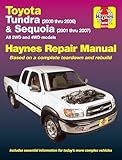
- Complete Repair Coverage: Step-by-step repair procedures specific to your vehicle — from routine maintenance like oil changes and air filter replacement to complex engine and transmission repairs
- 700+ Photos & Illustrations: Every procedure is visually supported with clear, close-up photography taken during an actual vehicle teardown and rebuild — no guesswork required
- Beginner to Advanced: Written in plain language so a DIY owner with basic tools can tackle most repairs confidently, while still serving as a valuable reference for experienced mechanics
- Full Troubleshooting Section: Quickly diagnose problems with dedicated troubleshooting guides for engine, electrical, brakes, and drivetrain systems
- Time-Saving Tips Throughout: Pro shortcuts and notes highlight common pitfalls, helping you avoid costly mistakes and get your vehicle back on the trail faster
Engine knocking
A deep knock, rhythmic thud, or metallic rattle that rises with engine speed can indicate internal bearing or other mechanical damage. Note when it occurs—at cold start, at idle, under acceleration, or continuously—and tell the dealer. Do not assume that every rattle is a main-bearing failure; accessory drives, valvetrain components, exhaust shields, and other faults can make noise.
Rough running
Shaking, unstable idle, hesitation, or misfiring can accompany serious engine damage, but they can also come from ignition, fuel, air-metering, or software problems. A rough-running truck should be inspected promptly, especially if the condition appeared with a warning light or new noise.
Do these 3 things before closing this tab:
1Repair Windows errors before they cause bigger problems2Scan for outdated or missing drivers - takes under a minute3Clear out junk files and repair common Windows errorsFailure to start
A no-start condition may occur when an engine is damaged, seized, or unable to build the required compression. It may also be caused by a weak battery, starter, fuel delivery, immobilizer, or sensor fault. Avoid repeated cranking, which can create additional heat and drain the battery; have the dealer diagnose it and document the symptom.
Loss of motive power
Power that fades while driving, an engine that shuts off, or a truck that will not respond to the accelerator is the most urgent symptom because traffic conditions can turn a stall into a collision hazard. Move to a safe location only if the vehicle still responds normally, activate hazard lights, and request roadside assistance or dealer transport.
Why machining debris can damage a bearing
Engine machining creates small metal particles and other residue. Production controls are intended to remove that material before assembly and operation. Toyota’s stated defect theory is that some debris remained in certain engines, entered the lubrication system, and reached a main bearing. The bearing supports the crankshaft; contamination or abnormal wear can reduce its ability to maintain a smooth oil film. Continued operation can then produce knocking, accelerate wear, and ultimately prevent the engine from running.
The 2026 Canadian notice says additional debris-removal controls were introduced for later engines, but that remaining debris could still be enough to damage the number-one main bearing. It also identifies an improved bearing in engines produced after the affected group. These details describe Toyota’s investigation for the specified Canadian population, not a blanket finding about every V35A or every Tundra engine.
How to check whether a specific truck is recalled
- Find the VIN. Use the 17-character VIN on the dashboard, driver-door label, registration, or title. Confirm that the characters match the truck you intend to drive or buy.
- Run Toyota’s VIN lookup. The owner recall page displays open safety recalls and service campaigns associated with that vehicle. Save or print the result.
- Ask for campaign details. Have the dealer confirm the campaign number, whether the remedy is available, and whether the vehicle has already received the repair.
- Match the remedy to the VIN. Do not assume that the free engine-assembly replacement specified for 24V381 automatically applies to 25V767 or 26V320. Later filings described their remedies as still under development at those filing dates.
- Keep documentation. Request the repair order, parts description, campaign number, and completion date. This record is important for future service and for a used-truck transaction.
Repair options and what “free” means
Campaign 24V381
Toyota’s U.S. 24TA07 remedy notice states: “Toyota dealers will replace the engine assembly FREE OF CHARGE to the customer.” The statement applies to vehicles whose VINs are included in that campaign and whose repair is authorized under the recall. A dealer should explain scheduling, parts availability, loaner or rental policies, and any related inspection requirements.
Campaigns 25V767 and 26V320
The November 2025 Toyota announcement for 25V767 and NHTSA’s May 2026 acknowledgment for 26V320 said the remedy was being developed at the time of filing. Because recall remedies and notification schedules can change, the current VIN result and dealer confirmation are more reliable than an old article, forum post, or model-year assumption. Do not promise an engine replacement until the dealer confirms that remedy for the individual truck.
Vehicles outside a covered campaign
A Tundra with the same symptom may have an unrelated failure or may be outside the recall population. The official sources do not establish a universal repair procedure, independent-shop price range, or consumer DIY fix for the debris condition. The dealer must determine whether a recall applies and what diagnosis is appropriate. If no recall is open, ask for a written diagnosis and a clear separation between recall work, warranty work, and customer-paid repairs.
Independent reader supportYour contribution helps us test, update, and keep practical guides available for everyone.Buying a used Tundra: a VIN-based checklist
Model year alone cannot establish recall status. Before paying a deposit or accepting delivery:
Free tools Windows power users keep installed
One-click scans. No signup required.
Rank #4
- Run the exact VIN through Toyota’s recall lookup, not a generic year-and-model search.
- Verify that every listed campaign is completed, or obtain a written plan for completion before purchase.
- Ask for dealer invoices showing the campaign number and the engine assembly or other parts installed.
- Start the truck cold and listen for knocking, then observe idle quality, warning lights, and throttle response.
- Ask whether the vehicle has ever stalled, lost power, required an engine replacement, or been towed for an engine complaint.
- Do not treat a clean dashboard or a seller’s verbal assurance as proof that the VIN has no open recall.
A pre-purchase inspection can identify other mechanical issues, but it does not replace the manufacturer’s VIN determination or prove that an engine is free of microscopic manufacturing debris.
Common mistakes and safer alternatives
Assuming every 2022–2024 truck is affected
The campaigns cover selected VINs and production groups. Use the official lookup and dealer confirmation instead of broad year-based claims.
Calling every engine noise the recall defect
The notices establish a possible relationship in covered vehicles, not a diagnosis for every noisy engine. Give the dealer the symptom history and allow a proper inspection.
Continuing to drive after power loss
Loss of motive power can create a high-speed crash risk. Stop operating the truck when safe, request guidance, and arrange transport if the dealer says it should not be driven.
Expecting the same remedy for every campaign
The free engine-assembly replacement is documented for 24V381. The later filings did not yet state the same released remedy. Check the current status tied to the VIN.
What the evidence does—and does not—show
Toyota and safety agencies have documented a manufacturing-debris theory, named symptoms, identified affected campaign populations, and described a free engine replacement for the 24V381 group. They have not shown that every Tundra engine failure has that cause, that every V35A engine is defective, or that a population number equals the number of engines that failed. They also have not provided a universal home diagnostic test or a reliable consumer price comparison for non-recall repairs.
For an owner, the practical decision is therefore straightforward: use the VIN to establish eligibility, treat serious symptoms as a safety issue, and let an authorized dealer state the remedy currently available for that truck. For a buyer, documented campaign completion and a symptom-free inspection are more meaningful than a model-year label or an unsupported failure-rate claim.
Quick Recap
Product prices and availability are accurate as of the date/time indicated and are subject to change. Any price and availability information displayed on Amazon at the time of purchase will apply.




