There is no single “Toyota hybrid battery.” Depending on the model and year, a Toyota hybrid traction battery can use nickel-metal hydride (NiMH) or lithium-ion chemistry. Toyota battery-electric vehicles (EVs) use a high-voltage traction battery as well, but the exact chemistry for every EV model is not established in the owner information reviewed here. Battery life also has no universal Toyota number: Toyota says it varies with use, driving conditions, temperature and other factors. The warranty periods below are coverage limits, not predictions of when a battery will need replacement.
The practical difference is the rest of the vehicle. A hybrid still has a gasoline engine, oil and engine-service requirements, plus model-specific care for battery cooling airflow. An EV eliminates gasoline-engine oil service but still needs checks for coolant, brake fluid, tires, brakes, washer fluid and its 12-volt battery. Compare the exact model year, market, warranty guide and maintenance schedule rather than assuming that every hybrid or every EV is built the same way.
As an Amazon Associate I earn from qualifying purchases.
What the two battery systems actually do
A Toyota hybrid and a Toyota EV both use a high-voltage traction battery to propel the vehicle, but they use that battery in different vehicle architectures.
Hybrid traction battery
A hybrid battery works with a gasoline engine. The battery can supply electric drive, accept energy recovered during braking and help the engine operate efficiently. The engine remains a major mechanical system, so the vehicle still has engine oil, an oil-filter service schedule, fuel-system components and exhaust equipment. The battery is one part of a combined powertrain rather than the vehicle’s sole energy source.
#1 Best Overall

- Some GM Genuine Parts may have formerly appeared as ACDelco GM Original Equipment (OE)
- Easy Installation
EV traction battery
An EV traction battery is the vehicle’s primary energy store. It powers the electric motor and is recharged from an external power source. There is no gasoline engine or engine-oil change, but the car still has high-voltage electronics, thermal-management equipment, a reduction gear or drive unit, brakes, suspension, tires and a separate 12-volt electrical system. “Fewer moving parts” does not mean “no maintenance.”
Do not confuse either traction battery with the 12-volt battery
Both vehicle types also use a conventional low-voltage battery for accessories, control modules and starting the vehicle’s systems. A failed 12-volt battery is not the same problem as degraded traction-battery capacity. Toyota’s 2026 bZ owner information, for example, includes a 12-volt battery check in the motor-compartment maintenance guidance, alongside checks of fluids and other components: Toyota’s 2026 bZ motor-compartment guidance.
Which chemistry does a Toyota hybrid use?
The accurate answer is: it depends on the model, year and configuration. Toyota’s hybrid FAQ identifies both lithium-ion and nickel-metal hydride as chemistries used for hybrid drive batteries and says the type varies by vehicle: Toyota’s hybrid traction-battery FAQ.
| Example | Battery chemistry stated in the source | What the example proves |
|---|---|---|
| 2025 Toyota Corolla Hybrid (owner information) | Lithium-ion | At least this model-year/configuration uses a lithium-ion hybrid traction battery. |
| 2019 Toyota RAV4 Hybrid (owner information) | Nickel-metal hydride | At least this model-year/configuration uses a NiMH hybrid traction battery. |
The chemistry examples come from the respective owner materials: 2025 Corolla Hybrid maintenance data and 2019 RAV4 Hybrid maintenance data. They demonstrate variation; they are not a complete inventory of Toyota hybrids.
Why the label is not enough
“Hybrid” does not automatically mean NiMH, and “newer” does not by itself establish the chemistry in a particular vehicle. Packaging, trim, production region and model-year changes can affect the specification. For a vehicle you own or are considering, open the owner manual for the exact year and configuration and look for the traction-battery description. Do not infer chemistry from a badge, a used-car advertisement or a generic internet list.
What is known about Toyota EV chemistry?
Toyota’s owner information and warranty pages do not provide a comparable chemistry table for every Toyota battery-electric model. It is therefore safer to identify the EV’s battery as a high-voltage traction battery and use the vehicle’s technical documentation for chemistry, cooling and service details. Assigning one chemistry to every Toyota EV would overstate the evidence.
Rank #2

- Battery dimensions --- BCI Group size 48 (H6 L3), 10.98 x 6.81 x 7.51 inches, Terminal Layout: Left: - Right: +. Battery dimensions, cold cranking amps, terminal location and battery type are key factors in getting the right unit. Please measure your old battery and compare the size with this battery, if the measurements are the same, the positive and negative positions are the same, there is not much difference in CCA and it will fit your vehicle.
- 4 TIMES EXTRA CYCLING --- High density negative paste and Enhanced life alloy or Silver Calcium stamped alloy.Uplus Start and Stop AGM battery has 4 times extra cycle life compared to standard conventional batteries.
- DESIGNED FOR VEHICLES WITH START-STOP --- International standard size BCI Group 48 (H6/L3), easy to install.Ideal for vehicles with large electrical loads (DVD players, navigation systems, heated seats, power doors, etc.), vehicles used for frequent short trips or in stop-n-go traffic and vehicles that sit unused for days or weeks at a time.
- DEEP-CYCLE AND CRANKING POWER --- Calcium lead positive grid, maximizes conductivity and allows for low resistance.Highest cold cranking amperes (760CCA) for engine starts, even reliable during cold winter temperatures.
- TOP-LEVEL SAFETY --- 15 times more vibration-resistant.Vent cap design that resists acid leakage.Top-level safety features and absolutely no free acid.Original Spare Parts ensure the replacement battery has the same quality as the original one.
How long do Toyota hybrid and EV batteries last?
No universal Toyota hybrid or EV battery-life figure is established in Toyota’s published material. Toyota Japan says hybrid drive-battery service life cannot be stated uniformly because use and driving conditions differ. Toyota USA’s battery information gives the same essential warning for EVs: An EV battery’s lifespan varies, based on a number of factors.
That statement appears on Toyota’s official battery warranty page: Toyota Battery Warranty.
Free tools Windows power users keep installed
One-click scans. No signup required.
Factors that change real-world aging and range
Toyota identifies several variables that affect EV driving range and battery performance:
- Outside temperature, including very hot or very cold conditions.
- Driving style and vehicle speed.
- Road and terrain conditions.
- Tire pressure.
- Heating or air-conditioning use.
Toyota Europe also describes battery performance as dependent on conditions such as hot or cold regions and paved or unpaved roads: Toyota Europe’s battery information. These factors explain why two otherwise identical vehicles can show different range or state-of-health results. They do not create a reliable formula such as “the battery lasts X years” or “replacement occurs at Y miles.”
Capacity loss is not the same as sudden failure
A traction battery can gradually hold less usable energy, reducing driving range, without suffering an immediate complete failure. Range also changes temporarily with temperature, speed, terrain, tire pressure and climate-control demand. A dashboard range estimate is therefore not a laboratory measurement of permanent battery capacity. If a warning appears, charging behavior changes abruptly or the vehicle limits power, use the diagnostic procedure and qualified service channel specified for that model.
Why warranty mileage is not a life expectancy
A warranty defines the manufacturer’s responsibility under stated conditions. It does not promise that the battery will be replaced when the warranty ends or that it will fail immediately afterward. A battery can remain serviceable beyond the coverage period, while a covered defect can arise earlier. Keep the warranty guide for the vehicle’s market because exclusions, eligibility, capacity tests and transfer rules control the actual claim.
The Tool Desk
Outbyte PC Repair FREEClear out junk files and repair common Windows errorsFree Scan →Outbyte Driver Updater FREEScan for outdated or missing drivers - takes under a minuteDriver Scan →Warranty terms: compare the market, not just the badge
Toyota warranty coverage differs by region. The following figures are examples listed on Toyota’s market pages in 2026; they must not be combined into a worldwide Toyota policy.
Rank #3
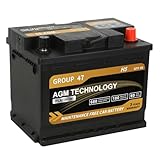
- ✅ Perfect Fit & Compatibility: BCI Group Size 47 (H5), 12V 60Ah, 680CCA, 100RC. Dimensions: 9.52" L x 6.89" W x 7.48" H. Terminal: Tapered terminal (Left negative (-), Right positive (+)). Ensure proper fit by comparing the size, terminal position, and CCA with your original battery. This ensures compatibility and avoids any fitment issues for your vehicle.
- ✅ Reliable Starting Power in All Conditions: Delivers 680 Cold Cranking Amps (CCA) for reliable engine starts, even in freezing weather. This automotive battery is built to perform consistently within a wide temperature range from -22°F to 158°F, withstanding short-term extremes from -40°F to 75°F, ensuring maximum performance no matter the weather.
- ✅ Advanced AGM Technology for High Performance: Specially designed for vehicles with start-stop technology and those requiring greater power, this AGM battery delivers up to 2X the cycle life of conventional batteries. With its high-density negative paste, it ensures improved conductivity, longer battery life, and faster recharge times. Maintenance-free design—no need to add liquid or water.
- ✅ Durable & Safe Design: This group 47 battery is 18X more vibration-resistant than standard batteries, ensuring a longer service life and reliable performance. Its leak-proof, non-spillable design offers enhanced safety, and the absence of free acid guarantees stable performance, preventing acid leakage and internal corrosion. Ideal for tough conditions.
- ✅ Not for Deep Cycle Applications: Please note that this is a starting battery and is not designed for deep-cycle applications such as solar or marine use. It is ideal for vehicles with higher electrical accessory loads or those that need a high CCA starting battery with enhanced cyclic performance. Verify that the battery type and specifications match your vehicle's requirements.
| Market and source | Vehicle/battery coverage stated | Important qualification |
|---|---|---|
| United States | Hybrid battery: 10 years or 150,000 miles, whichever comes first. | Terms and exclusions in the applicable US warranty guide control. This is coverage, not a predicted service life. |
| United States | EV drive components, including the traction battery when the stated condition is met: 8 years or 100,000 miles, whichever comes first. | Traction-battery coverage applies when remaining capacity falls below 70% of original capacity, subject to the warranty terms. |
| India | Hybrid battery: 8 years or 160,000 km. | Market-specific term on Toyota India’s warranty page. |
| India | BEV battery: 8 years or 200,000 km. | Toyota India states a 70% minimum battery-capacity condition throughout the warranty period. |
| Europe | Battery Care Programme: up to 10 years of vehicle age or 1 million kilometres. | Conditional on an annual Battery Health Check and applicable country and programme terms; not an unconditional factory warranty. |
Verify the wording for your vehicle and country in the relevant documents: Toyota USA, Toyota India and Toyota Europe. A US owner should not substitute India’s kilometre limits, and a European Battery Care Programme should not be represented as the US warranty.
What the 70% condition means
For the US EV wording, the capacity threshold is a condition for the stated traction-battery coverage. It is not a claim that every battery reaches exactly 70% at eight years or 100,000 miles. The relevant test method, repair remedy and eligibility are governed by the vehicle’s warranty documentation.
Hybrid maintenance: the engine remains in the schedule
A Toyota hybrid’s maintenance plan combines ordinary gasoline-engine service with hybrid-system care. The 2025 Corolla Hybrid maintenance information identifies engine-oil requirements as well as the hybrid traction battery. Oil and filter intervals, spark-plug replacement, coolant requirements, brake inspections and other tasks depend on the model’s schedule; follow the maintenance log supplied for that vehicle rather than a generic hybrid interval.
Keep the battery cooling intake clear
Some Toyota hybrids draw cabin air through an intake to cool the traction battery. Dust, pet hair, luggage or clothing can obstruct that airflow. Toyota’s 2024 RAV4 Hybrid do-it-yourself guidance lists cleaning the traction-battery air-intake vent and mentions a vacuum cleaner as a possible tool: 2024 RAV4 Hybrid service precautions.
This is model-specific guidance, not proof that every Toyota hybrid has the same vent, filter or cleaning interval. Locate the intake in the exact owner manual before removing trim or attempting cleaning. Never cover the vent with cargo, mats or accessories.
When a cooling warning appears
The 2025 Corolla Hybrid warning guidance says a traction-battery cooling-parts warning can indicate a clogged filter, a blocked intake vent or a gap in the duct. Its prescribed first response is to clean the intake vent and have the vehicle inspected if the warning persists: 2025 Corolla Hybrid warning-message guidance.
Rank #4

- Reconditioned, 2 yr Replacement Warranty
- In-Vehicle tested @100 Amperes
- Shipping weight 110 lbs
- Park safely and switch the vehicle off as directed by the manual.
- Inspect the specified intake area for dust, hair, paper, clothing or other blockage.
- Clean only as the owner manual permits; use the recommended tool and do not force debris into the duct.
- Restart and observe the warning according to the manual’s instructions.
- If the warning remains, power is reduced or unusual heat/noise is present, stop experimenting and arrange inspection by a qualified Toyota hybrid technician.
Is there a replaceable hybrid battery filter?
Some models may identify a cleanable or replaceable intake filter, while others may use a different arrangement. A query such as “Toyota hybrid battery cooling air intake filter” is useful only after the manual or parts information confirms that a filter exists and fits your exact model. Do not treat the high-voltage traction battery itself as a routine replacement item, and do not order a filter based solely on a similar-looking vehicle.
Recommended Free Tools
EV maintenance: fewer engine tasks, not zero service
A battery-electric Toyota removes gasoline-engine oil and spark-plug service, but the vehicle still needs scheduled inspections. Toyota’s 2026 bZ motor-compartment information covers coolant reservoirs, brake fluid, washer fluid and the 12-volt battery, and includes model-specific guidance for traction-battery coolant: 2026 bZ motor-compartment maintenance.
Typical EV service areas
- Thermal system: Check the specified coolant reservoirs and use only the fluid and procedure listed for the model.
- Braking system: Inspect brake fluid and brake components. Regenerative braking can reduce friction-brake use, but it does not eliminate inspections or eventual wear.
- Tires and alignment: Electric-drive weight and instant torque make correct pressure, tread and rotation important to safety and range.
- Washer system: Refill washer fluid and inspect the system as scheduled.
- 12-volt battery: Test or replace it according to the vehicle schedule and symptoms.
- High-voltage system: Leave diagnosis, isolation faults, coolant work and battery removal to trained, properly equipped technicians.
Do not open high-voltage covers, probe orange cables or improvise coolant service. The exact schedule, fluid specifications and safety procedures in the owner manual take precedence over broad claims that EVs are maintenance-free.
Charging, storage and daily use: what can be stated safely
Toyota’s owner manuals and other published materials do not establish one universal Toyota charging routine that maximizes traction-battery life across every model and market. Charging limits, recommended state-of-charge ranges, preconditioning behavior and storage instructions can differ by vehicle. Use the charging and long-term-storage instructions in the exact owner manual, rather than applying a rule copied from another EV.
Practical habits that do not require inventing a lifespan formula
- Use the charging equipment and cable procedures specified for the vehicle.
- Keep the battery-cooling intake and other airflow paths unobstructed where the manual identifies them.
- Maintain correct tire pressure because Toyota lists pressure as a factor affecting range.
- Expect temporary range changes in cold or hot weather and when using heating or air conditioning.
- Seek service for repeated warning messages instead of repeatedly clearing them or disconnecting the 12-volt battery.
How to compare a specific Toyota hybrid with a specific Toyota EV
Use the following sequence when shopping, estimating ownership costs or deciding whether a used vehicle’s battery risk is acceptable.
Outdated Drivers Are Slowing You Down
One free scan finds every outdated or missing driver and matches the right update for your exact hardware.Free scan · exact hardware matchPC Slower Than It Used to Be?
A free scan shows the junk files, broken settings and background clutter dragging Windows down - then fixes them in one click.Free scan · Windows 10 & 11- Record the exact identity. Write down model, model year, trim, drivetrain, battery configuration and sales market. “RAV4 Hybrid” or “bZ” alone is not enough to establish every specification.
- Confirm chemistry and cooling design. Read the owner manual’s traction-battery section. Confirm whether it names lithium-ion or NiMH, where the cooling intake is located and whether a filter or cleaning procedure is specified.
- Read the applicable warranty guide. Note years, miles or kilometres, capacity thresholds, exclusions, diagnostic requirements, transferability and the remedy offered. Do not substitute another country’s warranty page.
- Map the maintenance schedule. For the hybrid, include engine oil and other gasoline-engine services plus battery-intake care where specified. For the EV, include coolant, brake fluid, tires, brakes, washer fluid and 12-volt checks.
- Match the vehicle to its environment. Consider temperature, terrain, road surface, driving speed, tire pressure and climate-control use because Toyota identifies them as performance factors. Treat this as a use-case assessment, not a battery-life calculator.
- Inspect a used vehicle’s records. Look for completed scheduled services, warning-message repairs, cooling-intake cleaning where applicable and documented battery-health or warranty work. A seller’s claim that a battery is “good for ten years” is not a substitute for records or a qualified inspection.
- Ask for a model-specific battery evaluation. If purchase risk is material, request a diagnostic report from a qualified technician who can test the high-voltage system safely and explain what the measurement means. Do not accept a single range estimate as proof of permanent capacity.
Decision table
| Question | Hybrid implication | EV implication |
|---|---|---|
| Will the vehicle still need engine service? | Yes. Gasoline-engine oil and related scheduled work remain. | No gasoline engine or engine-oil service, but other vehicle systems remain. |
| What chemistry should you assume? | Do not assume; Toyota examples include NiMH and lithium-ion. | Use the exact EV documentation; a universal Toyota EV chemistry is not established here. |
| What battery-life number should you budget around? | No universal Toyota figure is supported. | No universal Toyota figure is supported. |
| What airflow care may be needed? | Some models specify traction-battery intake cleaning or filter attention. | Follow the EV’s thermal-management instructions; do not import hybrid intake procedures. |
| What warranty comparison matters? | Market-specific years, distance and exclusions. | Market-specific years, distance and any capacity threshold, such as 70% in the cited US wording. |
Common mistakes and how to correct them
“Every Toyota hybrid uses NiMH.”
Correction: Toyota identifies both NiMH and lithium-ion hybrid batteries. The 2025 Corolla Hybrid and 2019 RAV4 Hybrid owner materials show different chemistries.
Best Value

- BATTERY SPECS: 12-Volt, 800 Cold Cranking Amps, Size: 10.06" Long x 6.94" Wide x 7.88" Tall, Weight: 38.8 pounds, Dual SAE & GM Posts, C20 Capacity: 50 AH
- RESERVE CAPACITY of 100 minutes for constant performance. Faster charging capabilities.
- SPIRALCELL TECHNOLOGY: SPIRALCELL TECHNOLOGY with 99.99% pure lead delivers more power and consistently outperforms conventional flat-plate batteries. Optimal starting power even in bad weather.
- LONG LASTING: Fifteen times more resistant to vibration than standard flooded battieres for durability and Up to 3 times longer life vs. standard flooded batteries.
- MAINTENANCE FREE: For maximum convenience. Ideal for basic electrical demands.
“The warranty tells me exactly when the battery will die.”
Correction: Warranty limits define coverage. Toyota says service life varies with use and conditions, and no single average lifespan is established in Toyota’s published material.
“An EV has no maintenance.”
Correction: EVs still require inspections and fluid checks. The 2026 bZ information specifically addresses coolant, brake fluid, washer fluid and the 12-volt battery.
“A cooling warning means the high-voltage battery must be replaced.”
Correction: For the cited Corolla Hybrid guidance, a clogged filter, blocked intake or duct gap can trigger the warning. Clean the intake only as directed and seek inspection if the warning persists.
What’s actually slowing this PC down?
Pick the symptom - the matching free tool is one click away.
“A US, India or Europe warranty applies everywhere.”
Correction: Toyota publishes different market terms. Identify the country, vehicle and warranty guide before relying on a year, mile, kilometre or capacity figure.
Bottom line for owners and buyers
Toyota hybrid and EV batteries are not interchangeable categories with one chemistry or one expected lifespan. Toyota hybrids can use NiMH or lithium-ion packs depending on model and year; Toyota’s published material does not support assigning one chemistry to every EV. Toyota also does not publish a universal battery-life number in its published material. Use the warranty as a coverage boundary, not a countdown.
The maintenance choice is clearer: a hybrid retains gasoline-engine service and may require attention to a battery-cooling intake, while an EV removes engine-oil work but still needs thermal-system, brake, tire, washer-fluid and 12-volt maintenance. The reliable way to compare two vehicles is to identify the exact model and market, read both owner manuals and warranty guides, account for climate and use, and obtain qualified diagnostics when a warning or used-car purchase makes battery condition uncertain.
Quick Recap
Product prices and availability are accurate as of the date/time indicated and are subject to change. Any price and availability information displayed on Amazon at the time of purchase will apply.




