Outdated Drivers Are Slowing You Down
One free scan finds every outdated or missing driver and matches the right update for your exact hardware.Free scan · exact hardware matchWindows Errors? Fix Them Before They Spread
Repair common Windows errors and clear accumulated junk for a smoother, more stable PC - no reinstall needed.Free scan · no reinstallFor the 2026 U.S. Toyota Crown, XLE, Limited, and Nightshade are rated at 42 city/41 highway/41 combined mpg. The Platinum grade uses the turbocharged Hybrid MAX system and is rated at 29 city/32 highway/30 combined mpg. That powertrain difference is the first thing to check when a dashboard reading seems high or low. Toyota describes these as EPA estimates for comparison, not guarantees; vehicle condition, weather, traffic, load, route and driving style all change actual fuel use.
This guide explains the ratings by trim, how to measure your own Crown’s fuel economy, why mileage changes, and which manufacturer-backed habits can help without promising a specific gain Toyota has not quantified for the Crown.
As an Amazon Associate I earn from qualifying purchases.
2026 Toyota Crown MPG at a glance
The Crown lineup has two distinctly different hybrid systems. Three grades use Toyota’s 2.5-liter hybrid all-wheel-drive system, while Platinum uses the more powerful 2.4-liter turbo Hybrid MAX all-wheel-drive system. Their EPA ratings should not be compared as though they were the same vehicle.
| 2026 U.S. Crown trim | Hybrid system | EPA city mpg | EPA highway mpg | EPA combined mpg |
|---|---|---|---|---|
| XLE | 2.5-liter Toyota Hybrid System AWD | 42 | 41 | 41 |
| Limited | 2.5-liter Toyota Hybrid System AWD | 42 | 41 | 41 |
| Nightshade | 2.5-liter Toyota Hybrid System AWD | 42 | 41 | 41 |
| Platinum | 2.4-liter turbo Hybrid MAX AWD | 29 | 32 | 30 |
These figures come from Toyota’s 2026 model-year U.S. specifications and brochure. Toyota notes that information applies to mainland U.S. vehicles and can change. Its April 1, 2025 newsroom release rounded the combined figures to 41 mpg for the 2.5-liter system and 30 mpg for Hybrid MAX; the live 2026 specifications are the better reference because they identify each trim and provide city and highway values.
#1 Best Overall

- Programmable 3-In-1 Automotive Trip Computer: Diagnostic Scan Tool, And Up To 37 Digital Gauges In One (Vehicle Dependent)
- Real-Time Monitoring Capabilities: Watch Fuel Consumption, Cost-Per-Mile, Coolant Temperature, Engine Speed, Horsepower, And Much More In Real Time. Simple 5-button operation allows you to quickly and easily access the powerful features of the ScanGauge
- Wide Vehicle Compatibility: Works On All 1996 Or Newer Obd2 Cars, Including Gas, Diesel, Propane And Hybrid Vehicles with 16pin OBD2 port
- Diagnostic Trouble Code Functions: Checks For Diagnostic Trouble Codes (Dtcs), Clears The Codes, And Can Turn Off The Check Engine Light
- Simple Power Connection: No Batteries Required - The single connection to the diagnostic connector under the dashboard is all that is needed
How to read city, highway and combined ratings
City and highway numbers describe separate standardized test cycles. The combined figure is a weighted calculation intended for comparison across vehicles, not an average that every driver should reproduce. A Crown used almost entirely for short urban trips may show a result closer to its city experience, while a long, steady trip can resemble the highway figure. Hills, congestion, speed and temperature still make a personal result different from either label.
Why the Platinum rating is much lower
Hybrid does not mean every Crown hybrid has the same efficiency target. The XLE, Limited and Nightshade prioritize lower fuel consumption with the 2.5-liter system. Platinum’s 2.4-liter turbo Hybrid MAX is designed for substantially stronger performance, so its official rating is 11 combined mpg lower and its city rating is 13 mpg lower.
When comparing two Crowns, record the trim and powertrain before looking at the number on the instrument panel. A 30-mpg Platinum is not necessarily performing worse than a 41-mpg XLE; those are different EPA categories. Likewise, a 2.5-liter Crown driven in winter traffic should not be judged against a Platinum on a warm, steady highway trip.
The Tool Desk
Outbyte PC Repair FREERepair Windows errors before they cause bigger problemsFix Now →Outbyte Driver Updater FREEScan for outdated or missing drivers - takes under a minuteDriver Scan →EPA estimates versus the number you see
EPA ratings are standardized comparison figures. Toyota’s 2026 brochure says, “Your mileage will vary for many reasons, including your vehicle’s condition and how/where you drive.” The estimate is not a promise that every trip, tank or season will match the label.
What a dashboard average can and cannot tell you
- A dashboard average reflects the recent driving history and the vehicle’s calculation method; it is not an independent laboratory result.
- A short trip can be dominated by a cold start, cabin heating, traffic or a parking maneuver and therefore look unusually poor.
- A long, gentle trip with a warm engine and little HVAC demand can look unusually good.
- Comparisons are meaningful only when trim, route, trip length, temperature, load and traffic are broadly similar.
The available Toyota material does not establish a defensible average for real-world Crown owners. Treat any single readout as a clue, then verify it over multiple fill-ups.
How to measure your Crown’s real fuel economy
Use the same method each time so that changes reflect the car rather than inconsistent arithmetic. This is a practical measurement approach, not a Toyota-mandated test.
- Fill the tank and record the odometer. If the pump stops automatically, use the same stopping practice at later fills rather than repeatedly topping off.
- Write down the fuel quantity. Record gallons shown by the pump and the date, route type, weather and unusual loads.
- Drive normally for several tanks. Include enough miles to smooth out one short trip or one unusually cold morning. Keep separate notes for mostly-city, mostly-highway and mixed use.
- Refuel under the same conditions. At the next fill, record miles driven and gallons added. Do not infer consumption from the fuel gauge position.
- Calculate mpg. Divide miles driven by gallons added. For example, 420 miles divided by 10.5 gallons equals 40 mpg.
- Compare like with like. Match the result to the correct trim rating and note whether the period included winter temperatures, heavy cargo, roof equipment, long idling or repeated short trips.
Tracking several fill-ups can reveal a trend, but it cannot turn an individual car into an EPA test vehicle. A persistent change that has no obvious explanation deserves an owner’s-manual check or an inspection by a qualified Toyota service provider.
Free tools Windows power users keep installed
One-click scans. No signup required.
A simple tracking worksheet
For each fill, save the odometer miles, gallons, calculated mpg, average temperature, city/highway split, passengers or cargo, and HVAC use. Mark any unusual event such as a snowstorm, long wait in traffic or tire-pressure warning. After three or more comparable tanks, look for a pattern rather than reacting to one low number. Keeping city-heavy and highway-heavy tanks in separate groups prevents a change in route mix from looking like a mechanical problem.
The biggest factors that change Toyota Crown MPG
Trim and powertrain
Start with the table above. The 2.5-liter grades carry a 41-combined-mpg estimate; Hybrid MAX Platinum carries a 30-combined-mpg estimate. No driving technique can erase that built-in difference.
Rank #2

- [Vehicle Compatibility]: Only compatible with American car brands produced after 2008 as shown in the product image, and Japanese cars and European car brands produced after 2005 (not compatible with all pure electric vehicles)
- [Important]: (Not all car brands support reading oil temperature and transmission temperature and pressure data), a few car brands can display these data using custom PIDs with the assistance of our engineers. Please keep in mind that due to the variation of car brands and production dates, we cannot guarantee that all vehicles can be successfully upgraded
- [Working Principle]: The obd2 meter is connected to the car's 16-pin OBD2 interface via the OBD2 line, and can monitor in real time (water temperature, boost pressure, fuel consumption, speed and other car ECU data). The displayed data is related to the corresponding sensor. Without the corresponding sensor, no data can be read
- [Visual/auditory alarm]: When important ECU data such as water temperature, turbo pressure, exhaust temperature, etc. exceed dangerous values, the driver will be reminded through pop-up windows and sound alarms to prevent greater damage to the vehicle. It also has common fault code clearing and reminder functions
- [Ultimate Customization]:You can upgrade the instrument program, customize different display data combinations, display the data you want on various work interfaces, change the display color, and even personalize your car logo
Acceleration, braking and speed changes
Toyota’s general fuel-saving guide advises gentle acceleration, anticipating stops and avoiding unnecessary rapid starts and stops where conditions allow. Its guide says dips in speed followed by spurts of rapid acceleration can increase highway fuel use by up to 30 percent. That is Toyota’s general estimate, not a controlled test of the Crown, so use it as a warning about the pattern rather than a guaranteed penalty.
On a clear road, look farther ahead, lift off early for a red light or slowing queue, and maintain a steady pace instead of alternating between braking and hard acceleration. Never sacrifice a safe following distance or traffic-law compliance for an MPG target.
What’s actually slowing this PC down?
Pick the symptom - the matching free tool is one click away.
High speed and route profile
Highway EPA values assume a standardized cycle. Real expressways may involve higher speeds, hills, wind, congestion and frequent lane changes. A steady lower speed within the legal limit generally demands less power than repeatedly accelerating to pass or recover speed, but Toyota does not publish a Crown-specific speed-to-mpg curve.
Tire pressure
Use the pressure printed on the label inside the driver’s door and the vehicle-specific information in the owner’s manual. Check when the tires are cool, because pressure changes as tires heat during driving. Toyota specifically warns against using the maximum pressure molded into the tire sidewall as the target: overinflation can affect wear, traction and ride.
A digital tire-pressure gauge can make frequent checks convenient. Its purpose is measurement; buying one does not guarantee an MPG increase. Correct pressure is the goal, not the highest number the tire can withstand. Check all four tires and the spare, if equipped, according to the manual, and inspect for a slow leak when one tire repeatedly drops below its label value.
Unnecessary cargo and trip pattern
Extra mass requires energy every time the Crown accelerates and climbs. Remove items you do not need, especially dense cargo that has accumulated in the trunk. Toyota also recommends combining errands. Several short journeys require multiple warm-ups, whereas one consolidated outing can reduce repeated cold operation, particularly in cool weather.
Temperature, heating and air conditioning
Cold weather can reduce mileage through warm-up time, denser air, winter fuel formulations, lower tire pressure and increased heater demand. Toyota advises avoiding prolonged idling solely to warm the cabin. Plan enough time for visibility and defrosting, but do not leave the car running for long periods after it is ready to drive.
In warm weather, air-conditioning draws energy and can offset some of the hybrid system’s efficiency. Toyota recommends reducing unnecessary HVAC use. The available guidance does not quantify a fixed MPG effect for Crown air conditioning or heating, so a precise seasonal percentage would be misleading.
Hybrid-system operation and EV mode
Toyota’s indexed 2026 Crown owner’s-manual excerpt says the hybrid system is designed to achieve the best possible fuel economy in normal driving by using the engine and traction motor. The same excerpt cautions that using EV drive mode more than necessary may lower fuel economy.
Rank #3

- PROFESSIONAL ALL-IN-ONE OBD2 GAUGE: ➤This All-In-One Car HUD with Obd Scanner is specially designed for cars without speedometer/tachometer installed. The professional LCD display can not only help you monitor the speedometer, RPM, water temperature, fuel consumption, turbo pressure in your car, but also read and clear engine fault codes.
- SAFETY FIRST: ➤ More than 30 driving data (such as speed, RPM, water temperature, voltage, turbo pressure, etc.) will be displayed on the HUD display, and you can easily view every detailed data without looking down at the dashboard while driving, so as to prevent engine overload damage and protect vehicle and personnel safety
- PROFESSIONAL CUSTOMIZATION: ➤Committed to solving OBD2 instrument (incompatible with frequent crashes, black screen, pixel bottom, inaccurate data, etc.), the system has its own data fine-tuning function, suitable for Honda, for Toyota, for Volkswagen, and for Mazda models. It is born for them.
- ALARM FUNCTION: ➤ The OBD2 meter displays detailed real-time data to ensure safe driving on the road. It can alert you in the event of turbo pressure, high water temperature, overspeed, RPM alarm, engine trouble codes, etc., to prevent the car from overloading and let you drive safely.
- ADDITIONAL FEATURES: ➤ It can read vehicle data flow information, support unit switching from metric to imperial, and automatically adjust screen brightness, fast data transfer rate. With 1/4 mile, 0-60MPH, 0-100MPH acceleration test, it has automatic sleep mode, so you can leave this OBD meter in the car without unplugging it.
EV mode is therefore not an automatic MPG button. Use it as the manual describes and let the control system choose engine and motor operation during ordinary driving. Holding a low battery state or forcing electric operation when conditions are unfavorable can require the engine to work harder later.
Vehicle condition
Toyota explicitly lists vehicle condition and driving conditions as reasons actual mileage varies. The evidence available here does not support blaming a particular failed component when MPG falls. If pressure is correct, the route and weather are comparable, and several tanks show a persistent decline, consult the manual and arrange a qualified diagnosis rather than replacing parts based on a guess.
A manufacturer-backed routine for improving fuel economy
- Identify your baseline. Confirm XLE, Limited, Nightshade or Platinum and use the corresponding EPA city, highway and combined figures.
- Measure over several fill-ups. Use miles divided by gallons and annotate weather, route, load and HVAC use.
- Check cold tire pressure. Set every tire to the driver’s-door label or manual value. Inspect for a slow leak if one tire repeatedly loses pressure.
- Smooth out your inputs. Press the accelerator gently, anticipate traffic and avoid rapid starts and stops when safe. Toyota’s wording is direct: “Pressing the accelerator pedal gently will help you save gas.”
- Reduce avoidable mass and idling. Remove unneeded cargo, combine errands and avoid long stationary warm-ups.
- Use climate controls thoughtfully. Limit unnecessary heating or cooling while maintaining safe visibility and comfort.
- Leave EV mode to the circumstances for which it is intended. The indexed manual excerpt warns that using it more than necessary may reduce economy.
- Recheck the trend. After making one change, compare similar routes and temperatures rather than expecting one tank to prove a result.
How to compare two Crown MPG reports fairly
Before deciding that one Crown is more efficient, align the variables in this checklist:
- Trim and system: 2.5-liter hybrid or 2.4-liter turbo Hybrid MAX.
- Cycle: city, highway or mixed driving, with similar speeds and hills.
- Trip length: repeated cold starts versus a fully warmed, continuous journey.
- Weather: ambient temperature, wind, rain or snow and seasonal fuel.
- HVAC: heating, defrosting and air-conditioning demand.
- Load: passengers, luggage, roof accessories and towing, if applicable.
- Condition: tire pressure, maintenance status and any warning lights.
- Measurement: several calculated fill-ups rather than one dashboard snapshot.
Without those details, “my Crown gets X mpg” is useful as an anecdote but not as a like-for-like benchmark.
Common MPG mistakes to avoid
- Comparing the wrong trim: A Platinum result should not be judged against the 2.5-liter trims’ 41-mpg combined estimate.
- Using the tire sidewall number: That is a maximum, not the Crown’s recommended setting.
- Judging one tank: A single cold snap or traffic jam can dominate the result.
- Relying only on the fuel gauge: Gauge segments are not a precise measure of gallons consumed.
- Assuming EV mode always saves fuel: Toyota’s manual excerpt specifically warns that unnecessary use can lower economy.
- Chasing a percentage Toyota did not publish: Weather, HVAC and route effects vary, so no fixed Crown-specific improvement should be promised.
When a low reading is normal—and when to investigate
Likely temporary causes
- A cold snap with frequent heater or defroster use.
- Several very short trips with little time for the powertrain to warm.
- Heavy traffic, steep hills, strong wind or wet roads.
- Added passengers, luggage or equipment.
- A recent tire-pressure change caused by temperature.
Reasons to seek a check
- The decline persists over multiple comparable tanks after pressure and load are corrected.
- A tire repeatedly loses pressure or the vehicle pulls to one side.
- A warning light, unusual noise, vibration or drivability change appears with the MPG drop.
- The result is inconsistent with the confirmed trim and powertrain, even after accurate fill-up calculations.
Use the owner’s manual for the correct inspection intervals and warnings. A qualified Toyota service provider can test the vehicle; the available Toyota guidance does not identify a single likely failed part from an MPG change alone.
Do these 3 things before closing this tab:
1Repair Windows errors before they cause bigger problems2Scan for outdated or missing drivers - takes under a minute3Clear out junk files and repair common Windows errorsWhat the numbers mean for your buying or ownership decision
If fuel cost is the priority, the 2.5-liter XLE, Limited and Nightshade have the clear official advantage at 41 combined mpg. Choosing Platinum means accepting a 30-combined-mpg estimate in exchange for the Hybrid MAX configuration’s different performance mission. The right comparison is between the equipment and performance you want and the fuel use you are prepared to accept, not between unrelated EPA classes.
For an existing owner, the practical target is consistency: keep pressure at the door-label value, drive smoothly, minimize needless load and idling, and judge performance over representative tanks. Toyota’s published information supports those actions but does not promise a particular percentage improvement for an individual Crown.
Frequently asked questions
Which 2026 Toyota Crown gets the best MPG?
XLE, Limited and Nightshade share the highest official rating: 42 city, 41 highway and 41 combined mpg. Platinum’s Hybrid MAX system is rated 29 city, 32 highway and 30 combined mpg.
Is 30 mpg normal for a Toyota Crown?
It is the official combined estimate for the Platinum Hybrid MAX. It is not the target for the 2.5-liter trims, whose combined estimate is 41 mpg. Actual results depend on conditions and may be higher or lower.
Quick wins for a faster PC:
Repair Windows errors before they cause bigger problemsFix Now →Scan for outdated or missing drivers - takes under a minuteDriver Scan →Rank #4
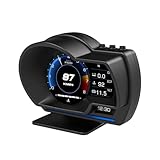
- P6 Speedometer Product Introduction: This heads up display for cars is a brand new upgraded version of the OBD+GPS intelligent instrument panel, with a very beautiful LCD display screen that looks great on your vehicle. Ordinary instruments only have OBD mode, while P6 is an OBD+GPS dual-mode system, which is more stable, smoother, and has richer data display
- Please Note: This obd2 gauge display head up display has dual modes of GPS and OBD, and comes with an OBD cable and USB cable. However, it is worth noting that the OBD system is only applicable to some gasoline vehicles manufactured after 2009; If your car is a diesel or pre-2008 model, you can only use GPS mode. If the OBD system is not compatible, please switch to the GPS system
- Speedometer Function: The functions of the heads up display for cars OBD system include vehicle speed, water temperature, voltage, fuel consumption, speed, single mileage, total mileage, driving time, driving direction, search for stars, altitude time, intake pressure, oil temperature, air-fuel ratio, turbine pressure, intake pressure, acceleration test, brake test, clearing fault codes, reading data flow alarm function; The functions of the heads up display GPS system include vehicle speed, voltage, satellite time, altitude, satellite quantity, driving direction, single mileage, driving time, acceleration test, brake test, and alarm function
- Automatic alarm function: The car head up display has multiple alarm functions that can improve driving safety, such as overspeed alarm, speed alarm, water temperature alarm, and voltage alarm. During normal driving, the ambient light appears blue (automatically adjusts brightness to adapt to the environment); When driving abnormally (such as speeding), the ambient light will turn into a red warning, which better enhances driving safety and safeguards your driving journey
- Product features: This tablet monitor has multiple functions to meet your various needs. HUD has 12 different screens that can be freely switched, bringing you a brand new driving experience; Multiple installation methods allow for easy placement, ensuring clear and natural installation in any corner without obstructing your line of sight
Why can highway MPG be lower than city MPG on the 2.5-liter Crown?
The published estimate is 42 city and 41 highway. Standardized city and highway cycles measure different conditions; the small difference does not indicate a fault. Your route, speed, wind and traffic can reverse or widen it.
How often should I check tire pressure?
Check it frequently when the tires are cool and use the pressure on the driver’s-door label or in the manual. Do not substitute the tire sidewall maximum. A gauge helps measure pressure but does not itself improve economy.
Should I use EV mode to maximize MPG?
Not automatically. The indexed 2026 Crown manual excerpt says the hybrid system is designed for efficient normal operation and cautions that using EV drive mode more than necessary may lower fuel economy. Follow the manual’s intended conditions.
How many tanks should I track before deciding MPG changed?
Use several fill-ups on broadly similar routes and record weather, load and HVAC use. One tank can be distorted by cold starts or unusual traffic; a persistent trend is more informative.
Frequently Asked Questions
What is the 2026 Toyota Crown’s combined MPG?
XLE, Limited and Nightshade are rated 41 combined mpg. Platinum with Hybrid MAX is rated 30 combined mpg.
Can gentle driving improve Crown fuel economy?
Toyota recommends gentle acceleration, anticipating stops and avoiding unnecessary rapid starts and stops. It does not promise a fixed percentage improvement for the Crown.
What tire pressure should I use?
Use the vehicle-specific value on the driver’s-door label or in the owner’s manual, checked when tires are cool. Do not use the tire sidewall maximum as the target.
When should a low MPG reading be inspected?
If a decline continues across several comparable tanks, especially with a warning light, repeated tire-pressure loss, noise, vibration or drivability change, consult the manual and a qualified Toyota service provider.
Recommended Free Tools
The Bottom Line
The 2026 Crown’s MPG story starts with the trim: three 2.5-liter hybrid grades are rated 41 combined mpg, while Platinum Hybrid MAX is rated 30. Measure over several fill-ups, compare similar conditions, keep tires at the door-label pressure, drive smoothly, reduce unnecessary cargo and idling, and use EV mode only as Toyota intends. These steps can improve consistency, but Toyota does not guarantee a specific real-world gain.
Quick Recap
Product prices and availability are accurate as of the date/time indicated and are subject to change. Any price and availability information displayed on Amazon at the time of purchase will apply.




