Recommended Free Tools
For most budget-focused Toyota shoppers, start with the Corolla Hybrid if compact size and low fuel use matter most. Move to the Prius when its higher efficiency and hatchback cargo area justify the price, or to the Camry Hybrid when you need a roomier midsize sedan. A gas Toyota can still cost less overall if you drive relatively few miles, face a large hybrid price premium, or plan to sell soon. The right answer comes from your annual mileage, local gasoline price, driving mix, space needs, and ownership period—not from the hybrid badge alone.
Hybrid or gas: the decision in one view
A hybrid combines a gasoline engine with one or more electric motors and a high-voltage battery. It can recover energy during deceleration and use electric assistance to reduce fuel consumption. A conventional gas Toyota relies solely on its gasoline engine. The hybrid system changes how fuel savings are achieved, but it does not eliminate the need to compare purchase price, financing, insurance, tires, maintenance, and resale value.
As an Amazon Associate I earn from qualifying purchases.
| Model or choice | Published price or fuel figure | Best fit |
|---|---|---|
| 2025 Toyota Corolla Hybrid | EPA-estimated up to 50 mpg combined; Toyota describes five grades. MSRP was not stated in the cited Toyota USA Newsroom release. | Compact sedan buyers prioritizing efficiency and a lower entry point than larger Toyota models. |
| 2025 Toyota Prius LE | $28,350 starting MSRP; 57 city/56 highway mpg listed by Toyota for the LE. | Drivers seeking the strongest efficiency among these examples plus hatchback practicality. |
| 2025 Toyota Camry LE FWD | $28,400 starting MSRP; manufacturer-estimated 51 mpg combined. The 2025 Camry lineup is hybrid-only. | People who need a larger sedan and value passenger room and highway comfort. |
| Gas Toyota alternative | Use the exact gas model, trim, model year, drivetrain, transaction price, and EPA rating in your calculation; no universal hybrid premium or payback period applies. | Low-mileage drivers, short ownership periods, or buyers facing a substantial hybrid premium. |
The Corolla figure is from Toyota USA Newsroom’s September 19, 2024 release. Prius figures come from Toyota’s current 2025 Prius model page. Camry figures come from Toyota USA Newsroom’s 2024 release. Prices are starting MSRPs, not guaranteed transaction prices; check the exact vehicle and destination charges with a dealer or current listing.
What the numbers actually mean
EPA estimates are a common baseline, not a promise
EPA city, highway, and combined ratings are standardized estimates intended to let shoppers compare vehicles tested under the same methodology. Your result can differ with temperature, speed, traffic, terrain, tire pressure, payload, air-conditioning use, driving style, and the vehicle’s configuration. Toyota’s 51 mpg Camry figure is explicitly a manufacturer estimate for the LE front-wheel-drive grade, while the Corolla and Prius figures are presented as EPA ratings on the cited Toyota materials. Keep the label attached to the number when comparing trims.
#1 Best Overall

- 【Fitment for Toyota Models / Not fit for RAV4 XLE models】fit for 2018-2026 Camry Hybrid, 2019-2022 Avalon Hybrid, 2019-2026 Corolla (not fit for Hybrid), 2022-2026 Corolla cross, 2019-2026 RAV4 Hybrid, 2021-2024 RAV4 Prime, 2020-2026 Highlander Hybrid, 2024-2026 Grand Highlander Hybrid XLE/Limited 2.5L (not for 2.4 Hybrid), 2021-2026 Sienna, 2021-2024 Venza, 2018-2022 C-HR, 2023-2026 Crown, 2025-2026 Crown Signia Hybrid
- 【Fitment for Lexus Models】fit for 2019-2025 ES300h, 2023-2026 RX350h, 2022-2026 NX350h, 2022-2026 NX450h+, 2019-2022 UX200, 2024-2026 RX450h+【Fitment for Subaru Models】fit for 2017-2020 / 2022-2024 BRZ 【Fitment for Mazda Models】fit for 2025-2026 CX-50 CX50 CX 50 Hybrid
- 【Replacement for】CA12289, AF5286, 16546-AA170, 17801-0T060, 17801-77050, 17801-F0020, SU003-06405, XA10586, 33-3080, AF5286, LX4529, A90142, AF5286, PA99265, A11479, AF1479, SA90213, WAF5286, WA10807
- 【Recommend to replace】It is recommended to change the vehicle's air filter every 12,000 miles (or as recommended in the owner's manual) to improve performance; Make sure your car engine has clean and efficient air flow.
- 【Note】Please use Amazon's "My Garage" tool to enter your year, make, and model to avoid mismatch with the model can not be used. If our products are not suitable for your car, please feel free to contact us and we will reply to you within 24 hours
The EPA also cautions that its greenhouse-gas rating addresses tailpipe emissions; producing the fuel used by the vehicle can generate additional CO2. A hybrid generally burns less gasoline for the same distance, but a tailpipe rating is not a complete life-cycle emissions calculation.
City and highway driving affect the value of a hybrid
Hybrids often show their largest efficiency advantage in stop-and-go driving because regenerative braking and electric assistance can recapture some energy that a gas car would dissipate as heat. Sustained high-speed highway travel can narrow the gap. Do not substitute a city rating for your real mixed driving: use the combined rating as a starting point, then adjust your annual fuel calculation if your commute is unusually urban, rural, mountainous, or highway-heavy.
Choose the Toyota model before choosing the powertrain
Corolla Hybrid: the affordability-first starting point
Toyota describes five Corolla Hybrid grades and an EPA-estimated rating of up to 50 mpg combined. That combination makes it the logical first stop for a shopper who wants a compact sedan, low fuel consumption, and a generally lower purchase position than a larger Toyota. Verify the exact grade, equipment, drivetrain, and current price: “up to” applies to the configuration with the highest rating, not necessarily every Corolla Hybrid on a dealer lot.
Compare the Corolla Hybrid with the gas Corolla that has the same model year, similar equipment, and comparable drivetrain. A heavily optioned hybrid against a base gas car will exaggerate the apparent premium; a base hybrid against a highly equipped gas car can hide it. Check seating, trunk capacity, rear-seat legroom, and any all-wheel-drive requirement before doing fuel math. If the compact sedan format meets your needs, the Corolla Hybrid is usually the clearest way to buy efficiency without moving to a larger vehicle.
Prius: pay for maximum efficiency and hatchback utility
Toyota lists a $28,350 starting MSRP for the 2025 Prius. Its listed LE configuration is rated at 57 city/56 highway mpg, making it the efficiency leader among the examples here. The liftback body adds flexible cargo access that a conventional compact sedan may not provide.
The Prius is a strong choice when you drive enough miles to use its fuel advantage, carry bulky items, or value efficiency more than the lowest possible purchase price. Confirm that the vehicle you are pricing is the LE or another specific grade; equipment, drivetrain, and inventory can change both the rating and the transaction price. Compare a similarly equipped gas alternative rather than assuming every dollar above the Prius starting MSRP is a hybrid premium.
Camry Hybrid: midsize room without a gas 2025 Camry option
Toyota’s 2025 Camry release describes an exclusively hybrid lineup. The release lists a $28,400 starting MSRP and a manufacturer-estimated 51 mpg combined for the LE front-wheel-drive grade. If you want a new 2025 Camry, the relevant choice is among hybrid grades and drivetrains, not between a 2025 Camry hybrid and a 2025 Camry gas model.
PC Slower Than It Used to Be?
A free scan shows the junk files, broken settings and background clutter dragging Windows down - then fixes them in one click.Free scan · Windows 10 & 11Crashes, No Sound, or Screen Glitches?
Random freezes, missing sound and display glitches usually trace back to one bad driver. Find and replace yours safely.Free scan · under a minuteThe Camry makes sense when Corolla-sized passenger and cargo space are insufficient or when you spend substantial time on the highway and prefer a larger sedan. Its starting MSRP is only $50 above the Prius starting MSRP in the cited figures, but the cars serve different needs and may have different equipment. Compare the actual window stickers, financing offers, and dealer prices rather than treating the two starting numbers as an apples-to-apples total.
Rank #2

- 【Upgrade Material】WAJIJI car covers for automobiles is made of 7 layers of heavy-duty materials. 1. PA coating provides 100% waterproof. 2.PE enhances breathability and maintains suitable internal temperature. 3.Aluminum foil reflects 99% of UV rays, reducing damage. 4-5.PEVA material has strong tear resistance. 6.The thickened inner layer cotton increases the firmness of the car cover, improving tear resistance and scratch resistance. 7.Soft cotton effectively protects the car paint.
- [Custom Design for Toyota Camry Car Cover] 1.The driver's door zipper makes it is convenient to retrieve items from inside the car. 2.Four wheel-fixed windproof straps, with specially designed windproof straps passing through the middle of the car. Additional windproof straps are provided at the front and rear to prevent the car cover from being blown away in strong winds. 3.Reflective stripes, widened design at the front and rear, to remind others at night. 4.Car Rearview Mirror custom pocket
- [Packaging List] 1.Custom car cover waterproof all weather. 2.Storage bag, unlike cheap storage bags on the market, is a sturdy portable bag designed to store your cover when not in use (please note that it may require some effort to fit the cover into the bag). 3.Microfiber Towels for Cars, won't corrode car paint, clear coat, or surfaces. TIPS: Use it to wipe your car clean before putting on the cover to prevent sand residue from scratching your car's paint.
- 【All-Weather Protection, Suitable for All Seasons】outdoor car cover designed to provide comprehensive protection throughout the year. Crafted with 100% waterproof material, this car cover offers a shield against sunlight, wind, hail, snow, dust, and scratches. It safeguards your vehicle from dirt, UV pollutants, sand, leaves, branches, snow, rain, frost, and bird droppings. With our car cover, your vehicle stays pristine and protected in any weather condition.
Gas Toyota: the rational choice in specific situations
A gas model can win financially when you drive few miles each year, keep the vehicle for a short period, find a meaningful discount on the gas car, or cannot recover the hybrid premium before selling. It can also be the better fit if the gas version offers the body style, drivetrain, towing capability, or inventory you need at a price the hybrid cannot match.
There is no universal “hybrids pay back in X years” answer. Transaction prices, incentives, gasoline prices, annual miles, city/highway mix, financing, maintenance, and resale assumptions differ by buyer. Use the exact gas trim and model year, not a generic gas-car price.
Calculate fuel cost and hybrid payback
1. Record the inputs that belong to your household
- Annual miles: use your odometer history, commute distance, school runs, and regular trips. Separate unusually high one-time travel from normal use.
- Fuel price: use the gasoline price you actually expect to pay in your area. If it varies seasonally, calculate a low and high case.
- Fuel economy: use the EPA combined rating for the exact trims, or use city and highway ratings if your driving pattern is heavily skewed.
- Ownership period: estimate how many years you will keep the car or how many miles you expect to drive before selling it.
- Purchase difference: compare actual out-the-door prices, including the equipment you would otherwise add to the gas car.
2. Compute annual gasoline cost
Use this simple model for each vehicle:
annual fuel cost = annual miles ÷ mpg × local price per gallon
For example, if a driver travels 12,000 miles, pays $3.50 per gallon, and compares 50 mpg with 30 mpg, the annual fuel costs are $840 and $1,400 respectively. The illustrative difference is $560 per year. Replace every input with your own miles, local price, and exact vehicle ratings; the example is not a forecast of any Toyota owner’s result.
3. Estimate a simple payback period
First calculate the hybrid’s price premium after discounts and equivalent equipment. Then divide it by annual fuel savings:
hybrid payback years = hybrid price premium ÷ annual fuel savings
Using the illustrative $560 annual saving, a $2,800 premium would produce a five-year fuel-only payback. That calculation excludes financing interest, maintenance, insurance, taxes, registration, tires, repairs, resale, and the time value of money. Treat it as a screening tool, not a total-cost-of-ownership study.
Do these 3 things before closing this tab:
1Clear out junk files and repair common Windows errors2Scan for outdated or missing drivers - takes under a minute3Repair Windows errors before they cause bigger problems4. Run low, middle, and high cases
Because fuel prices and mileage are uncertain, calculate at least three cases:
Rank #3
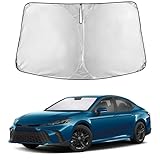
- Compatible for Toyota Camry 2025-2026 Windshield Sun Shade: Precisely designed windshield sunshade fit for Toyota Camry - 2025 2026 to provide full windshield coverage with 100% light blocker.
- Maximum Heat & UV Blocking Windshield Sunshade: Reflective windshield sun shade with a 4-layer cover blocks 99.89% of UVA & 99.95% of UVB and offers SPF 100 & UPF 80+ protection, reducing harmful UV rays and extreme heat, keeping the car’s interior cooler while protecting the dashboard, seats, and steering wheel.
- Premium Insulated Sunshade Material: High-density 280T front windshield sunshade with multi-layer reflective insulation effectively deflects sunlight and reduces interior heat buildup during hot summer days.
- Quick Install Folding Windshield Sun Shade: Foldable Front Window shade installs in seconds and stores easily in the glove box or door pocket when not in use.
- Durable Long-Lasting Windshield Sunshade: Reinforced stitched edges prevent warping, bending, or tearing, making the sun shade ideal for daily windshield protection and long-term use.
- Low-use case: fewer annual miles and a shorter ownership period.
- Expected case: your best estimate of normal miles, fuel price, and years owned.
- High-use case: more miles, a higher fuel price, or a longer ownership period.
If the hybrid only pays back in the high-use case, buy it for its other benefits rather than assuming fuel savings will guarantee a return. If it pays back even in the low-use case, the efficiency advantage is more financially resilient.
Account for costs fuel math leaves out
Upfront price and transaction price
Starting MSRP is a reference point, not your final price. Compare the same model year and trim level, destination charges, dealer-installed accessories, taxes, registration, incentives, and financing terms. A lower advertised price can disappear if the vehicle lacks equipment you would add to the gas alternative. Conversely, a dealer discount or an available incentive can shrink the hybrid premium enough to change the result.
The cited figures are $28,350 for a 2025 Prius starting MSRP and $28,400 for a 2025 Camry starting MSRP. The Corolla Hybrid release cited here gives the five-grade range and fuel rating but does not establish a starting MSRP. Confirm current pricing immediately before signing because inventory and incentives change.
Free tools Windows power users keep installed
One-click scans. No signup required.
Maintenance, repairs, and warranty coverage
Do not assume maintenance savings or costs without checking the manufacturer’s schedule and your local service pricing. Hybrid and gas versions can differ in engine, transmission, braking, cooling, and high-voltage-system components. Tires, brakes, fluids, and routine inspections still depend on the vehicle and how you drive. Include scheduled service, expected wear items, repair reserves, and financing separately from the fuel-only payback calculation.
Toyota states on its current Prius model page that, for vehicles from model year 2020 forward, the hybrid battery warranty covers 10 years from the date of first use or 150,000 miles, whichever comes first. Confirm the warranty booklet for the exact vehicle, start date, geographic market, exclusions, and transfer terms. Warranty coverage is protection against specified defects; it is not a promise that every hybrid-system repair will be free or that the battery will deliver a particular fuel-economy result for the entire period.
Resale and financing
Resale value is model-, trim-, condition-, mileage-, region-, and market-dependent. Do not assign a guaranteed resale premium to a hybrid without a current appraisal or comparable listings. A hybrid financed at a higher interest rate can take longer to break even even when its cash price difference looks manageable. Compare the total amount financed and the loan term for both vehicles.
Independent reader supportYour contribution helps us test, update, and keep practical guides available for everyone.Check practical requirements before committing
Passenger and cargo needs
- Choose the Corolla when a compact sedan’s seating and trunk meet your daily needs.
- Choose the Prius when a hatchback opening and flexible cargo area are worth prioritizing.
- Choose the Camry when you need a larger sedan’s passenger room and highway-oriented comfort.
Measure the items you carry regularly rather than relying on a brochure impression. Bring a child seat, mobility aid, work case, or sports equipment to a test drive if it is central to your decision.
The Tool Desk
Outbyte PC Repair FREEClear out junk files and repair common Windows errorsFree Scan →Outbyte Driver Updater FREEFix the driver behind crashes, sound loss and screen glitchesFind Drivers →All-wheel-drive and trim availability
All-wheel-drive availability, equipment, and fuel ratings can vary by model, grade, and model year. If traction capability is a requirement, identify the exact drivetrain first, then compare its price and rating with the gas alternative. Do not use a front-wheel-drive rating to estimate an all-wheel-drive purchase.
Rank #4

- ★ SIZE - 5.9 inch Long *0.8 inch tall
- ★ PACKAGE INCLUDED - 1pcs HYBRID emblem . Suitable for Tailgate Front Door Rear of car.
- ★ HIGH QUALITY - Made with high quality Zinc Alloy Metal material. Fits on JEEP Dodge Mercedes BMW Mustang Volvo Chevrolet Nissan Audi VW Ford Honda Toyota Jaguar
- ★ EASY TO INSTALL - Self-adhesive make this nameplate replacement sticker are very easy to install, not need any tools.Weatherproof
- ★ AFTER-SALES SERVICE - All products from EmbRoom are guarantee to keep in good repair for 120 days, we promise 100% resend or refund if there have any quality issue happen in guarantee period.
Climate and driving conditions
Cold temperatures, snow tires, roof loads, steep grades, high speeds, and extended idling can reduce real-world fuel economy for any powertrain. A driver in a cold, hilly area should use a conservative mileage estimate and leave more room between projected savings and the premium. Test the seating, visibility, heating, and cargo setup in the conditions that matter to you.
A buying process that avoids the common mistakes
- Define the non-negotiables. Write down required passenger capacity, cargo dimensions, drivetrain, safety equipment, budget, and ownership years.
- Pick the body style. Decide whether compact sedan, hatchback, or midsize sedan fits before comparing mpg.
- Build an exact-trim pair. Select one hybrid and one gas vehicle with comparable model year, equipment, drivetrain, and dealer fees.
- Record verified figures. Copy the EPA city/highway/combined ratings, Toyota’s manufacturer-estimate label where applicable, MSRP, discounts, financing rate, and out-the-door price.
- Run the fuel model. Calculate annual fuel cost for your expected, low, and high cases.
- Calculate payback. Divide the actual hybrid premium by annual fuel savings, then add financing, maintenance, insurance, and resale assumptions as separate lines.
- Inspect the warranty. Confirm the hybrid-battery terms for the exact model year and the date the coverage begins.
- Drive both vehicles. Check noise, ride, braking feel, visibility, seat comfort, cargo loading, and highway behavior.
- Recheck the final deal. Make sure the VIN, trim, drivetrain, options, price, incentives, and fees match the vehicle you evaluated.
Common mistakes and how to correct them
Using the best mpg number for every trim
“Up to 50 mpg combined” describes the highest-rated 2025 Corolla Hybrid configuration in Toyota’s cited release. The Prius’s 57 city/56 highway figures are for the listed LE. The Camry’s 51 mpg is a manufacturer estimate for the LE front-wheel-drive grade. Correct the mistake by matching the rating to the exact stock number you are buying.
Comparing a hybrid’s MSRP with a discounted gas car
A sale price is not comparable to a starting MSRP. Correct the mistake by collecting out-the-door quotes for equivalent equipment and applying incentives to both sides where eligible.
What’s actually slowing this PC down?
Pick the symptom - the matching free tool is one click away.
Promising yourself a fixed payback period
Fuel savings are not constant because miles, gasoline prices, weather, and driving conditions change. Correct the mistake by showing a range of scenarios and by keeping maintenance, financing, and resale outside the fuel-only equation.
Assuming the 2025 Camry has a gas counterpart
Toyota describes the 2025 Camry lineup as hybrid-only. Correct the mistake by comparing Camry hybrid grades with another midsize model if a gas powertrain is mandatory, or by comparing a gas and hybrid Corolla when the compact class works for you.
Treating the battery warranty as a lifetime guarantee
The stated coverage is 10 years or 150,000 miles from first use, whichever comes first, for Toyota vehicles from model year 2020 forward. Correct the mistake by reading the exact warranty terms and planning ownership beyond the coverage window accordingly.
Which buyer should choose which powertrain?
Choose the Corolla Hybrid when
- You want a compact sedan.
- Your annual mileage and fuel price make the efficiency worth the verified premium.
- You spend enough time in urban or mixed driving to benefit from the hybrid system.
- You can accept the exact grade’s cargo, seating, and drivetrain limits.
Choose the Prius when
- Maximum efficiency is a primary goal.
- The listed LE’s 57 city/56 highway rating fits your priorities.
- You value hatchback cargo access.
- The $28,350 starting MSRP and actual transaction price fit your budget after comparing equipment.
Choose the Camry Hybrid when
- You need midsize-sedan space and a more substantial highway car.
- You accept that the 2025 Camry lineup is hybrid-only.
- The LE FWD’s manufacturer-estimated 51 mpg combined rating and $28,400 starting MSRP align with your budget and requirements.
Choose a gas Toyota when
- You drive relatively few miles or will own the car briefly.
- The hybrid premium remains large after discounts and equivalent equipment.
- Your financing, drivetrain, cargo, or availability needs favor the gas model.
- Your scenario analysis shows fuel savings will not recover the premium during your expected ownership.
Bottom line for an affordability-focused shopper
Start with the Corolla Hybrid for the most straightforward compact, efficiency-first choice. Step up to the Prius when its efficiency and hatchback utility solve a real need, and choose the Camry Hybrid when midsize space matters more than the smallest purchase footprint. Keep a gas Toyota on the shortlist whenever your mileage is low, your ownership period is short, or the transaction-price difference is large. A spreadsheet using your annual miles, local gasoline price, exact EPA or manufacturer-estimated rating, ownership years, financing, maintenance, and resale assumptions will give you a more honest answer than a universal hybrid payback claim.
Quick Recap
Product prices and availability are accurate as of the date/time indicated and are subject to change. Any price and availability information displayed on Amazon at the time of purchase will apply.




