The Toyota 2JZ remains a familiar engine-swap choice because it brings together a documented 3.0-liter inline-six design, a factory twin-turbo version, and decades of visibility through the Supra, motorsport, and tuning culture. Those facts explain its staying power—but they do not prove that every 2JZ is reliable at any power level, that it is the best swap for every car, or that it remains the most popular choice today.
What makes the 2JZ stand out?
The 2JZ is an engine family, not one fixed specification. Toyota engineers described two versions: the naturally aspirated 2JZ-GE and turbocharged 2JZ-GTE. Both displace 2.997 liters and use an inline-six layout, according to the engineers’ 1993 technical paper, “Development of Toyota JZ Type Engine Series.”
That shared basic identity, paired with a factory turbocharged member of the family, gives the 2JZ broad appeal as a swap candidate. But the engine code alone does not tell a buyer what is included, what condition a donor is in, or what work a particular conversion will require.
GE and GTE are not interchangeable specifications
2JZ-GE
The GE is the naturally aspirated version identified in Toyota engineers’ account. Its existence matters when evaluating a donor: a 2JZ-GE is not a factory turbocharged 2JZ-GTE, and a swap plan should begin by confirming the exact variant rather than relying on “2JZ” as shorthand.
Free tools Windows power users keep installed
One-click scans. No signup required.
#1 Best Overall
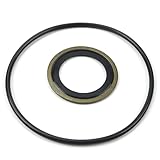
- Part Type: Camshaft
- This Rebuild Kit is for 2JZ and 1JZ VVTi Intake Timing Cam Gear
- Fits Toyota Supra Lexus GS300 IS300 SC300 VVTI
- Package Included: 1x High quality Viton chemical resistant Cam gear O-Ring, 1x Cap seal washer
2JZ-GTE
The GTE is the turbocharged version. Toyota’s A80 Supra vehicle-lineage record lists a representative Japanese-market turbo grade at 280 PS at 5,600 rpm. That figure belongs to the specified Supra grade; it is not a universal output for every 2JZ-GTE, market, or installation. Toyota’s record also cautions that its listed specifications represent particular grades. See Toyota’s A80 Supra record.
A separate figure in the 1993 SAE paper describes the Japanese Aristo-developed 2JZ-GTE: 206 kW at 5,600 rpm and 431 Nm at 3,600 rpm. These are source- and vehicle-context figures, not numbers to combine with the Supra record into a single supposedly universal factory rating.
Rank #2
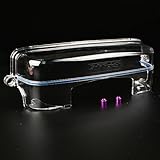
- COMPATIBILITY: Compatible With SUPRA JZA80 DRIFT 2JZGTE 2JZ.
- HIGH QUALITY: New Transparent clear cam cover for 2JZGTE & 2JZ are Made by High quality clear poly-carbonate Material.
- OE STANDARD: Heavy-duty aftermarket replacement at an affordable price. Superior Durability and Impact Resistance.Meets the Original Equipment (OE) standards, ensuring replacement fit just like the original.
- WARRANTY DESCRIPTION: Our product have a one-year warranty, please buy with confidence.
- EASY INSTALLATION: No modification Requires. Produced under strict quality control standards, easy to install. Any question pls feel free to contact.
How the factory twin-turbo system worked
Toyota describes the CT20A two-way twin-turbo arrangement as using one turbocharger under low-speed, low-load conditions and both under high-speed, high-load conditions. The design intent was to support response and usable torque across a broad engine-speed range, rather than relying on both turbochargers in every operating condition. Toyota’s historical engineering account is available at Toyota 75 Years: Engine development — Two-way twin turbocharger.
This is a description of the original system’s strategy, not a guarantee of how a decades-old engine will behave today. Donor condition, maintenance history, modifications, and the details of a swap all matter; the factory design alone cannot establish the condition or performance of a particular engine.
Do these 3 things before closing this tab:
1Scan for outdated or missing drivers - takes under a minute2Repair Windows errors before they cause bigger problems3Fix the driver behind crashes, sound loss and screen glitchesRank #3

- THIS IS BRAND NEW: DNJ® Exhaust Intake Valve Kit
- FITS: 1992-2005 Lexus, Toyota GS300, IS300, SC300 3.0L L6 24V DOHC 2997cc
- FITMENT NOTES: Exhaust Intake Valve Kit
- DNJ Engine Components is a full line provider of Domestic & Japanese engine parts for cars and trucks.
- We carefully selected DNJ Engine Components as the sole provider. DNJ has a 30+ year track record of quality, experience, and trust. It makes sense for us to carry a brand that would help us earn customer loyalty in the long run
Why the Supra connection still matters
The A80 Supra gives the 2JZ-GTE much of its enduring recognition. Toyota dates the A80’s release to May 1993 and the end of its production to August 2002. The model’s timeline varied by market: Toyota UK says the North American run ended in 1998, while the Japanese market continued longer. Its Supra history also recounts competition appearances and the growth of tuning culture around the car.
Toyota says the Supra remained active in motorsport until 2005, after production ended. That continued visibility helps explain why the car and its engine became familiar beyond their original showroom years. It is historical context for the 2JZ’s reputation, not a measurement of how many people currently swap one into another car or proof that motorsport use establishes a street build’s reliability.
Rank #4

- Compatible with Toyota: 4Runner (1992–1999), Avalon (1995–1998), Camry (1992–1999), Celica (1994–1999), Corolla (1993–1999), MR2 (1993–1995), Paseo (1994–1999), Pickup (1992–1995).
- Compatible with Toyota: Previa (1993–1997), RAV4 (1996–1999), Sienna (1998–1999), Supra (1993–1998), T100 (1993–1998), Tacoma (1995–2001), Tercel (1995–1999).
- Secure Electrical Connection: Provides stable and reliable 2-pin connection for accurate sensor readings.
- Direct Replacement Fit: Replaces 7283-1114-30, 90980-11363, 9098011363 allows quick and easy installation with no modifications required.
- Essential Engine Component: Ensures proper oil pressure monitoring to protect engine performance and longevity.
Why choose a 2JZ for a swap?
For a swapper, the attraction is a combination of recognizable engine architecture, a factory turbocharged option, and a long public history tied to a high-profile performance car. The GTE’s documented original engineering and Toyota’s account of its twin-turbo strategy provide a more concrete basis for interest than reputation alone.
That history does not settle whether a 2JZ swap is worthwhile for a particular build. There is no single recipient car, target output, location, or budget specified here, and Toyota’s historical sources do not provide a universal parts list, current cost, or compatibility guarantee. Swap popularity is also not quantified by the sources cited here, so it is more accurate to call the 2JZ a recognizable and enduring choice than to claim it is the most popular engine swap today.
Outdated Drivers Are Slowing You Down
One free scan finds every outdated or missing driver and matches the right update for your exact hardware.Free scan · exact hardware matchPC Slower Than It Used to Be?
A free scan shows the junk files, broken settings and background clutter dragging Windows down - then fixes them in one click.Free scan · Windows 10 & 11Best Value

- Country Of Origin: United States
- Model Number: 9295
- Item Package Dimension: 8.0" L x 4.0" W x 1.0" H
- Item Package Weight: 3.0 lb
What to check before planning a 2JZ swap
Make the decision around the actual donor and recipient car, not the engine’s reputation in isolation. Work through these checks before buying parts or setting a build target:
- Identify the donor. Confirm whether it is a GE or GTE, its condition, what accessories and components are included, and what its history establishes. The engine family name does not answer those questions.
- Check the recipient chassis. Investigate packaging, mount availability, and the space needed for the engine and supporting systems. Fitment is specific to the car; no universal mount or kit is established here.
- Map the full conversion scope. Account for transmission and drivetrain compatibility, ECU and wiring, fuel delivery, cooling, and exhaust. Requirements depend on the chassis and chosen configuration.
- Set a realistic use and output target. A street car, competition car, and other project uses can call for different choices. Factory figures are not a promise of modified output, and no horsepower guarantee follows from the engine’s reputation.
- Confirm local rules and the complete installed cost. Emissions and registration requirements vary by location, while the parts and labor bill depends on the donor, recipient, and conversion scope. Neither can be resolved without those details.
Does a 2JZ swap make sense for your car?
It can make sense when the specific engine, chassis, intended use, and conversion plan line up—and when the builder is prepared to assess the full installation rather than buy on reputation alone. The 2JZ’s history explains why it remains on enthusiasts’ radar; it cannot substitute for checking donor condition, fitment, drivetrain and systems requirements, local rules, or total project cost.
Quick Recap
Product prices and availability are accurate as of the date/time indicated and are subject to change. Any price and availability information displayed on Amazon at the time of purchase will apply.