The Tool Desk
Outbyte Driver Updater FREEScan for outdated or missing drivers - takes under a minuteDriver Scan →Outbyte PC Repair FREERepair Windows errors before they cause bigger problemsFix Now →Three-wheeled cars have appeared in different forms for different needs—not as one continuous design lineage. The strongest documented examples here are post-war German microcars and British minimal cars: from the enclosed, tandem-seat Messerschmitt Kabinenroller to the two-seat Bond Minicar and the wedge-shaped Bond Bug.
What makes a three-wheeled car?
The label covers vehicles with distinct layouts, body styles and purposes. A three-wheeler might be an enclosed cabin scooter, a compact two-seat car or a delivery vehicle. The examples below illustrate selected European histories; they are not a complete account of three-wheeled motoring worldwide.
That distinction matters when comparing them. The Messerschmitt Kabinenroller’s tandem seating and enclosed canopy differ markedly from the Bond Minicar’s two-seat layout and the Bond Bug’s lifting front canopy. A feature or driving characteristic documented for one model should not be assumed to apply to all three-wheelers.
Post-war Germany: the Messerschmitt Kabinenroller
From the Fend Flitzer to the KR models
The Messerschmitt Kabinenroller grew out of aircraft engineer Fritz Fend’s work on small vehicles. The Messerschmitt Foundation of Great Britain traces the line back to the 1948 Fend Flitzer, an invalid carriage, followed by Fend’s partnership with Willy Messerschmitt in 1952 and KR 175 production in 1953. The foundation dates the KR 200 to 1955 and describes it as having a 191 cc engine and improved independent front suspension. Its history page identifies 1958 as a production peak but does not state a production total for that year. These are dates and descriptions reported by the foundation, not figures from an independent production ledger. Messerschmitt Foundation of Great Britain: history
Free tools Windows power users keep installed
One-click scans. No signup required.
#1 Best Overall

- Historic 1886 First Automobile Model Design: Bring 1886 Automotive Engineering to Life with a detailed mechanical model featuring gear transmission, screw-driven steering, front and rear suspension, and an openable cover
- Startable Metal Engine & Working Transmission: Features an operable metal engine with visible gears and linkage components. Watch the power-transfer system work as the engine and transmission move together, bringing early automotive mechanics to life
- 430+ Precision Components for Hands-On Engineering: Includes more than 430 finely processed parts such as gears, chains, screw drives, and transmission components, creating a detailed mechanical assembly experience for automotive and engineering enthusiasts
- Premium Aluminum & Zinc Alloy Construction: Crafted from precision-processed aluminum alloy and zinc alloy with anodized metal surfaces for a solid feel, refined finish, and strong collectible value for desks, offices, workshops, or display cabinets
- Expandable Mechanical Project for Enthusiasts: Supports compatible upgrades and custom modifications, giving experienced builders more room to explore mechanical adjustments, alternative configurations, and extended DIY experimentation
A compact, enclosed two-person vehicle
The Deutsches Museum describes its exhibited Kabinenroller as a 1954 example built by Regensburger Stahl- und Metallbau GmbH. It records a 173 cm³ Fichtel & Sachs two-stroke engine, output of 6.8 kW (9 hp) at 5,250 rpm and a top speed of 80 km/h. Those specifications belong to the museum’s identified 1954 vehicle; they should not be substituted for the KR 200’s separately reported 191 cc engine.
The museum describes the plexiglass cover as weather protection and notes the practical challenge of avoiding a tip in curves. It also reports “Snow White’s Coffin” as a nickname for the cover; that is a reported nickname, not a universal name for the vehicle. The museum’s exhibit record says more than 50,000 KR 175 and KR 200 models had been sold by 1964. Deutsches Museum: Messerschmitt Kabinenroller
Rank #2

- Historic 1886 Automobile Mechanical Design: This Build Your Own Automobile Model faithfully recreates the world’s first car – gear transmission, screw‑driven steering, front/rear suspension, and an opening cover
- Interactive Mechanical Functionality: Turn the steering wheel to see the linkage system in action. Observe how early suspension and transmission work together – a hands‑on history lesson
- 430+ Precision Components for True Engineering Feel: Over 430 finely machined pieces including visible gears, chains, and screw drives. Assemble a working tribute to automotive heritage
- Premium Aluminum & Zinc Alloy Craftsmanship: Made with CNC‑cast, anodized metal parts. A refined, collectible finish that feels substantial – perfect for display or educational use
- Expandable & Upgradeable Design: Supports additional kits or DIY modifications – even potential powered conversion. A lasting project for Automotive Culture Lovers who love to tinker
Britain’s Bond Minicar: minimal motoring
The Science Museum Group describes the Bond Minicar as a two-seat, front-wheel-drive three-wheeler designed by Lawrence “Lawrie” Bond. Sharps’s Commercials Limited, later Bond Cars Limited, produced it from 1949 to 1966. Its body used aluminium, steel and fibreglass, and the museum notes that it had no reverse gear. Those details convey a deliberately simple vehicle, but the available museum account does not establish sales totals or market share. Science Museum Group: Bond Minicar
Later British examples: the Bond Bug and Reliant Robin
Bond Bug
The Reliant Motor Club’s history dates the Bond Bug’s introduction to June 1970 and its production run through 1974. The club says the Bug used Reliant Regal mechanicals and a new chassis later used for the Robin. Its fibreglass body had a wedge shape, while a lifting front canopy incorporated the side windows. These details come from a marque-focused enthusiast club history rather than a factory archive. Reliant Motor Club: Bond Bug history
Quick wins for a faster PC:
Fix the driver behind crashes, sound loss and screen glitchesFind Drivers →Repair Windows errors before they cause bigger problemsFix Now →Scan for outdated or missing drivers - takes under a minuteDriver Scan →Rank #3

- Revell Model Kit #17325, Skill Level 5, Contains 153-Parts, Recommended for ages 13 and up
- Classic custom chopper trike styling. Over 14-inches long once assembled.
- Period-perfect details include stretched-out front forks and swept-back handle bars.
- Removable long-handled parade axe and optional iron mask. Includes soft vinyl tubing to represent spark plug leads and various control cables.
- Molded in white and clear with two trees of chrome-plated parts and soft black tires. Requires paint and glue. (not included)
Reliant Robin and earlier Reliant three-wheelers
Reliant’s model history places the Robin’s introduction in 1973 and describes it as a 750 cc model available as a saloon or estate. These are claims from the marque-history page, so they are best read as Reliant’s own model account. Reliant: model history
The National Motor Museum Trust provides earlier context for Reliant’s three-wheelers through its Regal collection entry. It describes the company’s origins in simple three-wheeled delivery vans powered by motorcycle engines and using front forks. This working-vehicle background differs from the passenger-focused forms of the Bond Bug and Robin. National Motor Museum Trust: Reliant Regal collection
Rank #4
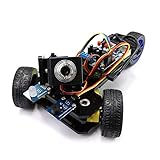
- Two Working Modes: Video mode (with camera) and Radar mode (with ultrasonic distance sensor) (Assembly required) (Raspberry Pi and Battery NOT included)
- Detailed Tutorial: Provide step-by-step assembly guide and complete Python code (The download link can be found on the product box) (No paper tutorial)
- Compatible Models: Raspberry Pi 5 / 4B / 3B+ / 3B / 3A+ (2B / B+ is also compatible but needs extra parts) (NOT included in this kit)
- Control Methods: Controlled wirelessly by your Android phone or tablet, iPhone and computer (run Windows or Raspberry Pi OS)
- Battery NOT Included: Please refer to the downloaded tutorial to buy
How these cars compare
| Example | Role and form | Layout and power details | Dates and evidence |
|---|---|---|---|
| Messerschmitt Kabinenroller | Enclosed two-person cabin; the museum describes the cover as weather protection. | The museum’s 1954 vehicle has a 173 cm³ two-stroke engine, 6.8 kW (9 hp) at 5,250 rpm and a recorded top speed of 80 km/h. The Foundation separately reports a 191 cc engine for the KR 200. | The museum identifies its vehicle as a 1954 example and reports more than 50,000 KR 175 and KR 200 models sold by 1964. The foundation dates KR 175 production to 1953 and KR 200 to 1955. |
| Bond Minicar | Two-seat minimal car. | Front-wheel drive; aluminium, steel and fibreglass bodywork; no reverse gear. | The Science Museum Group documents production from 1949 to 1966. |
| Bond Bug | Wedge-shaped body with a lifting front canopy incorporating side windows. | Reliant Regal mechanicals; the Reliant Motor Club says the chassis was later used for the Robin. Engine specification not stated in the cited club history. | The Reliant Motor Club dates introduction to June 1970 and production through 1974. |
| Reliant Robin | Saloon or estate. | 750 cc, according to Reliant’s model history. Drive configuration not stated on the cited page. | Reliant’s model history dates its introduction to 1973. |
Why the three-wheel layout kept returning
These examples show how a three-wheel arrangement could serve different purposes without producing a single standard type of car. The Kabinenroller paired a compact cabin with tandem seating in post-war Germany. The Bond Minicar offered a two-seat British design whose construction and lack of reverse gear speak to minimal motoring. The later Bug made a different visual statement with its wedge body and lifting canopy, while Reliant’s history also reaches back to delivery vans.
The evidence supports these specific comparisons, not a broad verdict about safety, handling, licensing or the legal classification of three-wheelers across countries. Nor does it establish a complete global history. What it does show is a recurring design choice adapted to distinct vehicles, makers and uses.
Quick Recap
Best Value

- DIY ASSEMBLY KIT: Comes with approximately 60 pieces, including an alloy frame, wheels, handlebars, fenders, headlight, pedals, screws, and more, plus a screwdriver and pliers for a complete hands-on building experience.
- 1:10 SCALE MODEL: This vintage classic three-wheeled sidecar bicycle is crafted at a 1:10 scale with fine alloy material, delivering realistic simulation design and impressive attention to detail.
- MOVABLE PARTS: Features functional moving components including steerable handlebars, spinning wheels, and a sidecar attachment, bringing the miniature model to life after assembly.
- VERSATILE USE: Perfect as a desktop decoration, collectible display piece, or a thoughtful gift; also great for parent-child bonding through a shared building activity.
- FINE WORKMANSHIP: Built from durable alloy material with premium-quality construction, this model showcases intricate craftsmanship that makes it a standout addition to any collection or display shelf.
Product prices and availability are accurate as of the date/time indicated and are subject to change. Any price and availability information displayed on Amazon at the time of purchase will apply.




