Quick wins for a faster PC:
Fix the driver behind crashes, sound loss and screen glitchesFind Drivers →Clear out junk files and repair common Windows errorsFree Scan →Scan for outdated or missing drivers - takes under a minuteDriver Scan →Short answer: The most consequential new U.S. EVs reaching customers during calendar year 2026 are the Chevrolet Bolt and Subaru Trailseeker, which are already arriving, followed by the Rivian R2, Slate Truck, BMW iX3, Porsche Cayenne Electric, Hyundai Ioniq 6 N, and Jeep Recon. They are not equally available, however: some are already at dealers, some are scheduled for late-year deliveries, and some remain dependent on production or retail-timing updates.
This is a U.S.-focused guide current as of August 10, 2026. “Arriving in 2026” means reaching U.S. customers during the calendar year, even when the manufacturer calls the vehicle a 2027 model. That is why the 2027 Chevrolet Bolt and 2027 BMW iX3 belong here.
How to read the list: EPA figures are not directly comparable with WLTP, preliminary manufacturer estimates, or projections. Prices are starting MSRPs unless otherwise noted, and generally exclude taxes, registration, dealer charges, options, and other transaction costs. “Expected” is not the same as “available nationwide.”
What counts as a new EV for 2026?
This list includes all-new models, new nameplates, major new generations, and significant performance or body-style derivatives that are expected to reach U.S. customers during calendar 2026. It includes 2027 model-year vehicles delivered before the end of 2026, but it does not treat every new trim, battery option, or charging-connector change as a new vehicle.
Outdated Drivers Are Slowing You Down
One free scan finds every outdated or missing driver and matches the right update for your exact hardware.Free scan · exact hardware matchPC Slower Than It Used to Be?
A free scan shows the junk files, broken settings and background clutter dragging Windows down - then fixes them in one click.Free scan · Windows 10 & 11#1 Best Overall

- Road-Trip Ready & Apartment-Friendly: Comes with a 20ft heavy-duty cable that easily spans a standard parking space, plus a NEMA 5-15 adapter for plug and play convenience. Whether you're charging at home or hitting the highway, this portable EV Charger is your ultimate travel companion for weekend getaways and camping trips
- Delay Timer & Adjustable Current: Use the built-in timer to delay your start by 1-12 hours and easily harvest off-peak energy savings. Then pick from 6/8/10/12/16A (Level 2) to match your garage grid. It automatically locks in your favorite setting and never forces you to re-adjust. No complicated apps or Wi-Fi needed, just straightforward, reliable control
- Tactile Buttons & LED Screen: No glitchy smartphone apps or finicky touchscreens that lag, freeze, and misfire in winter. Our EV charger is engineered with a high-definition LED display that tracks critical real-time data, including live voltage and current. Tactile buttons deliver direct, satisfying click feedback that remains highly responsive even when wearing heavy winter gloves or operating in torrential downpours—conditions where standard touchscreens completely fail
- ETL Certified Safety & IP65 All-Weather Shield: ETL certified to meet US safety standards for charging. Engineered with a certified IP65 dust-and-waterproof enclosure and a heavy-duty TPE cable that operates reliably across a wide -22°F to 130°F range. An intelligent multi-protection defense system (GFCI, over-voltage, over-current, surge, short-circuit, and over-temp) keeps a 24/7 watch for 100% safe, unattended overnight charging in any weather
- J1772 Compatible + Dual-Level Charging: Works with all J1772 EVs (Tesla requires a separate J1772 adapter). Level 2: built-in NEMA 6-20 plug. Level 1: included NEMA 5-15 adapter fits any standard outlet. Please confirm your outlet is NEMA 6-20 or 5-15 before purchase
Concepts, unnamed platforms, canceled programs, vehicles delayed without a replacement date, and global models without confirmed U.S. availability are separated from the main list. That distinction matters because automakers routinely use “coming in 2026” to describe production beginning, orders opening, a handful of early deliveries, or a model-year launch that does not result in widespread inventory until the following year.
2026 U.S. EVs at a glance
| Vehicle | Body style | Calendar-year status | Model year | Starting price | Range and test standard | Charging | Best suited to | Launch confidence |
|---|---|---|---|---|---|---|---|---|
| Chevrolet Bolt | Small hatchback | On sale now; dealer arrivals began in Q1 | 2027 | $28,995, including destination freight | 262 miles, EPA-estimated | Up to 150 kW DC; about 25 minutes from 10–80% | Lowest-cost confirmed new EV | High |
| Subaru Trailseeker | Midsize SUV | On sale now | 2026 | $39,995 | More than 280 miles, manufacturer-listed; varies by trim and wheels | About 28 minutes from 10–80%; NACS compatibility | Outdoor-oriented SUV buyers | High |
| Rivian R2 | Compact SUV | Deliveries expected in 2026; timing varies by trim | 2026 | $57,990 Performance in spring; $53,990 Premium in late 2026. The $44,990 Standard is scheduled for 2027. | Premium: up to 330 miles, EPA-estimated | Final U.S. charging details not established in the supplied launch information | Mainstream adventure SUV shoppers | High, but trim-dependent |
| Slate Truck | Two-door pickup convertible to SUV | First deliveries expected Q4 2026 | 2026 | $24,950 before destination, taxes, fees, options, and accessories | About 205 miles, Slate estimate; not an official EPA rating | Final production specification not confirmed | Low-cost truck buyers willing to accept risk | Medium |
| BMW iX3 50 xDrive | Luxury SUV | U.S. deliveries scheduled for fall 2026 | 2027 | $61,500 | 383–434 miles, preliminary BMW estimate; not yet final EPA-certified | BMW lists at least 21 minutes from 10–80% | Long-range premium EV shoppers | High |
| Porsche Cayenne Electric | Luxury-performance SUV | U.S. deliveries expected late summer 2026 | 2026 | $109,000 standard; $126,300 S; $163,000 Turbo | Final U.S. EPA figures should be checked by variant | Up to 400 kW claimed; S can charge 10–80% in less than 16 minutes | High-performance luxury SUV buyers | High |
| Hyundai Ioniq 6 N | Performance sedan | Limited U.S. availability later in 2026 | 2026 | U.S. price not established | Official U.S. range figure not established in the supplied information | About 18 minutes from 10–80% using a 350-kW charger | Enthusiast drivers | Medium |
| Jeep Recon | Off-road SUV | Timing requires verification; Jeep’s public page still says “coming Early 2026” | 2026 | $65,000 | Up to 250 miles, manufacturer estimate | Final charging details not established | Serious Jeep-style off-road buyers | Medium-low for a specific 2026 delivery |
Prices and specifications are manufacturer-published figures where available. A calendar-year arrival is not necessarily a nationwide launch, and a reservation does not necessarily guarantee a production slot, final price, or delivery month.
The most important late-2026 EV arrivals
1. Rivian R2: the mainstream-sized Rivian many shoppers have been waiting for
Status: deliveries expected during 2026, with trim-dependent timing.
The R2 is the most important new Rivian for ordinary shoppers because it is intended to bring the company’s adventure-oriented design and packaging into a smaller, more accessible SUV. It is also the model most likely to be cross-shopped with mainstream electric SUVs rather than only with expensive luxury vehicles.
Recommended Free Tools
The timing and price hierarchy are critical. Rivian says the R2 Performance is scheduled for spring 2026 at $57,990. The R2 Premium is scheduled for late 2026 at $53,990, with 450 horsepower and up to 330 miles of EPA-estimated range. The advertised $44,990 R2 Standard is a 2027 vehicle, not a version customers should expect to receive in 2026. The lower price is therefore not a genuine 2026 purchase price.
Rivian plans additional powertrains and trims over time, but early production is likely to be concentrated in the versions the company has scheduled first. Buyers should confirm which trim is actually being offered, the delivery estimate attached to their reservation, the final destination charge, and service coverage in their area.
Wait for the R2 if: you specifically want Rivian’s size, design, adventure identity, and SUV format and can accept a trim-limited first year.
Skip the wait if: you need an EV before late 2026 or want a vehicle with an established production and service history. A Subaru Trailseeker, Hyundai Ioniq 5, or Tesla Model Y is a more practical comparison for an immediate purchase, though each has a different size, equipment mix, and ownership proposition.
Do these 3 things before closing this tab:
1Repair Windows errors before they cause bigger problems2Fix the driver behind crashes, sound loss and screen glitches3Clear out junk files and repair common Windows errorsRivian’s R2 model page and March 2026 product update are the places to check for changes to trim timing and specifications.
2. Slate Truck: the affordable electric pickup with a second life as an SUV
Status: first deliveries expected in the fourth quarter of 2026; still in preproduction.
Slate’s concept is unlike the typical expensive electric pickup. The company says the two-door truck will start at $24,950 before taxes, fees, destination charges, and options, and can later be configured or converted into an SUV. Its deliberately simple cabin uses physical controls and leaves room for customers to add accessories and customize the vehicle.
Slate estimates approximately 205 miles of range, but explicitly says that figure is not an official EPA estimate. Final charging performance, production specifications, safety results, parts availability, and the delivery process remain important unanswered questions.
The Tool Desk
Outbyte PC Repair FREERepair Windows errors before they cause bigger problemsFix Now →Outbyte Driver Updater FREEScan for outdated or missing drivers - takes under a minuteDriver Scan →The low starting price is also easy to misunderstand. A base Slate is intentionally sparse, while an SUV conversion, larger battery if offered, appearance equipment, utility accessories, or other options could materially increase the transaction price. The $24,950 figure is a starting point, not an all-in purchase cost.
Wait for the Slate if: price, compact dimensions, modularity, and the idea of an inexpensive electric truck matter more than long-distance range, luxury, or maximum refinement.
Skip the wait if: you need a dependable delivery date, long highway range, extensive local service coverage, or a mature parts and warranty network. Before leaving a deposit, investigate where repairs will be performed, how accessories are installed, whether parts will be stocked locally, and what happens if production slips.
Slate’s FAQ, news page, and preorder instructions should be treated as essential reading. A reservation or preorder is not proof of a fixed delivery month or final transaction price.
3. BMW iX3 50 xDrive: the first U.S. Neue Klasse EV
Status: U.S. deliveries scheduled for fall 2026; sold as a 2027 model.
The iX3 matters less because it is simply another luxury SUV and more because it introduces BMW’s Neue Klasse architecture to the U.S. It brings a new electrical and software architecture, an 800-volt charging system, BMW’s “Heart of Joy” drivetrain-control system, and a native NACS charging port.
BMW lists a starting MSRP of $61,500, preliminary range of 383 to 434 miles, and 463 horsepower. BMW also lists a minimum 21-minute 10–80% DC charging time. The range is a preliminary BMW testing figure rather than a final EPA certification, so the official EPA number may differ.
Rank #2

- Flex Level 1 EV Charger - The EVDANCE Level 1 electric car charger is compatible with J1772 electric vehicles and plug-in hybrid vehicles (North American Standard). *Tesla requires a SAE J1772 adapter.
- Convenient to Use - This charger has both NEMA 6-20 plug for 16A 240V charging (3.68kW, 10-12 mi/h) and a NEMA 6-20 to 5-15 plug adapter for 12A 120V charging (1.44kW, 2-5 mi/h). The included bag makes it easier to carry on the go. It also has a 25ft cable length, you can use it flexibly from anywhere in the garage or driveway.
- Check Your Outlet Type -This charger works with standard 120V NEMA 5-15/5-20 outlets (2-5 mph charging speed) and 240V NEMA 6-20 outlets (10-12 mph) . It's not compatible with NEMA 6-15/10-30/14-30/14-50/6-50 outlets – you'll need a NEMA 14-50/14-30/10-30/6-50 to 6-20 adapter (sold separately) to connect.
- Compatible EV Models -This EV charger works with most major electric vehicles, including Ford, Chevrolet, Hyundai, Audi, Nissan Ariya, Rivian R1S, Kia, and others. However, it's not compatible with Mini Cooper Electric Hardtop,Toyota Prus Prime/Z4X/RAV4Prime, Porsche Taycan Base/4S/Turbo/Turbo S or Tesla models (Tesla requires a J1772 to Tesla Adapter, sold separately). For a full list of compatible models, check out the Full Compatibility List on our product page.
- Indication Displays - LED display that can tell you the status as well as indicate errors while charging your electric vehicle.
Additional single- and dual-motor versions are planned for 2027. That makes the 50 xDrive the relevant early U.S. version, but it also means buyers should avoid assuming that every future iX3 configuration will have the same range, output, or price.
Free tools Windows power users keep installed
One-click scans. No signup required.
Wait for the iX3 if: the Neue Klasse technology, long preliminary range, native NACS port, and new BMW software architecture are the main attraction.
Skip the wait if: you prefer a proven platform or need a vehicle immediately. An existing BMW iX or another established premium EV may be the safer choice while BMW’s first Neue Klasse vehicle accumulates real-world service history.
BMW warns that a reservation does not lock in a set transaction price. Check its delivery FAQ, pricing and availability FAQ, and U.S. model page before reserving.
4. Porsche Cayenne Electric: a six-figure performance SUV, not an affordable EV
Status: U.S. deliveries expected in late summer 2026.
The electric Cayenne is Porsche’s answer to the transition of one of its most important SUV nameplates. It is designed around performance, luxury, and charging speed rather than low cost or maximum efficiency. Gasoline and hybrid Cayenne variants remain part of the broader lineup, so the electric model is initially a companion or alternative rather than the only Cayenne.
The standard Cayenne Electric starts at $109,000. The Cayenne S Electric starts at $126,300, while the Cayenne Turbo Electric starts at $163,000. Porsche’s $2,350 delivery, processing, and handling fee is excluded, as are taxes, options, and dealer charges. Porsche option pricing can make the real transaction price substantially higher.
Porsche claims charging capability of up to 400 kW for the lineup. The S Electric uses a 113-kWh gross battery and can charge from 10% to 80% in less than 16 minutes under suitable conditions. It produces 536 horsepower, or up to 657 horsepower with Launch Control, and reaches 60 mph in 3.6 seconds.
The headline output figures need context: Porsche’s highest numbers are variant-specific and may include temporary launch-control overboost. Performance versions can also trade efficiency for power, tires, and equipment. The supplied U.S. launch information does not establish one final EPA range figure for every Cayenne Electric variant, so range should be confirmed by trim before ordering.
Wait for the Cayenne Electric if: you want Porsche driving dynamics and luxury-SUV performance with fast charging and have a six-figure budget.
Skip the wait if: you are primarily seeking value, maximum efficiency, or an inexpensive family EV. This is an aspirational performance vehicle, not a rational recommendation for most shoppers.
See Porsche’s Cayenne Electric announcement and Cayenne S Electric specifications for variant-specific details.
5. Hyundai Ioniq 6 N: an EV aimed at enthusiasts
Status: limited U.S. availability later in 2026; final U.S. pricing is not established.
The Ioniq 6 N is one of the few new EVs designed explicitly around the emotional experience of a performance car rather than merely its acceleration statistics. Hyundai lists 601 horsepower in normal operation and up to 641 horsepower with its temporary boost function. It uses an 84-kWh battery and can charge from 10% to 80% in approximately 18 minutes with a 350-kW charger.
Its performance hardware includes track-focused thermal management and chassis tuning. Hyundai also uses simulated shifting and active sound to give the driver more physical and auditory feedback. Those features are engagement tools; they do not mean the vehicle has a mechanical multi-speed transmission.
Availability is the central issue. Hyundai describes the Ioniq 6 N as a limited-quantity performance model, not as a replacement for the regular Ioniq 6, which Hyundai says is discontinued in the U.S. Buyers should wait for final pricing, allocation information, and local dealer availability rather than assuming every Hyundai store will receive one.
Wait for the Ioniq 6 N if: you want an unusually fast electric sedan, track-oriented hardware, and a driving experience designed to address traditional enthusiast objections to EVs.
Skip the wait if: you simply need an efficient daily EV. A conventional Ioniq 5 or another established EV will be easier to find and less expensive to operate aggressively, especially once tires and track wear are considered.
Hyundai’s Ioniq 6 N specifications and 2026 model-year update contain the currently published information.
Rank #3
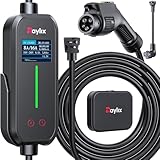
- [2026 INTELLIGENT CHARGING UPGRADE — PRECISION CONTROL MEETS SMART SCHEDULING] After surveying 100K+ U.S. EV owners, the Raylix R&D team found that nearly all drivers recognized the necessity of adjustable current and scheduled charging. Our upgraded J1772 charger features 4-level adjustable current (8A/10A/12A/16A) and a 1–12 hour smart delay timer. Whether you're charging overnight or during off-peak hours, enjoy smarter energy use, lower costs, and total convenience—on your schedule.
- [ONE CHARGER, ALL J1772 EVs/PHEVs READY!] Compatible with all SAE J1772 electric vehicles and plug-in hybrids—whether it’s Ford, GM, Nissan, Audi, BMW, Kia, Hyundai, Honda, Chevy, or more. Perfect for home or on-the-road charging, our 16A Level 1 & 2 charger ensures your EV is always powered and ready for any journey.
- [CHARGE 4× FASTER — NO MORE WAITING] In a rush? Our 16A Level 1 & 2 charger delivers charging speeds up to 4× faster than standard 8A Charger Level 1. Whether it's an early commute, a spontaneous trip, or last-minute errands, your EV will be ready when you are.
- [LEVEL 1 & 2 PORTABLE CHARGER — CHARGE ANYWHERE, ANYTIME] Designed for maximum flexibility, Raylix Level 1 & 2 EV charger features both 5-15 and 6-20 plug compatibility. Whether you're charging in your garage, at a friend's house, or at a roadside motel. NEMA 6-20 plug for Level 2 ev charging (240V, 16A, 3.68kW, 9-12 miles/hr) and a NEMA 5-15 adapter for Level 1 ev charging (120V, 12A, 1.44kW, 3-5 miles/hr) NOTE: In compliance with North American electrical safety standards, the charger automatically limits current to 12A when using a 5-15 outlet—protecting both your vehicle and your home’s electrical system.
- [AT-A-GLANCE CHARGING COMMAND: TOTAL CONTROL, INSTANTLY] While most ev chargers solutions confine vital data to in-car screens, the Raylix tesla charger breaks free with its enhanced TFT color display. This Raylix-exclusive feature delivers crystal-clear, real-time updates—voltage, current, power load, AND critical charging temperature—directly on the unit. Just one glance gives you complete charging insight. It’s not just information; it's the empowering peace of mind and satisfying control that transforms every charge into a masterfully managed experience.
6. Jeep Recon: the most serious off-road EV in the group
Status: verify timing before placing a deposit. Jeep’s public U.S. page still says “coming Early 2026,” even though that window has passed as of August 10.
The Recon is intended to be an electric Jeep in the fullest sense, rather than a conventional crossover with Jeep styling. Stellantis describes standard electric four-wheel drive, removable doors, Trail Rated capability, 650 horsepower, 620 lb-ft of torque, up to 250 miles of estimated range, and 0–60 mph in as little as 3.6 seconds. Jeep lists a starting MSRP of $65,000.
What’s actually slowing this PC down?
Pick the symptom - the matching free tool is one click away.
Removable doors and open-air capability are the distinguishing features. Trail Rated positioning is meaningful evidence of Jeep’s intended use case, but it should not be treated as a specific promise about payload, towing, water-fording depth, rock-crawling performance, or range on a particular trail. Off-road tires, low-speed terrain, weather, payload, and repeated elevation changes can reduce range substantially.
The problem is timing. Jeep’s “Early 2026” language is now stale or incomplete, and the public page does not provide the precise retail status a shopper needs. That does not by itself prove cancellation, but buyers should verify order banks, production status, live inventory, and an actual dealer delivery estimate.
Wait for the Recon if: removable doors, Jeep identity, and off-road capability are more important than maximum highway range or charging efficiency.
Skip the wait if: you need a Jeep-branded EV on a firm schedule. Do not assume that a reservation or a web-page promise means a vehicle will be available locally during 2026.
Windows Errors? Fix Them Before They Spread
Repair common Windows errors and clear accumulated junk for a smoother, more stable PC - no reinstall needed.Free scan · no reinstallOutdated Drivers Are Slowing You Down
One free scan finds every outdated or missing driver and matches the right update for your exact hardware.Free scan · exact hardware matchUse the Jeep Recon page and Stellantis announcement for the manufacturer’s published specifications, then confirm timing directly with a dealer.
New EVs already here during calendar 2026
2027 Chevrolet Bolt: the affordability story to beat
Status: on sale; vehicles began reaching U.S. dealers during the first quarter of 2026.
The new Bolt is arguably the most important affordable EV arrival of the year. Chevrolet lists a $28,995 starting MSRP, including destination freight, but excluding tax, title, license, dealer fees, and options. It combines a familiar small-hatchback format with 262 miles of EPA-estimated range, a 65-kWh lithium-iron-phosphate battery, native NACS charging, and optional Super Cruise.
DC charging is also substantially quicker than on the previous Bolt. Chevrolet lists up to 150 kW and approximately 25 minutes from 10% to 80%. That is not the fastest charging in the EV market, but it is a meaningful improvement at a sub-$30,000 starting price.
What’s actually slowing this PC down?
Pick the symptom - the matching free tool is one click away.
The Bolt is the clearest choice for a shopper who needs a new EV now and values price above size, acceleration, luxury, or maximum road-trip speed. Its small footprint also means buyers should check rear-seat room and cargo needs in person. Dealer pricing may differ from MSRP, and a limited-run positioning could affect local supply.
Buy the Bolt now if: you need an affordable new EV before the late-2026 arrivals and its hatchback size works for your household.
Wait instead if: you need a larger SUV, more cargo capacity, or specifically want the R2’s adventure-oriented packaging.
See Chevrolet’s launch specifications and dealer-arrival update.
2026 Subaru Trailseeker: an electric SUV for existing Subaru priorities
Status: on sale now.
The Trailseeker is Subaru’s first electric SUV that is meaningfully aimed at its outdoor-oriented mainstream audience. It starts at $39,995, has standard dual-motor all-wheel drive, produces 375 horsepower, and offers 8.5 inches of ground clearance. Subaru lists more than 280 miles of available range and an approximately 28-minute 10–80% charging time.
“More than 280 miles” is not a promise that every Trailseeker reaches the same number. Range depends on trim and wheel choice, so shoppers should look at the exact configuration being offered. Charging is adequate for road trips but not a standout against newer 800-volt EVs. The vehicle’s NACS compatibility also makes connector planning simpler, but buyers should confirm precisely which hardware and network access apply to their vehicle.
The Trailseeker is a better immediate choice than waiting for a vehicle with no firm date if you want all-wheel drive, clearance, and a familiar brand and dealer network. It should be compared by actual rear-seat room, cargo space, towing rating, and winter performance—not simply by the word “midsize.”
Buy the Trailseeker now if: you want an outdoor-oriented AWD SUV and do not want to gamble on a startup launch or a delayed model.
Wait instead if: you want the R2’s specific design and Rivian ecosystem, or you require faster charging and are prepared to pay for a more advanced premium vehicle.
Rank #4

- SAE J1772 Standard Charger: Compatible with all North American electric vehicles and plug-in hybrids, including Ford, Chevrolet, Nissan, BMW, Volkswagen, Hyundai, Kia, Audi, Mercedes-Benz, Rivian, Porsche, Toyota, Honda, Jeep, and GMC. Tesla vehicles can be charged with a separate SAE J1772 adapter (sold separately).
- Adjustable Current: Choose from 8A, 10A, 13A, or 16A to match your vehicle’s charging needs.Dual Plug Compatibility,NEMA 6-20 Plug (220/240V): Delivers up to 3.84 kW/h, providing approximately 15.36 MPH charging speed at 16A.NEMA 5-15 Plug (110/120V): Supports 10A charging at 120V, offering 1.2 kW/h (around 4.4 MPH). Customizable Charging: Easily adjust current to suit different charging scenarios, giving you maximum flexibility at home or on the go
- Hassle-Free Installation: Forget complicated setups—just plug in and go. Equipped with NEMA 5-15 and NEMA 6-20 (220V/240V) connectors, it works with any standard 110V–240V outlet. The 25-foot cable gives you the freedom to reach vehicles parked at a distance, making charging convenient anywhere.
- Intelligent Charging: Featuring a 2.8-inch touch display, you can easily select the charging current (8A / 10A / 13A / 16A) and schedule charging with a 1–12 hour delayed start. Perfect for maximizing off-peak hours and cutting electricity costs. (Example: Set a 2-hour delay, and charging begins automatically after 2 hours.)
- Comprehensive Safety: Designed to meet CE and FCC safety standards, this charger offers multiple layers of protection, including overvoltage, overload, short-circuit, grounding, and leakage safeguards. The durable IP65-rated waterproof housing and reinforced cable ensure reliable charging in all weather conditions, keeping your vehicle safe year-round.
Check Subaru’s Trailseeker model page and trim comparison for configuration-specific range and equipment.
Delayed, global, or not confirmed for U.S. buyers
These vehicles are relevant to the wider 2026 EV conversation, but they should not be presented as straightforward U.S. choices without a current availability check.
2027 Subaru Getaway: a three-row EV worth watching, but delayed
Subaru originally announced the Getaway as a three-row electric SUV with standard all-wheel drive, 420 horsepower, more than 300 miles of estimated range, up to 3,500 pounds of towing capacity, and seating for up to seven. Its U.S. launch was initially planned for late 2026.
Quick wins for a faster PC:
Fix the driver behind crashes, sound loss and screen glitchesFind Drivers →Repair Windows errors before they cause bigger problemsFix Now →Subaru later confirmed that the vehicle had been postponed to allow final adjustments and did not announce a replacement launch date. It therefore belongs on a delayed watchlist, not among confirmed late-2026 arrivals. Families who need three rows should not cancel an available vehicle solely because the Getaway was once scheduled for this year.
Follow Subaru’s Getaway page, its corporate announcement, and the reported delay for a new date.
Kia EV4: an interesting sedan whose U.S. launch is on hold
Kia originally announced an early-2026 U.S. launch for the compact electric EV4 sedan and advertised up to 330 miles of U.S.-estimated range for its long-range version. Kia later delayed the U.S. release “until further notice,” citing changed EV market conditions.
The EV4 remains relevant as a global 2026 EV and as evidence that automakers are still experimenting with lower, more efficient electric sedans. It should not be included in a definitive list of confirmed U.S. launches until Kia supplies a new American release plan.
Recommended Free Tools
Background is available in Kia’s U.S. debut announcement and subsequent reporting from Car and Driver and InsideEVs.
Polestar 5: global summer deliveries, unresolved U.S. access
Polestar says deliveries of the electric four-door grand tourer are expected from summer 2026. That makes it a legitimate global 2026 EV, but not a confirmed U.S. showroom vehicle.
In June 2026, Polestar announced that it had not received authorization under the U.S. Connected Vehicle Rule to sell vehicles in the United States from model year 2027 onward under the current rule. Until that issue is resolved, the Polestar 5 should be described as a global vehicle with unresolved U.S. availability—not as an American purchase recommendation.
See Polestar’s future-model announcement and U.S. regulatory update.
The Tool Desk
Outbyte PC Repair FREEClear out junk files and repair common Windows errorsFree Scan →Outbyte Driver Updater FREEFix the driver behind crashes, sound loss and screen glitchesFind Drivers →Mercedes-Benz CLA electric: important globally, not yet a confirmed U.S. pick
Mercedes-Benz has launched the new CLA globally in electric and hybrid forms. The company claims up to 792 kilometers of range on the relevant WLTP test cycle and says its 800-volt system can add up to 325 kilometers in 10 minutes.
Those are WLTP-based figures and must not be converted into an EPA range number by applying a simple percentage. U.S. timing, pricing, equipment, and EPA certification should be confirmed independently before the CLA becomes a central recommendation for American shoppers.
Mercedes-Benz’s announcement is available here.
Lucid Earth: announced, but not timed for 2026
Lucid has announced the Earth as one of the first models on its upcoming midsize platform. That establishes a vehicle and platform strategy, but not a customer delivery date, final specification, price, or official range.
The Earth is therefore a future Lucid to watch rather than a 2026 buying option. Anyone reserving a vehicle based on an early platform announcement should wait for production timing and a complete U.S. specification sheet.
Free tools Windows power users keep installed
One-click scans. No signup required.
Lucid’s midsize-platform announcement and supporting document contain the available information.
Independent reader supportYour contribution helps us test, update, and keep practical guides available for everyone.Vehicles frequently listed incorrectly as 2026 EV launches
Ram 1500 REV: do not confuse the canceled BEV with the range-extended truck
Older future-EV lists often describe the Ram 1500 REV as a 2026 battery-electric pickup. That is no longer accurate: Stellantis canceled development of the all-electric version and shifted toward a range-extended electric truck.
Ram’s current product page still promotes a projected 2026 range-extended pickup that uses a gasoline engine-generator. That vehicle can drive electrically, but it is not a pure battery-electric vehicle. An EREV has an onboard gasoline generator to produce electricity; a BEV has no gasoline engine. The distinction matters to shoppers who want zero tailpipe emissions while driving, simpler maintenance, or no gasoline use on long trips.
See Ram’s current product page, the cancellation report, and the relevant Federal Register discussion.
Best Value
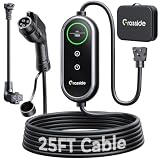
- Universal J1772 Compatibility: Designed with a standard J1772 connector, this J1772 charger works with most J1772 electric vehicles and PHEVs, including BMW, Mercedes-Benz, Hyundai, Kia, Nissan, Rivian, Ford, Chevy, Volkswagen, Toyota and more. Note: Tesla vehicles require a J1772 to Tesla adapter (not included)
- Flexible Outlet Compatibility: This portable EV charger comes with a NEMA 6-20 plug and a NEMA 5-15/5-20 to 6-20 adapter. Supports Level 1 (8–12A) and Level 2 (16A). Max 12A (1.44kW) on 120V NEMA 5-15/5-20 outlets, and full 16A (3.84kW) with a 240V NEMA 6-20 outlet. One charger is designed to cover home, garage, and travel charging needs with reliable performance
- Adjustable Smart Charging Control: Customize charging safely with adjustable current settings (8A/10A/12A/16A) to match different circuits. The 0–12 hour delay timer helps schedule overnight charging during lower electricity rates. Integrated LCD display shows real-time voltage, current, power, and charging status for clear monitoring without apps. Note: Press 'A' or 'T' for 3s to set and confirm.
- Home Charging & Travel Backup: For daily home use while remaining fully portable for travel. This level 1 ev charger includes a durable 25FT ev charging cord, providing flexible reach for garage or driveway charging. Charge overnight to take advantage of lower utility rates—potentially saving up to $500 annually on electricity costs. The included carrying case makes storage easy and keeps a dependable backup charger available in your trunk for road trips or visiting friends
- Engineered For Safety & Durability: Built for dependable daily use, this electric car charger features an IP65 waterproof rating for all weather operation. Equipped with a UL-listed cable, fully rubberized connector, and advanced protection against overcurrent, overheating, and electrical faults. Designed to ensure safe, stable, and long-term charging performance in demanding environments
A concept, a platform announcement, or a production target is not the same thing as a vehicle a U.S. customer can order, finance, service, and take home. That is why this guide uses status labels instead of placing every announced EV into one list.
EPA range, WLTP range, and charging claims are not interchangeable
Range figures in launch announcements come from different sources:
- EPA-estimated: the Chevrolet Bolt’s 262 miles and Rivian R2 Premium’s up to 330 miles.
- Preliminary manufacturer estimate: BMW iX3’s 383–434-mile figure and the Subaru Getaway’s more-than-300-mile estimate.
- Manufacturer estimate that is not EPA: Slate’s approximately 205-mile projection and Jeep’s up-to-250-mile Recon estimate.
- WLTP: the Mercedes-Benz CLA’s up-to-792-kilometer global figure and relevant Polestar figures. WLTP results are generally not directly equivalent to U.S. EPA ratings.
- No official range yet: Lucid Earth.
Charging claims also require context. A 10–80% result is not the same as a full charge, and peak charger power is not the same as the average power sustained through the session. Battery temperature, preconditioning, charger availability, state of charge, weather, and the vehicle’s charging curve all affect the result.
Among the confirmed vehicles, BMW lists a minimum 21-minute 10–80% time for the iX3, Porsche lists less than 16 minutes for the Cayenne S Electric under suitable conditions, Hyundai quotes about 18 minutes for the Ioniq 6 N with a 350-kW charger, Chevrolet quotes about 25 minutes for the Bolt, and Subaru quotes about 28 minutes for the Trailseeker. These are manufacturer claims, not independent comparative tests.
Do these 3 things before closing this tab:
1Fix the driver behind crashes, sound loss and screen glitches2Repair Windows errors before they cause bigger problems3Scan for outdated or missing drivers - takes under a minuteReal-world range is particularly sensitive to cold weather, highway speed, wheel and tire choice, roof accessories, towing, payload, heating and air conditioning, battery preconditioning, and off-road driving. None of the published figures should be treated as a guaranteed road-trip distance.
Should you buy an EV now or wait?
Buy now if you need affordable transportation
The Chevrolet Bolt is the strongest immediate answer for a shopper who wants a new EV at the lowest confirmed starting price in this group. It has a 262-mile EPA estimate, native NACS, and faster charging than the previous Bolt. Buy it now if its smaller dimensions meet your needs and you do not want to wait for an unproven launch.
Buy now if you want an outdoor-oriented SUV without launch risk
The Subaru Trailseeker is already on sale with standard dual-motor AWD, useful ground clearance, and more than 280 miles of manufacturer-listed range depending on configuration. It is the sensible choice for a buyer whose priority is getting into an AWD electric SUV rather than owning a specific future nameplate.
Wait for the R2 if size, price, and Rivian capability are the priority
The R2 is worth waiting for if its compact-SUV proportions and Rivian design appeal to you. Remember that the $44,990 Standard trim is scheduled for 2027. A 2026 buyer will initially be looking at the more expensive Performance or Premium versions.
Wait for Slate only if you accept startup risk
The Slate could be the most disruptive affordable EV in the U.S. if it reaches production at its announced price. It is also the least proven vehicle in this main group. Factory ramp-up, delivery fulfillment, service-center coverage, parts availability, warranty administration, software reliability, safety ratings, and accessory installation all deserve investigation before committing money.
Wait for the Ioniq 6 N if driving excitement matters
The Ioniq 6 N is the appropriate wait for a performance enthusiast who wants a sedan, track-oriented thermal management, simulated shifting, active sound, and 600-plus horsepower. It is not the right wait for someone who merely needs a practical electric commuter.
Choose between the BMW iX3 and Porsche Cayenne Electric by budget and risk tolerance
The BMW iX3 is the technology-focused choice: a first Neue Klasse vehicle, 800-volt charging, a native NACS port, and a very strong preliminary range claim. The Porsche Cayenne Electric is the performance-luxury choice, with six-figure pricing and exceptionally rapid charging claims. Buyers who prefer a known quantity should consider an established premium EV rather than making either first-generation launch the center of their purchase plan.
Do not wait indefinitely for the Getaway if you need three rows
The Getaway’s announced specifications are attractive, but its launch has been postponed with no replacement date. If you need a three-row vehicle on a known schedule, shop available alternatives rather than treating the late-2026 plan as firm.
What to verify before placing a deposit
- Exact delivery status: Ask whether the vehicle is in production, assigned a build slot, in transit, or merely scheduled. Get the expected month in writing where possible.
- Final MSRP: Confirm destination, processing charges, options, accessories, dealer fees, and whether the quoted price is for a trim available in 2026.
- Deposit terms: Check whether the reservation is refundable, transferable, or tied to a specific trim. A reservation may not guarantee a production slot, fixed price, incentive eligibility, or delivery month.
- Range certification: Identify whether the number is EPA, WLTP, preliminary, projected, or dependent on wheels and tires.
- Charging hardware: Confirm whether the vehicle has native NACS, uses an adapter, or depends on a future software or network rollout. Ask which charger power and battery preconditioning are required for the headline time.
- Local service: Find the nearest authorized service center and ask how warranty repairs, mobile service, roadside assistance, and parts ordering work.
- Battery and vehicle warranty: Read the actual terms, including capacity-retention coverage, exclusions, towing, commercial use, and performance driving.
- Practical ratings: Verify cargo volume, rear-seat space, ground clearance, towing, payload, roof-load limits, and the effect of an SUV conversion or accessory package.
- Safety and insurance: Check final crash-test results, insurance quotes, replacement-panel availability, and tire costs before delivery.
- Incentives: Confirm current federal, state, local, utility, lease, and income eligibility rules. Do not assume a future vehicle will qualify under the same program as an available one.
The best 2026 EV depends on what you actually need
For most shoppers, the decision is not between every vehicle in the table. It is between an available EV that solves a current need and one upcoming vehicle whose specific attributes justify waiting.
- Best affordable EV: Chevrolet Bolt, because its $28,995 starting MSRP and 262-mile EPA range are confirmed and it is already reaching dealers.
- Most interesting affordable truck: Slate Truck, because the pickup-to-SUV concept and projected price are unlike anything else here—but the preproduction risk is real.
- Best mainstream adventure SUV to watch: Rivian R2, provided you understand that the least expensive Standard trim is a 2027 vehicle.
- Best performance bargain: Hyundai Ioniq 6 N, subject to limited supply and final U.S. pricing.
- Most serious off-road EV: Jeep Recon, if Jeep confirms actual 2026 retail timing and the buyer accepts its modest estimated range.
- Most technologically significant luxury SUV: BMW iX3, because it launches BMW’s Neue Klasse architecture in the U.S.
- Most extreme performance SUV: Porsche Cayenne Turbo Electric, although its $163,000 starting MSRP before Porsche’s fee, options, and taxes places it in a very different category.
- Best three-row watchlist vehicle: Subaru Getaway, but it is delayed and should not be treated as a firm 2026 option.
- Most important global sedans: Mercedes-Benz CLA electric and Kia EV4, both of which require U.S. timing and certification caveats.
Frequently Asked Questions
Is the BMW iX3 a 2026 EV if it is a 2027 model?
Yes, for a calendar-year buying guide. BMW says U.S. deliveries are scheduled for fall 2026, even though the vehicle is sold as a 2027 model. Model year and customer delivery year are different labels.
Is the $44,990 Rivian R2 available in 2026?
No. Rivian has scheduled the $44,990 R2 Standard for 2027. The 2026 versions are the $57,990 Performance, scheduled for spring, and the $53,990 Premium, scheduled for late 2026.
Is the Ram 1500 REV a pure electric truck for 2026?
No. The all-electric battery version was canceled. Ram’s current future-truck plan is a range-extended electric pickup with a gasoline engine-generator, which is different from a battery-electric vehicle.
The Tool Desk
Outbyte Driver Updater FREEFix the driver behind crashes, sound loss and screen glitchesFind Drivers →Outbyte PC Repair FREERepair Windows errors before they cause bigger problemsFix Now →Which new EVs can shoppers buy now in 2026?
The Chevrolet Bolt and Subaru Trailseeker are the clearest confirmed choices in this guide. The Bolt began reaching dealers during the first quarter, and the Trailseeker is already on sale. Local inventory, dealer pricing, and trim availability still need to be checked.
The Bottom Line
Bottom line: Buy now if you need a proven, available EV: the Chevrolet Bolt is the value leader, while the Subaru Trailseeker is the more practical AWD SUV choice. Wait for the Rivian R2 if its size and adventure focus are exactly what you want, and consider the Slate only if its unusually low projected price and modular design outweigh the risks of a preproduction startup vehicle. The BMW iX3, Porsche Cayenne Electric, Hyundai Ioniq 6 N, and Jeep Recon are compelling for specific buyers, but their price, performance focus, limited supply, or uncertain timing makes them poor reasons for everyone else to postpone a purchase.
Quick Recap
Product prices and availability are accurate as of the date/time indicated and are subject to change. Any price and availability information displayed on Amazon at the time of purchase will apply.




