CAN and Ethernet solve different automotive networking problems. CAN is a low-cost, multi-master control bus designed for short messages, priority-based arbitration, strong error detection, and robust two-wire wiring. Ethernet is a family of link and physical-layer standards designed for scalable bandwidth, switched networks, and integration with IP-based software.
For small control messages from sensors, switches, and actuators, Classical CAN or CAN FD is often the better fit. For cameras, radar, lidar, software updates, service-oriented communication, and high-speed vehicle backbones, automotive Ethernet is usually more suitable. Modern cars commonly use both, connected through gateways or zonal controllers.
The short answer
The simplest accurate comparison is this:
CAN prioritizes predictable access to small control messages on a shared bus; Ethernet prioritizes scalable bandwidth and network integration across links and switches.
That does not mean CAN is simply slow Ethernet, or that Ethernet automatically replaces CAN. They differ in how nodes access the network, how messages are identified, how errors are handled, how timing is controlled, how the wiring is arranged, and how software is built above the link.
What’s actually slowing this PC down?
Pick the symptom - the matching free tool is one click away.
#1 Best Overall

- NOTE: It requires a compatible third-party app and is designed primarily for standard OBD-II diagnostics. It is not a full-system scanner. Advanced or vehicle-specific functions depend on your vehicle and the app. Please check compatible apps and supported functions before purchase.
- STANDARD OBD-II FUNCTIONS – read & clear trouble codes for check engine light, view freeze frame data, I/M readiness, and live sensor data to help monitor vehicle health and diagnose check engine problems.
- VEHICLE COMPATIBILITY – Works with most 1996+ cars and light trucks in the US for standard OBD-II diagnostics functions. Support for EVs & PHEVs is app-dependent; please use Apps developed for EVs such as Car Scanner ELM OBD2 to check compatibility or contact Veepeak.
- EASY BLUETOOTH CONNECTION: Supports Bluetooth LE for iOS & Android (not WiFi): please connect from within the app after setting the correct connection type. Also supports classic Bluetooth mode for Android. Android head units may not be supported.
- APP COMPATIBILITY: Compatible with generic Apps including Car Scanner ELM OBD2, Torque (for Android), OBD Fusion, as well as vehicle-specific Apps like BimmerCode*, BimmerLink*, OBD JScan, Dr. Prius, OBDocker, etc. Note: some Apps or in-App features require separate purchase from third party developers. NOT compatible with Carly, MHD, xHP, ProTool, bootmod3, etc.
- Choose Classical CAN or CAN FD for economical distributed control, small periodic messages, simple actuators, body electronics, and many existing automotive or industrial networks.
- Consider CAN XL when CAN-style arbitration and robustness remain useful but the application needs much larger payloads and more bandwidth than CAN FD.
- Choose automotive Ethernet for high-bandwidth sensors, central computers, IP-based diagnostics, service-oriented software, and switched backbones.
- Use a mixed CAN/Ethernet architecture when control traffic and high-volume data have different requirements. This is often the most practical design.
CAN and Ethernet are families, not single specifications
A comparison is only meaningful when the versions are named. “CAN” may mean Classical CAN, CAN FD, or CAN XL. “Ethernet” may mean office 1000BASE-T, automotive 100BASE-T1, automotive 1000BASE-T1, 10BASE-T1S, fiber, backplane Ethernet, or another IEEE 802.3 physical layer.
CAN commonly refers to the CAN data-link protocol used with an ISO 11898 physical layer. ISO 11898-1:2024 covers the CAN data-link layer and its physical-coding sublayer through CAN XL. The high-speed physical medium attachment is specified separately; the relevant published standard is ISO 11898-2:2026.
Ethernet is a broad family of IEEE 802.3 media-access-control and physical-layer standards. The cable, connector, signaling, distance, topology, and data rate depend on the particular PHY. The IEEE 802.3 family includes everything from low-speed single-pair Ethernet to multi-gigabit copper, fiber, and backplane links.
For cars, the fair comparisons are usually more specific:
Quick wins for a faster PC:
Clear out junk files and repair common Windows errorsFree Scan →Fix the driver behind crashes, sound loss and screen glitchesFind Drivers →- Classical CAN versus 100BASE-T1;
- CAN FD versus 100BASE-T1 or 1000BASE-T1;
- CAN XL versus automotive Ethernet; or
- A complete CAN application network versus an Ethernet/IP/AUTOSAR communication stack.
Automotive Ethernet is still Ethernet. It does not normally mean plugging an automotive ECU into an office switch with an RJ45 cable. Automotive PHYs such as 100BASE-T1 and 1000BASE-T1 are designed for single-pair vehicle wiring and use different transceivers, connectors, coupling networks, and link requirements than conventional 100BASE-TX or 1000BASE-T office Ethernet.
CAN vs. Ethernet at a glance
| Characteristic | Classical CAN, CAN FD, and CAN XL | Ethernet |
|---|---|---|
| Primary design goal | Distributed control, short messages, robust communication | Scalable data networking and interoperability |
| Typical topology | Shared multi-master bus, normally linear with termination at both ends | Usually point-to-point links connected by switches; some variants support multidrop |
| Access method | Priority-based, non-destructive arbitration | Usually full-duplex switched forwarding; legacy half-duplex Ethernet used CSMA/CD |
| Typical wiring | Differential two-wire CAN_H/CAN_L pair | Depends on PHY: twisted pair, single-pair copper, fiber, backplane, and others |
| Headline data rate | Classical CAN up to 1 Mbit/s; CAN FD and CAN XL can use faster data phases | Many rates, including 10BASE-T1S, 100BASE-T1, and 1000BASE-T1 |
| Payload | Classical CAN: up to 8 bytes; CAN FD: up to 64 bytes; CAN XL: up to 2,048 bytes | Conventional untagged Ethernet frames carry a 46–1,500-byte payload; jumbo frames are implementation-specific |
| Identifier model | CAN identifier normally represents message meaning and arbitration priority, not simply a node address | Ethernet uses source and destination MAC addresses; IP and application protocols may be carried above it |
| Error response | Detects errors, signals them on the bus, aborts the frame, retransmits, and confines faulty nodes | Invalid-FCS frames are normally discarded; recovery is generally handled by TCP or an application protocol |
| Timing | Highly analyzable under engineered priority and bus-load conditions, but not automatically deadline-guaranteed | Ordinary switched Ethernet has queueing and congestion; TSN can provide engineered bounded latency |
| Typical automotive roles | Powertrain, chassis, body control, actuators, diagnostics, and local sensor networks | Cameras, radar, lidar, infotainment, central computing, software updates, and vehicle backbones |
| Security | Base CAN data-link protocols do not inherently provide authentication or encryption | Security can be added at Layer 2, IP, transport, or application layers |
These are version-dependent comparisons. A 20-Mbit/s CAN XL data phase and a 10-Mbit/s multidrop Ethernet segment have very different properties from Classical CAN and switched gigabit Ethernet. Raw bit rate also does not equal usable application throughput.
How CAN arbitration works
CAN is normally a shared bus on which multiple nodes may transmit. When the bus is idle, more than one node can begin sending. CAN prevents that simultaneous transmission from becoming a destructive collision through bit-by-bit arbitration.
CAN uses two bus states:
- Dominant: a node actively drives the bus into the dominant state.
- Recessive: a node releases the bus, allowing the recessive state to appear if no node drives dominant.
A dominant bit overrides a recessive bit. Every transmitting node monitors the bus while it sends. If a node transmits recessive but reads dominant, it has lost arbitration and stops transmitting. The winning node continues its frame without corruption, while the losing node waits and tries again later.
The Tool Desk
Outbyte PC Repair FREEClear out junk files and repair common Windows errorsFree Scan →Outbyte Driver Updater FREEScan for outdated or missing drivers - takes under a minuteDriver Scan →For the usual CAN identifier comparison, the numerically lower identifier has the higher priority because it contains a dominant zero at the first bit where it differs from a lower-priority identifier.
Node A: identifier 0x120   000 010 010 000
Node B: identifier 0x300   011 000 000 000
                         ^ first differing identifier bit
                         dominant 0 from A wins over recessive 1 from B
Node A therefore continues and Node B withdraws. This is called non-destructive arbitration: the losing node does not cause the winning frame to be thrown away.
The identifier has two important jobs. It helps receivers decide which message they want, and it determines the message’s priority on the bus. It is not necessarily the address of the sending ECU. One ECU can transmit many identifiers, and many ECUs can listen to the same identifier. Higher-layer protocols such as CANopen, J1939, UDS, or a manufacturer’s signal database add their own addressing and interpretation rules.
How Ethernet forwarding works
Modern Ethernet in vehicles and data networks is usually arranged as separate point-to-point links between endpoints and switches. A switch learns which MAC address is reachable through each port and forwards an Ethernet frame toward its destination.
ECU or sensor ── point-to-point Ethernet link ──┐
                                                ├── Ethernet switch ── backbone
ECU or sensor ── point-to-point Ethernet link ──┘
Each full-duplex switch port is normally its own collision domain. There is no need for the CAN-style, bit-by-bit arbitration between all endpoints on the network. Instead, several frames can arrive at a switch at once and wait in queues if they need the same outgoing port.
That design scales well. Switches can connect multiple zones, central computers, cameras, and diagnostic equipment, and the network can carry different traffic classes over the same physical infrastructure. The trade-off is that latency depends on link speed, frame size, switch forwarding behavior, the number of hops, competing traffic, and queue occupancy.
Legacy half-duplex Ethernet used CSMA/CD, in which devices detected collisions and retried. That is historically important but should not be presented as the normal behavior of current switched full-duplex Ethernet.
The important Ethernet exception: 10BASE-T1S
Ethernet is not always point-to-point. 10BASE-T1S provides 10-Mbit/s Ethernet and can support half-duplex multidrop operation over a common balanced pair. Its Physical Layer Collision Avoidance, or PLCA, mechanism organizes access to the shared medium.
Recommended Free Tools
Rank #2

- Turn your iPhone, Android device, or Windows PC into a professional grade diagnostic scan tool.
- Recommended adapter for FORScan, Torque, BimmerCode, Dashcommand, AlfaOBD, Carista, and more.
- Enhanced OEM Support for Ford, GM, Mazda, Nissan/Infiniti, Toyota/Lexus/Scion, Honda, Hyundai, Kia.
- Clear check Engine Light and get more live parameters (ABS, SRS, TPMS, etc) than other scanners.
- Over-voltage and battery drain protection, and included firmware updates.
A representative implementation, such as the Microchip LAN8670 family, shows why 10BASE-T1S is relevant to automotive architectures: it offers Ethernet framing and ecosystem compatibility while allowing a bus-like multidrop segment. It is not electrically or behaviorally identical to CAN, but it narrows the gap between a traditional fieldbus and Ethernet.
Speed, payload, and distance
CAN and Ethernet comparisons often go wrong because they mix a raw bit rate, a per-frame payload, and a whole-network throughput figure. These are different measurements.
| Technology | Headline figure | What it means |
|---|---|---|
| Classical high-speed CAN | Up to 1 Mbit/s | The nominal bus rate; achievable distance and timing depend on the physical design |
| Classical CAN payload | 0–8 bytes | The data field in one Classical CAN frame |
| CAN FD payload | Up to 64 bytes | A larger data field, with a nominal arbitration phase and potentially faster data phase |
| CAN FD data phase | Commonly cited up to 8 Mbit/s | The actual limit depends on controller, transceiver, wiring, topology, and timing |
| CAN XL payload | 1–2,048 bytes | A much larger data field intended for more substantial data transfers |
| CAN XL data phase | Up to 20 Mbit/s under suitable conditions | Not a universal rate for every CAN XL network or harness |
| 100BASE-T1 | 100 Mbit/s | An automotive single-pair, normally point-to-point Ethernet PHY |
| 1000BASE-T1 | 1 Gbit/s | An automotive single-pair gigabit Ethernet PHY |
| 10BASE-T1S | 10 Mbit/s | Single-pair Ethernet that can support point-to-point or half-duplex multidrop operation |
CiA describes high-speed Classical CAN as reaching 1 Mbit/s and gives approximately 40 metres as a theoretical example at that rate. The actual maximum length depends on cable characteristics, connectors, transceivers, propagation delay, topology, termination, and the timing margins selected. See the CiA high-speed CAN overview.
CAN FD keeps the arbitration phase compatible with the timing requirements of the network and switches to a faster data phase after arbitration. CiA describes CAN FD with data fields up to 64 bytes and rates up to 8 Mbit/s in suitable implementations. The faster phase makes signal integrity and transceiver limitations more important. A network designer cannot simply select an 8-Mbit/s setting and assume every harness will support it.
CAN XL extends the data field to as much as 2,048 bytes and can reach up to 20 Mbit/s in its data phase under suitable physical-layer conditions. It is an evolution of CAN, not a replacement for a switched Ethernet backbone. Bosch describes CAN XL as a technology intended to help bridge the gap between CAN FD and 100BASE-T1.
For conventional Ethernet, the familiar untagged frame has a 46–1,500-byte payload and a total frame size of 64–1,518 bytes, excluding the preamble and start-of-frame signaling. Jumbo frames can extend the payload in some controlled environments, but they are not automatically supported end to end.
Physical wiring and topology
Conventional high-speed CAN: a terminated bus
A typical high-speed CAN network uses a differential CAN_H/CAN_L pair arranged as a primarily linear bus:
120 Ω                                                120 Ω
  ├────────────── CAN_H / CAN_L main bus ──────────────┤
  │                       │                    │
 ECU 1                   ECU 2                ECU 3
 short stub              short stub           short stub
The conventional design normally has one 120-ohm termination resistor at each physical end. With both terminators connected, a resistance measurement across CAN_H and CAN_L is approximately 60 ohms because the two 120-ohm resistors are in parallel. The terminators reduce signal reflections.
Long stubs, star wiring, missing termination, extra termination, excessive capacitance, poor connectors, and an unsuitable cable can create ringing or sampling errors. As the bit rate increases, propagation delay and signal integrity become more restrictive. The Texas Instruments CAN physical-layer training material and its topology guidance explain why nominal bit rate, bus length, and wiring cannot be considered independently.
Ethernet: links, switches, and PHY-specific media
Ethernet does not prescribe one universal cable or topology. Depending on the PHY, it may use:
- Four-pair twisted-pair copper, as in common office Ethernet;
- Single-pair copper, as in automotive 100BASE-T1, 1000BASE-T1, and 10BASE-T1S;
- Fiber optic links;
- Backplane connections; or
- Other specialized media.
Automotive 100BASE-T1 and 1000BASE-T1 are generally point-to-point single-pair links. A switch or compatible link partner is normally required at the other end. Connecting several automotive Ethernet nodes to a passive two-wire bus in the manner of CAN will not work unless the chosen PHY and network technology explicitly support it, as 10BASE-T1S does.
The practical lesson is to specify the exact PHY, cable, connector, maximum segment length, EMC requirements, and switch architecture. “Ethernet” by itself is not enough information to choose vehicle wiring.
Outdated Drivers Are Slowing You Down
One free scan finds every outdated or missing driver and matches the right update for your exact hardware.Free scan · exact hardware matchWindows Errors? Fix Them Before They Spread
Repair common Windows errors and clear accumulated junk for a smoother, more stable PC - no reinstall needed.Free scan · no reinstallFrames, identifiers, and addressing
CAN is usually message-oriented
A Classical CAN frame includes an identifier, control information, a data field, CRC, acknowledgement, and other protocol fields. The identifier is generally a content or message identifier and an arbitration priority. For example, an identifier might represent wheel speed, engine torque request, steering angle, or a diagnostic message.
That model is often called signal-oriented communication. A periodic frame may carry several signals at fixed bit positions, with each signal assigned a defined scaling, offset, byte order, and update rate. The receiver does not necessarily care which ECU originated the frame; it cares about the data meaning.
CAN supports commonly used 11-bit and 29-bit identifier formats, but the way those identifiers are assigned depends on the higher-layer protocol or system design. CiA’s CAN terminology reference summarizes the Classical CAN frame and identifier concepts.
Ethernet identifies interfaces, then builds upward
An Ethernet frame normally contains a destination MAC address, source MAC address, a length or EtherType field, payload, and a Frame Check Sequence. MAC addresses identify network interfaces at the Ethernet link layer. IP addresses, ports, service identifiers, and application-level information add further communication semantics.
Free tools Windows power users keep installed
One-click scans. No signup required.
Rank #3

- Panlong Bluetooth OBD2 scanner turns your Android phone or tablet into a professional-grade diagnostic tool, and allows you to access manufacturer-specific vehicle data
- Read/clear error codes, display their meaning, turn off Check Engine Light, show current sensor data, find out why check engine light is on before visiting a mechanic, save money by fixing simple problems yourself
- Fully ELM327 compliant, support 9 OBDII protocols, compatible with 1996 US-based, 2000 EU and Asian-based 12V gas-powered & light diesel vehicles, and newer OBDII domestic or import vehicles
- Work with Android cellphone and tablet; compatible Apps on Google Play: Torque, Dashcommand, Car Scanner ELM OBD2, OBD Fusion, OBD Auto Doctor... and Dr. Prius App for Toyota/Lexus hybrid; we recommend downloading free version first as there are many other Apps you may be interested in trying out
- Please Note: 1. this version supports Android phone/tablet only; 2. if you don't see "OBDII" on your phone Bluetooth device list, that's OK; go ahead to run App and it will find in App; 3. if you have two or more scanners, go to phone Bluetooth setting and unpair "OBDII" before you use the second one
Ethernet does not require TCP/IP. It can carry UDP, TCP, SOME/IP, DoIP, time synchronization, TSN traffic, VLAN-tagged traffic, security protocols, and non-IP frames. RFC 1042 describes the relationship between Ethernet framing and protocol payloads.
In an automotive Ethernet system, the physical link can be working while the intended service is unavailable. A link-up indication only proves that the PHYs have established a connection. It does not prove that IP configuration, routing, service discovery, SOME/IP subscriptions, diagnostics, or application authentication are correct.
Which is more deterministic?
Neither blanket statement is correct:
- “CAN is always deterministic” is too broad.
- “Ethernet is never deterministic” is also too broad.
CAN timing
CAN’s priority arbitration makes access behavior highly analyzable. A high-priority frame does not wait for a random backoff after losing a collision; it wins arbitration when the bus becomes available, subject to the frame currently being transmitted and other higher-priority traffic.
However, a CAN network still needs a timing analysis:
- A lower-priority frame can wait behind higher-priority frames.
- A frame already on the bus normally cannot be interrupted in the middle of transmission.
- High bus utilization increases waiting and response times.
- Poor identifier assignment can starve low-priority traffic.
- Error frames and retransmissions add extra delay.
- Bit timing, propagation delay, topology, and oscillator tolerances affect whether frames work reliably.
CAN is therefore best described as priority-based and potentially bounded when traffic, identifiers, bus load, and error assumptions are engineered. It is not a promise that every message has the same latency or an automatically guaranteed deadline.
Ordinary Ethernet timing
Best-effort switched Ethernet has variable latency. A frame may encounter transmission time, switch forwarding delay, queueing behind other frames, multiple hops, congestion, and higher-layer retransmission. A high nominal link rate does not eliminate a full queue or guarantee a deadline.
TSN adds engineered timing
Time-Sensitive Networking, or TSN, adds mechanisms for time synchronization, traffic shaping, scheduled transmission, frame preemption, and redundancy. The IEEE TSN group describes the goal as deterministic connectivity with bounded latency, low delay variation, and low packet loss. IEEE 802.1Qbv, for example, defines scheduled time-aware traffic, while IEEE 802.1DG-2025 defines an automotive in-vehicle Ethernet TSN profile.
TSN does not make an arbitrary Ethernet network deterministic by simply being enabled. The endpoints, switches, clocks, traffic classes, schedules, queues, bandwidth reservations, and failure behavior must all be designed and configured together.
Do these 3 things before closing this tab:
1Fix the driver behind crashes, sound loss and screen glitches2Repair Windows errors before they cause bigger problems3Scan for outdated or missing drivers - takes under a minuteError detection, retransmission, and fault confinement
How CAN handles errors
CAN includes several link-layer checks and reactions, including:
- CRC checking;
- Frame-format checking;
- Bit monitoring;
- Bit-stuffing checks; and
- ACK checking.
When a node detects a protocol or transmission error, it can transmit an error frame. The current frame is invalidated and is normally retransmitted. CAN also tracks transmit and receive errors. A node with persistent problems moves through error states and can eventually enter bus-off, disconnecting itself from normal bus participation. This fault-confinement behavior helps prevent one defective node from continuously disrupting every other node.
These mechanisms are a major reason CAN works well for distributed control, but they have a timing cost. A wiring fault, noisy transceiver, or missing termination can cause error frames and repeated retransmissions, consuming bus capacity and delaying valid messages. The CiA CAN error-handling overview explains the error states and confinement model.
How Ethernet handles errors
Ethernet adds a Frame Check Sequence, normally based on a CRC, to detect corruption. A receiving interface or switch that finds an invalid FCS normally discards the frame rather than forwarding it. The basic Ethernet MAC does not universally generate a bus-wide error frame or automatically retransmit the damaged frame in the same way CAN does.
Reliable delivery may instead come from TCP, an application protocol, a safety mechanism, or a system-specific retry policy. That does not make Ethernet inherently unreliable. Ethernet links can be extremely robust; the difference is where the system places recovery and fault-management responsibilities. Cisco’s FCS documentation describes corrupted Ethernet frames as errors that are dropped.
CAN FD and CAN XL change the comparison
Classical CAN
Classical CAN is the familiar form used in many vehicles and machines. It generally supports:
- Up to 1 Mbit/s in high-speed implementations;
- 0–8 data bytes per frame;
- Priority arbitration using the identifier; and
- A shared, terminated differential bus.
Eight bytes is often enough for compact control signals, but it creates overhead when transporting diagnostics, calibration data, software images, or larger structured messages.
CAN FD
CAN FD, or Flexible Data-rate CAN, expands the data field to as much as 64 bytes and permits a faster data phase after arbitration. That reduces overhead for larger messages while preserving the CAN arbitration concept.
Crashes, No Sound, or Screen Glitches?
Random freezes, missing sound and display glitches usually trace back to one bad driver. Find and replace yours safely.Free scan · under a minutePC Slower Than It Used to Be?
A free scan shows the junk files, broken settings and background clutter dragging Windows down - then fixes them in one click.Free scan · Windows 10 & 11Rank #4

- - VEHICLE COMPATIBILITY - Designed for 12V gasoline vehicles manufactured after 1996 with standard OBD2 support. Also compatible with light-duty diesel vehicles (6.5 tons or less) from 1996 onward. Not suitable for 24V diesel vehicles
- - SIMPLE OPERATION - Works with iOS and Android devices. Requires Bluetooth to be enabled on your phone. For iOS: no manual pairing required—connect directly through the OBD2 app. For Android: pair with "Android-Vlink" using PIN 1234. No complex setup, lower power consumption than Wi-Fi OBD2 readers, and no interference with other apps' internet access
- - LOW POWER CONSUMPTION - Vgate iCar Pro Bluetooth 4.0 adapter features auto-sleep and auto-wake functionality, drawing as little as 3mA in sleep mode to help preserve vehicle battery. Note: auto-wake may not work on electric or hybrid vehicles—reinsertion may be required to reactivate
- - COMPACT & PLUG-AND-PLAY DESIGN - Compact and lightweight, designed for easy insertion and removal from the OBD2 port. Most cars from the last two decades have an OBD2 port—simply locate it and plug in the Vgate iCar Pro Bluetooth 4.0
- - LED INDICATORS - When plugged into the OBD2 port: red light stays on, green light on for 1 second, blue light on for 3 seconds then off. During Bluetooth connection: blue light flashes (stops when paired). When connected to an app and reading data: red light remains on, blue and green lights flash simultaneously
CAN FD requires compatible controllers and transceivers, and the timing must be correct in both the nominal arbitration phase and the faster data phase. A Classical CAN-only node does not understand a CAN FD frame as a valid Classical CAN frame. If FD traffic is placed on a bus with legacy nodes that cannot tolerate it, those nodes may generate errors. Systems therefore need compatible node behavior, traffic segregation, or a gateway strategy. CiA’s CAN FD explanation covers the larger data field and separate bit-rate phases.
CAN XL
CAN XL supports data fields from 1 byte to 2,048 bytes and a data phase of up to 20 Mbit/s under suitable physical-layer conditions. It retains CAN-style priority arbitration while adding capabilities intended for larger payloads, higher-layer protocols, and closer integration with Ethernet-oriented communication.
CAN XL can therefore occupy an intermediate architectural position. It may be attractive where CAN’s bus access and control behavior remain valuable but CAN FD’s 64-byte payload is too limiting. It should not, however, be treated as a drop-in replacement for a switched 100BASE-T1 or gigabit Ethernet backbone. Controller availability, transceiver requirements, conformance, topology, and ecosystem maturity must be checked for the intended vehicle program. See the CiA CAN XL overview.
Software-stack differences
Typical CAN software
CAN defines the communication mechanism, not the complete meaning of every signal in an application. A system may use a custom signal database or a higher-layer protocol such as:
Quick wins for a faster PC:
Repair Windows errors before they cause bigger problemsFix Now →Scan for outdated or missing drivers - takes under a minuteDriver Scan →- CANopen for networked embedded devices;
- SAE J1939 for heavy-duty vehicles and machinery;
- ISO-TP for transporting larger diagnostic messages across CAN;
- UDS for vehicle diagnostics; and
- DeviceNet or ISOBUS in industrial and agricultural applications.
The resulting software is often signal-oriented: read a defined field in a periodic frame, apply its scaling, validate its freshness, and use it to control an actuator or state machine.
Typical Ethernet software
Ethernet often carries a larger stack:
- Ethernet MAC and PHY;
- VLAN or other link-layer functions;
- IP;
- UDP or TCP;
- service discovery;
- SOME/IP or another application protocol;
- DoIP for diagnostics over IP;
- time synchronization and TSN;
- firewalls and security protocols; and
- vehicle middleware, such as AUTOSAR components.
AUTOSAR’s SOME/IP specification defines service-oriented communication features including remote procedure calls, events, fields, serialization, and service discovery. SOME/IP can use UDP or TCP over IP, depending on the communication requirement.
This gives Ethernet access to familiar IP tooling and service-oriented design, but it also increases system complexity. An Ethernet ECU still needs the required automotive middleware, diagnostic behavior, safety mechanisms, timing configuration, cybersecurity controls, and resource management. An Ethernet link alone does not supply those features.
Cost and implementation trade-offs
CAN is often cheaper at the node and local-network level, but “CAN is cheaper” is not a universal system-level conclusion.
What’s actually slowing this PC down?
Pick the symptom - the matching free tool is one click away.
Where CAN can cost less
- Many microcontrollers include a CAN controller or CAN-compatible peripheral.
- CAN transceivers are comparatively simple and inexpensive.
- A shared two-wire bus can avoid a switch for a group of low-bandwidth nodes.
- Small messages require little memory and processing.
- Existing CAN tools, databases, diagnostics, and engineering knowledge can reduce integration effort.
- Low-power nodes can often meet requirements without a high-performance application processor.
Where Ethernet can become attractive
- One switched infrastructure can carry multiple traffic types.
- High-bandwidth links can replace several separate point-to-point networks.
- Switches can aggregate zones and connect central compute resources.
- IP-based diagnostics, software updates, and service-oriented communication may reduce the need for separate infrastructure.
- Higher bandwidth can provide room for future sensors and software features.
The real cost depends on PHY and switch count, processors, cable and connector requirements, electromagnetic-compatibility qualification, software licensing, development tools, safety and security requirements, production volume, and the cost of gateways. A mixed network may require gateways but still be cheaper and easier to engineer than forcing every low-speed actuator onto Ethernet.
Independent reader supportYour contribution helps us test, update, and keep practical guides available for everyone.Which should a car use?
Use the traffic and architecture—not the headline bitrate—to make the decision.
Choose Classical CAN when:
- Messages are small, periodic, and comfortably below the bus capacity.
- The network contains many simple sensors, switches, actuators, or control modules.
- Priority-based access is useful for urgent control messages.
- A linear shared bus is practical and the harness can be terminated correctly.
- Low node cost, low power, and a mature tool ecosystem matter.
- The project already uses CANopen, J1939, UDS, or an established CAN signal database.
Choose CAN FD when:
- Eight-byte Classical CAN frames create too much protocol overhead.
- Diagnostics, calibration, firmware transfer, or control structures need up to 64-byte data fields.
- The system can ensure FD compatibility and correct nominal/data-phase timing.
- CAN’s arbitration and existing wiring model remain valuable.
- Ethernet-level bandwidth and IP services are unnecessary.
Consider CAN XL when:
- Payloads are substantially larger than 64 bytes.
- CAN-style arbitration and a CAN-oriented control model remain desirable.
- The application needs an intermediate step between CAN FD and automotive Ethernet.
- Ethernet-frame tunneling or IP-oriented communication is useful without adopting a full switched backbone for every node.
- Suitable CAN XL controllers, transceivers, tools, and conformance support are available.
Choose automotive Ethernet when:
- The vehicle carries camera, radar, lidar, audio, video, or other high-volume sensor data.
- Many ECUs need service-oriented communication rather than only periodic signals.
- IP compatibility, software updates, or diagnostics over IP is important.
- A switched backbone, central-compute architecture, or zonal architecture is planned.
- The system needs VLANs, multicast, time synchronization, TSN, or Ethernet-layer security.
- CAN FD does not provide enough practical bandwidth or payload efficiency.
A practical decision tree
- Measure the traffic. List message sizes, rates, burst behavior, allowable loss, and growth for future features.
- Define timing. Separate average latency from worst-case response time. Identify hard deadlines and the consequences of a missed message.
- Name the physical environment. Specify harness length, branch structure, EMC exposure, connectors, temperature, and serviceability.
- Choose the communication model. Decide whether signals in periodic frames, request/response transport, or service-oriented events best fit the application.
- Account for diagnostics and updates. UDS over CAN, ISO-TP, DoIP, firmware downloads, and calibration can materially change the bandwidth requirement.
- Plan fault behavior. Define what happens during a bus-off event, link failure, switch failure, corrupted frame, unavailable service, or gateway reset.
- Plan security. Decide where authentication, freshness, encryption, key management, secure diagnostics, and filtering are implemented.
- Verify the ecosystem. Check controller, PHY, switch, transceiver, tool, middleware, AUTOSAR, and supplier support for the exact variant.
Why modern cars commonly use both
CAN remains efficient at the edge of the vehicle. A door module, steering actuator, seat controller, or body sensor often has modest data requirements and benefits from a simple shared control bus. Ethernet is valuable closer to zone controllers and central computers, where traffic from cameras, radar, infotainment, diagnostics, and software distribution must be aggregated.
Small actuators and sensors ── CAN / CAN FD ──┐
                                              ├── Zone controller ── Automotive Ethernet backbone
High-bandwidth sensors ───── 100BASE-T1 ──────┘
A gateway is not merely a wire adapter. It may translate CAN identifiers into signals or services, segment or reassemble transport-protocol messages, map diagnostic services, preserve message timing, enforce security policy, and define what happens when either network fails. A good gateway design also addresses data freshness, scaling, endianness, prioritization, queue limits, and fault reporting.
This mixed approach lets each technology do the job for which it is best suited: CAN for economical local control and Ethernet for high-bandwidth aggregation and software integration. Automotive networking guidance from Microchip describes this kind of complementary CAN and Ethernet ecosystem.
Common failure modes and troubleshooting
CAN checklist
- Check termination: a conventional high-speed bus normally has two 120-ohm terminators, one at each physical end. An approximately 60-ohm measurement across the pair with both connected is a useful initial check.
- Check topology: long stubs, star wiring, unexpected branches, and excessive capacitance can cause reflections.
- Check the bit timing: confirm nominal bitrate, sample point, oscillator tolerance, and—on CAN FD—the data-phase bitrate and timing.
- Check compatibility: a Classical CAN-only node may not tolerate CAN FD frames on the same bus.
- Check bus load: high-priority traffic can delay low-priority traffic, while error retransmissions consume additional capacity.
- Investigate bus-off: inspect wiring, grounding, common-mode voltage, transceiver power, termination, and the node’s error counters before repeatedly resetting the ECU.
- Interpret ACK errors correctly: the transmitter may report an ACK error when no compatible receiver acknowledges the frame. This can indicate an absent node, a disconnected bus, mismatched bit timing, or an isolated test setup.
- Do not assume advertised speed equals harness capability: cable delay, connector quality, transceiver limits, and topology determine the usable rate.
Automotive Ethernet checklist
- Confirm the PHY: 100BASE-T1, 1000BASE-T1, 10BASE-T1S, 100BASE-TX, and 1000BASE-T are not interchangeable interfaces.
- Confirm the topology: many automotive Ethernet links are point-to-point and require a compatible link partner or switch port. Do not attach them to a passive CAN-like bus.
- Check link configuration: verify supported speed, duplex behavior, master/slave or related PHY settings where applicable, and autonegotiation or forced-configuration consistency.
- Check FCS errors: corrupted frames are normally discarded, so inspect cabling, connectors, EMC conditions, PHY diagnostics, and switch counters.
- Check queues and congestion: a link can be physically healthy while switch buffering causes unacceptable latency or packet loss.
- Check MTU: frame and IP-payload limits must be consistent across the complete path.
- Separate link and service tests: link-up, IP reachability, SOME/IP service discovery, event subscription, and application response are different tests.
- Check TSN configuration: time synchronization, traffic schedules, priorities, stream reservations, switch support, and endpoint behavior must agree.
- Check security configuration: MACsec, IPsec, TLS, application authentication, and key management can all create failures that look like ordinary connectivity problems.
Security: neither technology is secure by default
CAN’s physical separation from an external network may reduce exposure, but it is not authentication. A device that can transmit on a conventional CAN bus can generally send a valid-looking frame with a chosen identifier. Classical CAN and CAN FD provide error detection and fault confinement, not confidentiality, sender authentication, or message freshness.
The CAN in Automation security material states that the standardized CAN data-link protocols do not themselves provide security measures. Security can be added through secure gateways, message authentication codes, freshness counters, intrusion detection, access control, secure diagnostics, and other system-level mechanisms.
CAN XL has an optional security direction called CANsec, described by CiA as an add-on intended to provide integrity, freshness, origin authenticity, and confidentiality. It should not be assumed that every CAN XL controller or vehicle network implements it; the exact product and profile must be verified. See the CiA CAN XL add-on services information.
Recommended Free Tools
Best Value
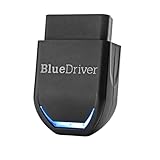
- [Diagnose Like a Pro] BlueDriver Pro Next-Gen is a professional OBD2 scanner and diagnostic tool that helps you scan, understand, and clear vehicle trouble codes with confidence. Turn your phone into a powerful car diagnostic scanner—no guesswork, no unnecessary repairs.
- [Read and Clear More Codes Than Ever] Read and clear more codes than basic car code readers. Access enhanced diagnostics for Check Engine, ABS, SRS, Airbag, TPMS, Transmission, and more on supported vehicles, including expanded coverage on newer model years.
- [Verified Fixes and Real-Time Data] Get unlimited, technician-verified repair reports matched to your VIN, with definitions, causes, and confirmed fixes. Monitor live vehicle data as you drive, view freeze frames, check smog readiness, and analyze Mode 6 test results.
- [Expanded Make & Model Coverage] Optimized for today’s vehicles with strong support for GM, Ford, Stellantis (RAM, Jeep, Chrysler), Toyota, Honda, Nissan, Mazda, Subaru, Hyundai, Mercedes-Benz, BMW, and VW. Enhanced communication on select 2024+ Nissan and Mazda models (see compatibility chart).
- [Gas Vehicles 1996+ & Select Light-Duty Trucks] Works with all gas-powered vehicles made in 1996 or newer, plus select light-duty trucks and diesels, including F-250, RAM 2500, Silverado, and Sierra. Built for daily drivers, family vehicles, and real-world truck use.
Ethernet offers several places to add protection. AUTOSAR documents MACsec as an IEEE 802.1AE Layer-2 mechanism that can provide integrity, authenticity, and optional confidentiality. IPsec, TLS, secure SOME/IP, gateway filtering, VLAN isolation, firewalls, secure boot, endpoint authentication, and key management may also be used.
Ethernet therefore has more familiar security building blocks, but it also presents a larger software and attack surface. The security of either architecture is a property of the complete system—not of the word CAN or Ethernet on a datasheet.
Common misconceptions
“CAN is just 1 Mbit/s and 8 bytes.”
Those figures describe Classical CAN. CAN FD supports up to 64-byte data fields, and CAN XL supports up to 2,048 bytes with a faster data phase. Always name the CAN generation.
“Ethernet always means 100 Mbit/s or 1 Gbit/s over four pairs.”
100BASE-T1 is 100 Mbit/s over a single balanced pair, and 1000BASE-T1 is 1 Gbit/s over a single pair. 10BASE-T1S is a 10-Mbit/s single-pair option that can support multidrop. The PHY determines the wiring.
“Ethernet is always nondeterministic.”
Ordinary best-effort Ethernet has variable queueing delay, but TSN adds synchronization, shaping, scheduling, preemption, and redundancy mechanisms for engineered real-time behavior.
“CAN is always deterministic.”
CAN provides priority-based access that can be analyzed, but low-priority traffic can be delayed or starved, frames cannot normally be interrupted mid-transmission, and errors add retransmission time. Deadlines still require a traffic and response-time analysis.
“The CAN identifier is the ECU address.”
It is normally a message identity and priority value. A node can transmit multiple identifiers, and several nodes can consume the same message. Higher-layer protocols define additional addressing where needed.
“Ethernet means TCP/IP.”
Ethernet can carry TCP/IP, UDP, SOME/IP, DoIP, TSN traffic, VLAN-tagged traffic, security protocols, and non-IP frames. TCP is only one possible higher-layer choice.
“CAN is more secure because it is isolated.”
Isolation can reduce exposure, but the base CAN data-link protocol does not authenticate senders or encrypt messages. A connected attacker or compromised ECU can still inject traffic unless the system adds protection.
“Ethernet replaces CAN everywhere.”
Ethernet is expanding into high-bandwidth and backbone roles, but CAN remains an efficient choice for many small-message control links. A gateway-based mixed architecture is often more sensible than forcing one technology into every part of the vehicle.
Frequently Asked Questions
Can a CAN device connect directly to an Ethernet switch?
No. CAN and Ethernet use different electrical signaling, frame formats, access methods, and physical interfaces. A gateway, bridge, or controller that explicitly supports both technologies is normally required. CAN XL may support Ethernet-related tunneling mechanisms, but that still does not make a CAN transceiver electrically interchangeable with an Ethernet PHY.
Is Ethernet faster than CAN?
Usually, if the comparison is Classical CAN with automotive 100BASE-T1 or 1000BASE-T1. Classical CAN is commonly rated up to 1 Mbit/s, while 100BASE-T1 is 100 Mbit/s and 1000BASE-T1 is 1 Gbit/s. But CAN FD and CAN XL narrow the gap for some control applications, and usable performance depends on payload, overhead, bus load, switch queues, topology, and timing.
Do these 3 things before closing this tab:
1Repair Windows errors before they cause bigger problems2Fix the driver behind crashes, sound loss and screen glitches3Clear out junk files and repair common Windows errorsWhich is better for automotive real-time control?
There is no universal winner. A priority-engineered CAN or CAN FD bus can provide highly analyzable timing for small control messages. Ethernet can also support tightly bounded real-time traffic when designed with TSN and correctly configured switches, clocks, schedules, and traffic classes. The choice depends on deadlines, bandwidth, topology, and the required software stack.
Is CAN cheaper than automotive Ethernet?
CAN is often less expensive for small local networks because it can use simple transceivers, low-cost controllers, and a shared two-wire bus. Ethernet may be more economical at the system level when it consolidates high-bandwidth traffic, supports zonal aggregation, or avoids several separate networks. PHYs, switches, wiring, software, tools, security, and qualification all affect the final cost.
The Bottom Line
CAN is usually the better tool for economical, robust, small-message control. Ethernet is usually the better tool for high-bandwidth, switched, IP-oriented communication. Classical CAN, CAN FD, CAN XL, 10BASE-T1S, automotive Ethernet, and TSN are expanding the choices, but the correct decision still depends on traffic, timing, topology, physical layer, cost, software, and fault behavior. In many modern vehicles, the answer is not CAN or Ethernet—it is CAN at the control edge and Ethernet for aggregation and the backbone.
Quick Recap
Product prices and availability are accurate as of the date/time indicated and are subject to change. Any price and availability information displayed on Amazon at the time of purchase will apply.




